
Horse breed
Tiger Horse
The Tiger Horse is a relatively recent breed, developed in the United States starting in the 1980s. Its objective was to recreate spotted horses with unique gaits, similar to those described by Spanish conquistadors and used by the Nez Percé tribes.

The breed at a glance
The Tiger Horse is generally described as intelligent, willing, and easy to train. It possesses a calm and cooperative temperament, making it an excellent partner for various activities. It is also renowned for its robustness and endurance.
- Category
- saddle horse
- Origin
- United States · Late 20th century
- Height at withers
- 142–157 cm
- Weight
- 400–550 kg
- Lifespan
- 25-30 years
- Common coats
- leopard, blanket, snowflake, marbled, solid with Appaloosa characteristics (white sclera, mottled skin, striped hooves)
- Disciplines
- equestrian trail riding, trail, western riding, gaited dressage
Origin and history
The Tiger Horse is a relatively recent breed, developed in the United States starting in the 1980s. Its objective was to recreate spotted horses with unique gaits, similar to those described by Spanish conquistadors and used by the Nez Percé tribes. The breed was established by primarily crossing Appaloosa horses with gaited horses such as the Paso Fino or the Tennessee Walking Horse. It is recognized by the Tiger Horse Association.
Conformation and physique
The Tiger Horse is a medium-sized, athletic, and well-proportioned horse, with solid yet refined bone. It presents an elegant and muscular silhouette, suited for endurance and gaits. It is often compared to a finer Appaloosa with additional gaits.
The head is medium-sized, well-chiseled, with a straight or slightly convex profile. The eyes are large and expressive, often with visible sclera. The nostrils are wide and the ears are medium-sized, well-placed.
The neck is well-muscled, arched, and attaches harmoniously to the withers. The withers are well-defined and prominent, allowing for good freedom of movement.
The back is short and strong, the topline is solid. The chest is deep and wide, providing good lung capacity. The croup is rounded and muscular, with a rather low-set tail.
The limbs are clean, with large joints and well-defined tendons. The cannons are of medium length. The hooves are generally solid and well-formed, often striped. Feathering is sparse or absent.
- Common coats: leopard, blanket, snowflake, marbled, solid with Appaloosa characteristics (white sclera, mottled skin, striped hooves)
Temperament and aptitudes
The Tiger Horse is generally described as intelligent, willing, and easy to train. It possesses a calm and cooperative temperament, making it an excellent partner for various activities. It is also renowned for its robustness and endurance.
The Tiger Horse is renowned for its natural and comfortable gaits, particularly the 'Tiger Walk' (a four-beat lateral gait) and the 'Tiger Rack' (a fast four-beat gait). It should also exhibit a regular and balanced walk, trot, and canter.
- Uses: recreational riding, trail riding, cattle work, gaited show, outdoor riding
- Disciplines: equestrian trail riding, trail, western riding, gaited dressage
Feeding the Tiger Horse
The Tiger Horse is generally an easy keeper, capable of efficiently utilizing forage. It tends to gain weight if overfed or lacking exercise. A diet based on good quality forage (hay or grass) is paramount. Concentrates are only necessary for intense work or specific needs (growth, lactation), and must be chosen carefully to avoid excessive sugar and starch intake.
Like many easy keeper breeds, the Tiger Horse can be predisposed to Equine Metabolic Syndrome (EMS) and laminitis, especially in cases of overweight or an unsuitable diet (too rich in sugars/starch). Careful management of diet and exercise is crucial to prevent these conditions.
With Equio, every feed, supplement or treat is read against the horse's real profile (age, weight, Body Condition Score, conditions) — useful for a Tiger Horse as soon as a metabolic or digestive sensitivity is known.

Health and points to watch
Particular attention must be paid to weight management and laminitis prevention, especially in predisposed individuals. Regular hoof care is essential, and the mottled skin around the eyes and muzzle may require sun protection in case of prolonged exposure.
- More frequent conditions: laminitis, Equine Metabolic Syndrome (EMS)
Care and grooming
Tiger Horse care is similar to that of other saddle horses. Regular hoof trimming is important, especially since striped hooves can sometimes be more fragile. The mane and tail are generally of medium length and thickness, requiring regular brushing. The spotted coat is easy to maintain, but the pink skin under white markings can be sensitive to the sun.
Did you know?
- The name 'Tiger Horse' refers to the spotted horses described by Spanish explorers as having unique gaits, and not to a resemblance to a tiger.
- The breed is often associated with 'Knabstrupper' or 'Appaloosa' horses due to their spotted coats, but it is distinguished by its specific gaits.
- The founders' objective was to recreate a type of horse that might have existed before the arrival of Europeans in America, based on historical descriptions.
The Tiger Horse and how to track it
The Tiger Horse breed is very rare in France. There is no significant breeding or established population, with the few individuals present generally being imported by enthusiasts.
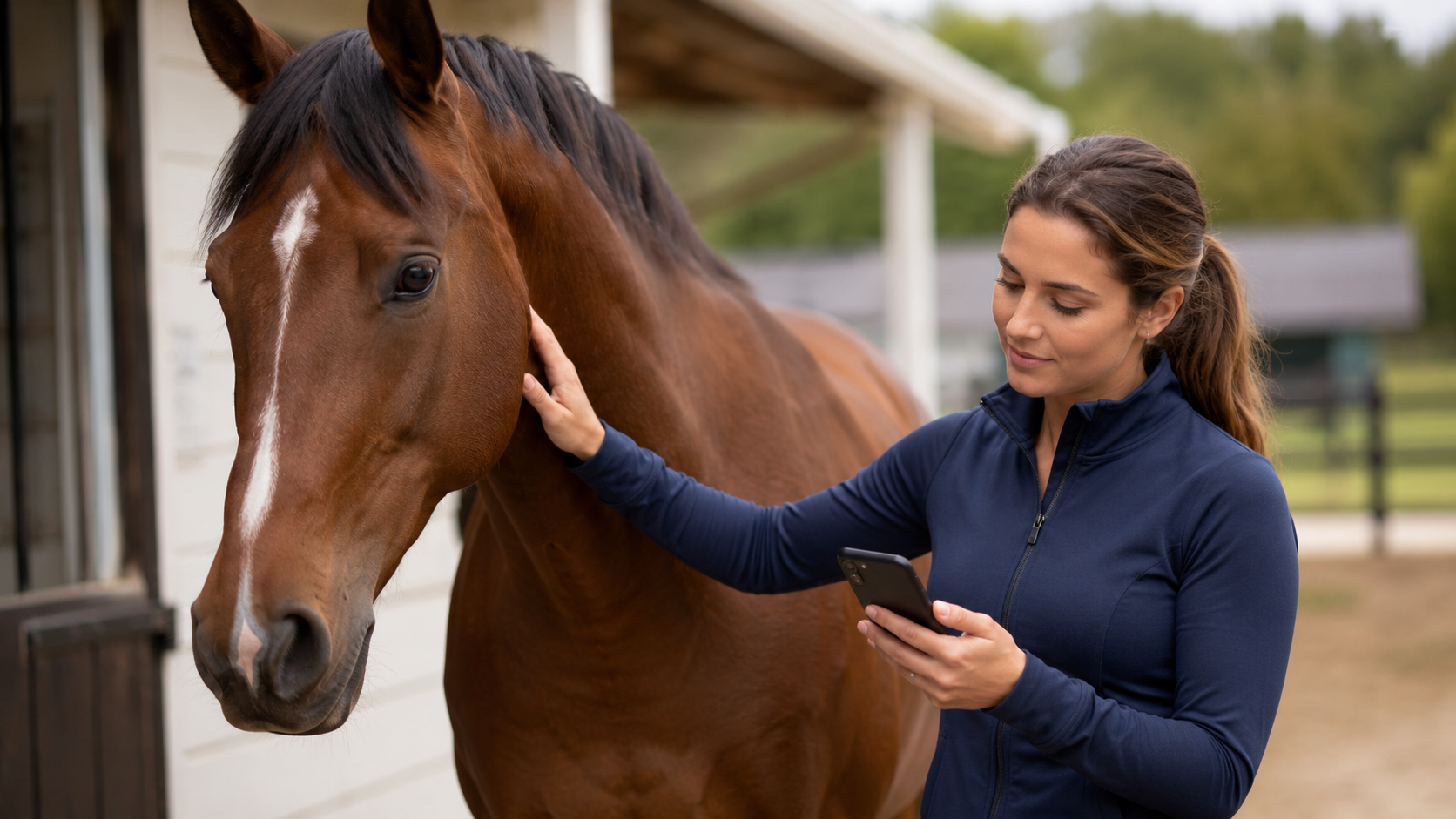
Equio lets you build a complete profile for a Tiger Horse: identity, weight, Body Condition Score, feeding, conditions, care reminders (vaccines, worming, trimming) and an exportable health log. The breed sets the identity; everyday decisions still depend on the real horse and your vet's advice.
- Record the activity level: rest, leisure, sport or breeding
- Add known conditions or sensitivities
- Scan feeds, plants and care products
- Keep reminders (vaccines, worming, trimming)
- Prepare a PDF export before a vet appointment
Frequently asked questions
What is special about the Tiger Horse's gaits?
The Tiger Horse is known for its natural four-beat gaits, particularly the 'Tiger Walk' and the 'Tiger Rack'. These gaits are very comfortable for the rider and allow for covering long distances without excessive fatigue.
Is the Tiger Horse suitable for beginners?
Thanks to its calm, intelligent, and cooperative temperament, the Tiger Horse can be an excellent choice for beginner riders or those seeking a reliable and easy-to-handle partner, provided they have appropriate guidance.
What is the most typical coat pattern of the Tiger Horse?
Spotted coat patterns, similar to those of the Appaloosa, are the most iconic of the Tiger Horse. Common patterns include leopard, blanket, snowflake, or marbled, often with Appaloosa characteristics such as white sclera, mottled skin, and striped hooves.
Is the Tiger Horse a rare breed?
Yes, the Tiger Horse is a relatively rare breed, primarily bred in the United States. Its population is limited, and it is not widely found outside its country of origin.
What are the exercise requirements of a Tiger Horse?
The Tiger Horse is an athletic horse that enjoys regular exercise. It needs daily physical activity to maintain its physical and mental fitness and to prevent obesity, especially if kept on pasture.