
Horse breed
Appaloosa
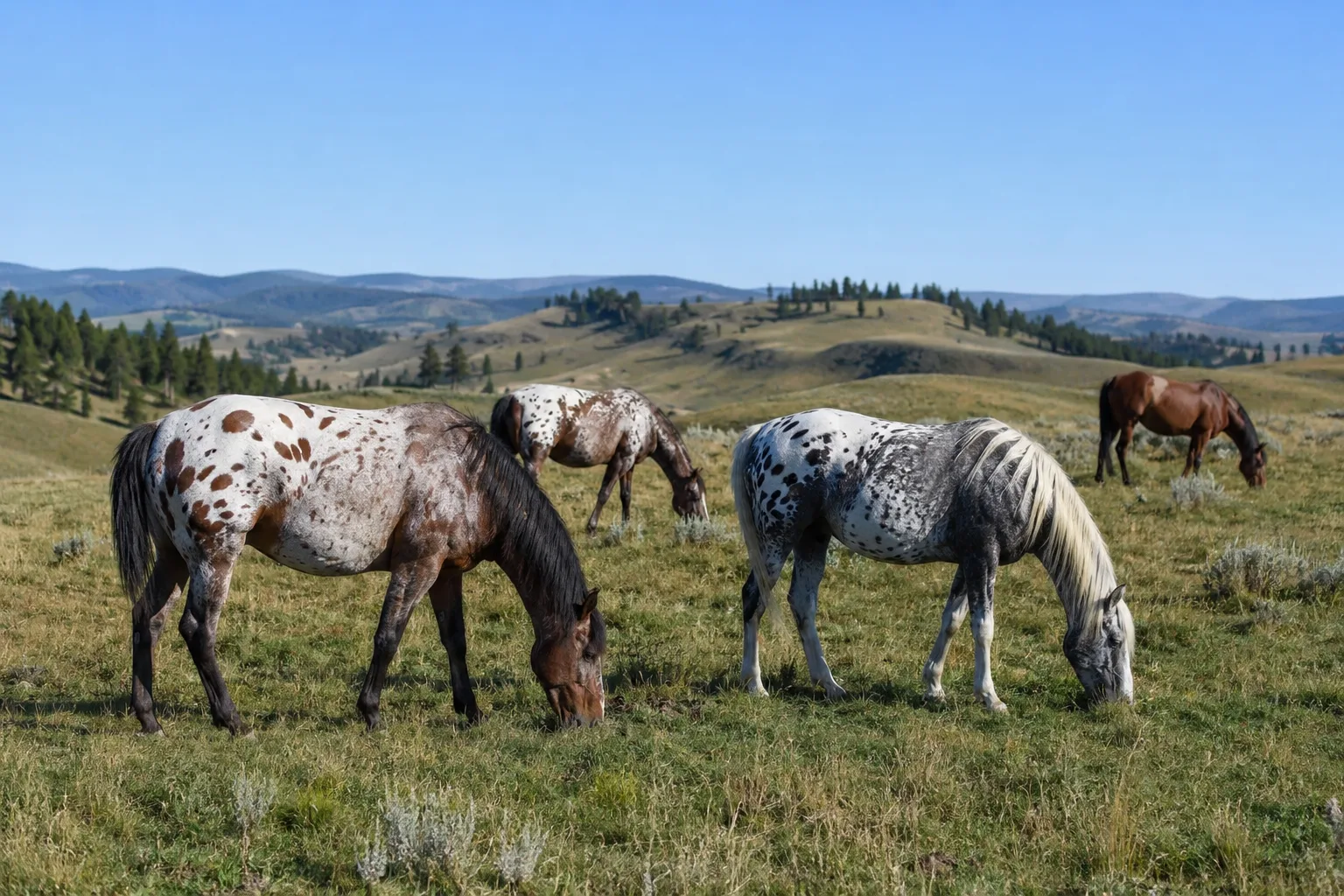
The Appaloosa originated from horses introduced by the Spanish to North America, which were selectively bred by the Nez Perce Native American tribe for their spotted coats and athletic qualities. After the defeat of the Nez Perce in 1877, the breed nearly disappeared.
The breed at a glance
The Appaloosa is renowned for its calm, intelligent, and willing temperament. It is a versatile horse, easy to train, demonstrating great loyalty and a good capacity for learning. It is courageous and enduring, making it an excellent partner for work and leisure.
- Category
- saddle horse
- Origin
- United States · 18th century (established by the Nez Perce), 20th century (modern recognition)
- Height at withers
- 142–163 cm
- Weight
- 450–570 kg
- Lifespan
- 25-30 years
- Common coats
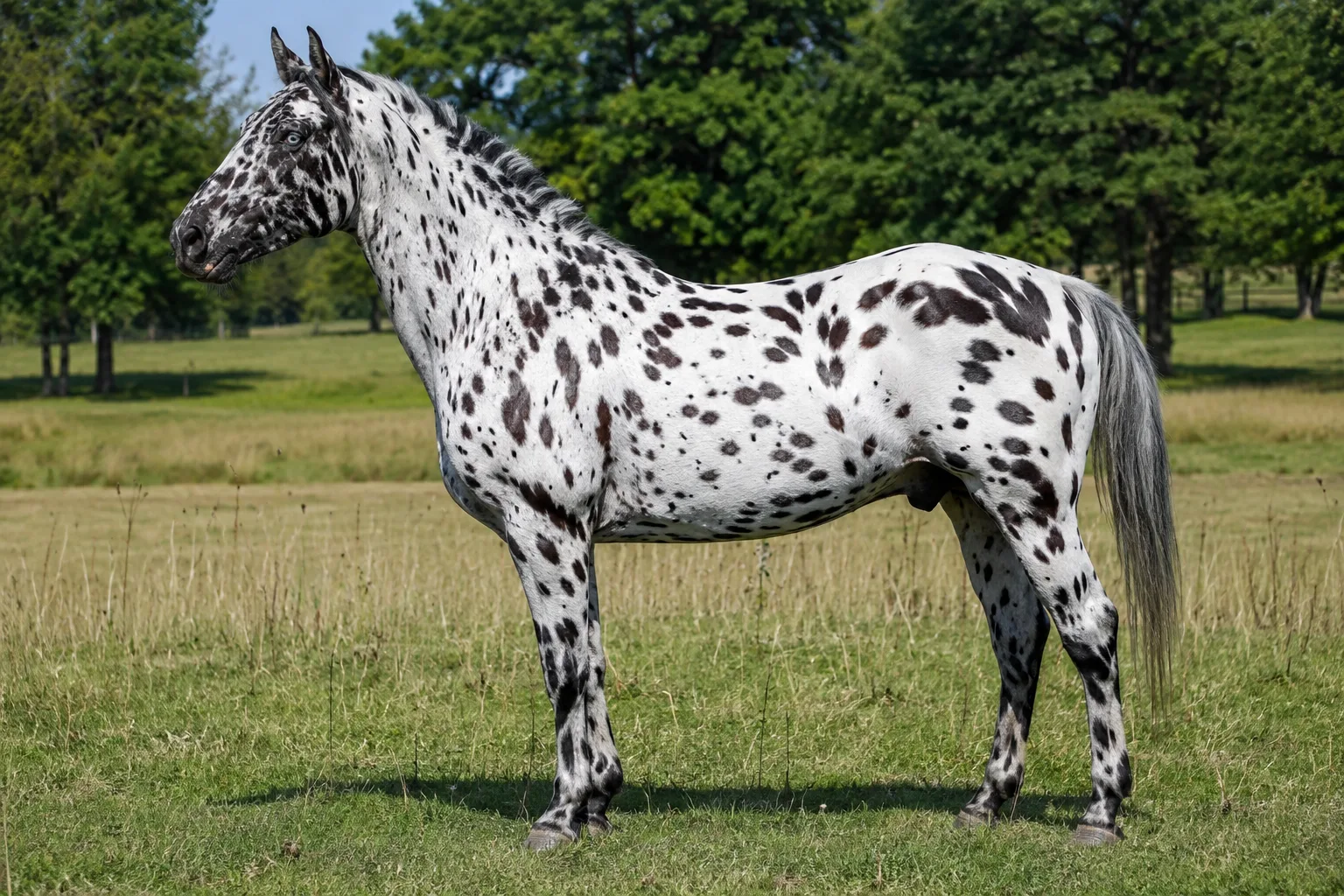
- leopard, blanket, snowflake, flecked, marbled, solid
- Disciplines
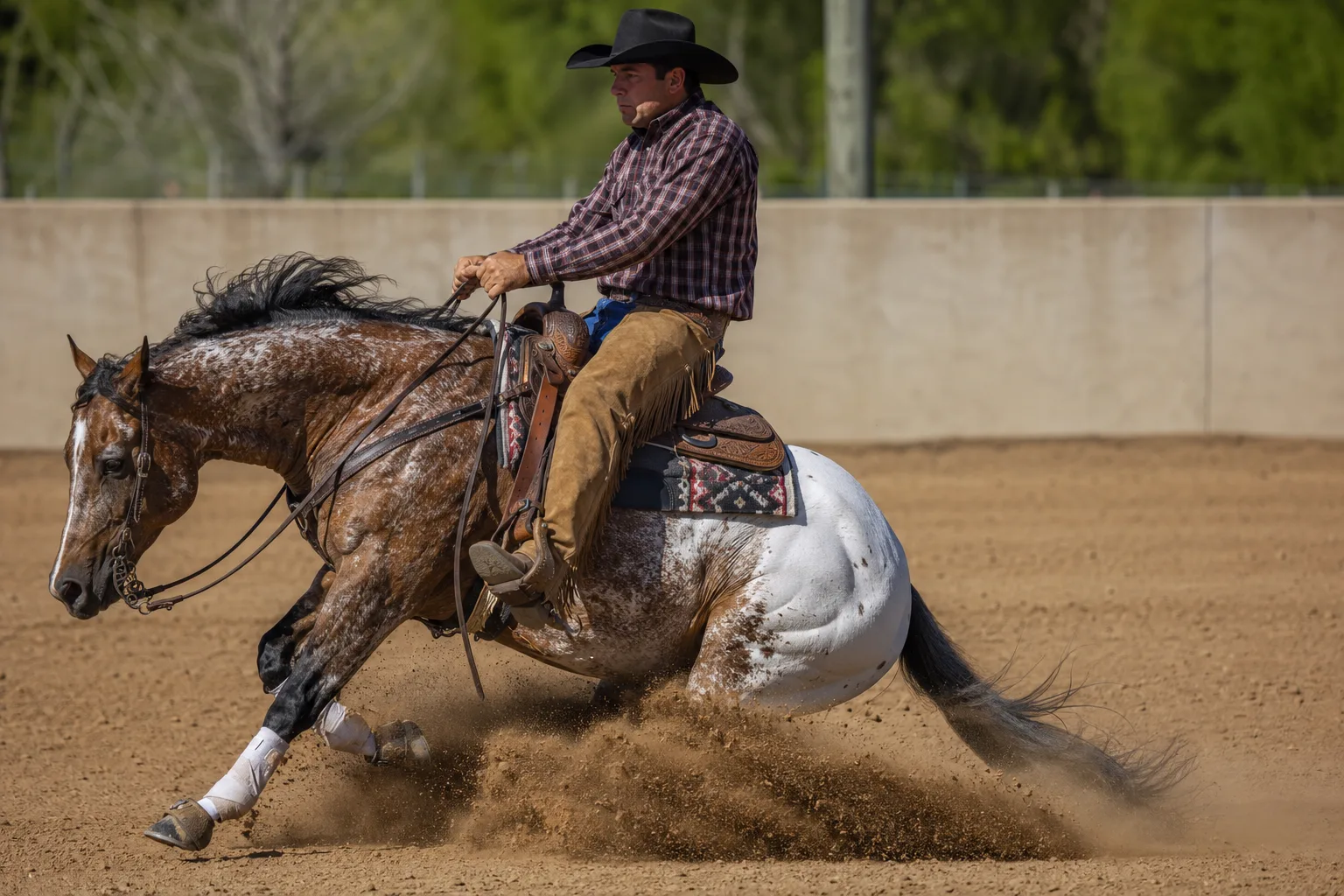
- western pleasure, reining, cutting, trail
- Other names
- Appaloosa Horse
Origin and history
The Appaloosa originated from horses introduced by the Spanish to North America, which were selectively bred by the Nez Perce Native American tribe for their spotted coats and athletic qualities. After the defeat of the Nez Perce in 1877, the breed nearly disappeared. It was saved and re-established in the early 20th century by American breeders, leading to the creation of the Appaloosa Horse Club in 1938 to preserve and promote the breed.

Conformation and physique
A medium-sized riding horse, well-muscled, with a strong yet elegant bone structure. It presents a harmonious silhouette, combining power and agility, typical of American working and pleasure horses.
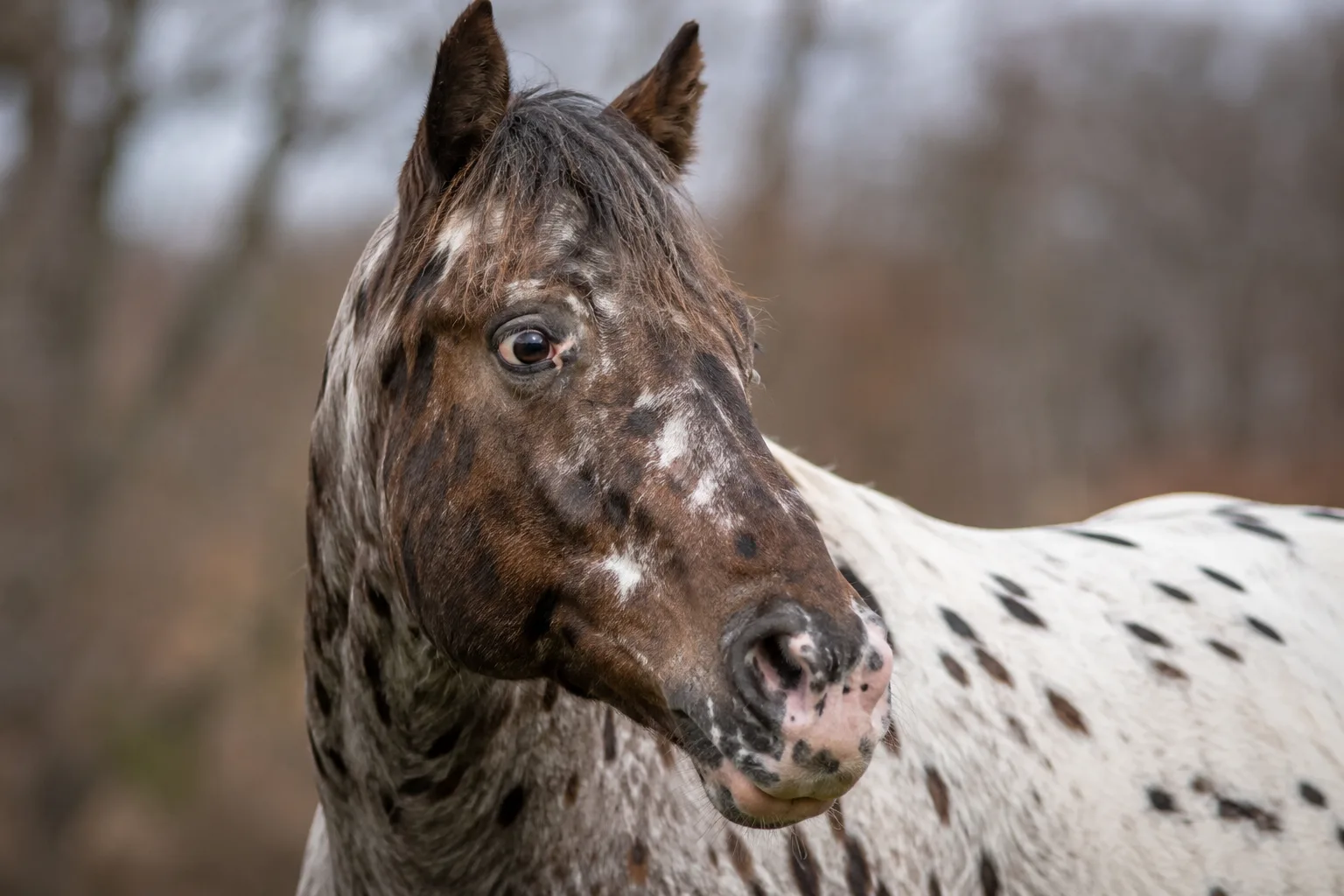
Expressive, well-proportioned head, with a straight or slightly concave profile. The eyes are often encircled with white (visible sclera), the nostrils are wide, and the ears are medium-sized and well-set.
Muscular, well-set neck, of medium length, blending harmoniously into a well-defined and extended wither. It is often arched in stallions.
Short, strong back, taut and muscular topline. Deep and wide chest, well-sprung ribs. Powerful and rounded croup, often double, with a low-set tail.
Strong limbs, with clean joints and well-defined tendons. Cannons are short and strong. Hooves are vertically striped with black and white, and are renowned for their hardness. Feathering is generally sparse.
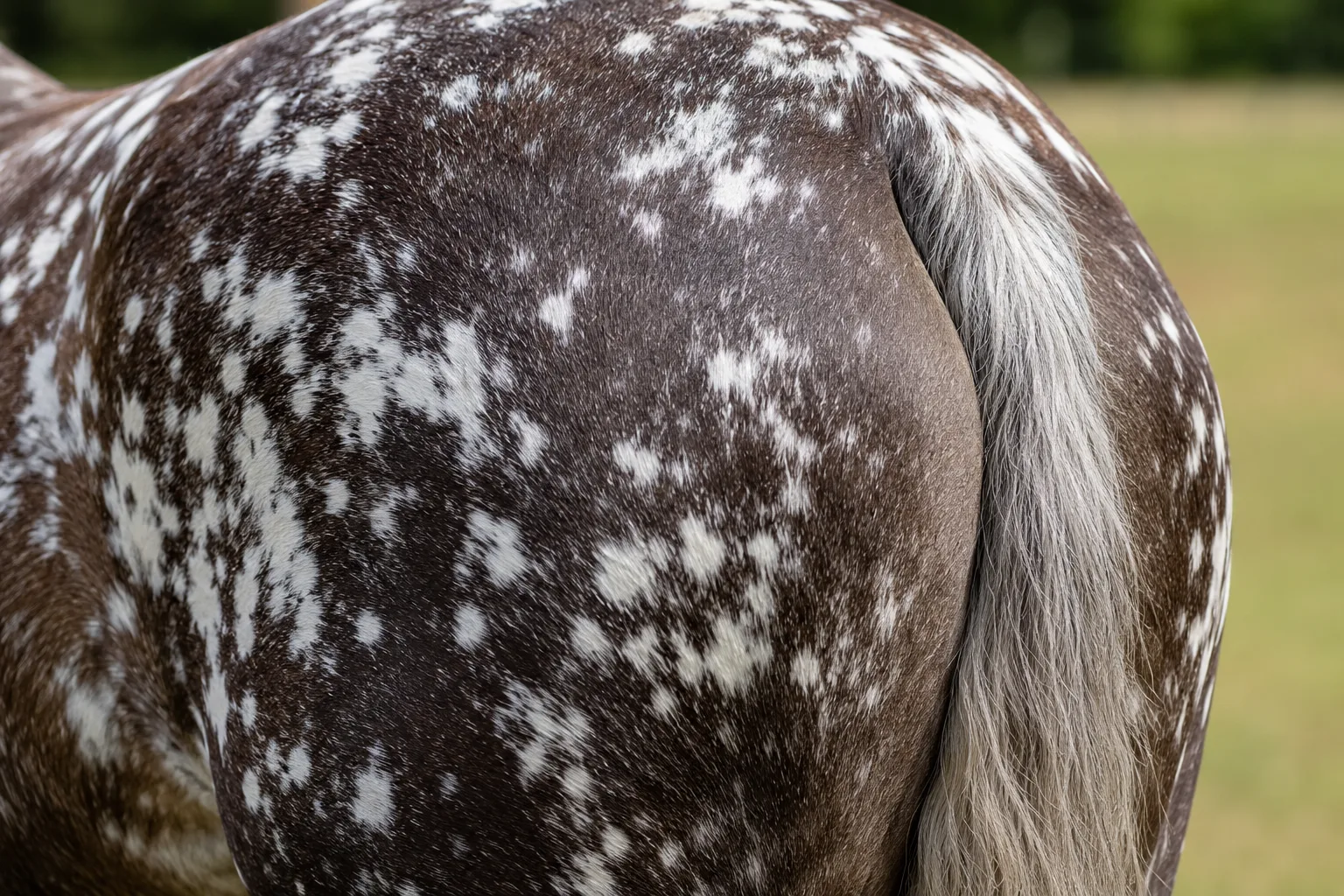
- Common coats: leopard, blanket, snowflake, flecked, marbled, solid
Temperament and aptitudes
The Appaloosa is renowned for its calm, intelligent, and willing temperament. It is a versatile horse, easy to train, demonstrating great loyalty and a good capacity for learning. It is courageous and enduring, making it an excellent partner for work and leisure.
The gaits are supple, expansive, and regular, with good hindquarter engagement. The Appaloosa is renowned for its energetic walk, comfortable trot, and balanced canter, as well as its ability to perform specific working gaits for reining or cutting.
- Uses: recreational riding, trail riding, working horse (ranch), show, driving
- Disciplines: western pleasure, reining, cutting, trail, barrel racing, show jumping, dressage, endurance riding
Feeding the Appaloosa
The Appaloosa is generally a horse with an efficient metabolism, inherited from its hardy origins. It tends to make good use of its feed ration and can easily become overweight if its diet is not adjusted to its activity level. A diet based on good quality forage (hay or grass) in sufficient quantity is paramount. Concentrates should be given sparingly and only according to the intensity of work, favoring formulas low in sugar and starch.
The Appaloosa, like many saddle horse breeds, can be predisposed to Equine Metabolic Syndrome (EMS) and laminitis, especially if overweight or sedentary. It is therefore crucial to monitor its weight and limit sugar and starch intake. Although less documented than for other breeds, vigilance is advised regarding carbohydrate sensitivity.
With Equio, every feed, supplement or treat is read against the horse's real profile (age, weight, Body Condition Score, conditions) — useful for a Appaloosa as soon as a metabolic or digestive sensitivity is known.
Health and points to watch
Particular attention should be paid to the Appaloosa's ocular health due to its predisposition to recurrent uveitis. Pink skin areas, especially around the eyes and muzzle, require sun protection. Weight and diet monitoring are essential to prevent metabolic disorders.
- Documented genetic disorders: CSNB (Congenital Stationary Night Blindness), HERDA (Hereditary Equine Regional Dermal Asthenia) - rare but possible, PSSM1 (Polysaccharide Storage Myopathy type 1) - rare but possible
- More frequent conditions: Equine Recurrent Uveitis (ERU) or 'moon blindness' (particularly individuals with little pigment around the eyes), sun sensitivity on depigmented areas
Care and grooming
Appaloosa hooves are known for their hardness and require regular trimming like any horse. The mane and tail are often fine and sparse, requiring gentle care to prevent breakage. The spotted coat does not require specific care, but pink skin areas may need sun protection. Clipping is possible but can alter the appearance of the coat patterns.
Did you know?
- The visible white sclera around the eye, striped hooves, and mottled skin (particularly around the muzzle and genitals) are distinctive characteristics of the breed, even in solid-colored Appaloosas.
- The name 'Appaloosa' comes from the Palouse River, which flowed through the Nez Perce territory in the northwestern United States.
- There are nine recognized Appaloosa coat patterns, ranging from 'leopard' (dark spots on a light background) to 'blanket' (white covering on the hindquarters with or without spots).
The Appaloosa and how to track it
The Appaloosa is well represented in France, with active breeding farms and a community of enthusiasts. It is appreciated for its versatility and temperament, both in Western and classical or leisure riding.
Equio lets you build a complete profile for a Appaloosa: identity, weight, Body Condition Score, feeding, conditions, care reminders (vaccines, worming, trimming) and an exportable health log. The breed sets the identity; everyday decisions still depend on the real horse and your vet's advice.
- Record the activity level: rest, leisure, sport or breeding
- Add known conditions or sensitivities
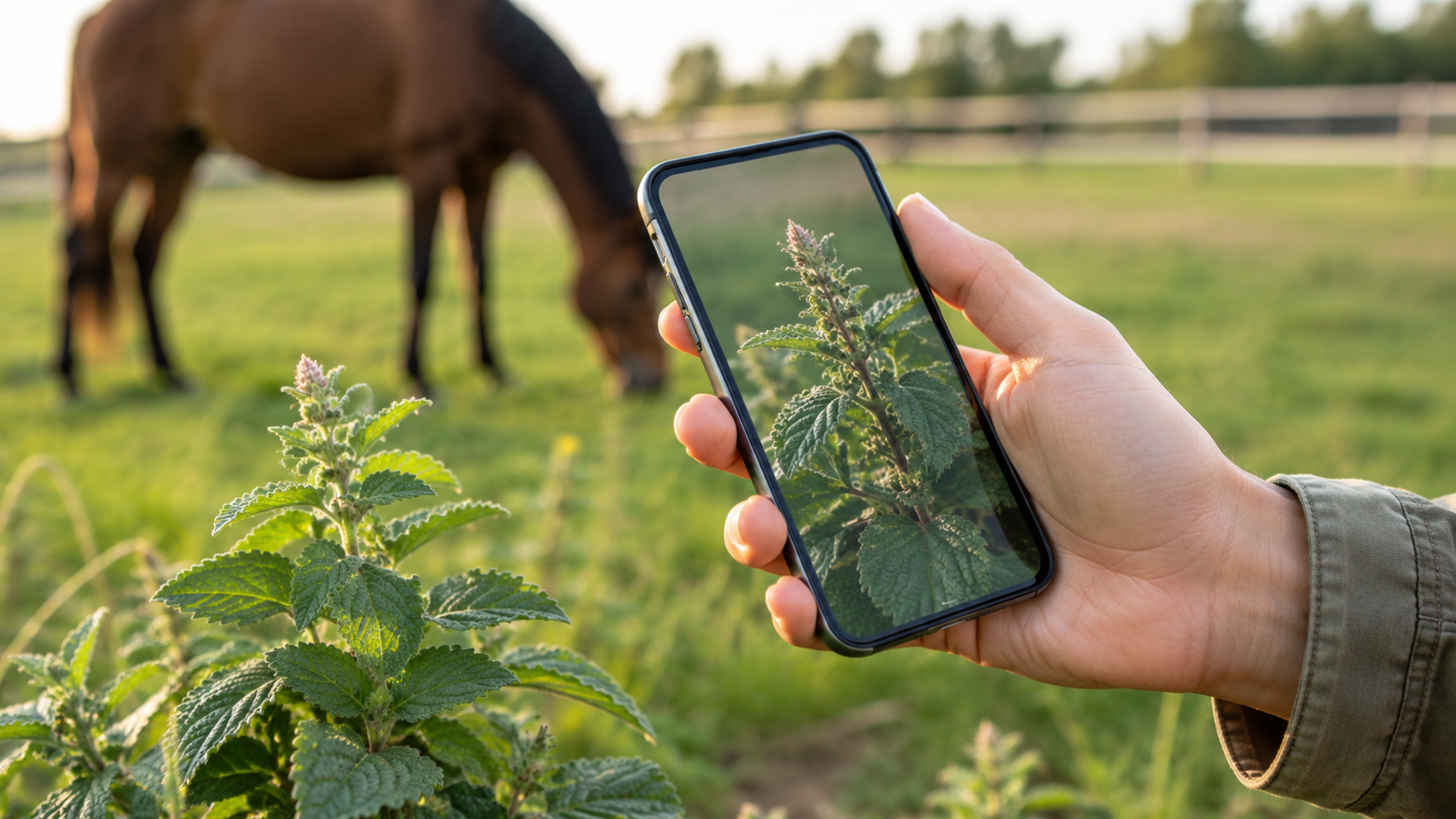
- Scan feeds, plants and care products
- Keep reminders (vaccines, worming, trimming)
- Prepare a PDF export before a vet appointment
Frequently asked questions
What is the average price of an Appaloosa?
The price of an Appaloosa varies considerably depending on its age, training level, lineage (performance or leisure lines), and coat pattern. A foal can cost from 2,000 to 5,000 euros, while a well-trained adult horse can reach 5,000 to 15,000 euros, or even more for competition horses.
Is the Appaloosa a good horse for beginners?
Yes, the Appaloosa is often considered an excellent horse for beginners and leisure riders due to its calm, intelligent temperament and willingness to cooperate. Its versatility also makes it suitable for many disciplines, allowing the rider to explore different activities.
How to care for an Appaloosa's spotted coat?
Caring for an Appaloosa's spotted coat does not differ from that of any other horse. Regular brushing is sufficient to maintain coat cleanliness and shine. Pink skin areas, often present under white spots, can be sensitive to sunburn and require appropriate protection in summer.
Is the Appaloosa exclusively a Western horse?
No, although the Appaloosa is very popular in Western disciplines due to its origins and aptitudes, it also excels in many classical disciplines such as show jumping, dressage, endurance riding, and driving. Its versatility makes it a horse suitable for a wide variety of uses.
What are the particularities of the Appaloosa's eyes?
A particularity of the Appaloosa is the frequent presence of a visible white sclera around the iris, similar to that of humans. This gives the impression that the horse has a 'human eye'. This characteristic is a distinctive breed trait, but it is also associated with a predisposition to Equine Recurrent Uveitis, requiring careful monitoring.