
Horse breed
Wielkopolski
The Wielkopolski breed was developed in Poland after World War II, primarily in the Wielkopolska (Greater Poland) region. It originated from the crossbreeding of two extinct Polish breeds, the Poznan and the Mazury (or Masuren), which themselves were influenced by warmblood horses such as the Thoroughbred, Hanoverian, Trakehner, and Arabian.

The breed at a glance
The Wielkopolski is renowned for its balanced, intelligent, and willing temperament. It is generally docile, easy to train, and eager to please, making it suitable for a variety of riders. It is a courageous and enduring horse at work.
- Category
- sport horse
- Origin
- Poland · Mid-20th century
- Height at withers
- 160–170 cm
- Weight
- 500–600 kg
- Lifespan
- 20-25 years
- Common coats
- bay, chestnut, black, grey
- Disciplines
- show jumping, dressage, eventing, driving
- Other names
- Wielkopolski Horse
Origin and history
The Wielkopolski breed was developed in Poland after World War II, primarily in the Wielkopolska (Greater Poland) region. It originated from the crossbreeding of two extinct Polish breeds, the Poznan and the Mazury (or Masuren), which themselves were influenced by warmblood horses such as the Thoroughbred, Hanoverian, Trakehner, and Arabian. The goal was to create a versatile, robust, and elegant riding and sport horse. The breed was officially recognized in the 1960s.
Conformation and physique
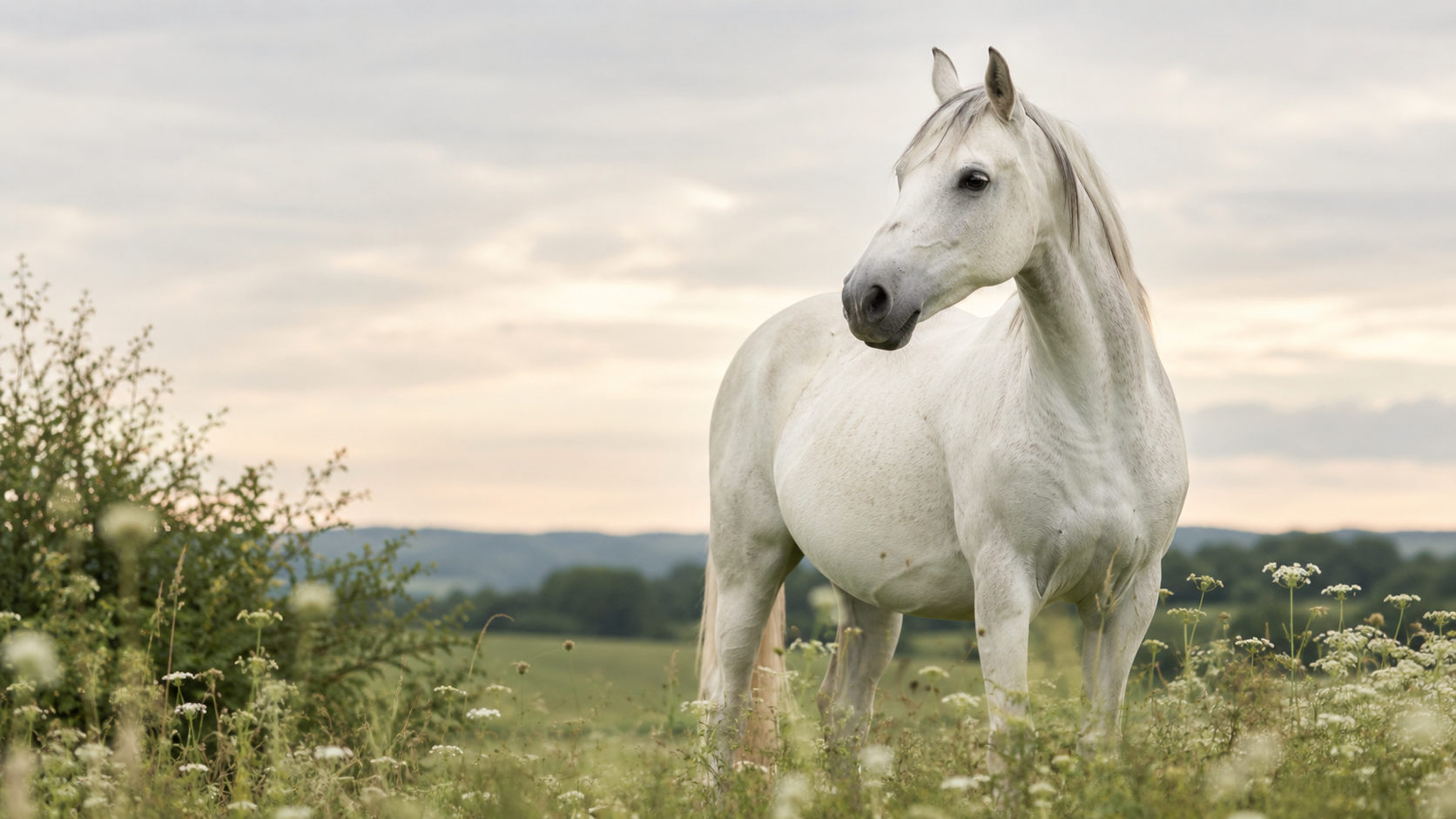
The Wielkopolski is a medium to large-sized horse with a harmonious and athletic build. It possesses a solid yet not heavy bone structure, typical of a modern sport horse, combining elegance and power.
The head is medium-sized, well-proportioned, with a straight or slightly convex profile. The eyes are large and expressive, the ears well-set and mobile. The muzzle is broad and the nostrils open.
The neck is long, well-muscled, and well-set, tapering towards the head. It is carried elegantly, contributing to the horse's overall balance. The Withers are long and well-defined.
The back is straight and strong, with a harmonious topline. The chest is deep and broad, ensuring good lung capacity. The croup is long, muscular, and slightly sloped, with a well-set tail.
The limbs are clean, strong, and well-muscled, with large, healthy joints. The cannons are of good length and the tendons are well-defined. The feet are solid and well-formed. Feathering is generally sparse.
- Common coats: bay, chestnut, black, grey
Temperament and aptitudes
The Wielkopolski is renowned for its balanced, intelligent, and willing temperament. It is generally docile, easy to train, and eager to please, making it suitable for a variety of riders. It is a courageous and enduring horse at work.
The gaits are ample, supple, and energetic, with good hindquarter engagement. The walk is regular, the trot is elevated, and the canter is balanced and powerful, making it an excellent sport horse.
- Uses: saddle horse, sport horse, light driving, leisure
- Disciplines: show jumping, dressage, eventing, driving, endurance riding
Feeding the Wielkopolski
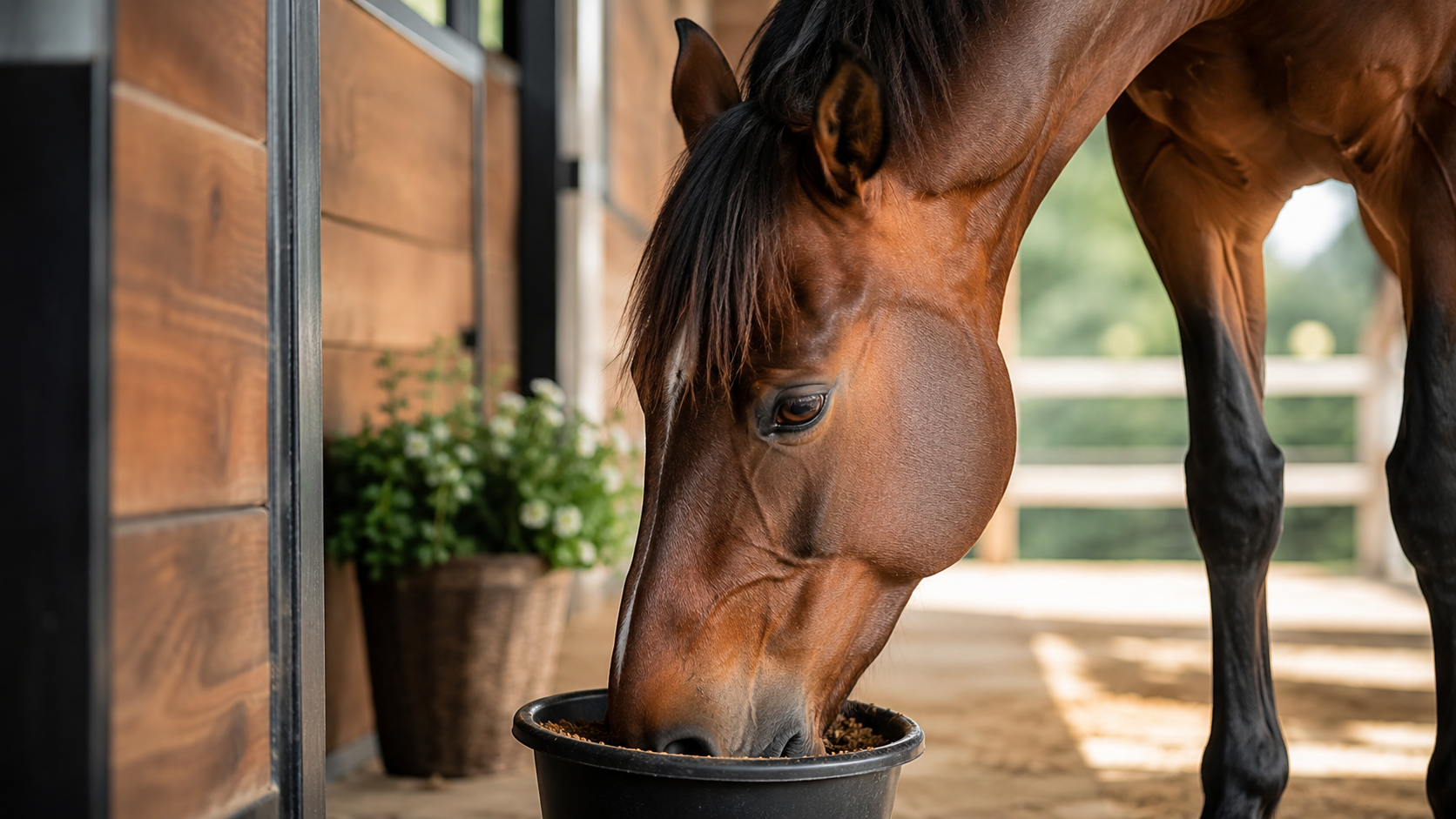
As a sport horse, the Wielkopolski has energy requirements that vary considerably with its activity level. It has a demanding athlete's metabolism. A balanced diet, rich in good quality forage (hay or grass), is paramount. Appropriate concentrates (oat flakes, specific pellets for sport horses) are necessary to cover energy and protein needs during intense work, taking care not to overfeed to avoid obesity.
Although the Wielkopolski is not specifically documented as predisposed to major metabolic disorders like PSSM or EMS, like any sport horse, it can be sensitive to excesses of sugars and starch. Careful dietary management is recommended to prevent the risks of colic, laminitis, or digestive issues related to an unbalanced diet.
With Equio, every feed, supplement or treat is read against the horse's real profile (age, weight, Body Condition Score, conditions) — useful for a Wielkopolski as soon as a metabolic or digestive sensitivity is known.
Health and points to watch
Particular attention must be paid to joint and tendon health, especially in sport horses subjected to intense work. Regular veterinary check-ups, dental care, and rigorous hoof management are essential to maintain the horse's good health.
- More frequent conditions: sport-related locomotor disorders (osteoarthritis, tendinitis) if poorly managed, dental problems (as with all horses)
Care and grooming
The care of the Wielkopolski is similar to that of other sport horses. Regular hoof trimming is crucial to maintain their integrity. The mane and tail can be groomed for aesthetic and practical reasons. The coat requires regular brushing, and clipping may be considered in winter for horses in intense work to facilitate drying and thermal regulation.
Did you know?
- The name 'Wielkopolski' literally means 'from Greater Poland,' the region where the breed was primarily developed.
- Before World War II, the Poznan and Mazury breeds, ancestors of the Wielkopolski, were already recognized for their qualities as riding and harness horses.
- The Wielkopolski is sometimes nicknamed the 'Polish sport horse' due to its versatile aptitudes.
The Wielkopolski and how to track it
The Wielkopolski breed is not widely represented in France, where breeding is very limited. The few individuals present are generally imported and used for sport or leisure by connoisseurs.
Equio lets you build a complete profile for a Wielkopolski: identity, weight, Body Condition Score, feeding, conditions, care reminders (vaccines, worming, trimming) and an exportable health log. The breed sets the identity; everyday decisions still depend on the real horse and your vet's advice.
- Record the activity level: rest, leisure, sport or breeding
- Add known conditions or sensitivities
- Scan feeds, plants and care products
- Keep reminders (vaccines, worming, trimming)
- Prepare a PDF export before a vet appointment
Frequently asked questions
Is the Wielkopolski a good horse for beginners?
Thanks to its balanced temperament and docility, the Wielkopolski can be suitable for supervised beginner riders, provided they are accompanied by a professional. Its intelligence and willingness to please facilitate its learning and handling.
What is the difference between a Wielkopolski and a Malopolski?
The Wielkopolski originates from western Poland and descends from the Poznan and Mazury breeds, with a strong influence from German warmblood horses. The Malopolski, on the other hand, comes from southeastern Poland and is more influenced by the Arabian Thoroughbred and Shagya Arabian, which gives it a lighter and more oriental build.
Is the Wielkopolski cold-hardy?
Originating from Poland, the Wielkopolski is well-adapted to temperate climates and can withstand cold temperatures, especially if acclimatized and provided with shelter. Its winter coat offers good natural protection.
What is the average price of a Wielkopolski?
The price of a Wielkopolski can vary considerably depending on its age, training level, lineage (sporting bloodlines), and performance. In Poland, prices may be more affordable than in Western Europe, but importation adds costs. It is difficult to provide an average without further details.
Is the Wielkopolski a versatile horse?
Yes, versatility is one of the Wielkopolski's main qualities. It excels in many equestrian disciplines, from show jumping to dressage, as well as eventing and driving, making it an excellent partner for sport and leisure.