
Horse breed
Hanoverian
Hanoverian breeding began in 1735 with the founding of the State Stud of Celle, in Lower Saxony. Initially, the goal was to produce a robust carriage and cavalry horse, resulting from crosses between local mares and Holsteiner, Thoroughbred, and Trakehner stallions.

The breed at a glance
The Hanoverian is renowned for its balanced, intelligent, and willing temperament. It is a courageous, responsive, and eager-to-please horse, making it an excellent partner for sport work. It is generally calm and easy to handle, but possesses the necessary energy for performance.
- Category
- sport horse
- Origin
- Germany · 18th century
- Height at withers
- 160–175 cm
- Weight
- 500–650 kg
- Lifespan
- 25-30 years
- Common coats
- bay, chestnut, black, grey
- Disciplines
- dressage, show jumping, eventing, driving
- Other names
- Hanoverian
Origin and history
Hanoverian breeding began in 1735 with the founding of the State Stud of Celle, in Lower Saxony. Initially, the goal was to produce a robust carriage and cavalry horse, resulting from crosses between local mares and Holsteiner, Thoroughbred, and Trakehner stallions. In the 20th century, the focus shifted towards the modern sport horse, with the introduction of Thoroughbred and Anglo-Arabian blood. The breed is officially recognized by the Verband Hannoverscher Warmblutzüchter (Hanoverian Warmblood Breeders' Association).

Conformation and physique
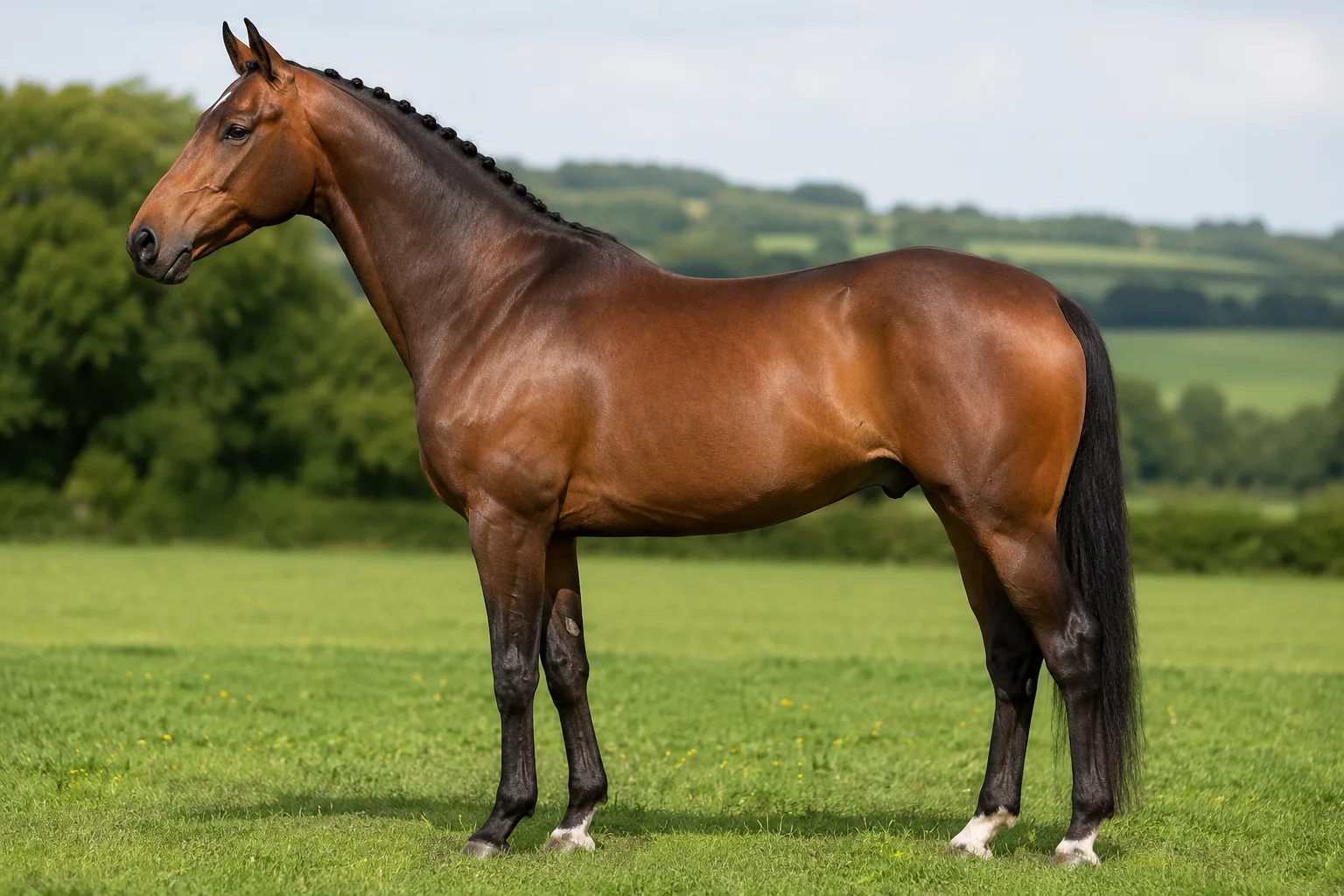
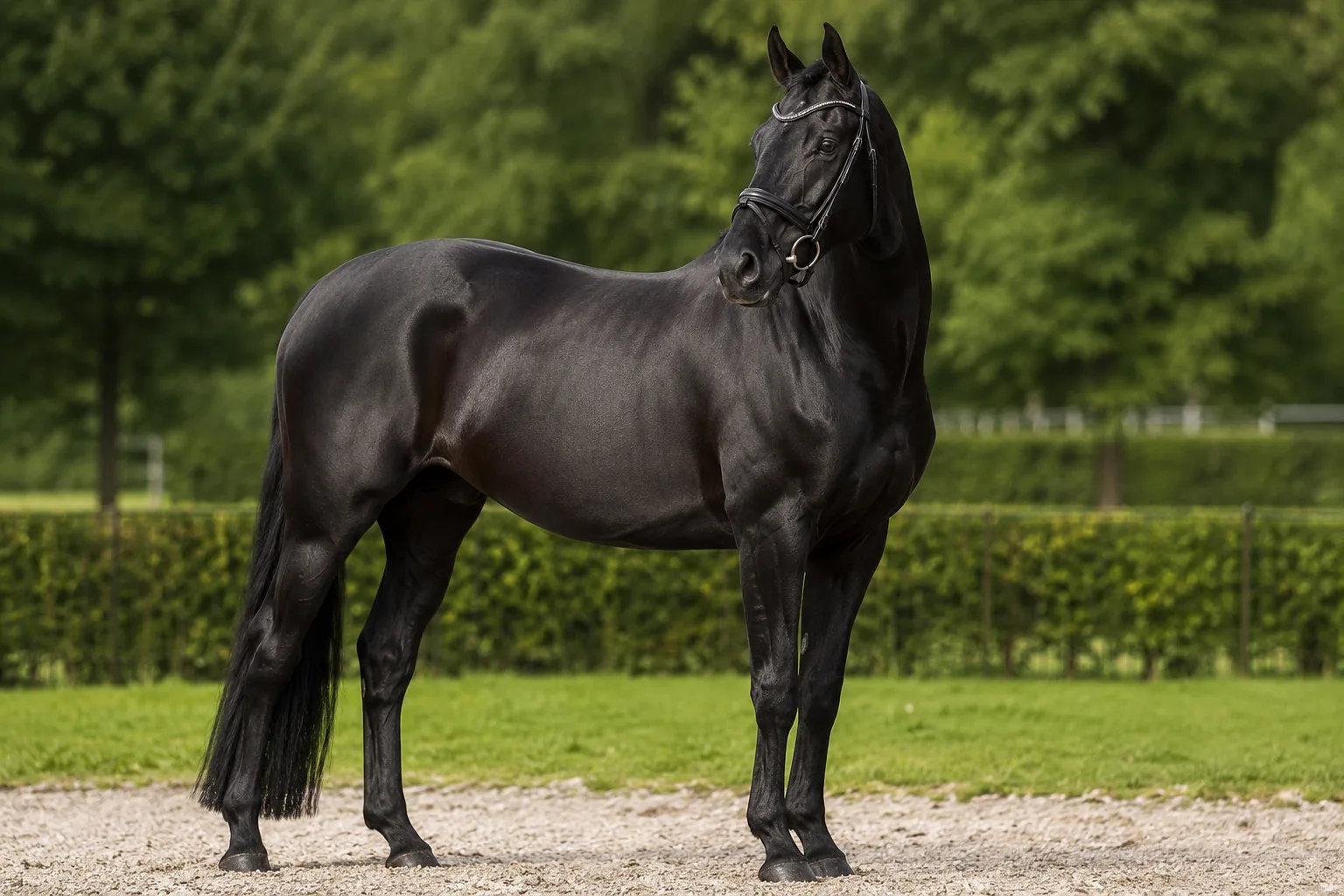
The Hanoverian is a large-framed, harmonious, and athletic sport horse, with a solid yet elegant bone structure. Its silhouette is that of a powerful and well-balanced horse, designed for performance.
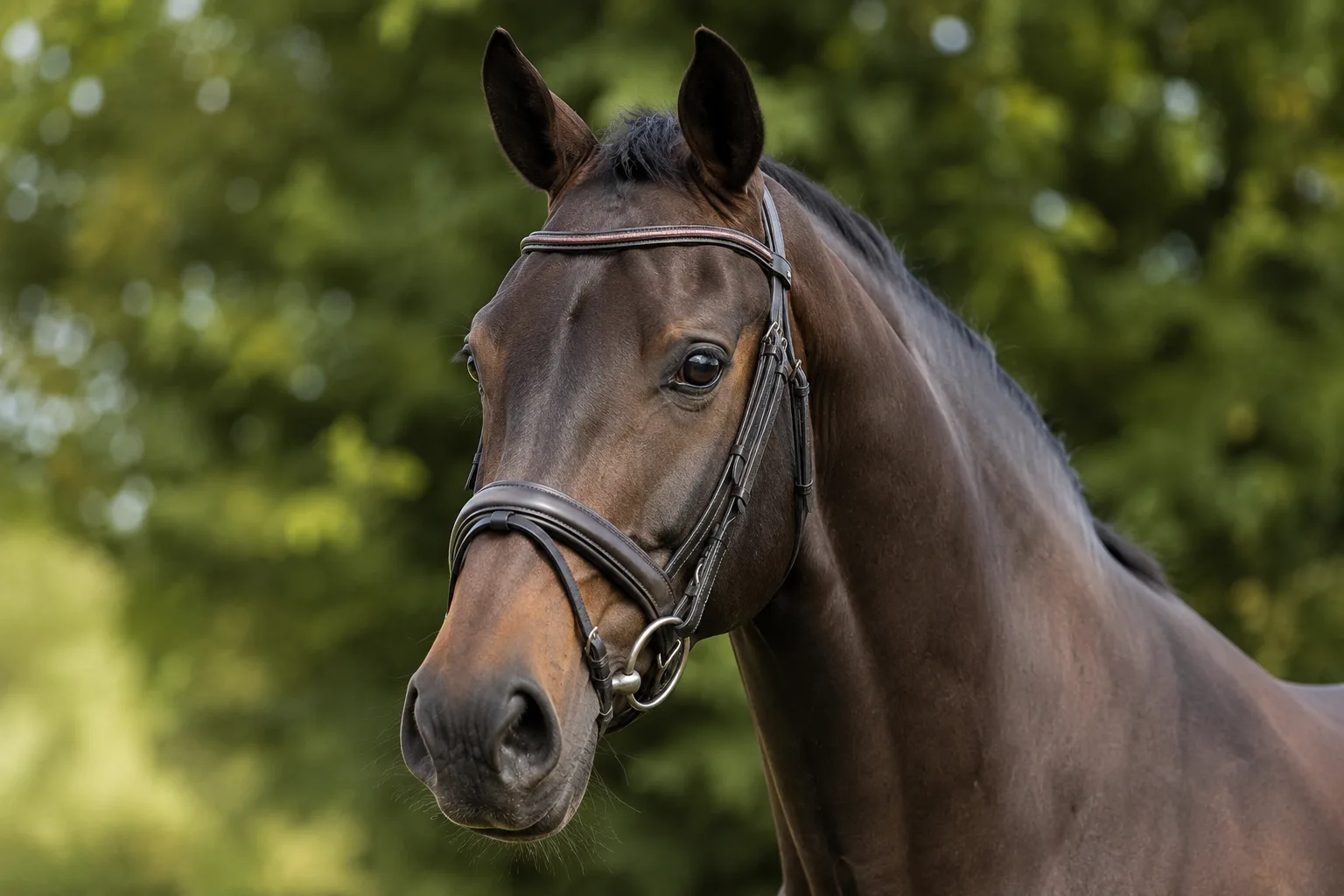
The head is expressive, medium-sized, with a straight or slightly concave profile. The eyes are large and lively, the ears well-set and mobile. The muzzle is broad and the nostrils open.
The neck is long, well-muscled, and well-set, blending harmoniously into a long and prominent wither. It is carried elegantly, promoting balance and suppleness.
The back is strong and short, the topline is taut and muscular. The chest is deep and broad, providing good girth clearance. The croup is long, muscular, and slightly sloped, with a well-set tail.
The limbs are clean, strong, and well-conformed, with large and well-defined joints. The cannons are short and the tendons well-defined. The feet are solid and well-shaped. Feathering is generally sparse.
- Common coats: bay, chestnut, black, grey
Temperament and aptitudes
The Hanoverian is renowned for its balanced, intelligent, and willing temperament. It is a courageous, responsive, and eager-to-please horse, making it an excellent partner for sport work. It is generally calm and easy to handle, but possesses the necessary energy for performance.
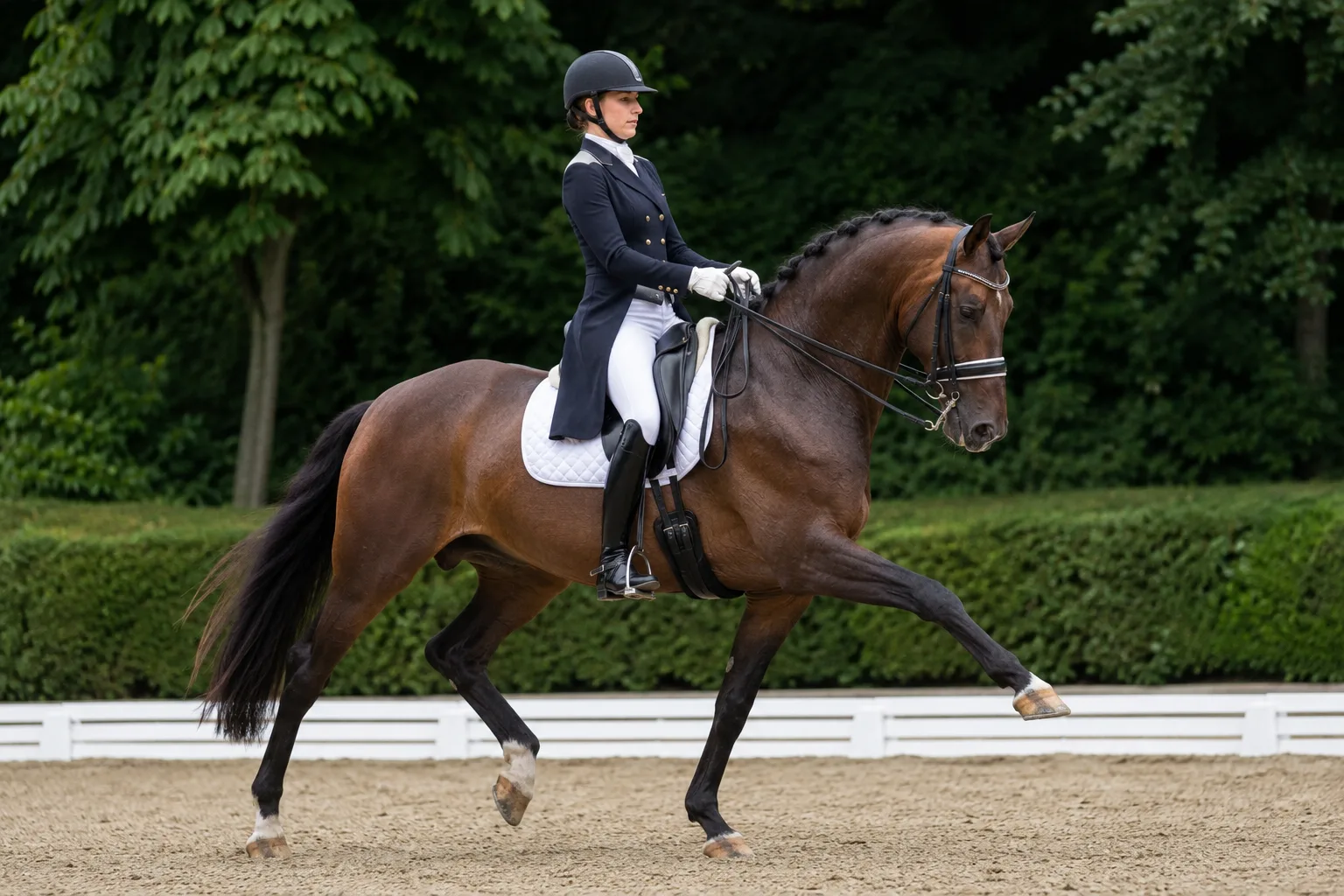
The Hanoverian's gaits are expansive, supple, and energetic, with excellent balance and great impulsion. The walk is regular, the trot is expressive, and the canter is powerful and rhythmic, with good ground cover.
- Uses: cavalry horse (historical), carriage horse (historical), sport horse (current)
- Disciplines: dressage, show jumping, eventing, driving
Feeding the Hanoverian
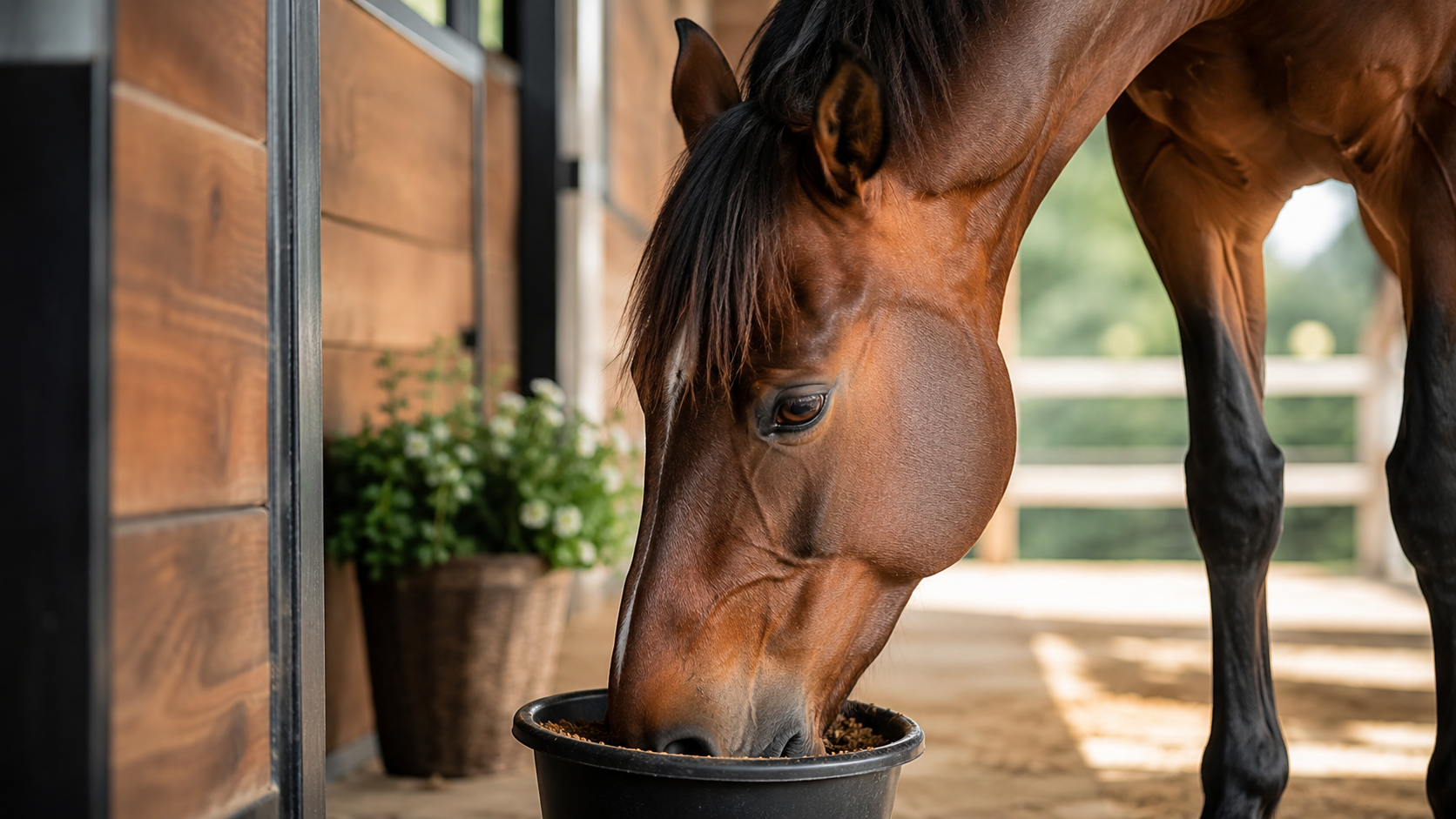
The Hanoverian, as a sport horse, has high energy requirements, especially if subjected to intense work. Its metabolism is that of a demanding athlete. It requires a balanced diet, rich in good quality forage (ad libitum hay), supplemented with concentrates adapted to its activity level. It does not have a particular tendency to become overweight if worked regularly, but monitoring is always advisable.
The Hanoverian breed is not documented as having specific and generalized predispositions to metabolic risks such as laminitis, Equine Metabolic Syndrome (EMS), or PSSM. However, like any sport horse, poorly managed feeding (excess sugar/starch, mineral imbalance) can lead to health problems.
With Equio, every feed, supplement or treat is read against the horse's real profile (age, weight, Body Condition Score, conditions) — useful for a Hanoverian as soon as a metabolic or digestive sensitivity is known.
Health and points to watch
Particular attention must be paid to limb conformation and bone development in young horses to prevent OCD. Regular monitoring of joints and tendons is essential for sport horses. Stress and dietary management are crucial for preventing gastric ulcers.
- Documented genetic disorders: OCD (Osteochondritis Dissecans) - general predisposition in large sport horses
- More frequent conditions: locomotor disorders related to athletic exertion (osteoarthritis, tendinitis), gastric ulcers (in stressed sport horses)
Care and grooming
Hanoverian care is similar to that of other sport horses. Regular hoof trimming is essential to maintain good limb conformation. The mane, tail, and coat require daily grooming to maintain their shine. Clipping is common in winter for horses in work. Particular attention to the limbs after exertion is recommended.
Did you know?
- The Hanoverian is one of the most successful breeds in the world in Olympic disciplines, with numerous gold medalists in dressage and show jumping.
- The Hanoverian studbook is one of the oldest and most rigorous in Germany, ensuring strict selection of breeding stock.
- The State Stud of Celle, the cradle of the breed, organizes highly renowned annual auctions of foals and young horses.
The Hanoverian and how to track it
The Hanoverian is well-represented in France, appreciated for its athletic qualities. Many French breeders offer Hanoverians or horses resulting from crosses with this breed, particularly for dressage and show jumping.
Equio lets you build a complete profile for a Hanoverian: identity, weight, Body Condition Score, feeding, conditions, care reminders (vaccines, worming, trimming) and an exportable health log. The breed sets the identity; everyday decisions still depend on the real horse and your vet's advice.
- Record the activity level: rest, leisure, sport or breeding
- Add known conditions or sensitivities
- Scan feeds, plants and care products
- Keep reminders (vaccines, worming, trimming)
- Prepare a PDF export before a vet appointment
Frequently asked questions
What is the average price of a Hanoverian?
The price of a Hanoverian varies considerably depending on its age, level of training, lineage (bloodline, parental performance), and athletic potential. A young, unbroken horse can cost from 5,000 to 15,000 euros, while a proven competition horse can reach several tens of thousands of euros, or even more for exceptional individuals.
Is the Hanoverian suitable for beginner riders?
Although the Hanoverian is renowned for its good temperament, its size and energy make it a horse better suited for riders who already have some experience. A beginner supervised by a professional can learn with a well-trained and calm Hanoverian, but it is preferable to have a solid foundation to manage its power and potential.
How to recognize a Hanoverian?
A Hanoverian can be recognized by its athletic and harmonious conformation, expressive head, elegant neck, and expansive gaits. The hot brand in the shape of a crowned 'H' on the left thigh is the distinctive mark of the breed, although not all Hanoverians are branded this way, especially if they were born outside Germany.
What are the main qualities of the Hanoverian in dressage?
In dressage, the Hanoverian excels due to its naturally expansive and supple gaits, its ability to collect, its balance, and its great aptitude for learning. Its willing temperament and responsiveness to aids make it an ideal partner for advanced dressage movements.
Is the Hanoverian a good family horse?
If the Hanoverian is well-trained and regularly worked, its calm and balanced temperament can make it a good family horse. However, its size and energy require an experienced rider. It is primarily a sport horse and will thrive best in an environment where it can express its athletic abilities.