
Horse breed
Holsteiner
The Holsteiner is one of the oldest German warmblood horse breeds, with origins dating back to the 13th century in the Schleswig-Holstein region. Initially bred by the monks of Uetersen Monastery, it was a robust agricultural workhorse and a warhorse.

The breed at a glance
The Holsteiner is renowned for its balanced, intelligent, and willing temperament. It is courageous, responsive, and possesses a great aptitude for work, making it a reliable and high-performing partner for equestrian sports disciplines.
- Category
- sport horse
- Origin
- Germany · 13th century (foundations), 19th century (modern establishment)
- Height at withers
- 163–173 cm
- Weight
- 550–650 kg
- Lifespan
- 25-30 years
- Common coats
- bay, chestnut, grey, black
- Disciplines
- show jumping, dressage, eventing, driving
Origin and history
The Holsteiner is one of the oldest German warmblood horse breeds, with origins dating back to the 13th century in the Schleswig-Holstein region. Initially bred by the monks of Uetersen Monastery, it was a robust agricultural workhorse and a warhorse. In the 19th century, the introduction of Thoroughbred and Yorkshire Coach Horse blood transformed the Holsteiner into an elegant and high-performing riding horse. The breed is officially recognized and managed by the Verband der Züchter des Holsteiner Pferdes.
Conformation and physique
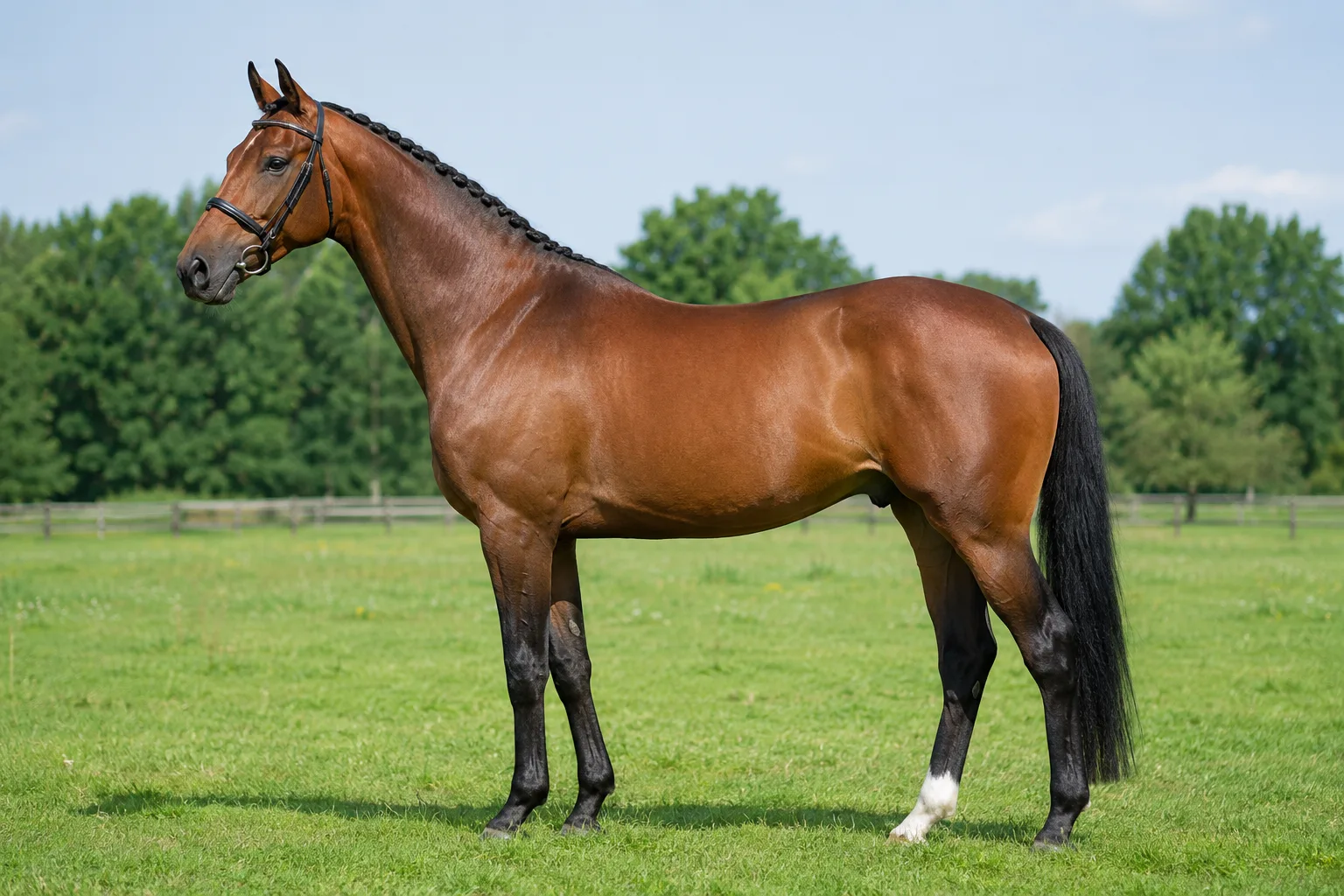
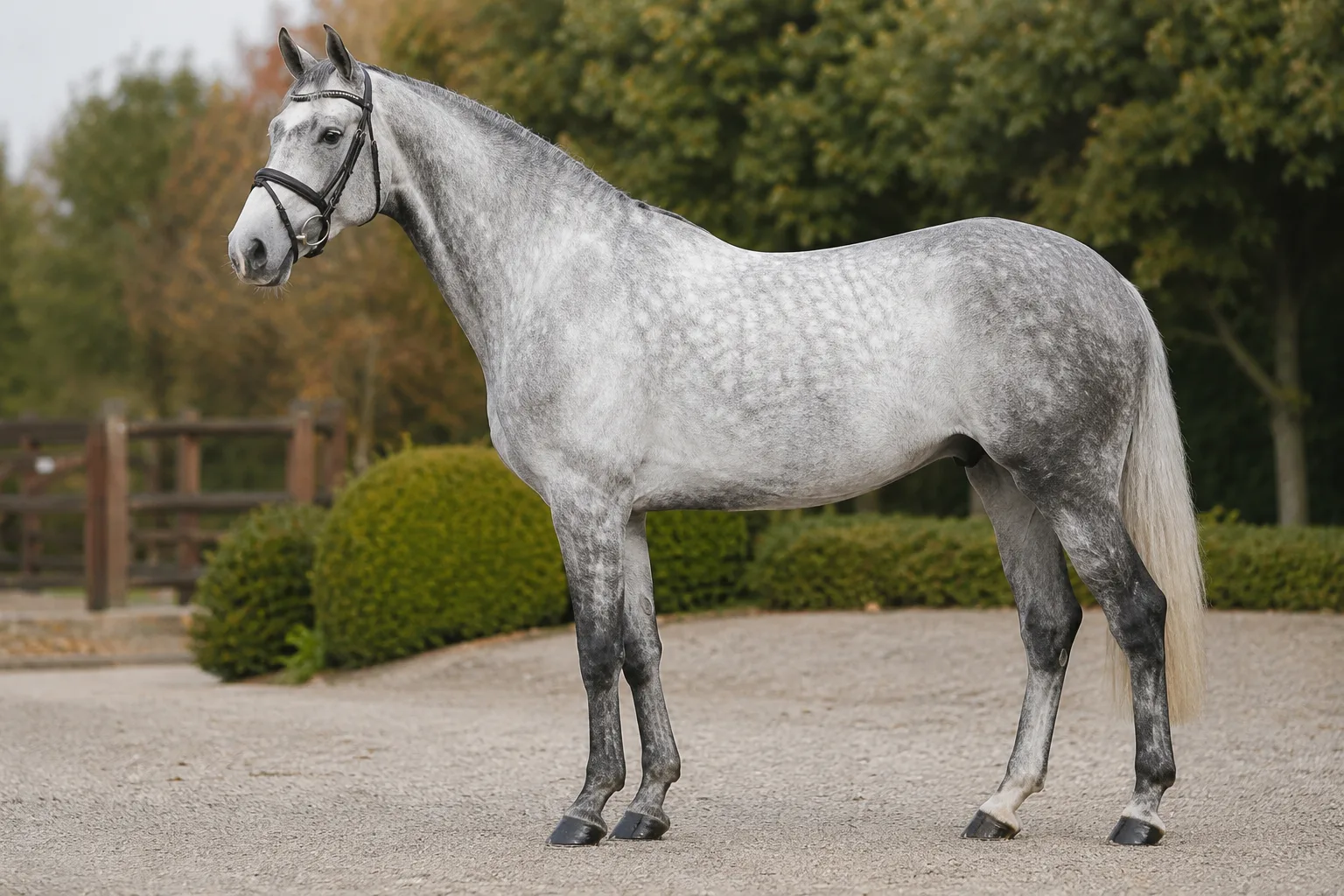
The Holsteiner is a large-framed sport horse, with a harmonious and athletic silhouette. It possesses a solid bone structure and well-developed musculature, exuding an impression of power and elegance.
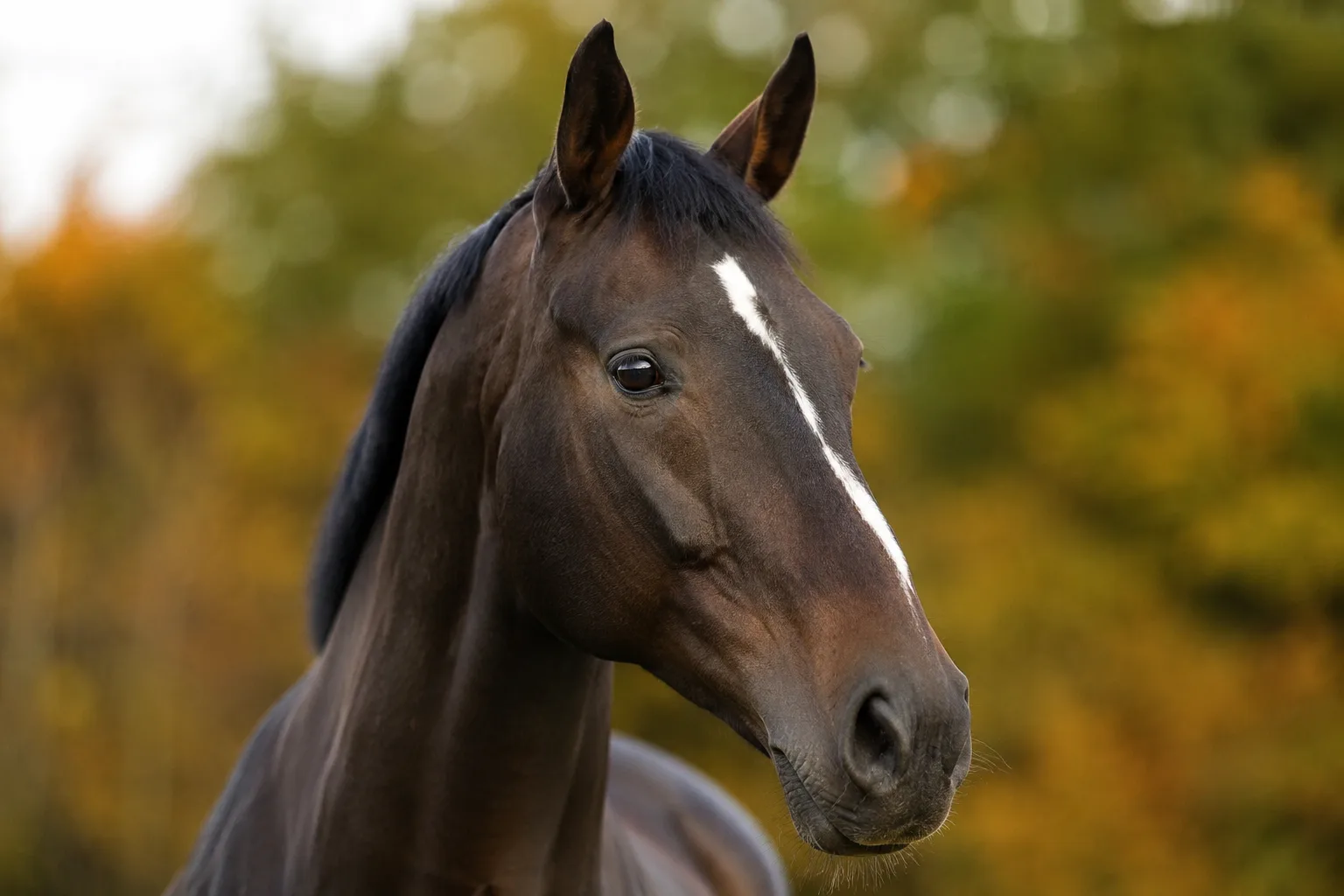
The head is expressive, medium-sized, with a straight or slightly convex profile. The eyes are large and lively, the ears well-set and mobile. The muzzle is broad and the nostrils open.
The neck is long, well-muscled, and arched, blending harmoniously into a long, well-defined wither. This conformation promotes balance and lightness of the forehand.
The back is short and strong, the topline is taut and muscular. The chest is deep and broad, offering good girth clearance. The croup is long, muscular, and slightly sloped, with a high tail set.
The limbs are solid, with large and well-defined joints. The cannons are short and the tendons clean. The feet are well-formed, with good quality horn. Feathering is generally sparse.
- Common coats: bay, chestnut, grey, black
Temperament and aptitudes
The Holsteiner is renowned for its balanced, intelligent, and willing temperament. It is courageous, responsive, and possesses a great aptitude for work, making it a reliable and high-performing partner for equestrian sports disciplines.
The Holsteiner's gaits are expansive, supple, and energetic, with excellent balance and good impulsion. The walk is regular, the trot is elevated, and the canter is powerful and rhythmic, with a great ability to cover ground.
- Uses: war horse (historical), agricultural horse (historical), saddle horse, sport horse
- Disciplines: show jumping, dressage, eventing, driving
Feeding the Holsteiner
As an athletic sport horse, the Holsteiner has high energy requirements, especially if subjected to intense work. It needs a balanced diet, rich in good quality forage (ad libitum hay) and supplemented with concentrates appropriate for its activity level. It is not particularly prone to obesity if worked regularly, but careful management of feed intake is crucial to maintain its optimal physical condition.
The Holsteiner does not have documented predispositions to specific dietary sensitivities like laminitis or Equine Metabolic Syndrome (EMS) more than other sport horse breeds. However, like any equine athlete, it can be sensitive to excesses of sugars and starches, requiring a controlled diet to prevent digestive and metabolic disorders.
With Equio, every feed, supplement or treat is read against the horse's real profile (age, weight, Body Condition Score, conditions) — useful for a Holsteiner as soon as a metabolic or digestive sensitivity is known.

Health and points to watch
Particular attention must be paid to the Holsteiner's joint health, given its intensive use in sport. Regular veterinary check-ups, appropriate shoeing, and progressive training management are essential to prevent musculoskeletal conditions. Air and forage quality are also important for preventing respiratory disorders.
- More frequent conditions: sport-related osteoarticular conditions (osteoarthritis, osteochondrosis), respiratory problems (emphysema, equine asthma) in cases of poor environmental management
Care and grooming
Holsteiner care is typical for a sport horse. Regular and appropriate trimming or shoeing is essential for its strong hooves. The coat requires daily brushing to maintain its cleanliness and shine. The mane and tail are generally left long and cared for their aesthetic appeal. Clipping is common in winter for horses in work.
Did you know?
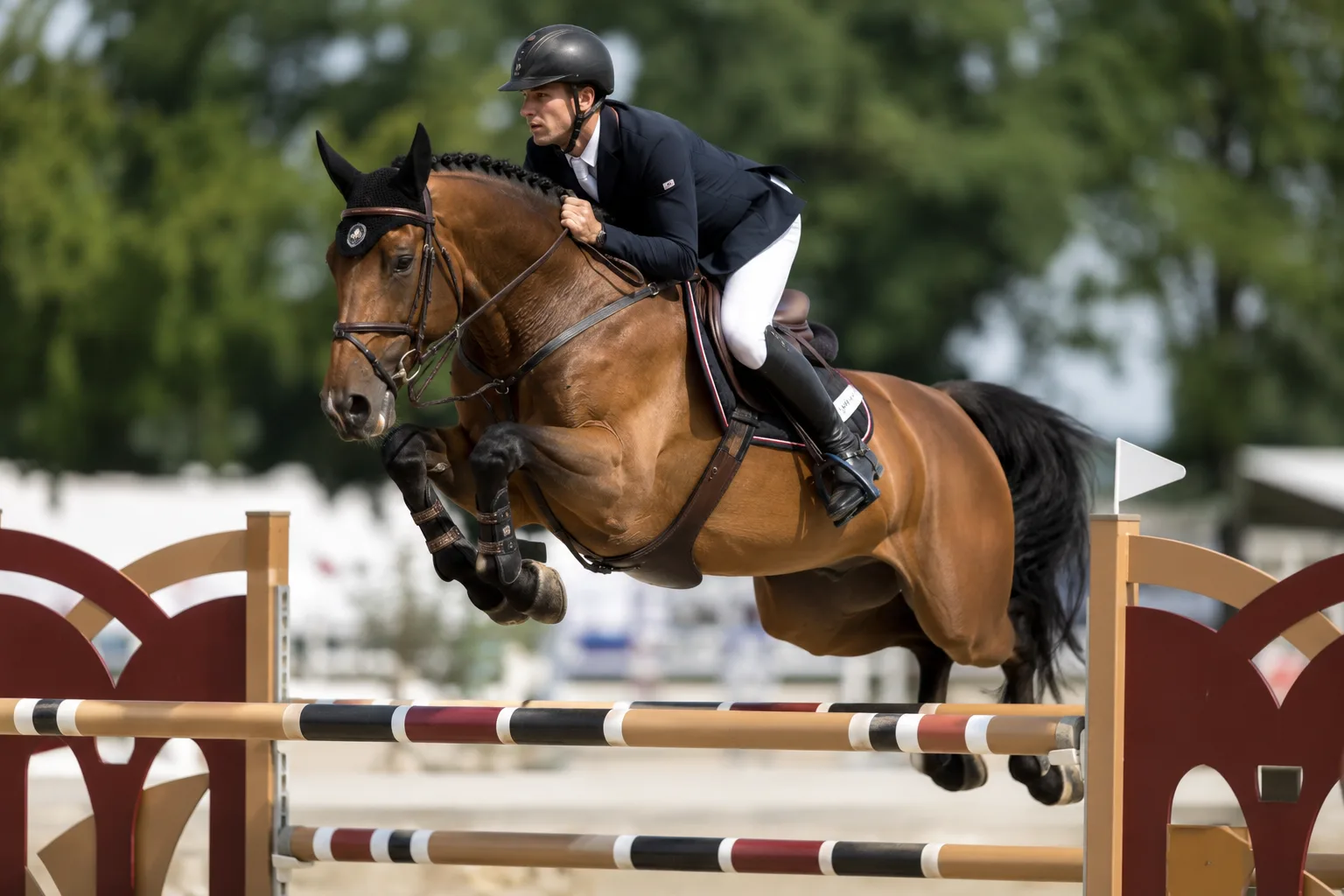
- The Holsteiner is the most decorated breed in the world in show jumping, with numerous Olympic and World champions.
- The Holsteiner studbook is one of the strictest and most selective in Germany, accepting only stallions and mares that have proven their athletic qualities or those of their offspring.
- The Holsteiner studbook logo features a stylized crown, symbolizing the royalty and excellence of the breed.
The Holsteiner and how to track it
The Holsteiner is well-represented in France, particularly in show jumping and dressage disciplines. It is valued by professional and amateur riders for its athletic qualities and temperament. Several French breeding farms specialize in this breed.
Equio lets you build a complete profile for a Holsteiner: identity, weight, Body Condition Score, feeding, conditions, care reminders (vaccines, worming, trimming) and an exportable health log. The breed sets the identity; everyday decisions still depend on the real horse and your vet's advice.
- Record the activity level: rest, leisure, sport or breeding
- Add known conditions or sensitivities
- Scan feeds, plants and care products
- Keep reminders (vaccines, worming, trimming)
- Prepare a PDF export before a vet appointment
Frequently asked questions
What is the average price of a Holsteiner?
The price of a Holsteiner varies considerably depending on its age, training level, lineage (pedigree, parental performance), and athletic potential. A young, unbroken horse may cost a few thousand euros, while a proven sport horse with good bloodlines can reach several tens of thousands of euros, or even more for high-level horses.
Is the Holsteiner suitable for beginner riders?
Due to its size, power, and sometimes energetic temperament, the Holsteiner is generally more suitable for experienced or supervised riders. Its intelligence and responsiveness require a fair hand and a rider capable of channeling its potential. However, some individuals may be calmer and suitable for less experienced riders under good supervision.
What are the main qualities of the Holsteiner in show jumping?
The Holsteiner excels in show jumping thanks to its power, respect for the rail, intelligence in trajectory, and excellent balance. It possesses great strength in its back and hindquarters, allowing it to clear imposing obstacles with ease and agility. Its courage and willingness to perform are also major assets.
How to choose a Holsteiner foal?
Choosing a Holsteiner foal should be based on studying its lineage (sire and dam), their athletic performance, and their temperament. It is also important to observe the foal's conformation, gaits, and general behavior. A thorough veterinary examination is recommended to ensure its good health and the absence of defects.
Is the Holsteiner a good dressage horse?
Yes, although better known for jumping, the Holsteiner is also an excellent dressage horse. Its expansive gaits, elegant carriage, suppleness, and learning ability make it a highly valued partner in this discipline. Many Holsteiners have reached high levels in dressage, demonstrating their versatility.