
Horse breed
Spanish Trotter
The Spanish Trotter is a relatively young breed, developed on the island of Mallorca from crosses between local mares and imported stallions, mainly French Trotters, Orlovs, and American Standardbreds. The goal was to create a fast and enduring horse for harness racing, which was very popular in the region.

The breed at a glance
It is generally an energetic, willing, and courageous horse, with a good competitive temperament. It is also known for its docility and ease of learning, making it a pleasant partner to work with.
- Category
- sport horse
- Origin
- Spain (Mallorca) · Late 19th century / early 20th century
- Height at withers
- 155–165 cm
- Weight
- 450–550 kg
- Lifespan
- 25-30 years
- Common coats
- bay, chestnut, black
- Disciplines
- Harness trotting, Ridden trotting
- Other names
- Trotador Español, Mallorquín Trotador
Origin and history
The Spanish Trotter is a relatively young breed, developed on the island of Mallorca from crosses between local mares and imported stallions, mainly French Trotters, Orlovs, and American Standardbreds. The goal was to create a fast and enduring horse for harness racing, which was very popular in the region. The breed was officially recognized in Spain and its studbook established, consolidating its identity and specific standards.
Conformation and physique
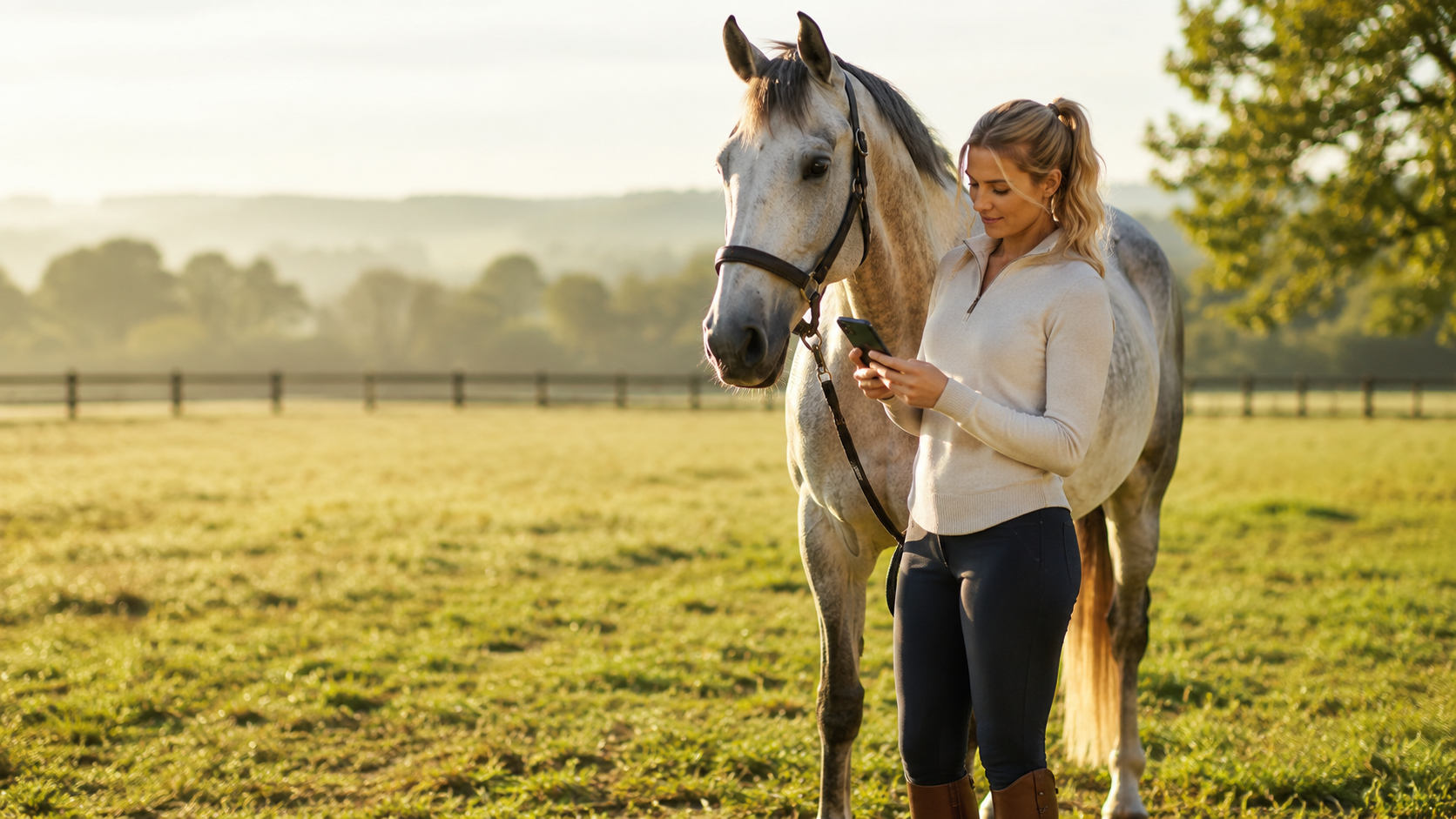
It is a medium to large-sized horse, athletic and elegant, with a solid bone structure but without excessive heaviness. Its silhouette is that of a trotter, built for speed and endurance.
The head is medium-sized, well-proportioned, with a straight or slightly convex profile. The eyes are lively and expressive, the ears medium-sized and well-placed.
The neck is long, muscular, and well-set, blending harmoniously into a well-defined and extended wither. It promotes balance and gait extension.
The back is straight and strong, the topline is taut. The chest is deep and wide, offering good lung capacity. The croup is long, muscular, and slightly sloped, conducive to propulsion.
The limbs are long, clean, and muscular, with large and well-defined joints. The tendons are distinct and the cannons are strong. The feet are well-formed and resilient. Feathering is generally sparse.
- Common coats: bay, chestnut, black
Temperament and aptitudes
It is generally an energetic, willing, and courageous horse, with a good competitive temperament. It is also known for its docility and ease of learning, making it a pleasant partner to work with.
The Spanish Trotter is primarily selected for its trot, which must be regular, expansive, energetic, and fast. It possesses an excellent ability to maintain this gait over long distances.
- Uses: harness racing, ridden trot races, leisure riding horse, leisure driving
- Disciplines: Harness trotting, Ridden trotting
Feeding the Spanish Trotter
The Spanish Trotter is an athlete that, during training and competition periods, has high energy requirements. Its metabolism is adapted to intense exertion. It requires a balanced diet, rich in good quality forage (free-choice hay) and supplemented with energy concentrates (cereals, compound feeds) adapted to its activity level. Particular attention must be paid to the intake of proteins, vitamins, and minerals to support muscle mass and recovery.
Although it does not have documented predispositions to specific dietary sensitivities like PSSM or EMS, like any equine athlete, it is essential to manage its diet to avoid imbalances. Excessive intake of sugars and starch without sufficient energy expenditure could, in the long term, increase the risk of general digestive or metabolic disorders (colic, ulcers, laminitis), but this is not a breed-specific characteristic.
With Equio, every feed, supplement or treat is read against the horse's real profile (age, weight, Body Condition Score, conditions) — useful for a Spanish Trotter as soon as a metabolic or digestive sensitivity is known.

Health and points to watch
Regular monitoring of the locomotor system is crucial due to the intensity of the efforts exerted during racing. It is important to ensure proper management of conformation and hoof trimming/shoeing. Particular attention must be paid to air quality in stables to prevent respiratory conditions.
- More frequent conditions: locomotor disorders related to intense exertion (tendinitis, osteoarthritis), respiratory problems (emphysema/heaves) in case of poor environmental management
Care and grooming
Routine care includes regular hoof trimming and shoeing adapted to racing activity, often with specific shoes. Daily grooming is important to maintain coat cleanliness and stimulate circulation. The mane and tail are generally maintained in a functional manner so as not to interfere during exertion. Good general hygiene is essential to prevent skin conditions.
Did you know?
- Harness racing is a deeply rooted tradition in Mallorca, and the Spanish Trotter is the proud representative of this local equestrian culture.
- Although primarily known for harness racing, some individuals of the breed have shown interesting aptitudes under saddle, particularly for leisure riding.
- The Spanish Trotter studbook is managed by the Asociación de Criadores y Propietarios de Caballos de Pura Raza Trotador Español (ACPTRE).
The Spanish Trotter and how to track it
The presence of the Spanish Trotter in France is limited, primarily due to the import of a few individuals for breeding or competition, but there is no significant breeding or specific studbook in France. It remains a breed predominantly bred and used in Spain.
Equio lets you build a complete profile for a Spanish Trotter: identity, weight, Body Condition Score, feeding, conditions, care reminders (vaccines, worming, trimming) and an exportable health log. The breed sets the identity; everyday decisions still depend on the real horse and your vet's advice.
- Record the activity level: rest, leisure, sport or breeding
- Add known conditions or sensitivities
- Scan feeds, plants and care products
- Keep reminders (vaccines, worming, trimming)
- Prepare a PDF export before a vet appointment
Frequently asked questions
Is the Spanish Trotter suitable for beginner riders?
Due to its energy and willing temperament, the Spanish Trotter is generally more suitable for riders with some experience. However, calm and well-trained individuals may be suitable for supervised beginners, especially for leisure riding.
What is the difference between the Spanish Trotter and the French Trotter?
Although they share common origins (notably the French Trotter), the Spanish Trotter has been specifically selected for the conditions and preferences of racing in Mallorca. It may exhibit subtle differences in morphology and temperament, but the main distinction lies in their studbook and primary breeding area.
Can a Spanish Trotter be used for disciplines other than trotting?
Yes, although its specialty is trotting, many Spanish Trotters are valued as riding horses for trail riding or leisure riding thanks to their endurance and good temperament. Some can even be introduced to recreational driving.
Is the Spanish Trotter a rare breed?
Outside of its native region, the island of Mallorca and mainland Spain, the Spanish Trotter is a relatively uncommon breed. Its population is stable but geographically concentrated, which makes it less known internationally than other trotter breeds.
What is the cost of acquiring a Spanish Trotter?
The price varies considerably depending on age, sex, lineage (racing lines), performance level, and training. A young, unbroken horse may be less expensive than a proven racehorse or a well-trained leisure horse. Prices are generally comparable to those of other performance trotter breeds.