
Horse breed
Standardbred
The Standardbred is an American breed developed in the 19th century specifically for trotting and pacing races. Its origins trace back to a Thoroughbred stallion named Messenger, imported in 1788, whose grandson Hambletonian 10 is considered the breed's foundation sire.
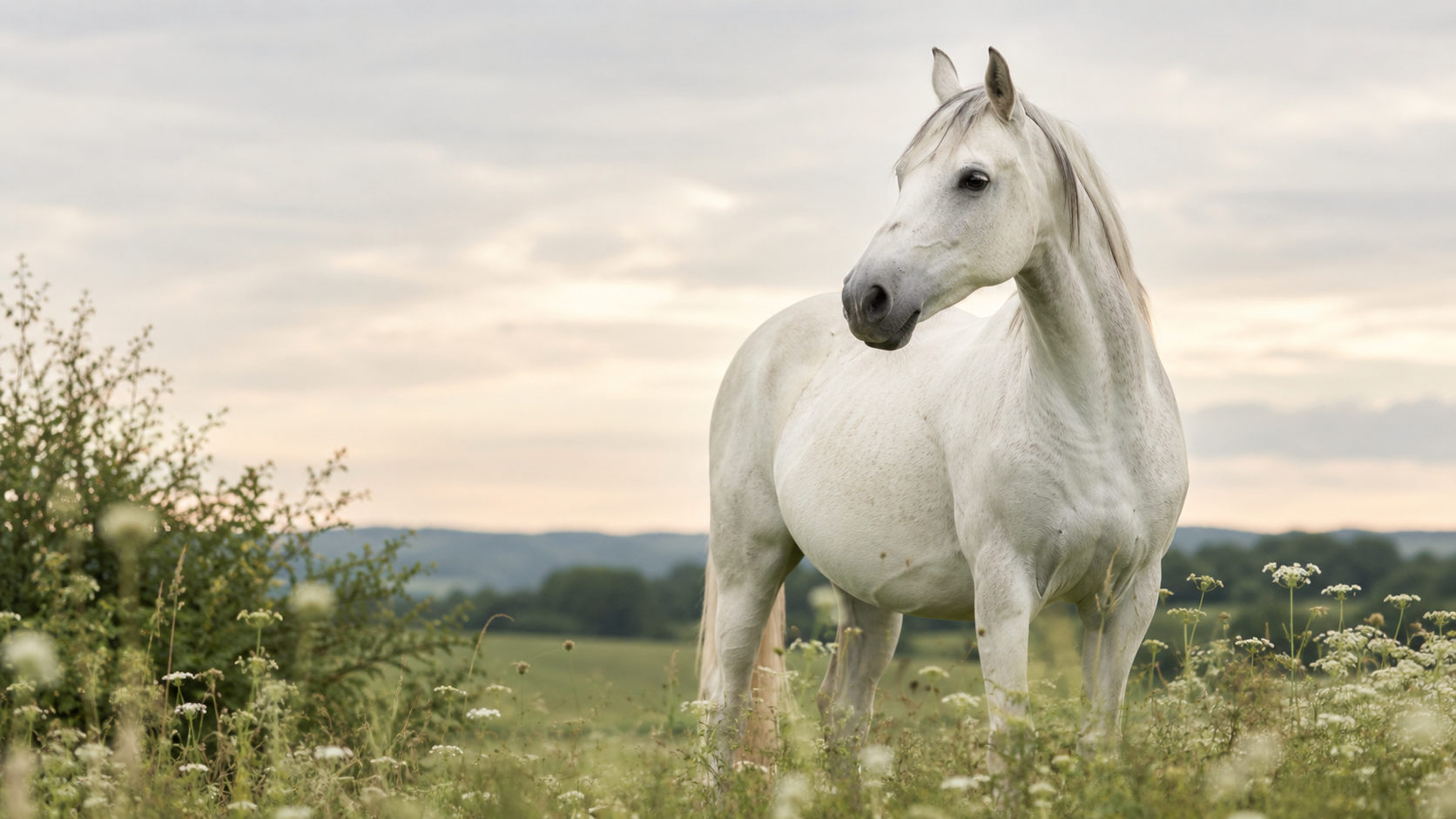
The breed at a glance
It is an intelligent, courageous horse with a strong will to work. It is generally calm and easy to handle but can show energy and determination on the track. Its reliable temperament makes it a good family horse after its racing career.
- Category
- sport horse
- Origin
- United States · 19th century
- Height at withers
- 142–163 cm
- Weight
- 400–550 kg
- Lifespan
- 25-30 years
- Common coats
- bay, chestnut, black, grey
- Disciplines
- Harness trotting, Harness pacing, Recreational riding, Dressage (after retraining)
- Other names
- Trotteur Américain, American Standardbred
Origin and history
The Standardbred is an American breed developed in the 19th century specifically for trotting and pacing races. Its origins trace back to a Thoroughbred stallion named Messenger, imported in 1788, whose grandson Hambletonian 10 is considered the breed's foundation sire. Crosses with Norfolk Trotters, Morgans, and other breeds helped establish its speed and endurance aptitudes. The breed was officially recognized and its studbook established in 1879, with standards based on race times.
Conformation and physique
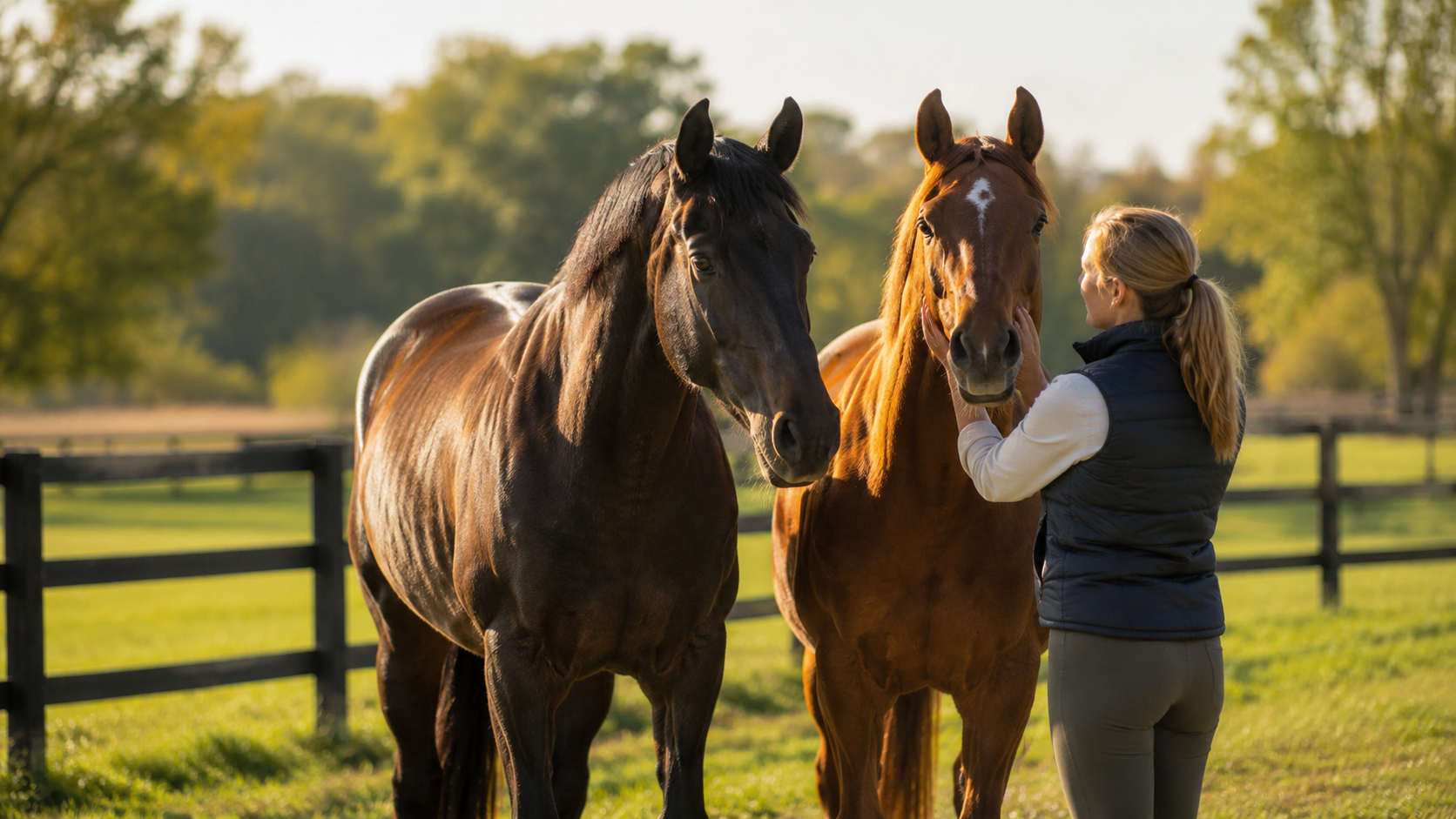
The Standardbred is a medium-sized horse, well-muscled and athletic, built for speed and endurance. It has a solid bone structure without being heavy, with a harmonious and balanced silhouette.
The head is generally refined, with a straight or slightly concave profile, large expressive eyes, and wide nostrils. The ears are medium-sized and well-placed.
The neck is muscular, medium in length, well-set, and blends harmoniously into a well-defined and strong wither, promoting balance and propulsion.
The back is medium in length, strong, and well-muscled, extending into a solid topline. The chest is deep and wide, providing good lung capacity. The croup is long, muscular, and slightly sloped, conducive to powerful gaits.
The limbs are strong, with large and well-defined joints. The cannons are short, and the tendons are clean and well-defined. The hooves are hard and well-formed, suited to the demands of racing. Feathering is generally sparse.
- Common coats: bay, chestnut, black, grey
Temperament and aptitudes
It is an intelligent, courageous horse with a strong will to work. It is generally calm and easy to handle but can show energy and determination on the track. Its reliable temperament makes it a good family horse after its racing career.
The Standardbred is renowned for its trotting and pacing gaits, which are natural and very regular. It is selected for its ability to maintain high speed over long distances in these specific gaits.
- Uses: Harness trotting races, Harness pacing races, Leisure riding horse, Sport horse (dressage, show jumping, endurance), Light work horse
- Disciplines: Harness trotting, Harness pacing, Recreational riding, Dressage (after retraining), Show jumping (after retraining), Endurance
Feeding the Standardbred
The Standardbred is a demanding athlete, requiring a balanced and energy-rich diet, especially if in training or competition. It needs sufficient intake of good quality forage (hay or grass) to maintain good digestive health. Concentrates must be adapted to its activity level, with a good balance of proteins, carbohydrates, fats, vitamins, and minerals. It does not have a particular tendency to gain weight if worked regularly.
The Standardbred is not specifically predisposed to particular dietary sensitivities such as laminitis or EMS more frequently than other athletic breeds. However, like any sport horse, careful dietary management is crucial to prevent digestive disorders (gastric ulcers) and muscular issues (exertional myopathies) related to training intensity and stress.
With Equio, every feed, supplement or treat is read against the horse's real profile (age, weight, Body Condition Score, conditions) — useful for a Standardbred as soon as a metabolic or digestive sensitivity is known.

Health and points to watch
Regular monitoring of limb alignment and feet is essential due to the demands of racing. Particular attention should be paid to the early detection of lameness and signs of digestive stress. Regular veterinary check-ups are recommended for performance horses.
- More frequent conditions: Exertional locomotor conditions (tendinitis, desmitis, osteoarthritis), Gastric ulcers, Respiratory problems (COPD, equine asthma)
Care and grooming
Hoof care is paramount, with trimming or shoeing adapted to its use (racing or leisure). The coat is generally easy to maintain, but clipping may be necessary for racehorses in winter. The mane, tail, and feathers are sparse and do not require specific care beyond routine maintenance.
Did you know?
- The name 'Standardbred' comes from the fact that horses had to meet a certain 'standard' time to be registered in the breed's studbook.
- Unlike most racehorse breeds, the Standardbred can race at a trot or a pace, two distinct gaits.
- The world speed record for a trotter is held by a Standardbred.
The Standardbred and how to track it
The Standardbred is present in France, primarily under the name American Trotter, and is used for improving French Trotter bloodlines, as well as for trotting and pacing races. It is also valued as a leisure or sport horse after its racing career.
Equio lets you build a complete profile for a Standardbred: identity, weight, Body Condition Score, feeding, conditions, care reminders (vaccines, worming, trimming) and an exportable health log. The breed sets the identity; everyday decisions still depend on the real horse and your vet's advice.
- Record the activity level: rest, leisure, sport or breeding
- Add known conditions or sensitivities
- Scan feeds, plants and care products
- Keep reminders (vaccines, worming, trimming)
- Prepare a PDF export before a vet appointment
Frequently asked questions
What is the difference between a Standardbred trotter and pacer?
A trotter moves its diagonal pairs of legs simultaneously (right front and left hind, then left front and right hind). A pacer moves its lateral pairs of legs simultaneously (right front and right hind, then left front and left hind). Both are two-beat gaits, but the pace is generally faster and often requires 'hopples' to maintain the gait.
Is the Standardbred a good horse for recreational riding?
Yes, many Standardbreds are successfully retrained as leisure horses after their racing careers. Their calm temperament, intelligence, and endurance make them excellent companions for trail riding, light dressage, or show jumping, provided they receive appropriate retraining.
Is the Standardbred suitable for beginners?
Thanks to their generally gentle temperament and willingness to please, many Standardbreds can be suitable for beginner or intermediate riders, especially if they have been well retrained after their racing careers. It is always advisable to choose a horse whose temperament matches the rider's level.
What is the cost of a Standardbred?
The cost of a Standardbred varies considerably. A promising young racehorse can be very expensive, while a retired racehorse, intended for leisure, can be acquired for a more modest price, often between 1,000 and 5,000 euros, depending on its age, health, and level of retraining.
How to identify a Standardbred?
The Standardbred can be identified by its athletic build, muscular body, refined head, and strong limbs. Its ability to trot or pace with great regularity and speed is its most distinctive characteristic. Bay and chestnut coats are the most common.