
Horse breed
Ukrainian Riding Horse
The breed was developed after World War II in Ukrainian stud farms, notably the Dnipropetrovsk stud, with the aim of creating a versatile sport horse. It originated from complex crosses between local saddle-type mares and stallions of European sport breeds such as the Trakehner, Hanoverian, English Thoroughbred, and Arabian Thoroughbred.
The breed at a glance
The Ukrainian Saddle Horse is renowned for its willing, intelligent, and courageous temperament. It is generally docile and easy to train, while also demonstrating energy and responsiveness, making it an excellent partner for sport.
- Category
- sport horse
- Origin
- Ukraine · Mid-20th century (1950s-1980s)
- Height at withers
- 160–170 cm
- Weight
- 500–600 kg
- Lifespan
- 25-30 years
- Common coats
- bay, chestnut, black, grey
- Disciplines
- show jumping, dressage, eventing, driving
- Other names
- Ukrainian Riding Horse, Ukrainian Saddle Horse
Origin and history
The breed was developed after World War II in Ukrainian stud farms, notably the Dnipropetrovsk stud, with the aim of creating a versatile sport horse. It originated from complex crosses between local saddle-type mares and stallions of European sport breeds such as the Trakehner, Hanoverian, English Thoroughbred, and Arabian Thoroughbred. Rigorous selection allowed for establishing the desired characteristics for modern equestrian disciplines. The breed was officially recognized in 1986.
Conformation and physique
It is a medium to large-sized sport horse, elegant and harmonious, with a solid yet refined bone structure. Its silhouette is athletic, well-proportioned, reflecting its athletic abilities.
The head is medium-sized, well-proportioned, with a straight or slightly concave profile. The eyes are large and expressive, the ears well-set and mobile.
The neck is long, well-muscled, and arched, blending harmoniously into a well-defined and extended wither. The head carriage is proud.
The back is short and strong, the topline is taut and muscular. The chest is broad and deep, ensuring good respiratory capacity. The croup is long, muscular, and slightly sloped.
The limbs are long, clean, and strong, with large and well-defined joints. The cannons are short and the tendons well-defined. The feet are round and resilient, without excessive feathering.
- Common coats: bay, chestnut, black, grey
Temperament and aptitudes
The Ukrainian Saddle Horse is renowned for its willing, intelligent, and courageous temperament. It is generally docile and easy to train, while also demonstrating energy and responsiveness, making it an excellent partner for sport.
The gaits are ample, supple, energetic, and regular, with good balance and marked impulsion. The walk is active, the trot airy, and the canter balanced and rhythmic, ideal for jumping and dressage.
- Uses: sport horse, recreational riding, breeding
- Disciplines: show jumping, dressage, eventing, driving
Feeding the Ukrainian Riding Horse
As a sport horse, the Ukrainian Saddle Horse has a demanding athlete's metabolism. It requires a balanced and energy-rich diet, adapted to its activity level. Good quality forage in sufficient quantity is essential, supplemented by concentrates formulated for sport horses, with adequate protein, vitamin, and mineral intake. Needs vary greatly depending on the intensity of work.
The breed does not present documented predispositions to specific dietary sensitivities such as laminitis or EMS, beyond the general risks associated with an unbalanced or excessive diet for any horse. Careful management of sugar and starch intake is recommended, especially for horses at rest or lightly worked, to prevent common digestive and metabolic disorders.
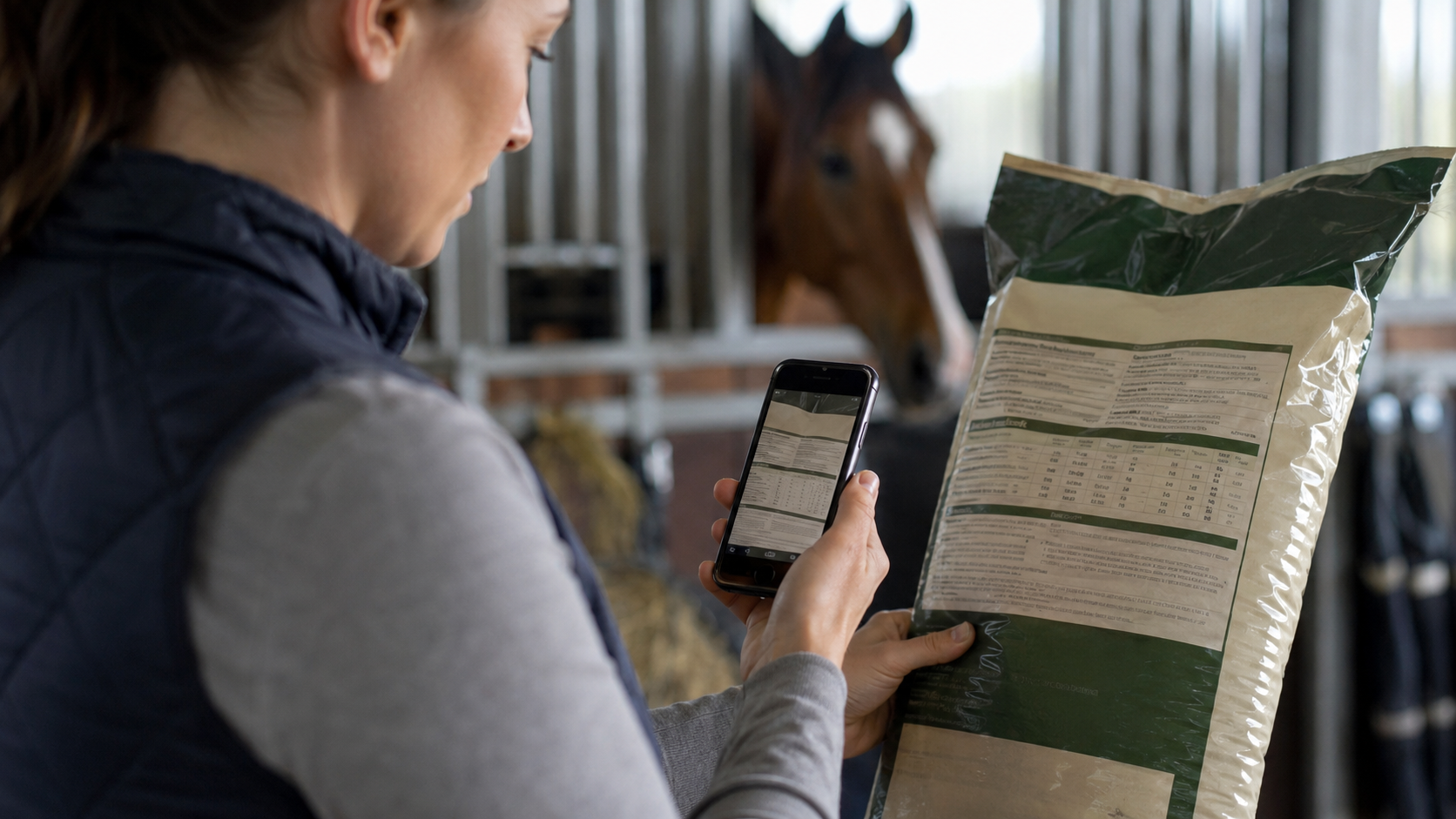
With Equio, every feed, supplement or treat is read against the horse's real profile (age, weight, Body Condition Score, conditions) — useful for a Ukrainian Riding Horse as soon as a metabolic or digestive sensitivity is known.
Health and points to watch
Regular monitoring of the locomotor system is paramount, with preventive veterinary check-ups. Particular attention should be paid to stress management and the prevention of gastric ulcers in competition horses. Regular dental and parasitic follow-up is also essential.
- More frequent conditions: locomotor affections related to intense athletic activity (osteoarthritis, tendinitis), gastric ulcers (in sport horses subjected to stress)
Care and grooming
Routine care includes regular trimming or shoeing adapted to athletic activity, typically every 6 to 8 weeks. Daily grooming is important to maintain coat quality and detect any skin problems. The mane and tail are generally left natural or braided for work. Clipping may be necessary in winter for horses working intensely.
Did you know?
- The Ukrainian Saddle Horse was created with the aim of competing with the best sport breeds of Western Europe.
- It is often used as a foundation for improving other sport horse breeds in Eastern Europe.
- Breed selection has focused on performance in show jumping and dressage.
The Ukrainian Riding Horse and how to track it
The breed is not widely represented in France, where it is mainly known to breeders and riders specializing in Eastern European sport horses. There is no significant breeding or specific studbook in France, with individuals present generally being imported.
Equio lets you build a complete profile for a Ukrainian Riding Horse: identity, weight, Body Condition Score, feeding, conditions, care reminders (vaccines, worming, trimming) and an exportable health log. The breed sets the identity; everyday decisions still depend on the real horse and your vet's advice.
- Record the activity level: rest, leisure, sport or breeding
- Add known conditions or sensitivities
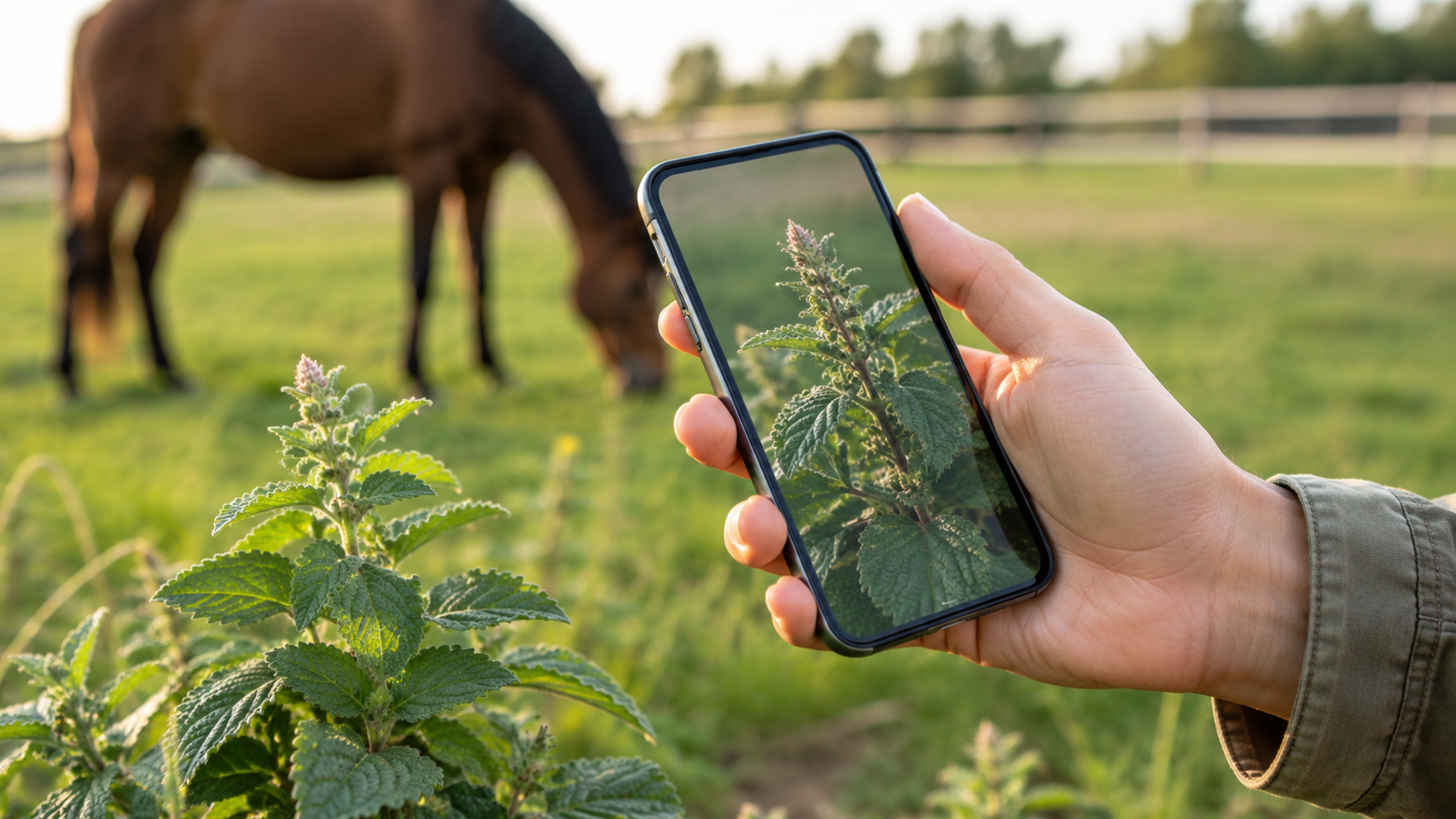
- Scan feeds, plants and care products
- Keep reminders (vaccines, worming, trimming)
- Prepare a PDF export before a vet appointment
Frequently asked questions
Is the Ukrainian Saddle Horse suitable for beginner riders?
Due to its energetic temperament and responsiveness, the Ukrainian Saddle Horse is generally more suitable for experienced or supervised riders. Its sensitivity and intelligence require a fair hand and a good understanding of its character.
What is the acquisition cost of a Ukrainian Riding Horse?
The cost can vary considerably depending on the horse's age, training level, lineage, and sports performance. As a less common breed in Western Europe, prices may be influenced by import costs. It is difficult to provide an exact range without further details.
Is the Ukrainian Riding Horse cold-hardy?
Originating from Ukraine, the breed is generally well-adapted to continental climates, including cold winters. However, like any sport horse, adequate protection (shelter, blanket) is recommended in extreme conditions, especially if the horse is clipped or in intense work.
Can a Ukrainian Riding Horse be used for endurance riding?
Although the Ukrainian Riding Horse is athletic and enduring, it is not specifically bred for endurance. Its gaits and conformation are more optimized for Olympic disciplines. It could participate in low to medium-intensity endurance events but would not be the optimal choice for high-level competition.
How to recognize a purebred Ukrainian Riding Horse?
Recognizing a purebred Ukrainian Riding Horse involves examining its equine passport and pedigree, which must be registered with the official breed studbook in Ukraine. Morphological characteristics and gaits must also conform to the breed standard.