
Horse breed
Catria
The Catria horse is an ancient breed originating from the Apennine mountains, in the Marche region of Italy. Probably descended from indigenous horses and crosses with Oriental and Iberian breeds, it has been used for centuries as a versatile working horse by local populations.

The breed at a glance
The Catria is renowned for its calm, docile, and courageous temperament. It is a hardy, resilient, and hardworking horse, possessing great intelligence and willingness, making it a reliable partner for various tasks.
- Category
- hardy breed
- Origin
- Italy · Antiquity / Middle Ages (established in the 20th century)
- Height at withers
- 140–150 cm
- Weight
- 400–500 kg
- Lifespan
- 25-30 years
- Common coats
- bay, chestnut, grey
- Disciplines
- equestrian trail riding, TREC, working equitation
Origin and history
The Catria horse is an ancient breed originating from the Apennine mountains, in the Marche region of Italy. Probably descended from indigenous horses and crosses with Oriental and Iberian breeds, it has been used for centuries as a versatile working horse by local populations. The breed was officially recognized and a studbook established in the early 20th century to preserve its unique characteristics. It is particularly well-suited to mountainous terrain and harsh conditions.
Conformation and physique
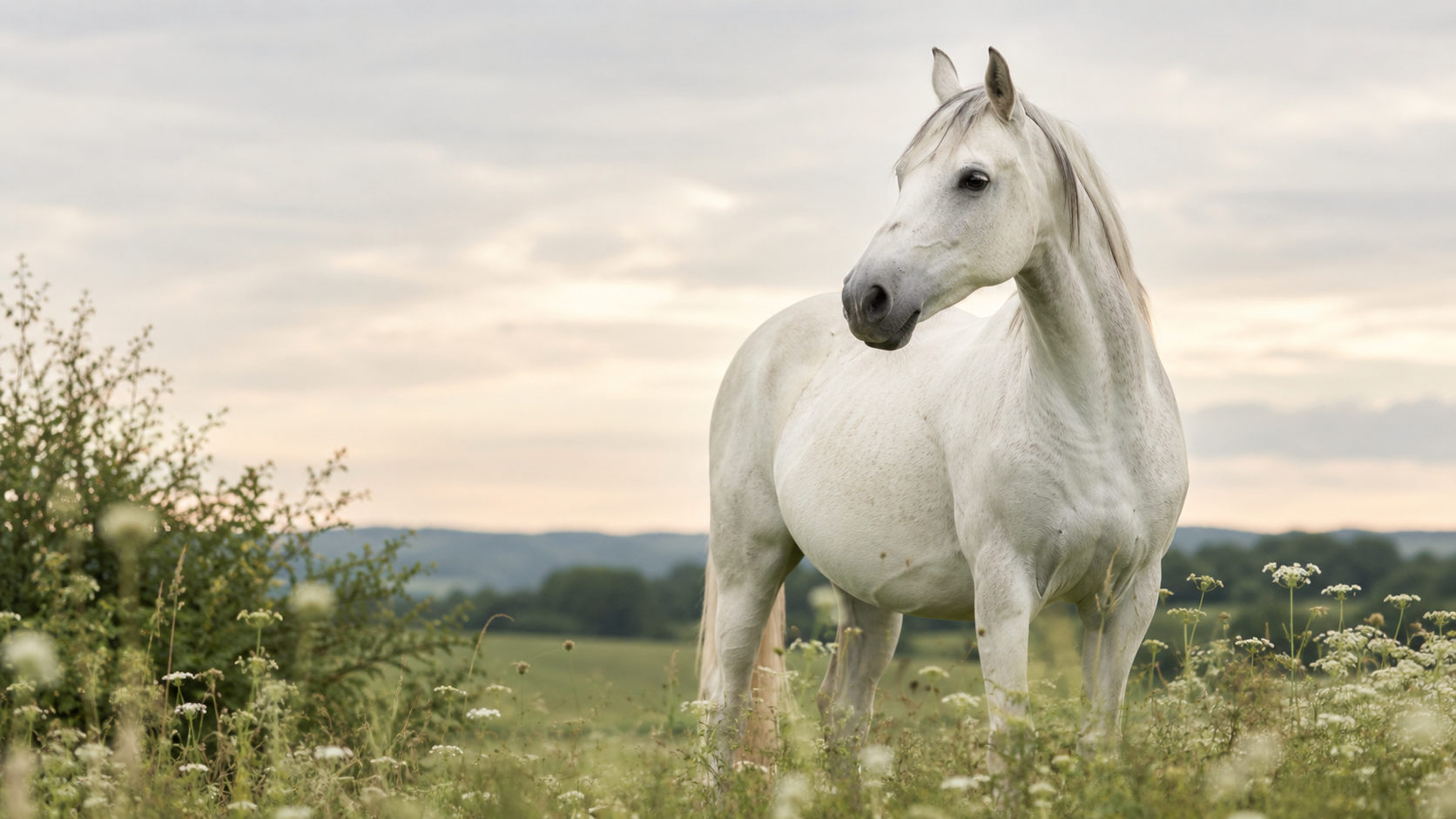
It is a medium-sized horse, robust and compact, with a solid bone structure and well-developed musculature, adapted to mountain life. Its build is harmonious and powerful, reflecting its working capacity.
The head is medium-sized, with a straight or slightly convex (Roman nose) profile, expressive eyes, and wide nostrils. The ears are medium-sized and well-set.
The neck is strong, muscular, and well-set, with a low wither that blends smoothly into the back. It is proportionate to the body, conferring good agility.
The back is short and strong, with a straight and muscular topline. The chest is broad and deep, ensuring good respiratory capacity. The croup is rounded and muscular, often slightly sloped.
The limbs are solid, with broad joints and well-defined tendons. The cannons are short, and the feet are hard and well-formed, adapted to rocky terrain. Feathers are generally sparse.
- Common coats: bay, chestnut, grey
Temperament and aptitudes
The Catria is renowned for its calm, docile, and courageous temperament. It is a hardy, resilient, and hardworking horse, possessing great intelligence and willingness, making it a reliable partner for various tasks.
The gaits are regular, sure-footed, and energetic, with good scope and great agility, particularly suited to rugged terrain and slopes. The walk is sure-footed and the trot is active.
- Uses: pack horse, saddle horse for recreational riding, light agricultural work, trail riding, semi-extensive rearing
- Disciplines: equestrian trail riding, TREC, working equitation
Feeding the Catria
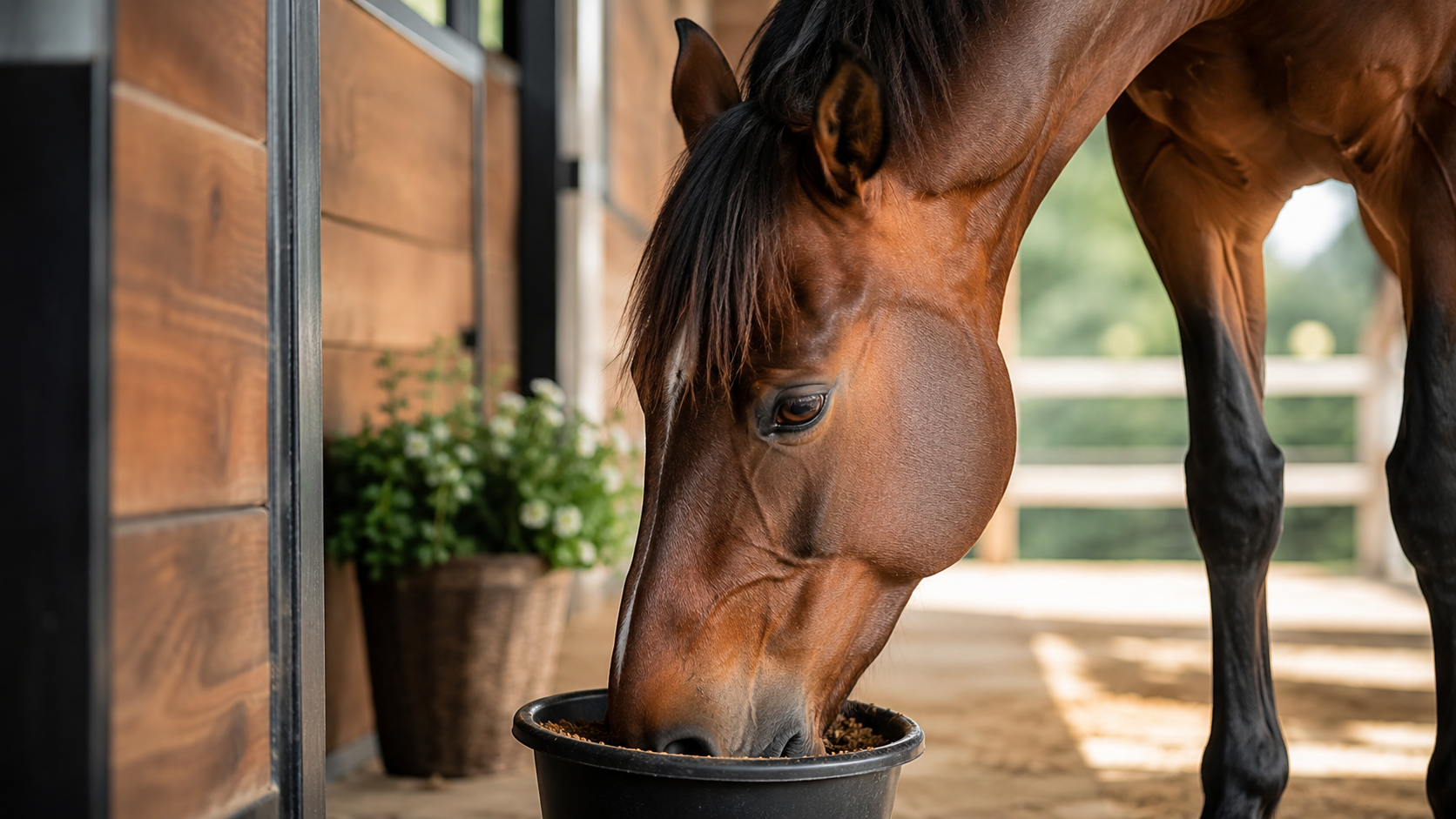
The Catria is a horse with an efficient metabolism, accustomed to frugal diets. It utilizes coarse forages very well and tends to gain weight if its diet is not adapted to its activity level. A diet primarily consisting of good quality hay is essential, supplemented with concentrates only in cases of intense work or specific needs (gestation, lactation).
Due to its efficient metabolism, the Catria can be predisposed to laminitis and Equine Metabolic Syndrome (EMS) if overfed or sedentary, especially with forages too rich in sugars and starch. Careful dietary management is crucial to prevent these conditions.
With Equio, every feed, supplement or treat is read against the horse's real profile (age, weight, Body Condition Score, conditions) — useful for a Catria as soon as a metabolic or digestive sensitivity is known.
Health and points to watch
Particular attention should be paid to weight management to prevent metabolic risks. Hoof quality should be monitored regularly, especially if the horse is on abrasive terrain. Annual dental check-ups are recommended.
- More frequent conditions: hoof problems related to poor trimming or shoeing on difficult terrain, respiratory conditions in cases of poor shelter ventilation
Care and grooming
The Catria is a hardy breed that does not require excessive care. Regular hoof trimming is essential to maintain their soundness. The mane, tail, and coat require regular brushing, but feathers are generally short and do not require special maintenance. Clipping is generally not necessary except for sport horses or those in intense work.
Did you know?
- The Catria is reared semi-extensively in the Apennine mountains, which contributes to its hardiness and adaptation to the environment.
- It is often used for the maintenance of mountainous landscapes and the preservation of local biodiversity.
- The breed is managed by the Associazione Nazionale Allevatori del Cavallo di Catria (ANACC) in Italy.
The Catria and how to track it
The Catria breed is very rare in France; its breeding and use are primarily concentrated in its region of origin in Italy. A few individuals may be found with enthusiasts of hardy breeds.
Equio lets you build a complete profile for a Catria: identity, weight, Body Condition Score, feeding, conditions, care reminders (vaccines, worming, trimming) and an exportable health log. The breed sets the identity; everyday decisions still depend on the real horse and your vet's advice.
- Record the activity level: rest, leisure, sport or breeding
- Add known conditions or sensitivities
- Scan feeds, plants and care products
- Keep reminders (vaccines, worming, trimming)
- Prepare a PDF export before a vet appointment
Frequently asked questions
Is the Catria horse suitable for beginners?
Yes, thanks to its calm and docile temperament, the Catria can be an excellent horse for beginners or less experienced riders, provided it has solid basic training.
What is the purchase cost of a Catria horse?
The cost of a Catria can vary considerably depending on age, training level, bloodlines, and breeder. As a rare breed outside Italy, prices may be higher due to scarcity and import costs.
Can the Catria live outdoors all year round?
Absolutely. The Catria is a hardy and very resilient breed, perfectly adapted to living outdoors all year round, provided it has natural or artificial shelter from the elements and access to water and forage.
What are the main qualities of the Catria for trail riding?
Its main qualities for trail riding are its hardiness, sure-footedness on difficult terrain, endurance, calm temperament, and ability to adapt to varied conditions, making it an excellent travel companion.
Is the Catria a threatened breed?
Although its population is relatively small and concentrated, conservation efforts are underway in Italy to preserve the breed and its genetic heritage, notably by the ANACC.