
Horse breed
Bardigiano
Originating from the Parma region of Italy, the Bardigiano is an ancient breed whose ancestors are likely Celtic horses. It was developed for agricultural work and mountain transport.

The breed at a glance
The Bardigiano is renowned for its calm, docile, and very hardy temperament. It is courageous, enduring, and willing to work, making it an excellent companion for trail riding and leisure activities. It is also very intelligent and easy to train.
- Category
- hardy breed
- Origin
- Italy · Antiquity / Middle Ages (established in the 19th century)
- Height at withers
- 135–149 cm
- Weight
- 350–450 kg
- Lifespan
- 25-30 years
- Common coats
- black, dark bay
- Disciplines
- Trail riding, Driving, TREC, Working equitation
- Other names
- Poney de Bardigiano
Origin and history
Originating from the Parma region of Italy, the Bardigiano is an ancient breed whose ancestors are likely Celtic horses. It was developed for agricultural work and mountain transport. The breed was officially recognized and a studbook created in the early 20th century, with preservation efforts following the World Wars. Today, it is a symbol of Italian equine biodiversity.

Conformation and physique
It is a medium-lined horse, compact and robust, with strong bone structure and well-developed musculature. It presents a harmonious silhouette, typical of mountain breeds.
Medium-sized head, with a straight or slightly concave profile, a broad forehead, expressive eyes, and well-opened nostrils. The ears are medium-sized and well-set.
Short, strong, and muscular neck, well-set, with a low but well-blended wither.
Short, straight back, strong topline. Broad and deep chest. Muscular, slightly sloping croup, with a low-set tail.
Short, strong, and clean legs, with broad joints and well-defined tendons. The hooves are solid, well-formed, and resilient. Feathering is often present, but not excessive.
- Common coats: black, dark bay
Temperament and aptitudes
The Bardigiano is renowned for its calm, docile, and very hardy temperament. It is courageous, enduring, and willing to work, making it an excellent companion for trail riding and leisure activities. It is also very intelligent and easy to train.
The gaits are regular, energetic, and sure-footed, with good impulsion. The walk is active, the trot supple, and the canter balanced, suitable for rugged terrain.
- Uses: Agricultural and forestry work (historical), Pack and harness, Equestrian trail riding and equestrian tourism, Recreational riding for children and adults, Meat production (traditional in Italy)
- Disciplines: Trail riding, Driving, TREC, Working equitation
Feeding the Bardigiano
The Bardigiano is a very thrifty horse, accustomed to poor mountain pastures. Its metabolism is adapted to a frugal diet, which makes it prone to becoming overweight if its diet is not controlled. It is content mainly with good quality forage (hay, grass) and only needs concentrates in cases of intense work or specific needs (gestation, lactation).
Due to its thrifty metabolism, the Bardigiano can be predisposed to Equine Metabolic Syndrome (EMS) and laminitis if overfed, particularly with forage too rich in sugars and starch, or if it lacks exercise. Careful monitoring of its weight is essential.
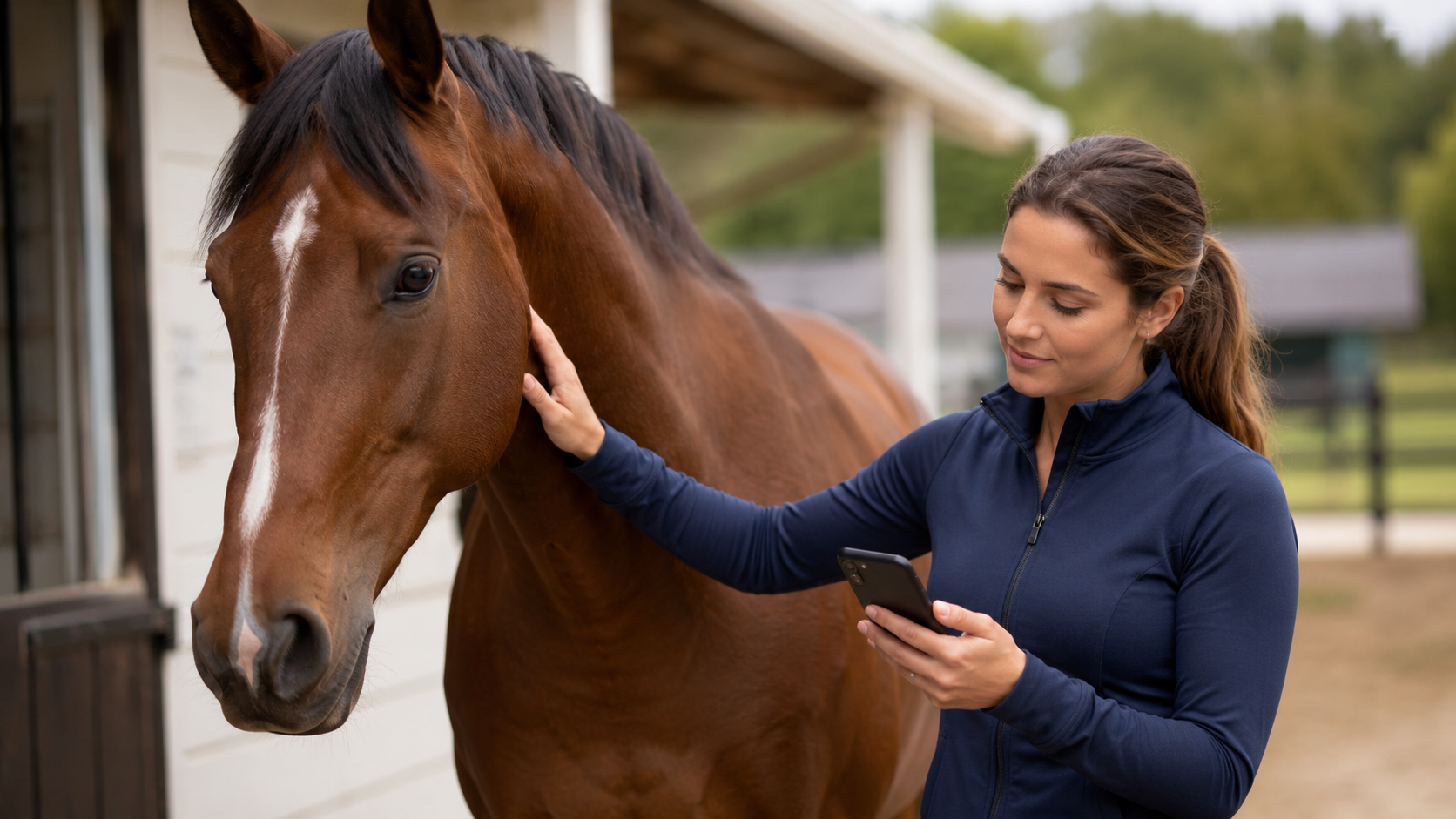
With Equio, every feed, supplement or treat is read against the horse's real profile (age, weight, Body Condition Score, conditions) — useful for a Bardigiano as soon as a metabolic or digestive sensitivity is known.
Health and points to watch
Carefully monitor the Bardigiano's weight to prevent obesity and the risk of laminitis. Ensure regular hoof trimming; their hooves are naturally strong but can suffer on very abrasive ground. Particular attention should be paid to dental care, especially in older individuals.
- More frequent conditions: Laminitis (in case of overfeeding), Equine Metabolic Syndrome (EMS), Joint problems related to age or excessive work on hard ground
Care and grooming
Caring for the Bardigiano is relatively simple thanks to its hardiness. Its very strong hooves require regular trimming but are rarely shod except for intensive work on very hard ground. The mane, tail, and feathering can be left natural or maintained according to preference. Its dense coat does not require specific care; regular brushing is sufficient.
Did you know?
- The Bardigiano is one of the few Italian equine breeds to have survived both world wars thanks to the resilience of its breeders.
- It is often used in Italian natural parks for pasture maintenance and transporting equipment in hard-to-reach areas.
- Despite its pony size, it is classified as a horse in Italy due to its morphology and strength.
The Bardigiano and how to track it
The Bardigiano breed is not widely represented in France, where it remains little known. A few passionate breeders may exist, but it has no official recognition or specific studbook in France. Individuals present are generally imported for leisure or trekking.
Equio lets you build a complete profile for a Bardigiano: identity, weight, Body Condition Score, feeding, conditions, care reminders (vaccines, worming, trimming) and an exportable health log. The breed sets the identity; everyday decisions still depend on the real horse and your vet's advice.
- Record the activity level: rest, leisure, sport or breeding
- Add known conditions or sensitivities
- Scan feeds, plants and care products
- Keep reminders (vaccines, worming, trimming)
- Prepare a PDF export before a vet appointment
Frequently asked questions
Is the Bardigiano suitable for beginners?
Yes, thanks to its calm, docile temperament and patience, the Bardigiano is an excellent mount for beginners, children, and inexperienced riders. It is safe and reliable.
What is the maximum height of a Bardigiano?
The maximum height at the withers for a Bardigiano is generally 149 cm, although some individuals may slightly exceed this measurement. It is considered a large pony or a small horse.
Can the Bardigiano live outdoors all year round?
Absolutely. Its great hardiness and dense coat allow it to live outdoors all year round, even in harsh climates, provided it has natural or artificial shelter from the elements.
Is the Bardigiano a good trekking horse?
Yes, this is one of its main qualities. Its endurance, sure-footedness, robustness, and balanced temperament make it an excellent companion for trekking, including on difficult terrain.
What are the accepted coat colors for the Bardigiano?
The most frequent and accepted coat colors for the Bardigiano are black and dark bay. White markings are generally limited and not highly regarded on the head and limbs.