
Horse breed
Murgese
The Murgese originates from the Murge region, in Puglia, Italy. It descends from indigenous horses crossed with Oriental and Iberian horses introduced during invasions and foreign dominations.
The breed at a glance
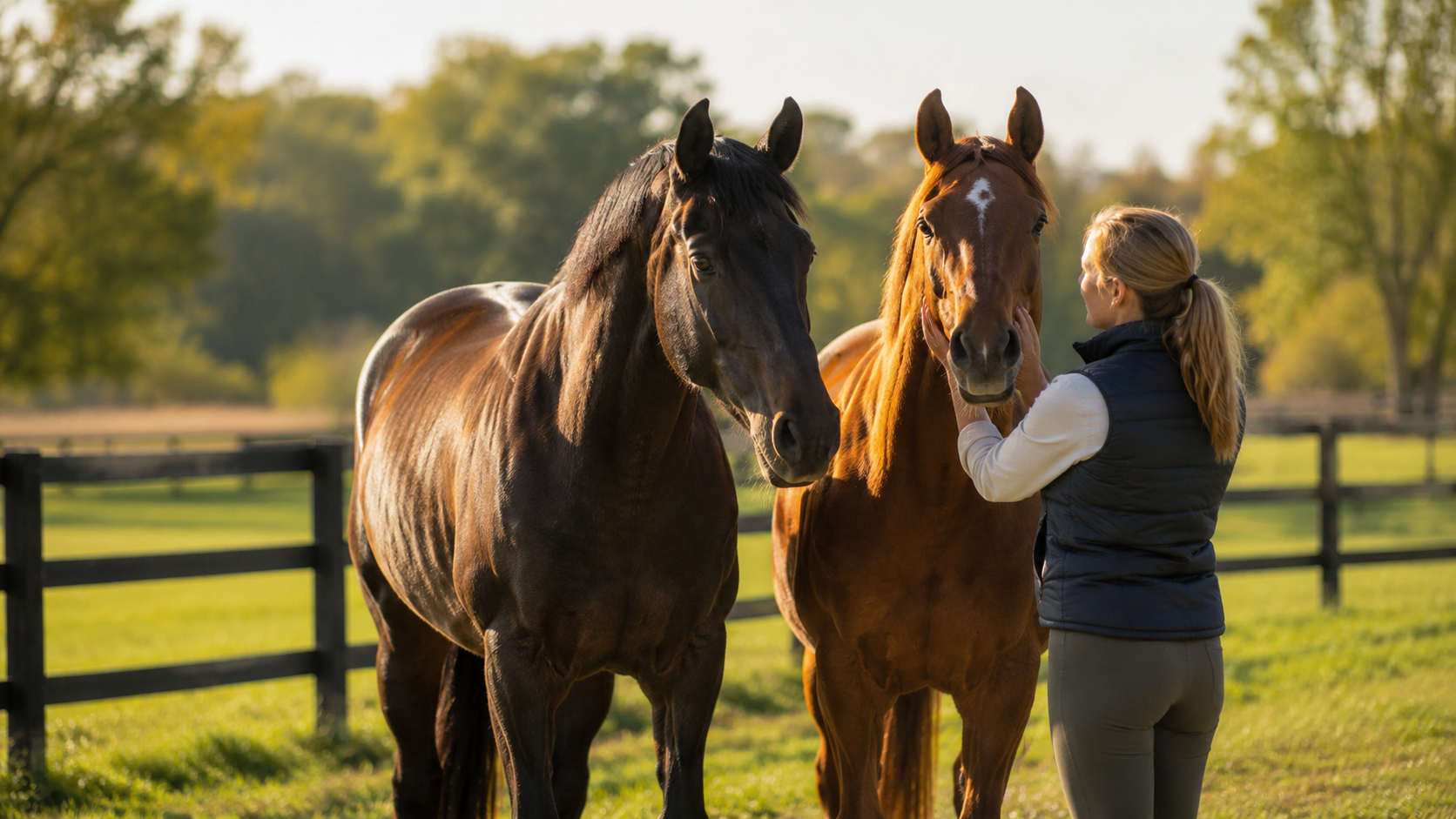
The Murgese is renowned for its calm, docile, and balanced temperament, making it a pleasant horse to handle and ride. It is also courageous, willing, and very hardy, with a great learning ability and a good aptitude for work.
- Category
- hardy breed
- Origin
- Italy · Middle Ages (established in the 15th-16th century)
- Height at withers
- 150–165 cm
- Weight
- 450–600 kg
- Lifespan
- 25-30 years
- Common coats
- jet black, roan (red roan or blue roan)
- Disciplines
- dressage, driving, TREC, equestrian trail riding
- Other names
- Murge
Origin and history
The Murgese originates from the Murge region, in Puglia, Italy. It descends from indigenous horses crossed with Oriental and Iberian horses introduced during invasions and foreign dominations. Historically used by cavalry and for agricultural work, it experienced a decline before being officially recognized and revived in the mid-20th century. The studbook was created in 1926, but the breed was truly established and promoted from the 1960s onwards.

Conformation and physique
It is a horse of mesoline to sub-brevile build, robust and compact, with a solid bone structure and well-developed musculature. It presents a harmonious silhouette, typical of baroque horses, with good body depth.
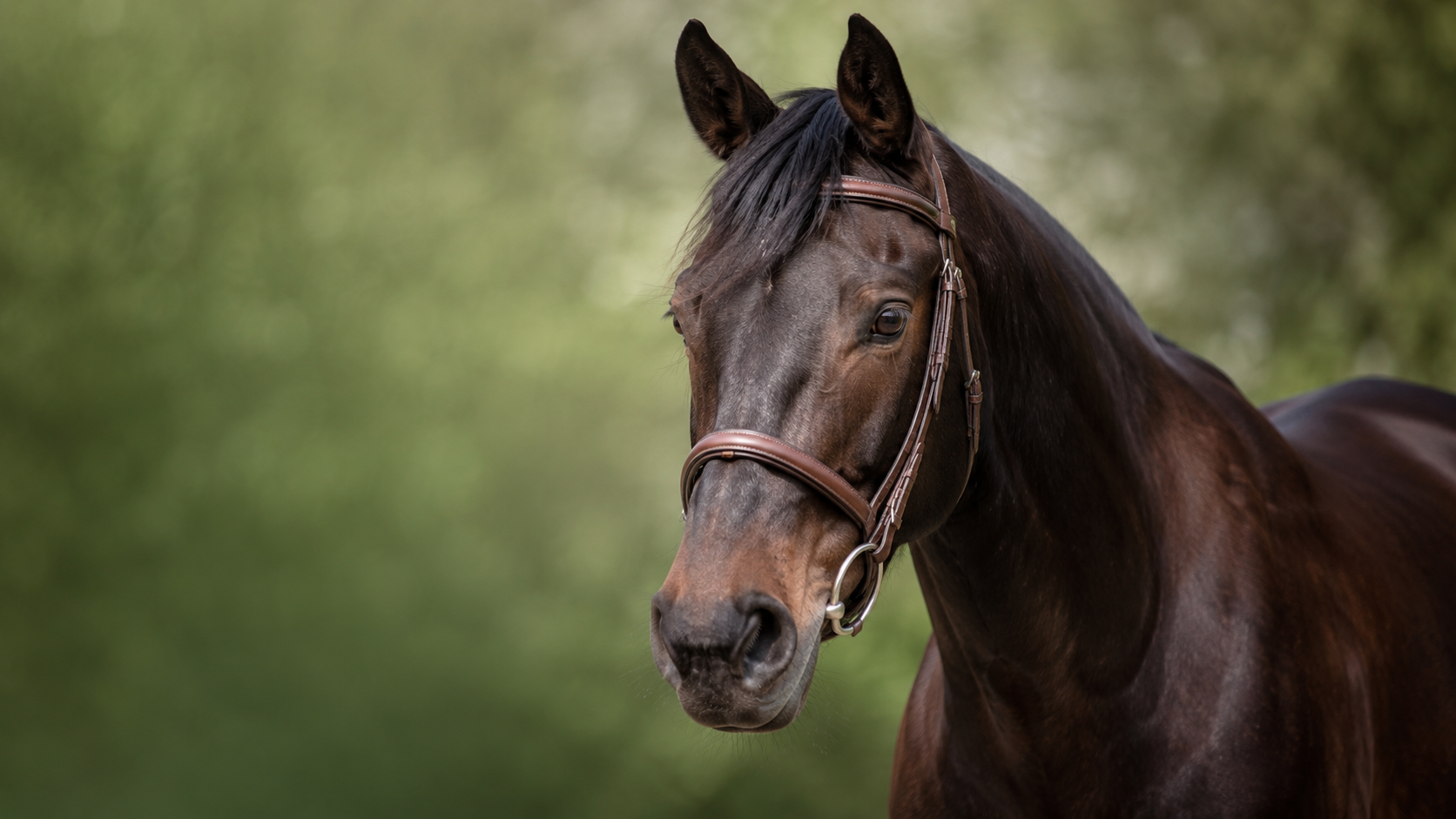
The head is medium-sized, often a little long, with a straight or slightly convex (Roman nose) profile. The forehead is broad, the eyes expressive and lively, the ears medium-sized and well-set. The nostrils are wide and the jaws strong.
The neck is well-set, muscular, and arched, typical of baroque horses, ending in a well-defined and muscular, but not excessively high, wither.
The back is short and strong, the topline is taut and muscular. The chest is broad and deep, ensuring good respiratory capacity. The croup is broad, muscular, and slightly sloped, with a well-set tail.
The limbs are solid, with large and well-defined joints. The cannon bones are short and strong, the pasterns of medium length. The feet are robust, with hard, black horn. Feathers are present, but not excessively abundant.
- Common coats: jet black, roan (red roan or blue roan)
Temperament and aptitudes
The Murgese is renowned for its calm, docile, and balanced temperament, making it a pleasant horse to handle and ride. It is also courageous, willing, and very hardy, with a great learning ability and a good aptitude for work.
The gaits are ample, regular, and energetic, with good balance and natural impulsion. The walk is active, the trot supple, and the canter rhythmic, showing a good aptitude for collection.
- Uses: saddle horse, driving, light agricultural work (historical), equestrian tourism, recreational riding, dressage, equestrian show, equine-assisted therapy
- Disciplines: dressage, driving, TREC, equestrian trail riding, working equitation
Feeding the Murgese
The Murgese is a hardy and economical breed, adapted to the poor pastures of its region of origin. It has an efficient metabolism and is able to utilize medium-quality forages. It is important to monitor its weight, as it can be prone to obesity if the diet is too rich or work is insufficient. A supply of good quality forage (hay) should form the basis of its diet, supplemented by concentrates only if the level of work requires it, and in moderation.
As a hardy and economical breed, the Murgese can be predisposed to Equine Metabolic Syndrome (EMS) and laminitis if overfed or sedentary. It is therefore crucial to manage its diet carefully, limiting sugar and starch intake, and favoring a high-fiber diet.
With Equio, every feed, supplement or treat is read against the horse's real profile (age, weight, Body Condition Score, conditions) — useful for a Murgese as soon as a metabolic or digestive sensitivity is known.
Health and points to watch
The robustness of the Murgese makes it a generally healthy horse. Vigilance must focus on weight management to prevent metabolic risks. Regular dental check-ups and appropriate hoof care are also essential to maintain its good general health.
- More frequent conditions: laminitis (if overfed), Equine Metabolic Syndrome (EMS)
Care and grooming
The Murgese's hooves are renowned for their hardness and resistance, requiring regular trimming but often less intensive than other breeds. The mane, tail, and feathers, although present, are not excessively abundant, and regular brushing is sufficient to maintain them. The dense coat does not require special care, but clipping may be considered for horses in intense work during winter. Particular attention should be paid to the skin under the feathers to prevent skin conditions related to humidity.
Did you know?
- The Murgese is one of the rare Italian equine breeds that has been saved from extinction thanks to targeted conservation efforts.
- Its glossy black coat, often associated with a slightly convex profile, gives it a noble and baroque appearance, highly valued in equestrian shows.
- It is sometimes nicknamed the 'horse of Puglia' in reference to its region of origin.
The Murgese and how to track it
The Murgese breed is poorly represented in France, where it remains confidential. A few passionate breeders import individuals for breeding or leisure and show riding, but it does not yet have a significant presence in the country.
Equio lets you build a complete profile for a Murgese: identity, weight, Body Condition Score, feeding, conditions, care reminders (vaccines, worming, trimming) and an exportable health log. The breed sets the identity; everyday decisions still depend on the real horse and your vet's advice.
- Record the activity level: rest, leisure, sport or breeding
- Add known conditions or sensitivities
- Scan feeds, plants and care products
- Keep reminders (vaccines, worming, trimming)
- Prepare a PDF export before a vet appointment
Frequently asked questions
Is the Murgese suitable for beginners?
Yes, thanks to its calm, docile temperament and willingness to please, the Murgese is often considered an excellent mount for beginner or inexperienced riders, as well as for children.
What is the most common coat color for the Murgese?
The most iconic and common coat color for the Murgese is solid black. However, the roan coat (strawberry roan or blue roan) is also accepted and present in the breed, though less frequent.
Is the Murgese a good sport horse?
The Murgese excels in disciplines requiring strength, endurance, and agility, such as dressage, driving, and TREC. Its versatility and temperament make it a reliable partner, although it is not a top-level sport horse for speed or pure jumping disciplines.
How to care for the Murgese's hooves?
The Murgese's hooves are naturally hard and resilient. Regular trimming by a farrier is essential to maintain their shape and prevent problems. They are generally suited for barefoot work, but shoeing may be necessary depending on the terrain and intensity of work.
Is the Murgese an endangered breed?
After experiencing a significant decline, the Murgese has been the subject of a successful conservation program. Although its population is not very high, it is stable and increasing thanks to the efforts of Italian breeders and the growing interest in this hardy and versatile breed.