
Horse breed
Azteca
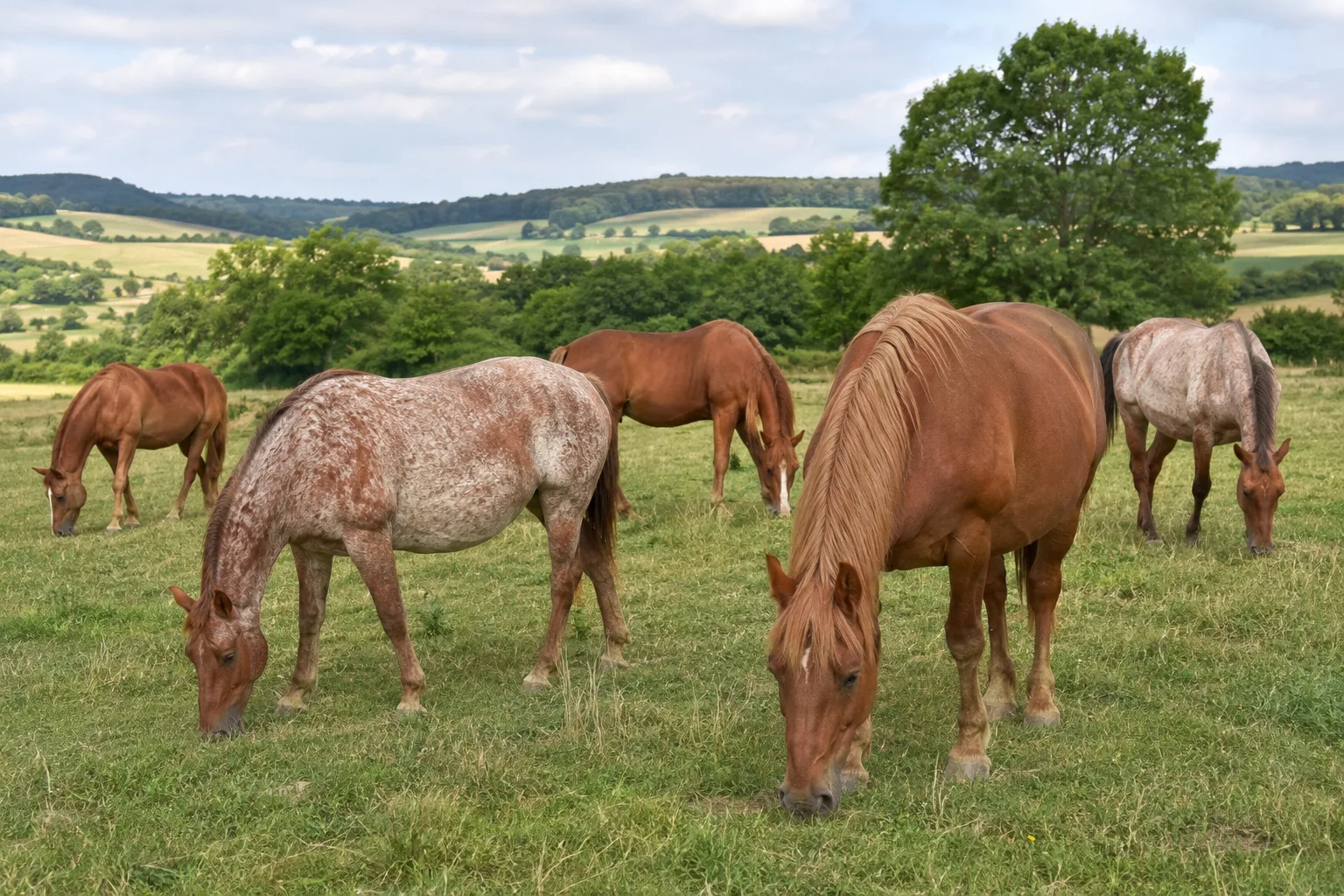
The Azteca breed was developed in Mexico in the 1970s with the goal of creating a versatile, elegant, and athletic saddle horse. It originated from a cross between the Spanish Purebred (Andalusian), the Quarter Horse, and the Criollo.
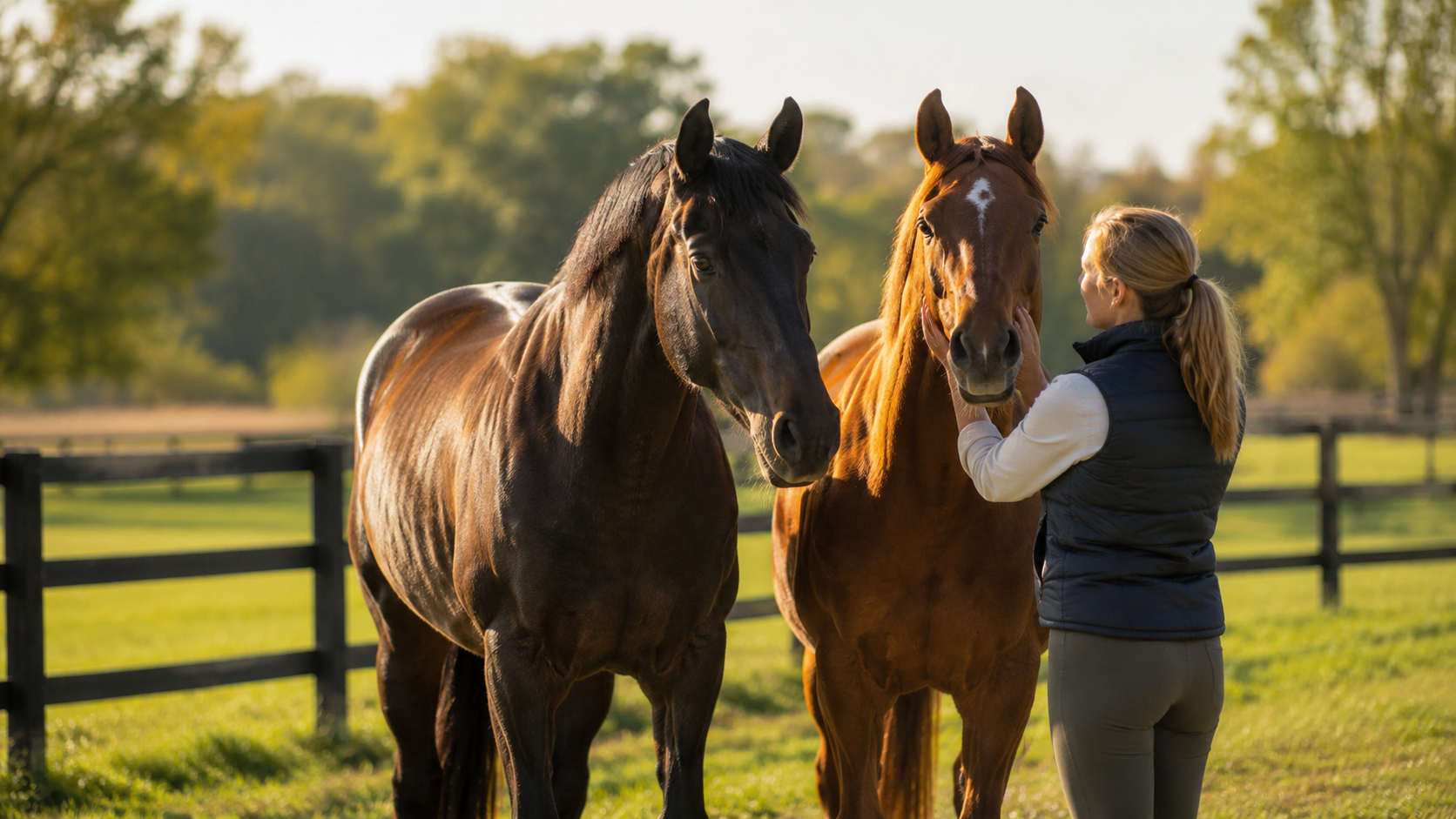
The breed at a glance
The Azteca is renowned for its balanced, intelligent, and willing temperament. It is courageous, docile, and easy to train, making it an excellent partner for various disciplines. Its responsiveness and learning ability are highly valued.
- Category
- saddle horse
- Origin
- Mexico · 1970s
- Height at withers
- 150–162 cm
- Weight
- 450–550 kg
- Lifespan
- 25-30 years
- Common coats
- bay, chestnut, grey, black, palomino, dun
- Disciplines
- classical dressage, western riding, charrería, TREC
Origin and history
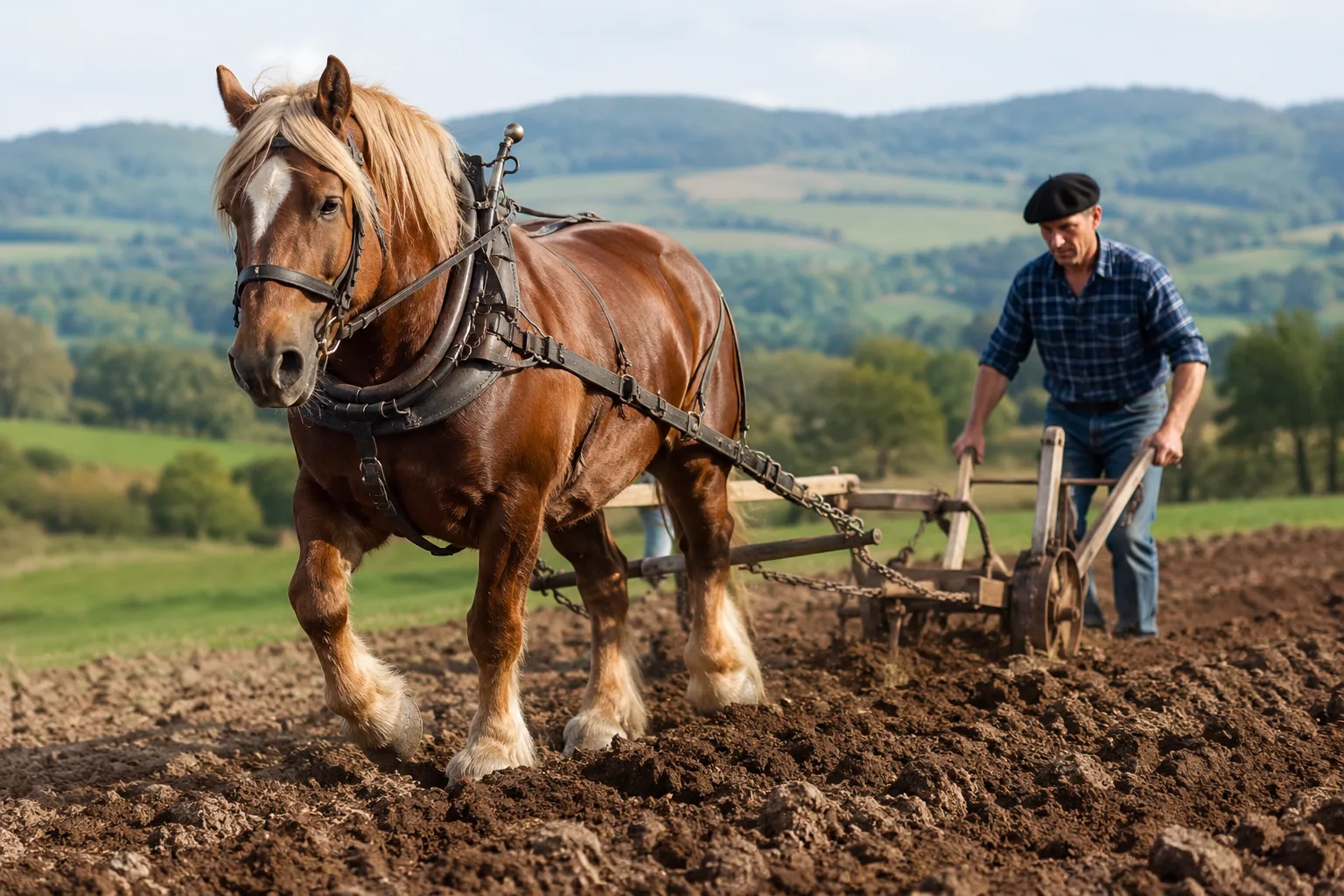
The Azteca breed was developed in Mexico in the 1970s with the goal of creating a versatile, elegant, and athletic saddle horse. It originated from a cross between the Spanish Purebred (Andalusian), the Quarter Horse, and the Criollo. The breed was officially recognized in 1982 by the Secretaría de Agricultura y Recursos Hidráulicos of Mexico. It has become a symbol of Mexican horsemanship and is highly valued for ranch work and equestrian disciplines.

Conformation and physique
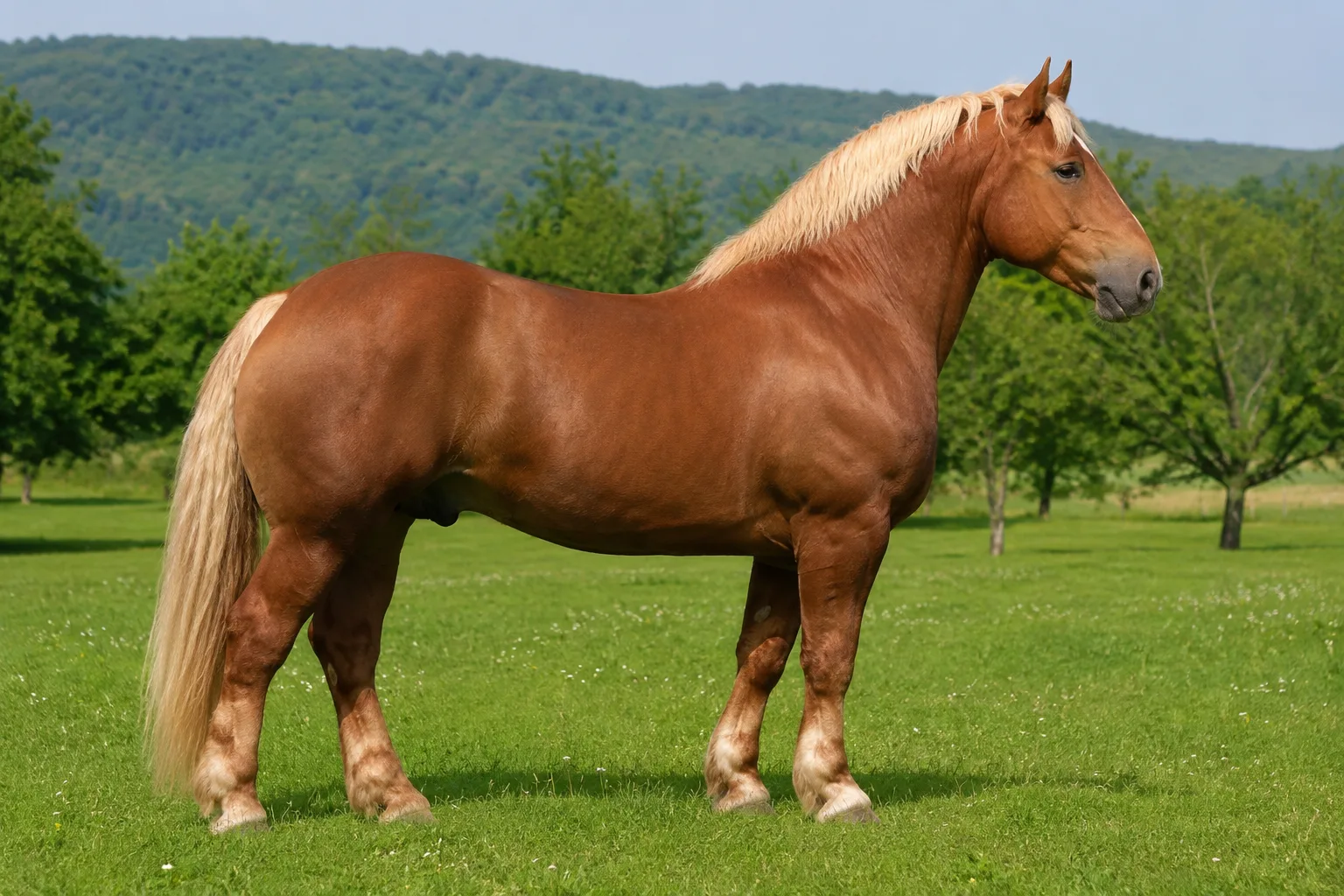
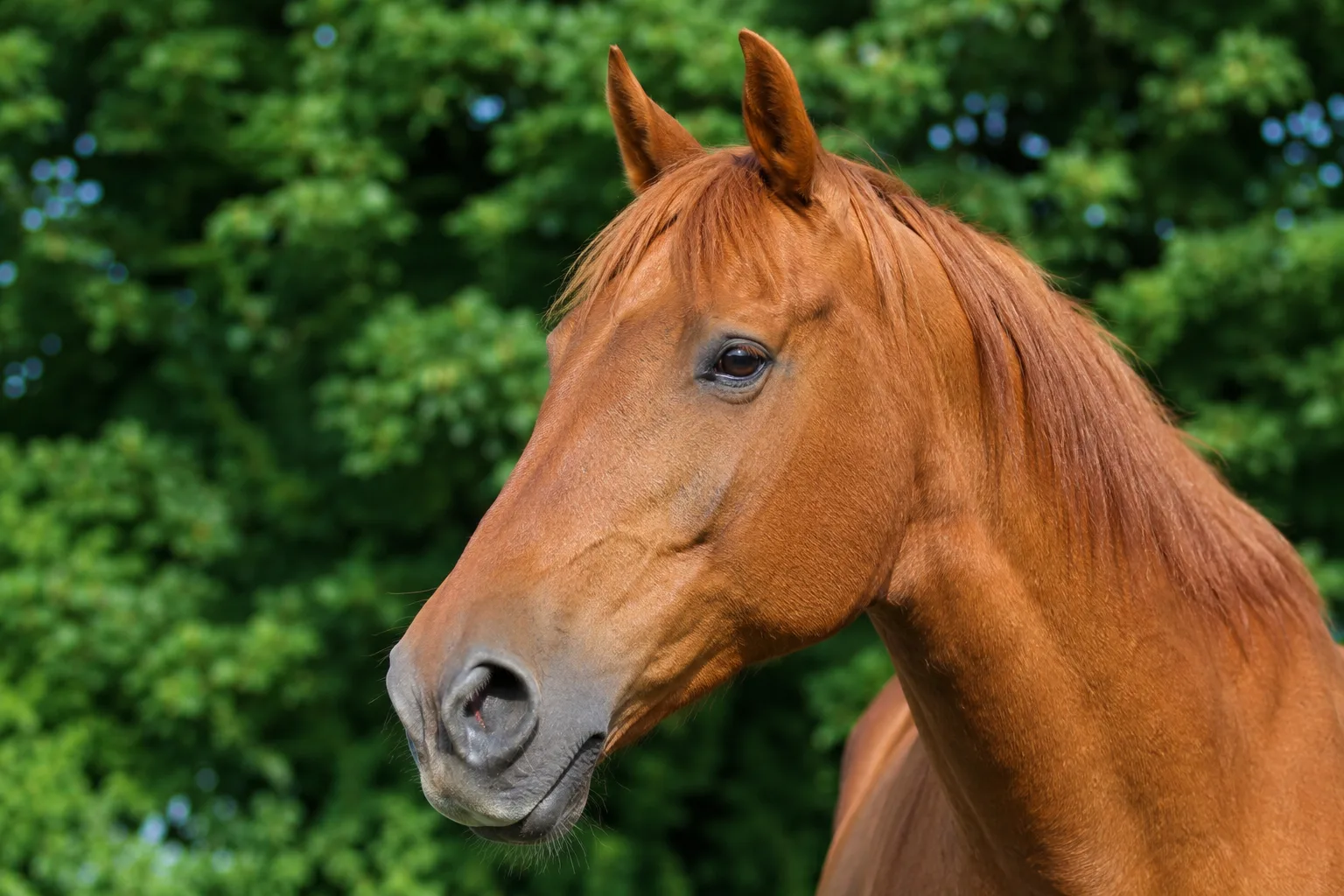
The Azteca is a medium to large-sized horse, harmonious and muscular, combining the elegance of the Andalusian with the robustness of the Quarter Horse. It has a solid bone structure without being heavy, and a balanced silhouette.
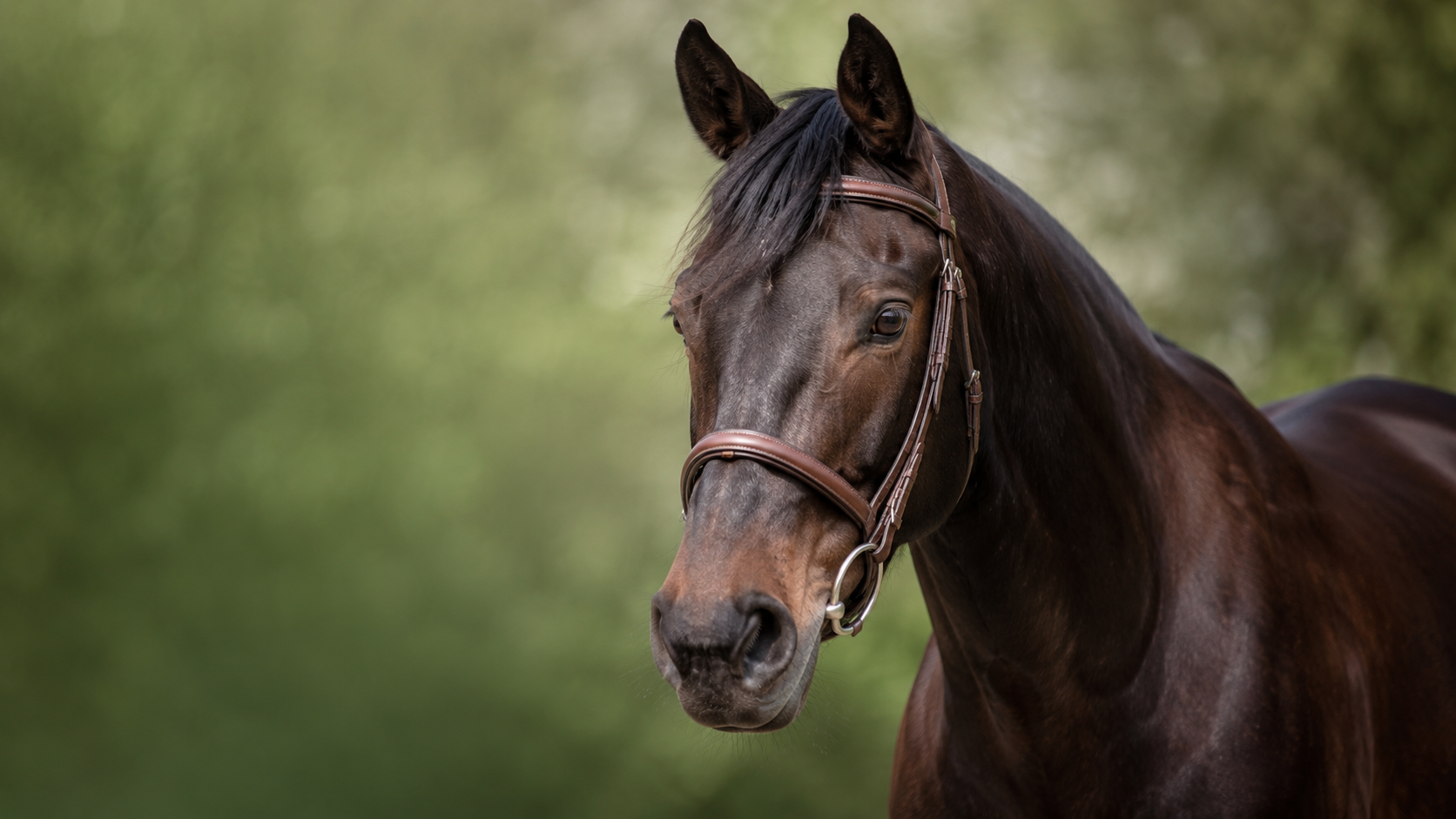
The head is medium-sized, well-proportioned, with a straight or slightly convex (subconvex) profile, expressive eyes, and large nostrils. The ears are medium-sized, well-set, and mobile.
The neck is muscular, well-arched, and set high, conferring a noble appearance. The withers are well-defined and extended, allowing for good saddle placement.
The back is short and strong, the topline is taut and muscular. The chest is broad and deep, ensuring good respiratory capacity. The croup is rounded and powerful, often double, typical of working horses.
The limbs are solid, with broad and well-defined joints. The cannons are short, and the pasterns are of medium length. The feet are round, hard, and well-formed. Feathering is generally sparse.
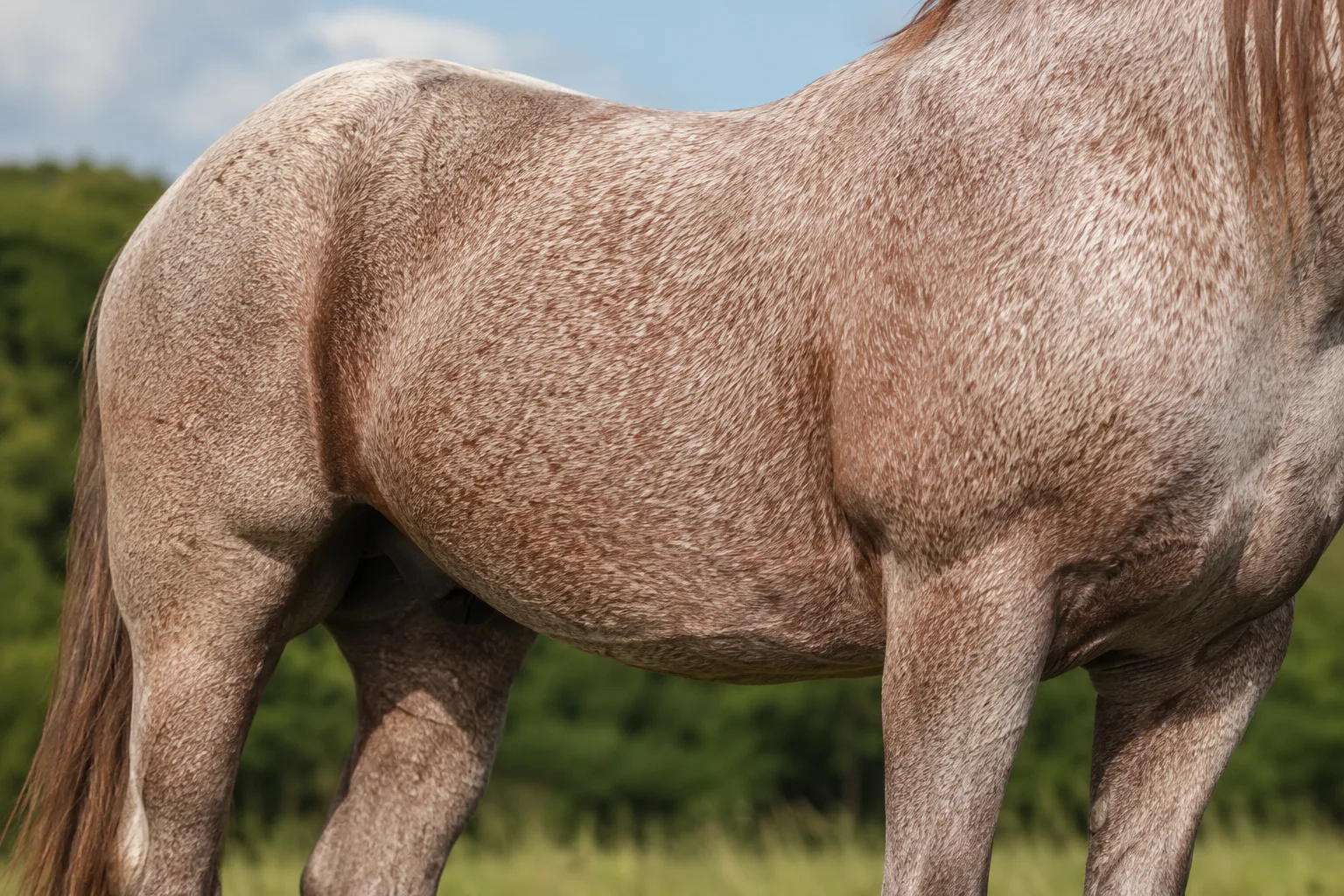
- Common coats: bay, chestnut, grey, black, palomino, dun
Temperament and aptitudes
The Azteca is renowned for its balanced, intelligent, and willing temperament. It is courageous, docile, and easy to train, making it an excellent partner for various disciplines. Its responsiveness and learning ability are highly valued.
Its gaits are expansive, supple, and energetic, with good balance and great agility. The walk is regular, the trot is elevated, and the canter is powerful and balanced, ideal for cattle work and haute école.
- Uses: working equitation (charrería), dressage, equestrian trail riding, equestrian show, recreational riding, cattle work
- Disciplines: classical dressage, western riding, charrería, TREC, show
Feeding the Azteca
The Azteca, originating from robust bloodlines, generally has a rather efficient metabolism, but its musculature and activity level may require adapted nutrient intake. It needs a balanced diet, rich in good quality forage (hay, grass). Concentrates should be adjusted according to its activity level to prevent obesity, especially if it is not worked much. Particular attention should be paid to protein intake for maintaining its muscle mass.
Although there are no documented genetic predispositions specific to the Azteca breed for metabolic conditions such as laminitis or EMS, its heritage from robust breeds can make it susceptible to obesity if its diet is not managed. Monitoring sugar and starch intake is always recommended to prevent general metabolic risks in horses.
With Equio, every feed, supplement or treat is read against the horse's real profile (age, weight, Body Condition Score, conditions) — useful for a Azteca as soon as a metabolic or digestive sensitivity is known.
Health and points to watch
Particular attention should be paid to joint health, especially in horses subjected to intense work. Regular hoof care is essential to prevent hoof problems. As with any horse, good parasite management and an appropriate vaccination program are crucial.
- More frequent conditions: joint problems related to intense activity, hoof conditions if the feet are not well maintained
Care and grooming
The Azteca requires regular care, including hoof trimming every 6 to 8 weeks to maintain their integrity. Its mane and tail, often abundant, benefit from regular detangling. The coat is easy to maintain; daily brushing is sufficient. Skin care is standard, with monitoring for irritations or injuries.
Did you know?
- The Azteca is the first horse breed developed in Mexico.
- The breed standard requires the Azteca to have at least 3/8 and no more than 5/8 Andalusian or Quarter Horse blood, with the remainder being Criollo.
- There are three types of Azteca: A (more Andalusian), B (more Quarter Horse), and C (more Criollo), although type A is the most common.
The Azteca and how to track it
The Azteca breed is present in France, but in small numbers. A few passionate breeders contribute to its development, and it is appreciated by riders seeking a versatile horse for dressage, working equitation, or recreational riding.
Equio lets you build a complete profile for a Azteca: identity, weight, Body Condition Score, feeding, conditions, care reminders (vaccines, worming, trimming) and an exportable health log. The breed sets the identity; everyday decisions still depend on the real horse and your vet's advice.
- Record the activity level: rest, leisure, sport or breeding
- Add known conditions or sensitivities
- Scan feeds, plants and care products
- Keep reminders (vaccines, worming, trimming)
- Prepare a PDF export before a vet appointment
Frequently asked questions
What is the average price of an Azteca horse?
The price of an Azteca varies considerably depending on its age, training level, lineage, and potential. It can range from €5,000 for a young, unbroken horse to over €20,000 for a trained and high-performing horse.
Is the Azteca a good horse for beginners?
Thanks to its calm, intelligent, and willing temperament, the Azteca can be an excellent horse for a beginner or intermediate rider, provided it is well-schooled and supervised. Its docility and responsiveness make it a pleasant partner.
What are the main differences between the Azteca and the Andalusian?
The Azteca is a crossbreed of the Andalusian, Quarter Horse, and Criollo. It retains the elegance and carriage of the Andalusian but gains robustness, musculature, and agility thanks to the contributions of the Quarter Horse and Criollo. The purebred Andalusian is generally more refined and more oriented towards haute école.
Is the Azteca suitable for cattle work?
Yes, the Azteca is particularly well-suited for cattle work. Its agility, speed, strength, and intelligence make it an excellent ranch horse, highly valued in charrería and western riding disciplines.
Where can I find Azteca breeders in France?
Azteca breeders in France are few but passionate. It is advisable to search through Iberian breed associations or working horse associations, or to consult specialized advertisements to find reliable contacts.