
Horse breed
Criollo
The Criollo descends from Iberian horses (Andalusians, Barbs, Castilian mares) introduced to South America by Spanish conquistadors in the 16th century. Left to roam wild on the vast plains, it developed incredible hardiness and resilience.

The breed at a glance
The Criollo is renowned for its calm, courageous, and intelligent temperament. It is a very hardy, enduring, and resilient horse, possessing a strong cow sense. It is loyal, willing, and easy to train, making it an excellent working partner.
- Category
- hardy breed
- Origin
- South America (Argentina, Uruguay, Brazil, Chile) · 16th century
- Height at withers
- 140–150 cm
- Weight
- 400–550 kg
- Lifespan
- 25-35 years
- Common coats
- bay, chestnut, grey, black, palomino, dun, grullo, roan, strawberry roan, grullo, dark dun, tobiano, overo
- Disciplines
- cattle work, endurance riding, trail riding, polo
- Other names
- Crioulo, Crioulo Brasileiro, Criollo Argentino, Criollo Chileno, Criollo Uruguayo



Origin and history
The Criollo descends from Iberian horses (Andalusians, Barbs, Castilian mares) introduced to South America by Spanish conquistadors in the 16th century. Left to roam wild on the vast plains, it developed incredible hardiness and resilience. The breed was established and officially recognized in the early 20th century, particularly in Argentina, to preserve its unique qualities. It has become the emblematic horse of the gauchos and South American culture.

Conformation and physique
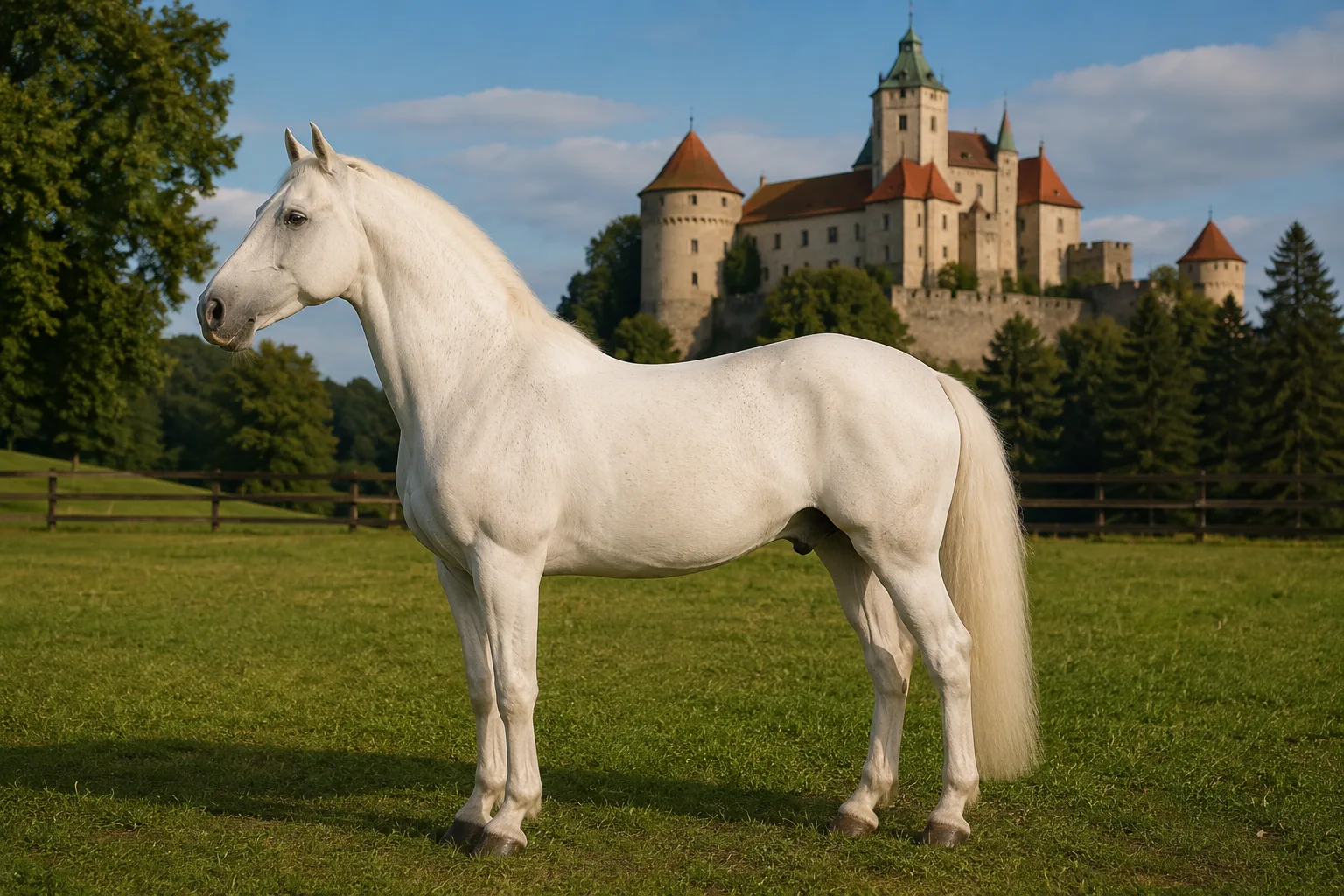
A medium-sized horse, compact and muscular, with strong bone structure and great robustness. Its build is that of a working horse, powerful and enduring, suited for long distances and difficult terrain.
Expressive head, with a straight or slightly convex profile, a broad forehead, lively and intelligent eyes, and well-opened nostrils. The ears are small and mobile.
Strong, muscular, and well-set neck, often arched, connecting to a low but well-defined wither.
Short and broad back, strong topline. Deep and ample chest, well-sprung ribs. Broad, muscular, and slightly sloping croup, with a low-set tail.
Short, clean, and very strong limbs, with large and well-defined joints. The cannons are short, and the feet are hard, round, and well-formed, adapted to varied terrain. No excessive feathering.
- Common coats: bay, chestnut, grey, black, palomino, dun, grullo, roan, strawberry roan, grullo, dark dun, tobiano, overo
Temperament and aptitudes
The Criollo is renowned for its calm, courageous, and intelligent temperament. It is a very hardy, enduring, and resilient horse, possessing a strong cow sense. It is loyal, willing, and easy to train, making it an excellent working partner.
The gaits are free, supple, and energetic, with great endurance. The walk is active, the trot extended, and the canter powerful, allowing for long distances to be covered without fatigue.
- Uses: cattle work (gauchos), equestrian trail riding, endurance riding, recreational riding, polo, western riding, 'paleteada' races
- Disciplines: cattle work, endurance riding, trail riding, polo, western riding
Feeding the Criollo
The Criollo is a very thrifty horse, accustomed to harsh living conditions and a frugal diet. Its metabolism is adapted to make the most of average quality forage. It tends to gain weight if its diet is too rich. A diet based on good quality hay is generally sufficient, along with mineral and vitamin supplements. Concentrates are only necessary in cases of intense work or specific needs.
Thanks to its hardiness and adaptation to sparse diets, the Criollo shows a low documented predisposition to metabolic disorders such as laminitis or Equine Metabolic Syndrome (EMS) compared to other more 'modern' breeds. However, overfeeding with sugars and starches, combined with a lack of exercise, can still pose a risk.
With Equio, every feed, supplement or treat is read against the horse's real profile (age, weight, Body Condition Score, conditions) — useful for a Criollo as soon as a metabolic or digestive sensitivity is known.

Health and points to watch
Its great hardiness generally makes it resistant to diseases. The condition of the feet, which are heavily used, must be monitored, and good parasite management ensured. Particular attention should be paid to dental health, especially in older horses, to prevent chewing and digestion problems.
- More frequent conditions: conditions related to joint wear and tear in older working horses, age-related dental problems
Care and grooming
The Criollo is an easy-care horse. Its hard hooves require regular trimming but are generally robust. Mane and tail are often thick and can be left natural or braided for work. Its dense coat protects it well from the elements and does not require special care, apart from regular brushing. Clipping is rarely necessary, except for the horse's comfort during intense work or in hot climates.
Did you know?
- The Criollo is famous for its participation in the 'Marcha de Resistencia', an extreme endurance event of 750 km over 15 days, with horses carrying 110 kg and feeding solely on grass.
- The Criollo has been used to create other breeds, notably the Quarter Horse, contributing its robustness and 'cow sense'.
- The Criollo is the national horse of Argentina and Uruguay.
The Criollo and how to track it
The Criollo breed is present in France, but in small numbers. It is appreciated by western riding, trail riding, and endurance enthusiasts for its qualities of hardiness, endurance, and reliable temperament. A few specialized breeding farms exist.
Equio lets you build a complete profile for a Criollo: identity, weight, Body Condition Score, feeding, conditions, care reminders (vaccines, worming, trimming) and an exportable health log. The breed sets the identity; everyday decisions still depend on the real horse and your vet's advice.
- Record the activity level: rest, leisure, sport or breeding
- Add known conditions or sensitivities
- Scan feeds, plants and care products
- Keep reminders (vaccines, worming, trimming)
- Prepare a PDF export before a vet appointment
Frequently asked questions
Is the Criollo suitable for beginners?
Yes, thanks to its calm, patient, and willing temperament, the Criollo can be an excellent horse for beginners, provided they have proper guidance. Its hardiness and reliability make it a safe partner.
What is the average price of a Criollo?
The price of a Criollo varies considerably depending on its age, training level, lineage, and location. In France, a well-trained horse typically costs between €4,000 and €15,000, but exceptional individuals can fetch higher prices.
Does the Criollo tolerate cold well?
Absolutely. The Criollo is an extremely hardy breed, accustomed to the extreme climatic variations of South America, including harsh winters. Its dense coat and robust constitution allow it to tolerate cold very well, provided it has shelter and appropriate feed.
Is the Criollo a good family horse?
Yes, its gentle temperament and patience make it an excellent family horse. It is generally very reliable and safe, making it suitable for riders of all ages and levels, for leisure riding or trail riding.
What are the main differences between an Argentine Criollo and a Brazilian Crioulo?
While very similar, Argentine and Brazilian Criollo lineages may exhibit slight variations in conformation and temperament, due to specific breed standards in each country and local selections. The Brazilian Crioulo is sometimes perceived as slightly more compact and muscular.