
Horse breed
Lusitano
The Lusitano is one of the oldest saddle horse breeds in the world, descending from the Iberian horses of the peninsula. It shares common ancestry with the Pure Spanish Horse (PRE).

The breed at a glance
The Lusitano is renowned for its noble, courageous, and generous temperament. It is intelligent, sensitive, and possesses a great capacity for learning, making it a willing and attentive partner in work. It is also known for its 'courage' in the face of danger, inherited from its past as a warhorse and bullfighting horse.
- Category
- saddle horse
- Origin
- Portugal · Antiquity (origins), 17th century (establishment), 20th century (modern recognition)
- Height at withers
- 155–165 cm
- Weight
- 450–550 kg
- Lifespan
- 25-30 years
- Common coats
- grey, bay, chestnut, black
- Disciplines
- dressage, working equitation, driving, equestrian show
- Other names
- Puro Sangue Lusitano, PSL
Origin and history
The Lusitano is one of the oldest saddle horse breeds in the world, descending from the Iberian horses of the peninsula. It shares common ancestry with the Pure Spanish Horse (PRE). Bred for centuries for warfare, bullfighting, and classical riding, it was officially recognized as a distinct breed from the Spanish horse in 1966. Its studbook is managed by the APSL (Associação Portuguesa de Criadores do Cavallo Puro Sangue Lusitano).
Conformation and physique
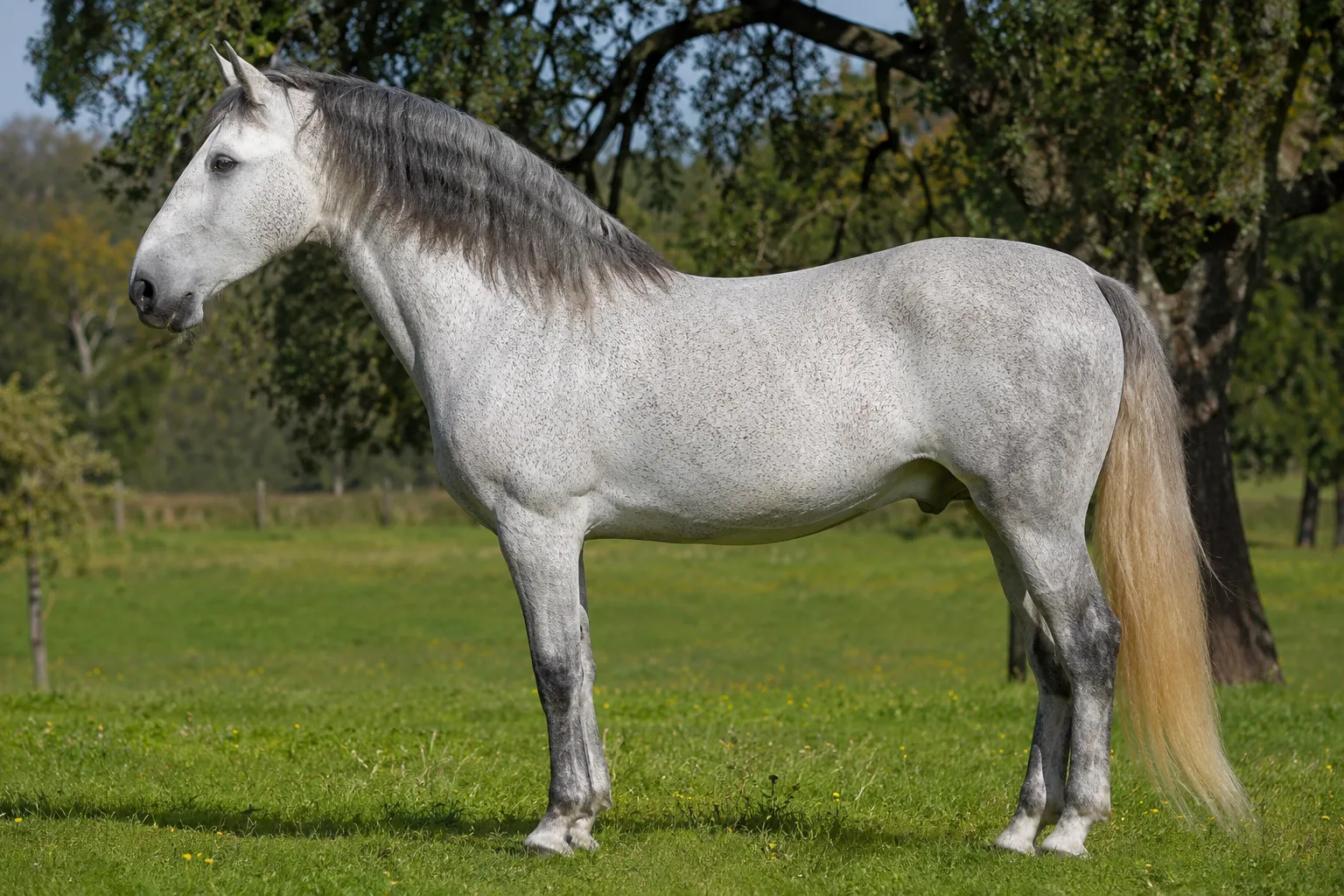
A mesomorphic, harmonious, and powerful horse, with a typical Baroque horse silhouette. It has a solid bone structure and well-developed musculature, without excessive heaviness.
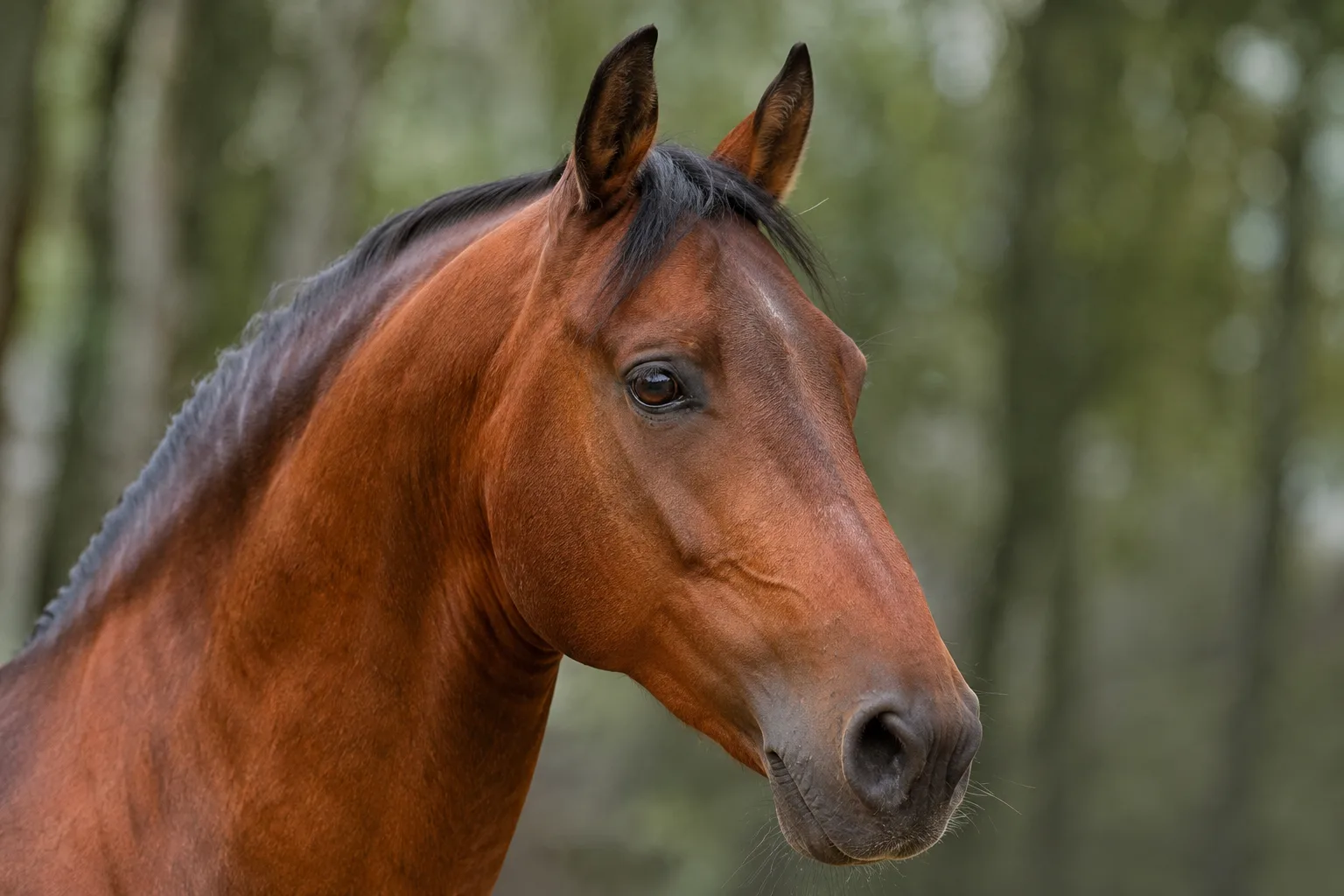
Medium-sized, expressive head, with a straight or slightly convex profile (Roman nose), characteristic of the breed. The eyes are large, lively, and expressive, and the ears are medium-sized and well-set.
Powerful, well-arched, and muscular neck, set high into the withers. The withers are broad and not very prominent, blending harmoniously into the back.
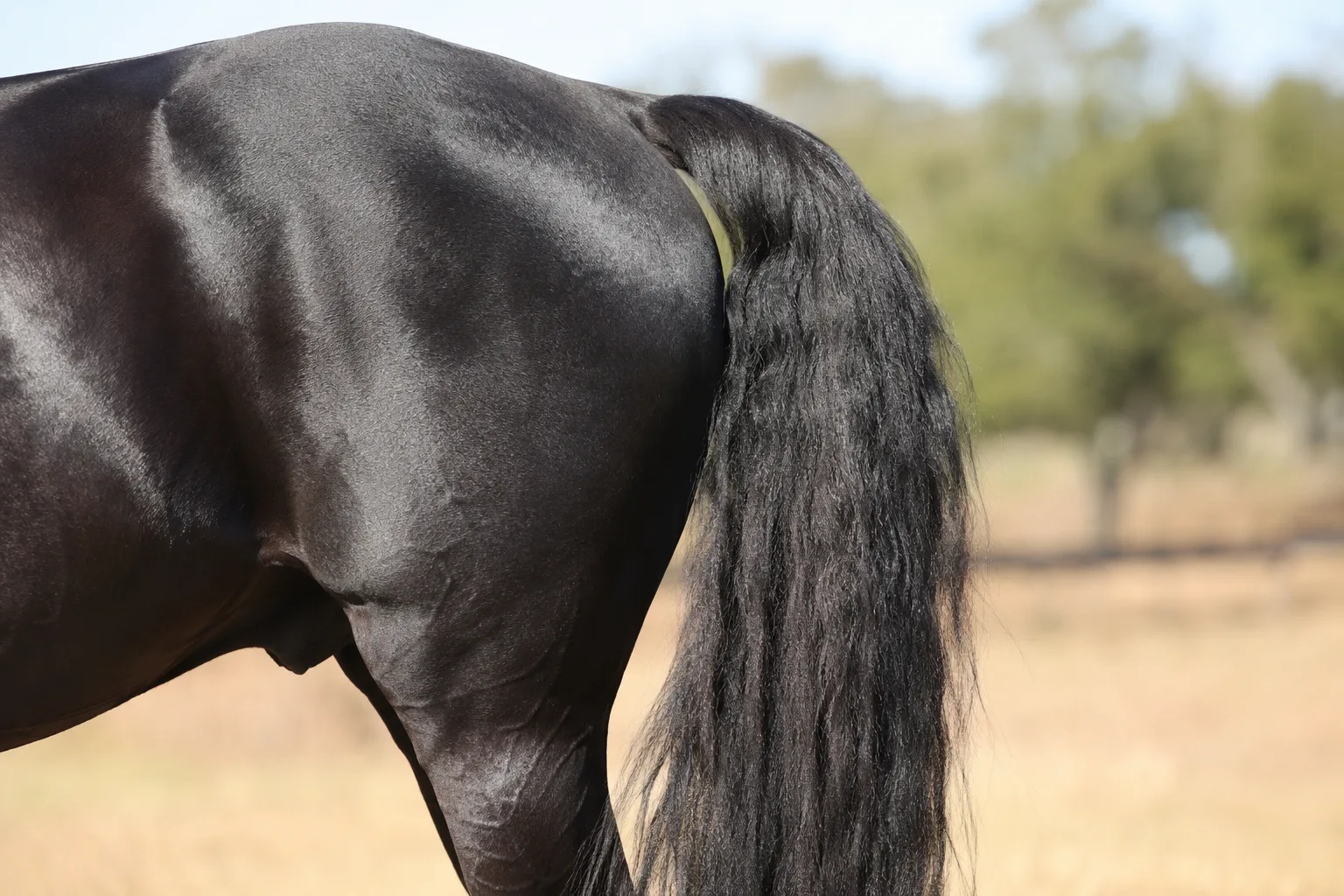
Short, broad, and strong back, with a taut and muscular topline. The chest is ample and deep, the croup is rounded, powerful, and slightly sloped, with a low-set tail.
Solid and well-muscled limbs, with broad joints and clean tendons. The cannons are short and the pasterns are medium length. Feathering is generally sparse.
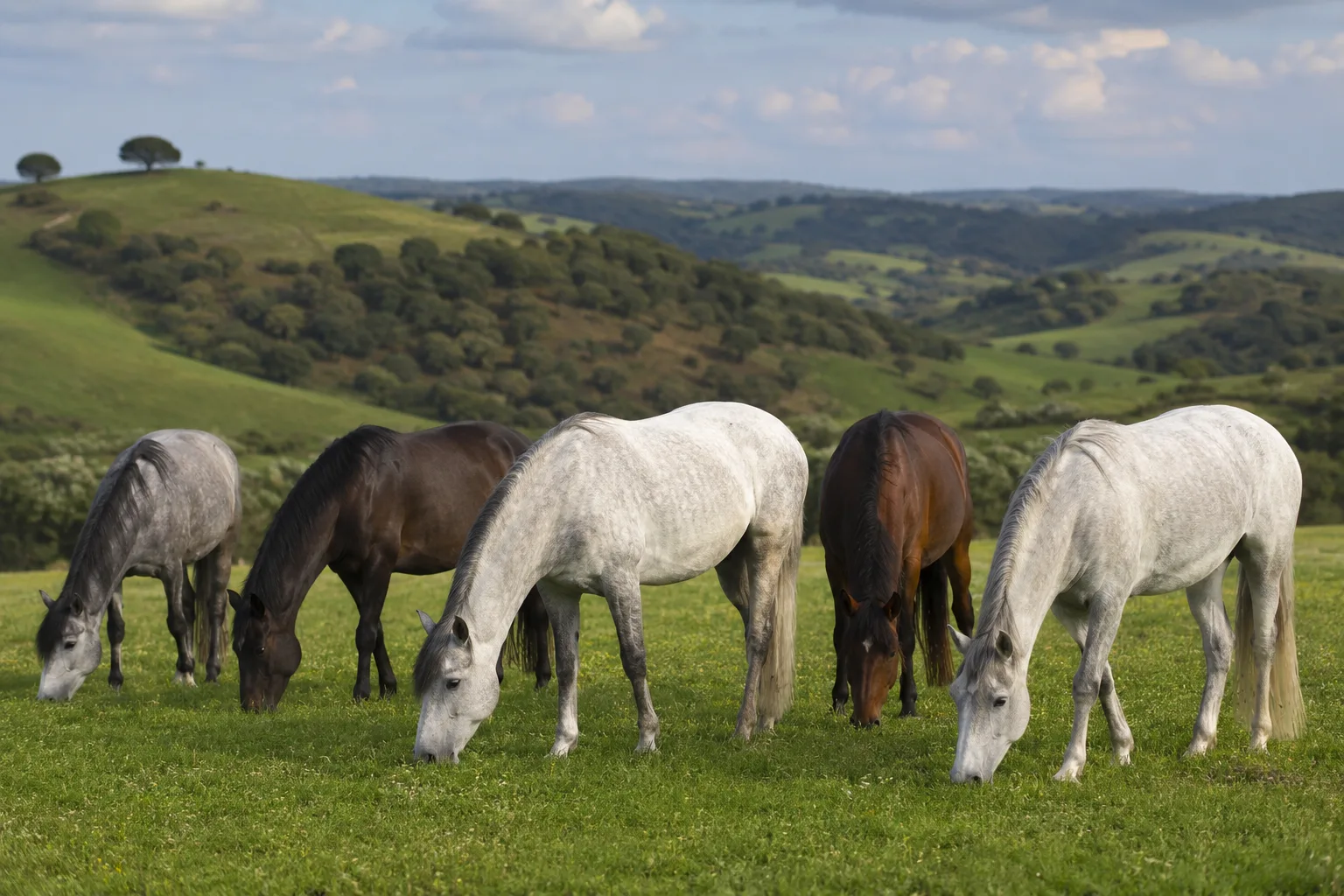
- Common coats: grey, bay, chestnut, black
Temperament and aptitudes
The Lusitano is renowned for its noble, courageous, and generous temperament. It is intelligent, sensitive, and possesses a great capacity for learning, making it a willing and attentive partner in work. It is also known for its 'courage' in the face of danger, inherited from its past as a warhorse and bullfighting horse.
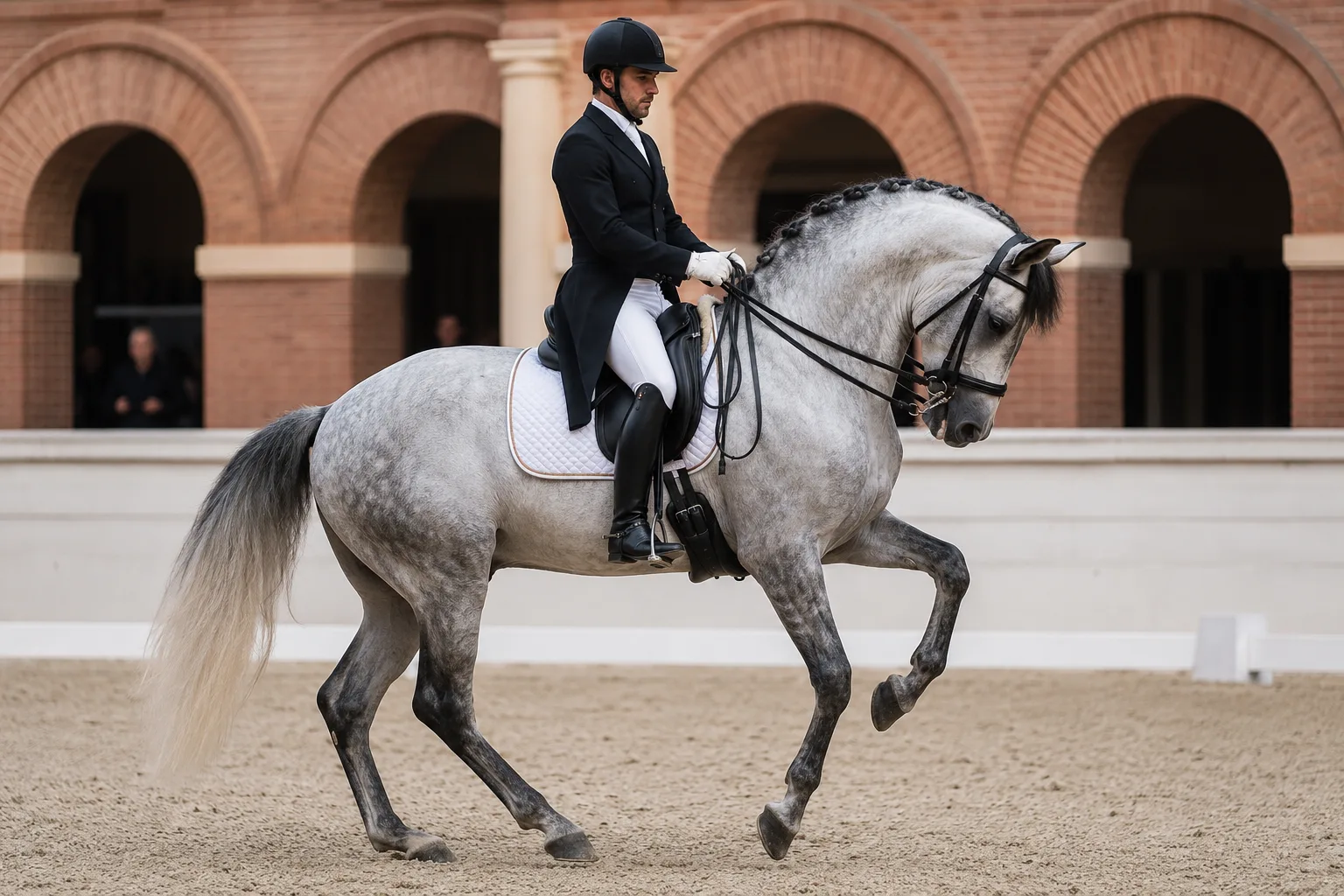
The gaits are elevated, ample, and supple, with great impulsion and a natural ability to collect. The canter is particularly balanced and rhythmic, the walk is energetic, and the trot is airy.
- Uses: working equitation, classical dressage, equestrian bullfighting, Haute École, leisure
- Disciplines: dressage, working equitation, driving, equestrian show, TREC
Feeding the Lusitano
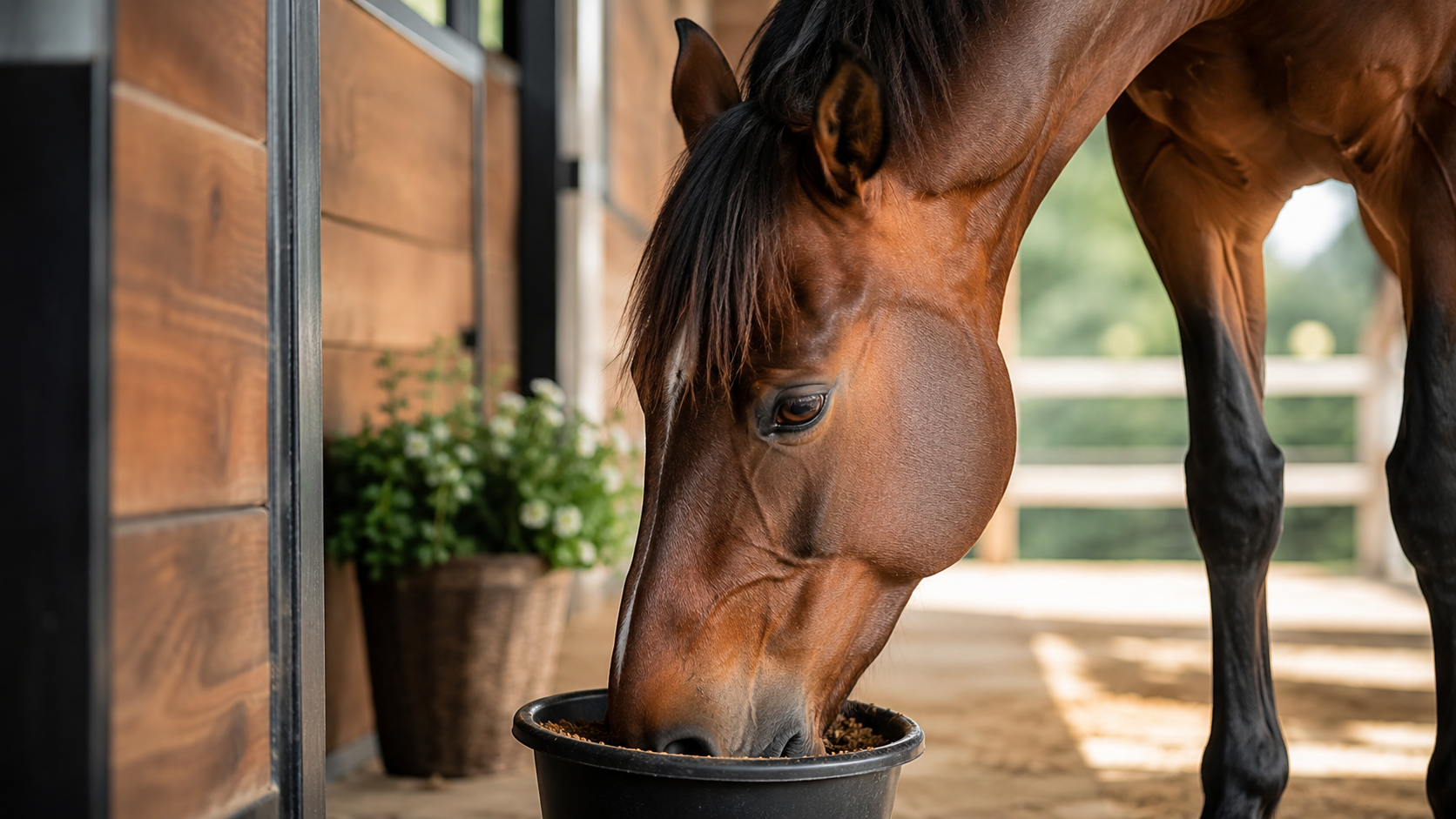
The Lusitano generally has an efficient metabolism, capable of effectively utilizing its feed ration. It tends to gain weight easily if not sufficiently exercised. A diet based on good quality forage (ad libitum hay or controlled grazing) is paramount. Concentrates should be adjusted sparingly according to the intensity of work, favoring low-starch and low-sugar feeds to prevent obesity.
Although robust, the Lusitano can be prone to obesity if overfed or lacking exercise, which increases the risk of Equine Metabolic Syndrome (EMS) and laminitis. It does not have a documented predisposition to specific metabolic diseases like PSSM.
With Equio, every feed, supplement or treat is read against the horse's real profile (age, weight, Body Condition Score, conditions) — useful for a Lusitano as soon as a metabolic or digestive sensitivity is known.

Health and points to watch
Regular weight monitoring is essential to prevent obesity and its complications. Particular attention should be paid to the maintenance of conformation and feet, as well as the early detection of signs of osteoarthritis in older or heavily worked horses.
- More frequent conditions: osteoarthritis (related to age and intensive work), dental problems (like any breed), respiratory conditions (like any breed)
Care and grooming
Lusitano hooves are generally strong and require regular trimming adapted to their conformation. The mane and tail are often abundant and thick, requiring regular detangling and maintenance to prevent knots. The coat is easy to care for, and clipping is only necessary for sport horses in intense work.
Did you know?
- The Lusitano is the preferred horse for equestrian bullfighting riders in Portugal and Spain, where its agility and courage are put to the test.
- It is often confused with the Pure Spanish Horse (PRE), but the two breeds have distinct standards and separate studbooks since 1966.
- The Lusitano is renowned for its ability to learn High School movements with great ease and natural elegance.
The Lusitano and how to track it
The Lusitano is well-established in France, with a growing population of breeders and users. It is highly valued for dressage, working equitation, and equestrian shows, as well as a leisure horse.
Equio lets you build a complete profile for a Lusitano: identity, weight, Body Condition Score, feeding, conditions, care reminders (vaccines, worming, trimming) and an exportable health log. The breed sets the identity; everyday decisions still depend on the real horse and your vet's advice.
- Record the activity level: rest, leisure, sport or breeding
- Add known conditions or sensitivities
- Scan feeds, plants and care products
- Keep reminders (vaccines, worming, trimming)
- Prepare a PDF export before a vet appointment
Frequently asked questions
What is the average price of a Lusitano?
The price of a Lusitano varies considerably depending on its age, level of training, lineage (bloodline, parents), and potential. A young, unbroken horse can cost between €5,000 and €10,000, while a trained horse with good bloodlines can reach €15,000 to €30,000 or more for exceptional individuals.
Is the Lusitano a good horse for beginners?
The Lusitano is intelligent and willing, but its sensitivity and energy can make it less suitable for a complete beginner. It is better suited for an experienced or supervised rider, capable of understanding and channeling its temperament, in order to develop a harmonious relationship and bring out its qualities.
What is the difference between a Lusitano and a Pure Spanish Horse (PRE)?
Although sharing common origins, the Lusitano and the PRE have evolved with slightly different breed standards. The Lusitano is often described as having a more convex profile, a rounder croup, and greater agility, while the PRE is sometimes perceived as more compact and powerful. Their studbooks have been distinct since 1966.
Is the Lusitano suitable for show jumping?
Although the Lusitano is agile and athletic, it is not traditionally bred for high-level show jumping. Its natural aptitudes predispose it more to dressage, working equitation, and disciplines requiring suppleness, balance, and collection. However, some individuals may prove competent in show jumping at intermediate levels.
How to choose a good Lusitano breeder?
To choose a good Lusitano breeder, prioritize those who are members of the APSL or recognized associations, and who emphasize bloodline selection, horse health, and welfare. Visit the facilities, observe the horses' temperaments, and discuss with the breeder their goals and practices to find the horse that suits your needs.