
Horse breed
Quarter Horse
The Quarter Horse originated from crosses between horses imported by Spanish colonists (Barb type, Spanish Purebred) and English horses (Thoroughbred) that arrived in Virginia. It was developed for sprint races over a quarter of a mile, hence its name.
The breed at a glance
The Quarter Horse is renowned for its calm, docile, and intelligent temperament. It is a willing, responsive, and very versatile horse, making it an excellent partner for work and leisure, suitable for many riders.
- Category
- saddle horse
- Origin
- United States · 17th - 18th Century
- Height at withers
- 142–163 cm
- Weight
- 450–600 kg
- Lifespan
- 25-30 years
- Common coats
- chestnut, bay, black, grey, palomino, dun, cremello, perlino, roan, dun, grullo, silver dapple
- Disciplines
- Reining, Cutting, Western Pleasure, Barrel Racing
- Other names
- American Quarter Horse
Origin and history
The Quarter Horse originated from crosses between horses imported by Spanish colonists (Barb type, Spanish Purebred) and English horses (Thoroughbred) that arrived in Virginia. It was developed for sprint races over a quarter of a mile, hence its name. Its versatility and speed made it an essential working horse for cowboys. The breed was officially recognized with the creation of the American Quarter Horse Association (AQHA) in 1940.
Conformation and physique
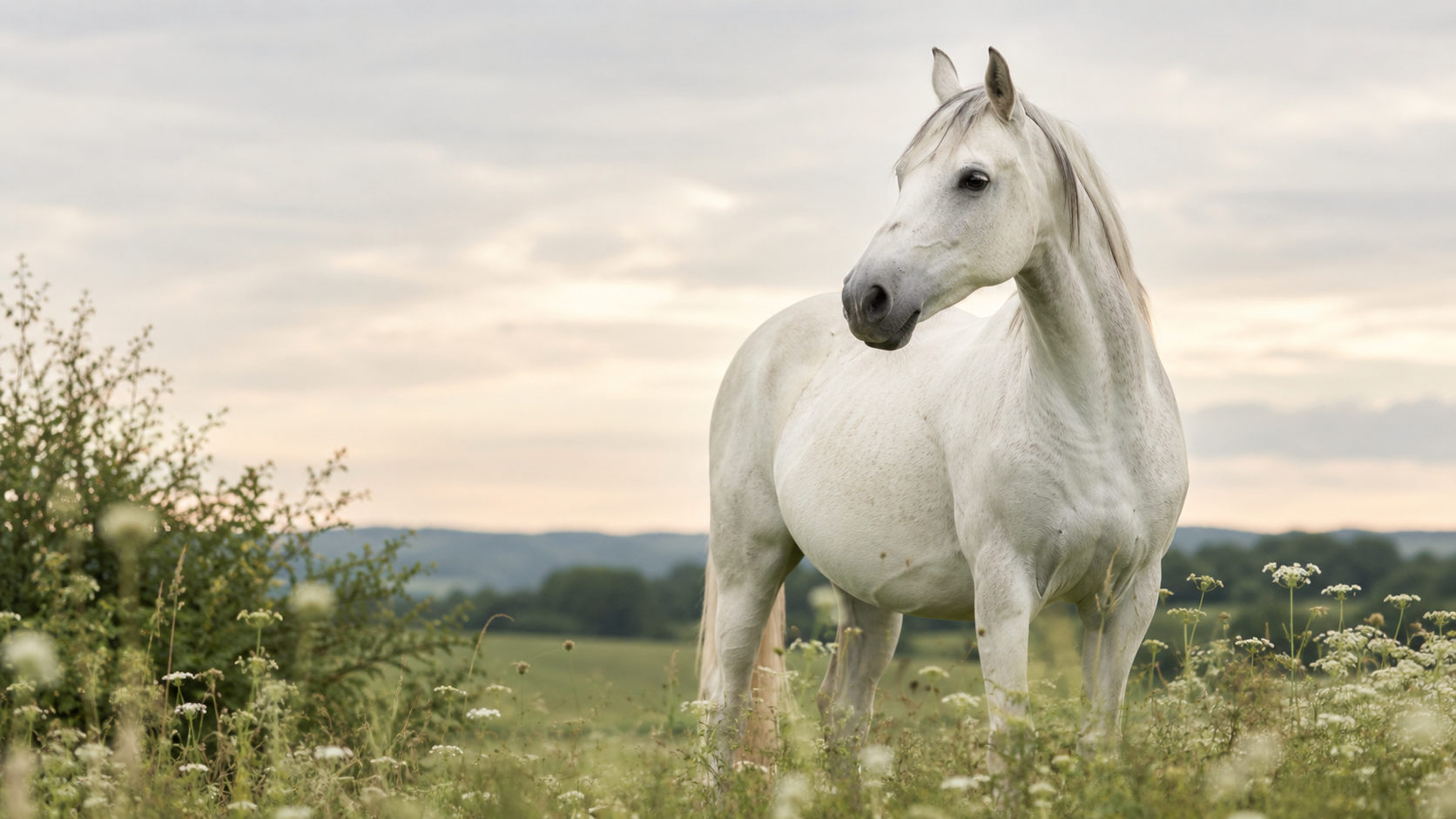
A compact, muscular, and powerful horse, of mesomorphic build. It has strong bone structure and a stocky silhouette, typical of a powerful and agile athlete.
Short head, wide between the eyes, with a straight or slightly concave profile. The nostrils are wide and the jaws are well-developed.
Muscular, well-set neck, of medium length, blending into a well-defined and muscular wither.
Short, strong back, muscular topline. Broad and deep chest. Very muscular, double, powerful, and rounded hindquarters, characteristic of the breed.
Short, strong limbs, with broad joints and well-defined tendons. The cannons are short and the feet are round and well-proportioned. The feathering is generally sparse.
- Common coats: chestnut, bay, black, grey, palomino, dun, cremello, perlino, roan, dun, grullo, silver dapple
Temperament and aptitudes
The Quarter Horse is renowned for its calm, docile, and intelligent temperament. It is a willing, responsive, and very versatile horse, making it an excellent partner for work and leisure, suitable for many riders.
The gaits are supple, regular, and energetic. The Quarter Horse is particularly renowned for its ability to start, stop, and turn quickly, as well as for its innate 'cow sense'.
- Uses: working horse (ranching, cattle sorting), sport horse (western, classical), leisure horse, racehorse (sprint)
- Disciplines: Reining, Cutting, Western Pleasure, Barrel Racing, Trail, Ranch Riding, Showmanship, Hunter Under Saddle, flat racing (sprint)
Feeding the Quarter Horse
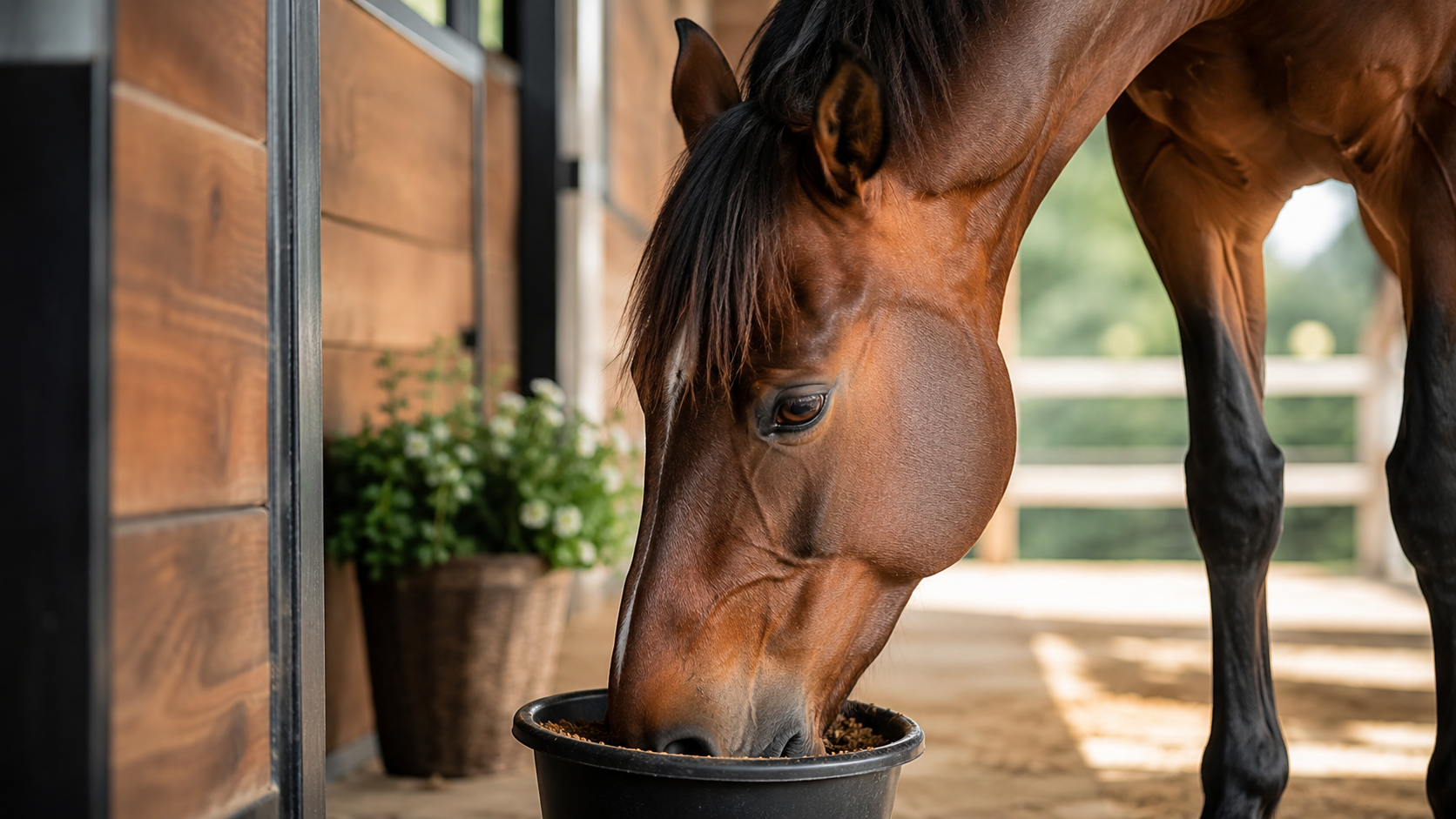
The Quarter Horse is an athletic horse that can have significant energy requirements depending on its activity level. It tends to be an efficient metabolizer, but a balanced intake of good quality forage is essential. Concentrates should be adjusted according to the workload, prioritizing digestible energy sources and quality protein to support its muscle mass.
Certain Quarter Horse lines may be predisposed to PSSM1 (Polysaccharide Storage Myopathy type 1), a muscle disease that requires a diet low in sugars and starch and rich in fats. Careful dietary management is crucial for affected or at-risk horses.
With Equio, every feed, supplement or treat is read against the horse's real profile (age, weight, Body Condition Score, conditions) — useful for a Quarter Horse as soon as a metabolic or digestive sensitivity is known.
Health and points to watch
Regular monitoring for signs of muscle stiffness or weakness is important, especially for lines at risk of PSSM1 or HYPP. Regular veterinary and farrier check-ups are essential to prevent problems related to intense athletic activity.
- Documented genetic disorders: PSSM1 (Polysaccharide Storage Myopathy type 1), HERDA (Hereditary Equine Regional Dermal Asthenia), HYPP (Hyperkalemic Periodic Paralysis Disease), GBED (Glycogen Branching Enzyme Deficiency), MH (Malignant Hyperthermia), OLWS (Overo Lethal White Syndrome)
- More frequent conditions: joint problems (due to the intensity of certain disciplines), hoof affections (if poor foot management)
Care and grooming
Quarter Horses require regular hoof trimming, adapted to their conformation and discipline. Their manes, tails, and feathering are generally sparse and easy to maintain. Regular brushing is sufficient to keep their short, dense coat clean. Clipping is often practiced for sport horses in winter.
Did you know?
- The Quarter Horse is the most represented horse breed in the world in terms of the number of registered individuals.
- Cow sense is an innate ability in many Quarter Horses, allowing them to anticipate cattle movements.
- The name 'Quarter Horse' comes from its ability to run faster than any other breed over a quarter mile (approximately 400 meters).
The Quarter Horse and how to track it
The Quarter Horse is very popular in France, where it is bred and used primarily for western disciplines, but also for leisure and trail riding.
Equio lets you build a complete profile for a Quarter Horse: identity, weight, Body Condition Score, feeding, conditions, care reminders (vaccines, worming, trimming) and an exportable health log. The breed sets the identity; everyday decisions still depend on the real horse and your vet's advice.
- Record the activity level: rest, leisure, sport or breeding
- Add known conditions or sensitivities
- Scan feeds, plants and care products
- Keep reminders (vaccines, worming, trimming)
- Prepare a PDF export before a vet appointment
Frequently asked questions
What is the average price of a Quarter Horse?
The price of a Quarter Horse varies considerably depending on its age, lineage (performance bloodlines), training level, and abilities. It can range from €3,000 for a recreational horse to over €30,000 for a high-level competition horse.
Is the Quarter Horse suitable for beginners?
Yes, thanks to its calm, docile temperament and responsiveness, the Quarter Horse is often recommended for beginners and riders of all levels. Its versatility makes it an excellent family horse.
What is the difference between a Quarter Horse and a Paint Horse?
The main difference lies in the coat pattern. The Quarter Horse can have all solid coat colors, while the Paint Horse is a Quarter Horse with a pinto (spotted) coat pattern. The two breeds share very similar origins and conformation standards.
Is the Quarter Horse a good trail horse?
Absolutely. Its endurance, sure-footedness, calm temperament, and ability to adapt to different terrains make it an excellent companion for trail riding and outdoor riding.
What are the genetic diseases to monitor in Quarter Horses?
The main genetic diseases to monitor are PSSM1, HERDA, HYPP, GBED, MH, and OLWS. Genetic tests are available to identify carriers and affected horses, allowing for informed breeding and care management.