
Horse breed
Warlander
The Warlander is a relatively recent breed, developed in the United States in the late 20th century. It is the result of a deliberate cross between the Friesian and the Pure Spanish Horse (PRE) or the Lusitano.
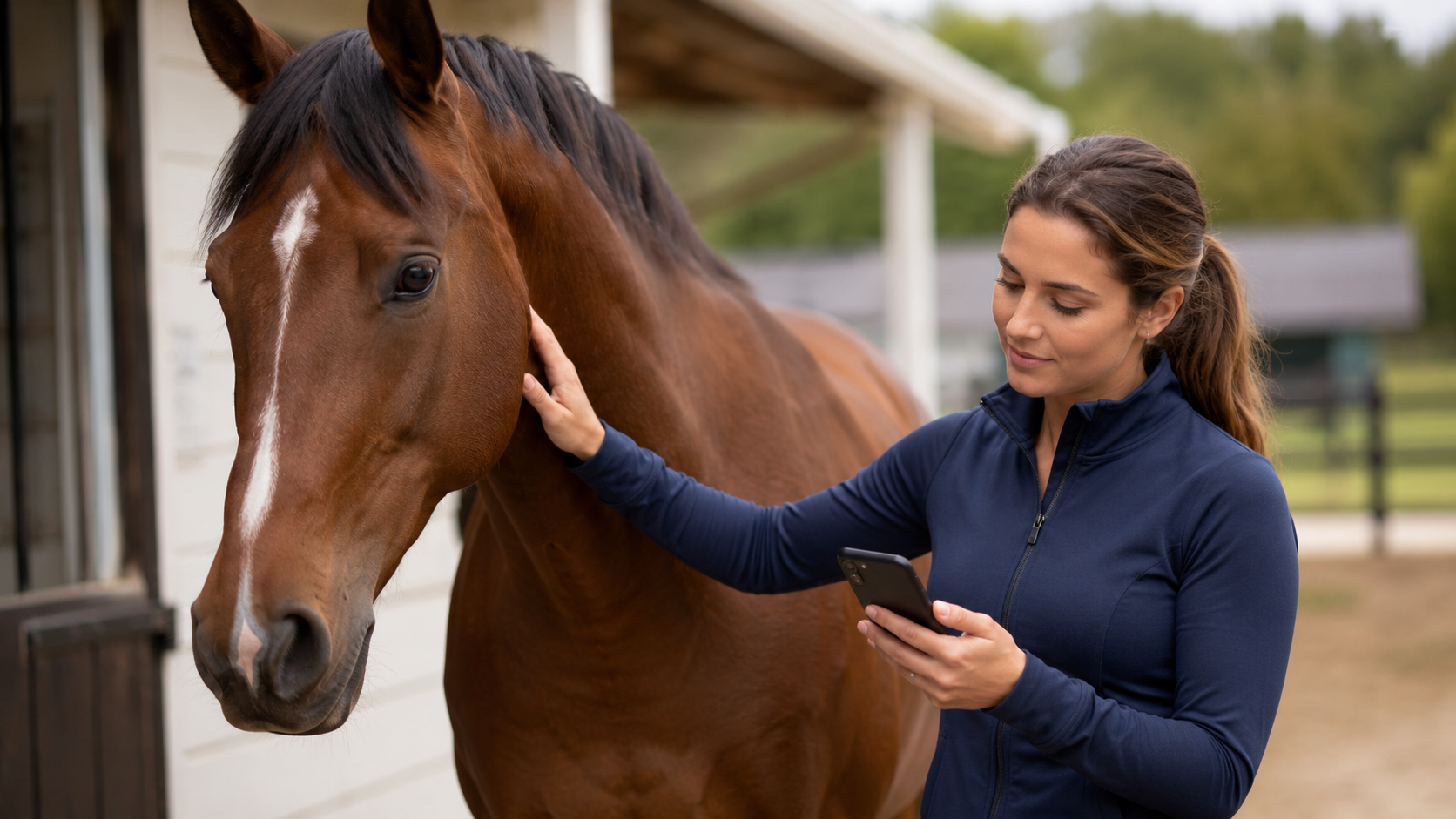
The breed at a glance
The Warlander is renowned for its willing, intelligent, and cooperative temperament. It is generally calm and easy to handle, while being energetic and eager to work. Its versatility and responsiveness make it an excellent partner for various disciplines.
- Category
- sport horse
- Origin
- United States · Late 20th Century / Early 21st Century
- Height at withers
- 152–168 cm
- Weight
- 500–650 kg
- Lifespan
- 20-25 years
- Common coats
- black, bay, chestnut, grey
- Disciplines
- dressage, working equitation, driving, show
Origin and history
The Warlander is a relatively recent breed, developed in the United States in the late 20th century. It is the result of a deliberate cross between the Friesian and the Pure Spanish Horse (PRE) or the Lusitano. The objective was to combine the power and presence of the Friesian with the agility and temperament of the Iberian horse. The breed is not recognized by the FCI, but breed registries exist to oversee its breeding and standards.

Conformation and physique
The Warlander is a medium to large-sized horse, with an athletic and elegant silhouette. It features a solid yet refined bone structure, combining the power of the Friesian and the refinement of the Iberian horse.
The head is expressive, well-proportioned, with a straight or slightly convex profile. The eyes are large and lively, the ears medium-sized and well-placed.
The neck is powerful, well-arched, and set high, blending harmoniously into a well-defined and muscular wither, typical of dressage horses.
The back is short and strong, the topline is harmonious. The chest is broad and deep, ensuring good lung capacity. The croup is rounded and muscular, often slightly sloped.
The limbs are strong, with large and well-defined joints. The cannons are short and the pasterns are of medium length. Moderate feathering is often present, a heritage from the Friesian, but less abundant than in the latter. The hooves are solid and well-formed.
- Common coats: black, bay, chestnut, grey
Temperament and aptitudes
The Warlander is renowned for its willing, intelligent, and cooperative temperament. It is generally calm and easy to handle, while being energetic and eager to work. Its versatility and responsiveness make it an excellent partner for various disciplines.
The gaits are ample, supple, and elevated, with good impulsion and a great capacity for collection. The walk is energetic, the trot is airy, and the canter is balanced and powerful, ideal for dressage.
- Uses: saddle horse, sport horse, equestrian show, driving
- Disciplines: dressage, working equitation, driving, show
Feeding the Warlander
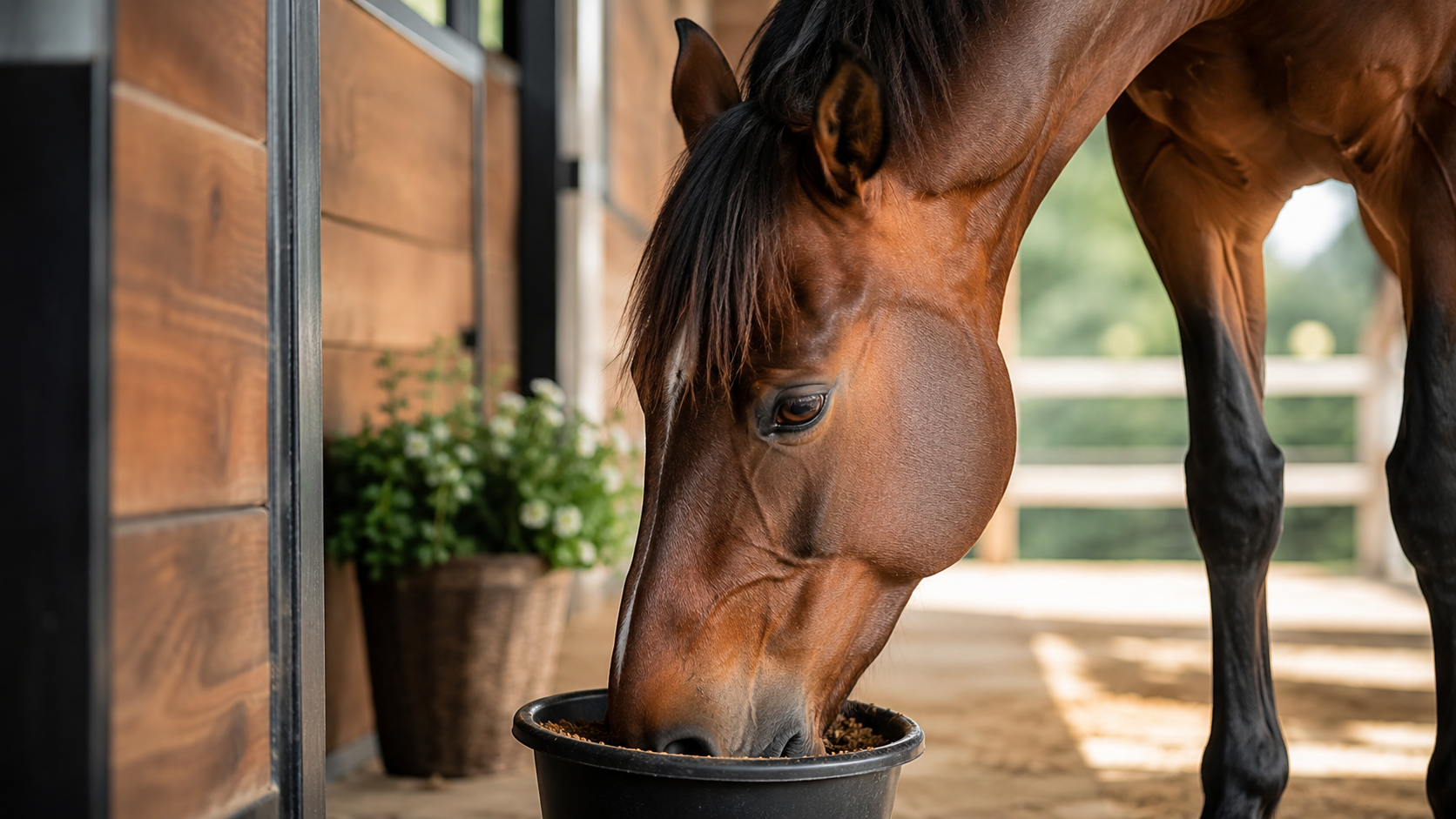
The Warlander, descended from robust breeds, generally has a balanced metabolism. It requires a quality diet, rich in forage (hay or grass) ad libitum. Concentrate requirements will depend on the intensity of work: a horse in light work can be content with forage and a mineral and vitamin supplement, while a competition athlete will require a more energetic ration, adapted to its level of effort, without excess sugars and starch.
Although there is no documented breed-specific predisposition to conditions like PSSM or EMS, it is prudent to monitor sugar and starch intake, especially for individuals with strong Friesian ancestry, who may be more susceptible to metabolic imbalances. Careful weight management is also recommended to prevent obesity.
With Equio, every feed, supplement or treat is read against the horse's real profile (age, weight, Body Condition Score, conditions) — useful for a Warlander as soon as a metabolic or digestive sensitivity is known.
Health and points to watch
As with any crossbred race, it is important to inquire about the parental bloodlines to understand any potential predispositions. Particular attention should be paid to the quality of conformation and hooves, as well as weight management to prevent joint and metabolic problems.
Care and grooming
The Warlander's care is similar to that of other sport horses. The hooves require regular trimming adapted to their activity. The mane, tail, and feathering, often abundant, require frequent brushing to prevent tangles and maintain cleanliness. The coat is generally easy to maintain, but clipping may be necessary for horses in intense work.
Did you know?
- The name 'Warlander' is a combination of the words 'Warhorse' and 'Friesian', reflecting the intention to create a powerful and noble horse.
- Although the Friesian is traditionally black, the Warlander can exhibit a greater variety of coat colors thanks to the influence of the Iberian horse.
- Warlanders are often sought after for their ability to perform high-school movements, a heritage from their Iberian ancestors.
The Warlander and how to track it
The Warlander breed is present in France, but its population remains small. Some passionate breeders are dedicated to its development, and it is mainly found among dressage enthusiasts or equestrian show performers.
Equio lets you build a complete profile for a Warlander: identity, weight, Body Condition Score, feeding, conditions, care reminders (vaccines, worming, trimming) and an exportable health log. The breed sets the identity; everyday decisions still depend on the real horse and your vet's advice.
- Record the activity level: rest, leisure, sport or breeding
- Add known conditions or sensitivities
- Scan feeds, plants and care products
- Keep reminders (vaccines, worming, trimming)
- Prepare a PDF export before a vet appointment
Frequently asked questions
What is the average price of a Warlander?
The price of a Warlander varies considerably depending on its age, level of training, bloodlines (parental lineage), and conformation. It can range from €8,000 for a young horse to over €25,000 for an individual proven in competition or with exceptional breeding potential.
Is the Warlander a good horse for beginners?
Thanks to its calm, intelligent, and cooperative temperament, the Warlander can be suitable for supervised beginner or intermediate riders. However, its size and power require a rider with a certain confidence and a good seat to manage it effectively.
What are the main differences between a Warlander and a Friesian?
The Warlander is a cross between a Friesian and an Iberian horse, whereas the Friesian is a purebred. The Warlander is generally lighter, more agile, and can display a greater variety of coat colors than the Friesian, which is traditionally black. The Warlander combines the power of the Friesian with the refinement and elegance of the Iberian horse.
Is the Warlander recognized by major equestrian federations?
The Warlander is not a recognized breed by the Fédération Équestre Internationale (FEI) or by most national purebred registries. However, there are specific Warlander breed registries that manage its studbook and standards, allowing owners to register their horses and participate in competitions under certain conditions.
Is the Warlander a versatile horse?
Yes, the Warlander is considered a very versatile horse. It particularly excels in dressage and working equitation thanks to its gaits and temperament. It is also valued for driving and equestrian shows, where its presence and elegance are highlighted.