
Horse breed
Friesian
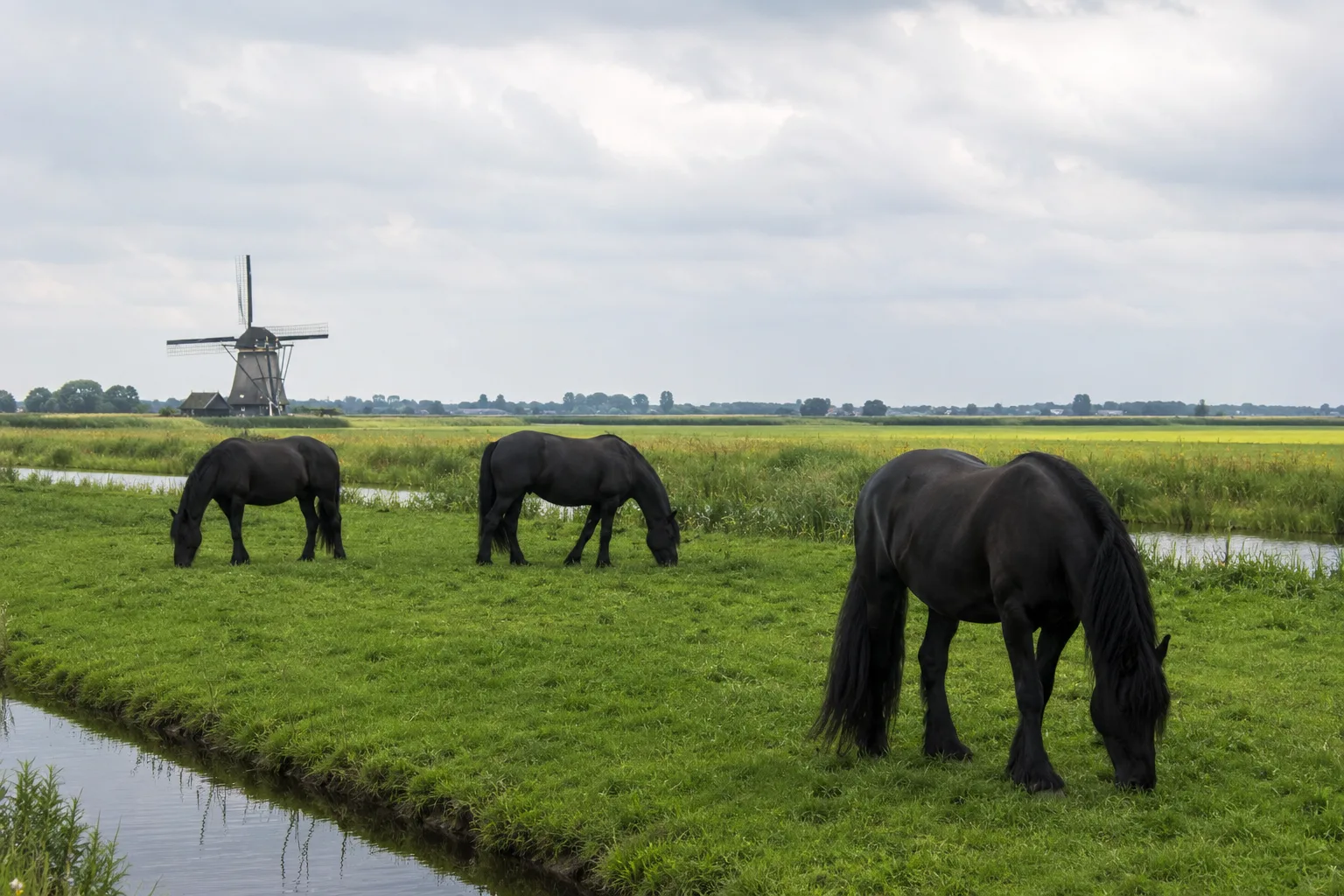
Originating from Friesland, a province in the Netherlands, the Friesian is an ancient breed whose ancestors were already present in Roman times. It was influenced by Iberian horses during the Crusades and the Spanish occupation, which gave it its proud carriage and elevated gaits.

The breed at a glance
The Friesian is renowned for its gentle, calm, and willing temperament. It is intelligent, learns quickly, and is very close to humans, making it a pleasant horse to handle and work with. It is also courageous and reliable.
- Category
- saddle horse
- Origin
- Netherlands · Middle Ages (established in the 17th century)
- Height at withers
- 155–175 cm
- Weight
- 500–650 kg
- Lifespan
- 25-30 years
- Common coats
- black (only coat color accepted by the studbook)
- Disciplines
- Dressage, Driving (competition), Equestrian Show
- Other names
- Friesian Horse, Fries Paard
Origin and history
Originating from Friesland, a province in the Netherlands, the Friesian is an ancient breed whose ancestors were already present in Roman times. It was influenced by Iberian horses during the Crusades and the Spanish occupation, which gave it its proud carriage and elevated gaits. Initially used as a warhorse, then for agricultural work and driving, it almost disappeared at the beginning of the 20th century before being saved by passionate breeders. The official studbook was created in 1879 (Friesch Paarden Stamboek - FPS).
Conformation and physique
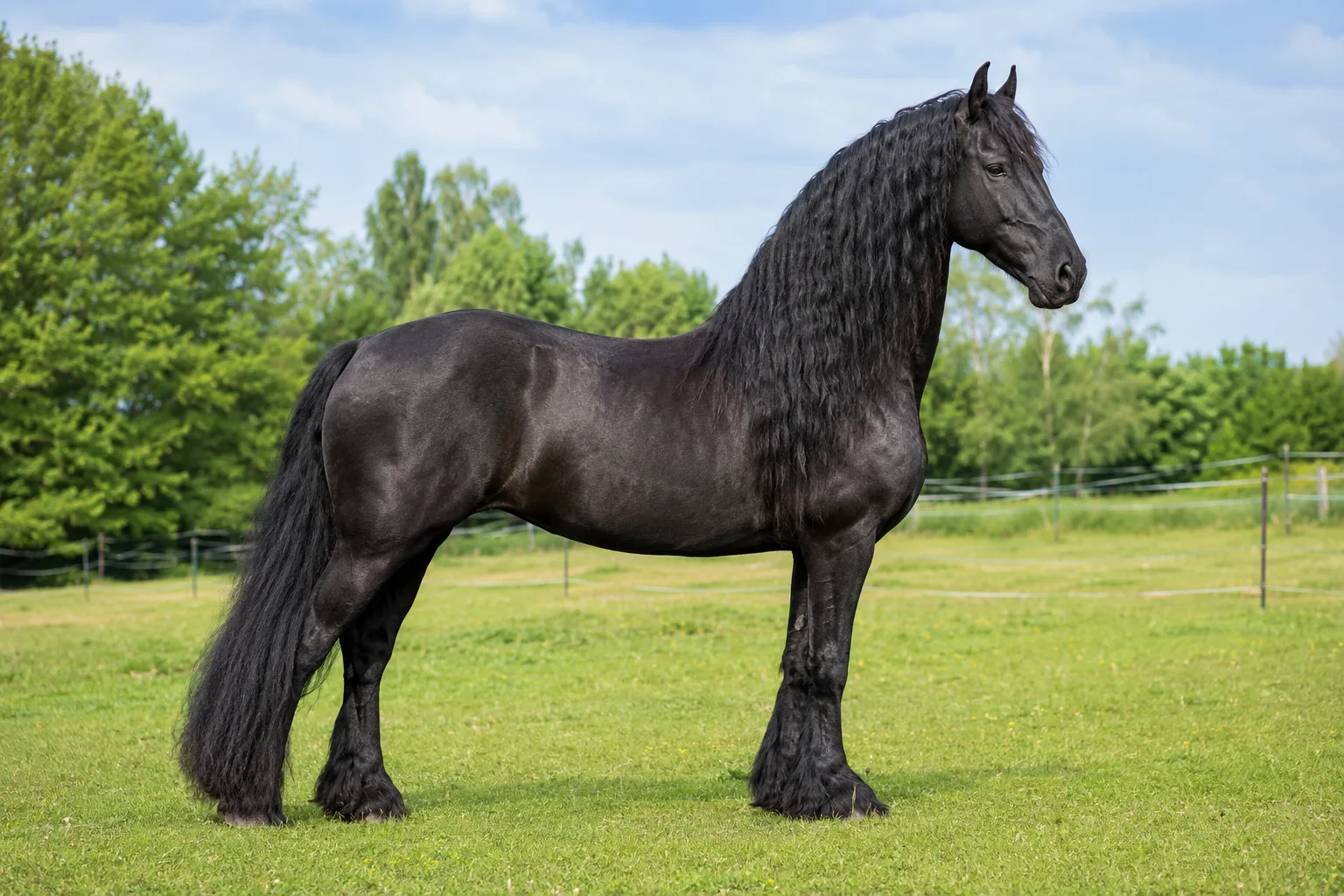
A medium to large-sized horse, elegant and powerful, with solid bone structure but without excessive heaviness. Its silhouette is harmonious, combining strength and nobility.
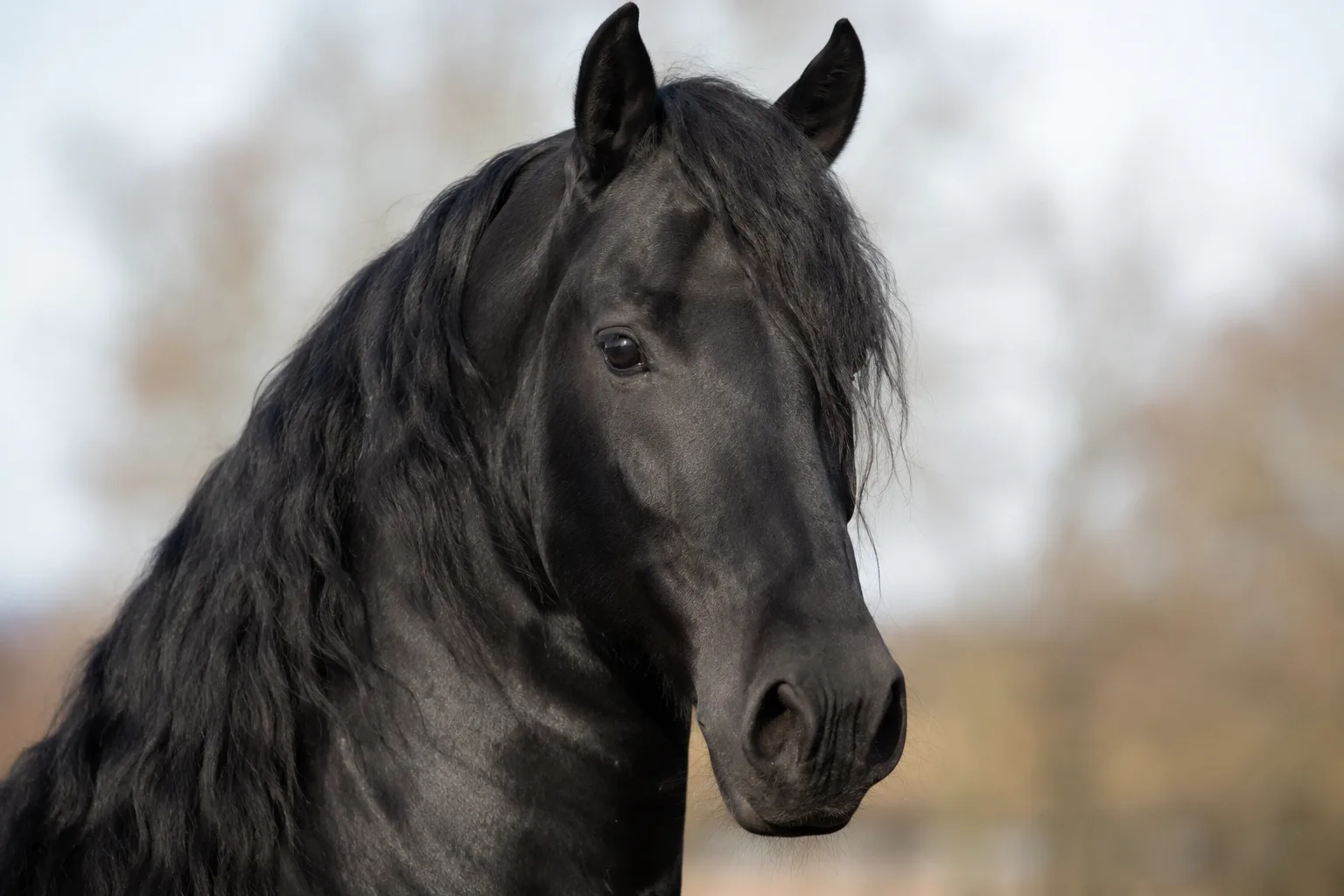
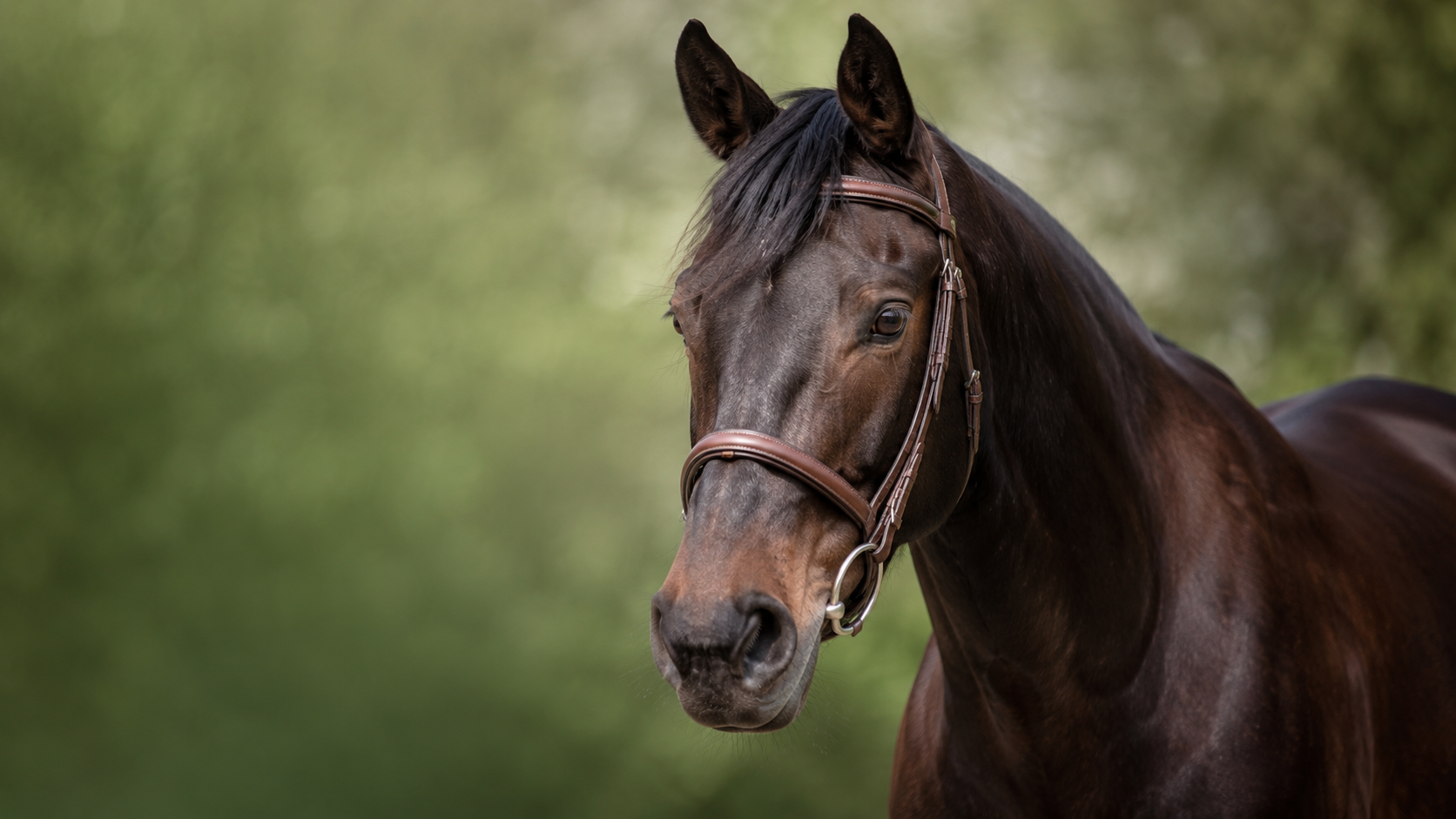
Expressive, medium-sized head, with a straight or slightly concave profile (never convex). The eyes are large, lively, and gentle, the ears small and well-placed, and the muzzle broad.
Long, arched, and powerful neck, set high, giving the Friesian a proud and noble head carriage. The withers are well-defined and extended.
Medium-length back, muscular and strong. The topline is harmonious. The chest is broad and deep, the ribs well-sprung. The croup is slightly sloped, muscular, and rounded, with a low-set tail.
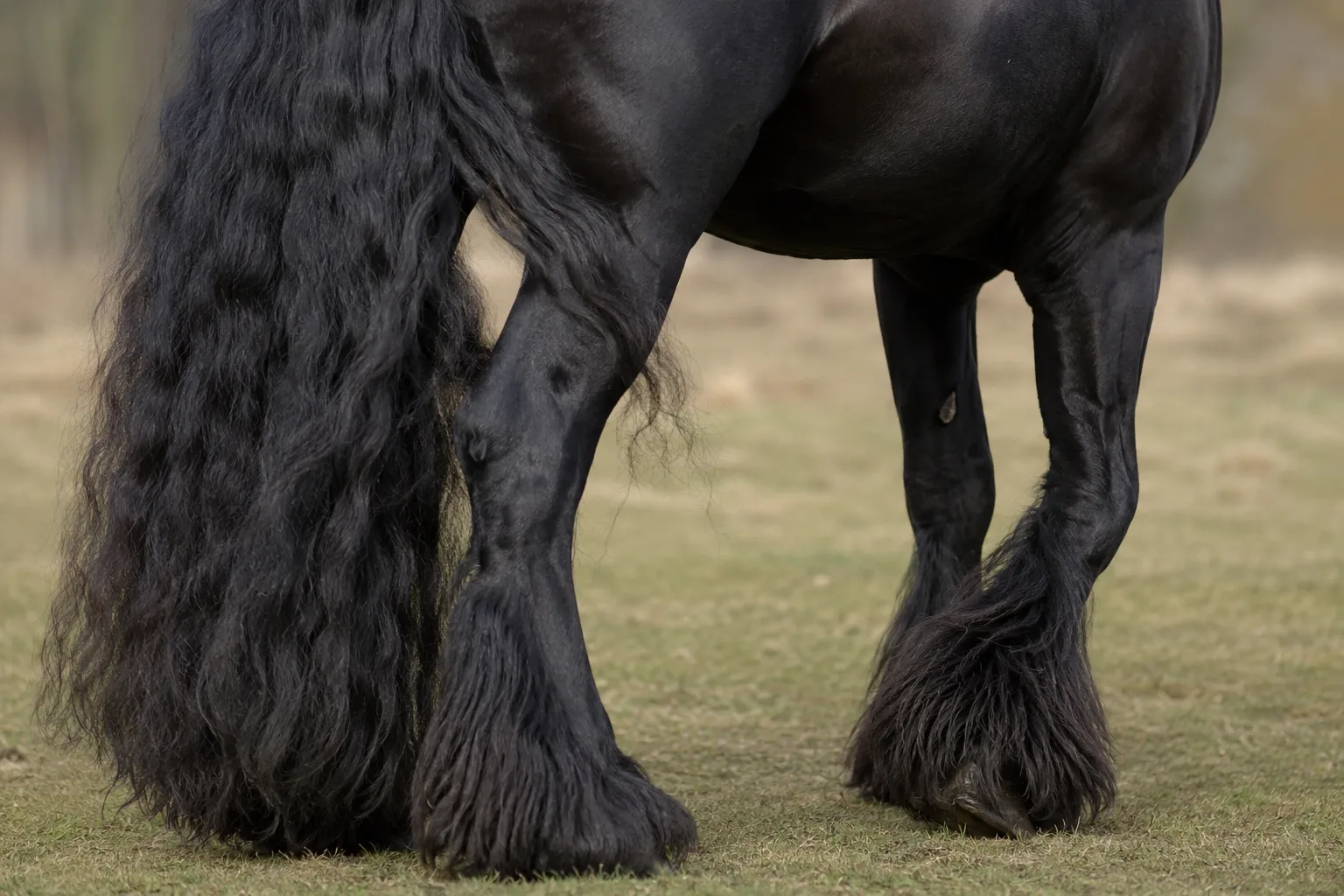
Strong and well-muscled limbs, with large and healthy joints. The forearms are long, the cannons short, and the pasterns long and sloping. The feathering is abundant and silky, covering black, well-formed hooves.
- Common coats: black (only coat color accepted by the studbook)
Temperament and aptitudes
The Friesian is renowned for its gentle, calm, and willing temperament. It is intelligent, learns quickly, and is very close to humans, making it a pleasant horse to handle and work with. It is also courageous and reliable.
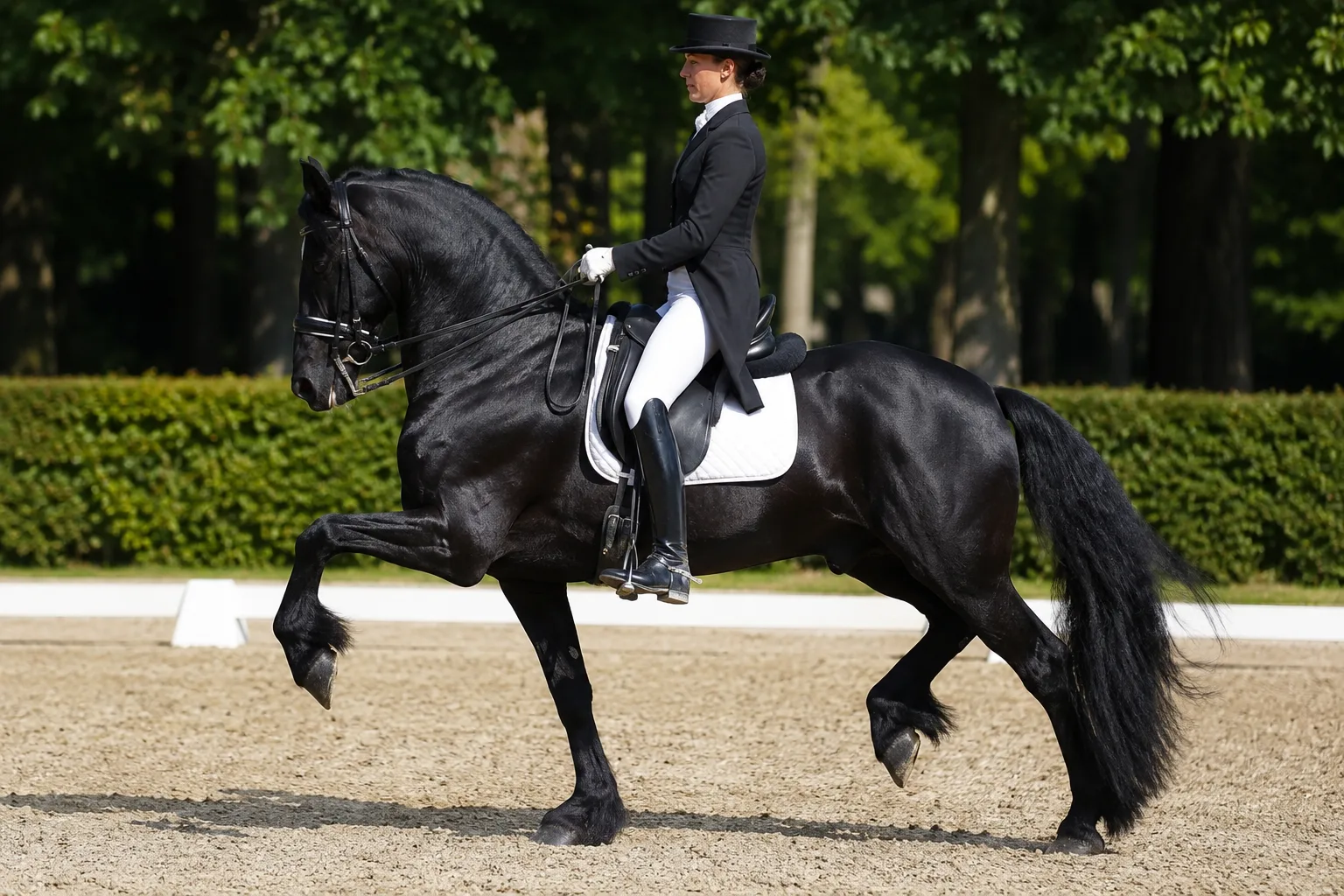
The gaits are expansive, elevated, energetic, and supple, with good hindquarter engagement. The trot is particularly spectacular, with high, rhythmic action.
- Uses: Driving (historical and current, especially in competition), Dressage (thanks to its gaits and carriage), Equestrian shows and cinema, Leisure riding and trail riding, Parade and exhibition horse
- Disciplines: Dressage, Driving (competition), Equestrian Show
Feeding the Friesian
The Friesian is generally a horse with a rather efficient metabolism, capable of effectively utilizing forage. It tends to gain weight if not sufficiently exercised or if its diet is too rich. A base of good quality hay ad libitum is essential. Concentrates should be adjusted sparingly according to the intensity of work, prioritizing feeds low in sugars and starch to avoid metabolic risks.
The Friesian can be prone to Equine Metabolic Syndrome (EMS) and laminitis, particularly if overweight or sedentary. It is therefore important to monitor its sugar and starch intake and maintain an ideal body weight. A sensitivity to sugars and starch is documented, making dietary management crucial.
With Equio, every feed, supplement or treat is read against the horse's real profile (age, weight, Body Condition Score, conditions) — useful for a Friesian as soon as a metabolic or digestive sensitivity is known.

Health and points to watch
Particular attention should be paid to weight management to prevent EMS and laminitis. Monitoring the limbs for early signs of CPL is crucial. Good parasite management and insect protection are recommended to limit RED.
- Documented genetic disorders: Hydrocephalus, Megacolon (colon dilation), Dwarfism, Factor VII Deficiency (Coagulation)
- More frequent conditions: Recurrent Equine Dermatitis (RED), Chronic Progressive Lymphedema (CPL) of the lower limbs, Digestive issues related to megacolon, Insect bite hypersensitivity
Care and grooming
Abundant feathering requires regular maintenance to prevent dermatitis and skin infections (mud fever). The mane and tail are very long and thick, requiring frequent detangling and specific care to keep them in good condition. Hoof trimming should be regular, as for any horse. The black coat may require special care to maintain its shine.
Did you know?
- The Friesian is the only horse breed native to the Netherlands.
- It is often nicknamed the 'Black Pearl' due to its unique coat and elegance.
- The Friesian has been used to improve many other breeds, including the Oldenburg and the Dales Pony.
- It is highly prized by the film industry for its majestic appearance and solid color.
The Friesian and how to track it
The Friesian breed is well-represented in France, with active breeding programs and a community of passionate owners. It is primarily used for leisure riding, dressage, and driving, as well as for shows.
Equio lets you build a complete profile for a Friesian: identity, weight, Body Condition Score, feeding, conditions, care reminders (vaccines, worming, trimming) and an exportable health log. The breed sets the identity; everyday decisions still depend on the real horse and your vet's advice.
- Record the activity level: rest, leisure, sport or breeding
- Add known conditions or sensitivities
- Scan feeds, plants and care products
- Keep reminders (vaccines, worming, trimming)
- Prepare a PDF export before a vet appointment
Frequently asked questions
What is the only coat color accepted for the Friesian?
The only coat color accepted by the Friesian studbook is black. Any other color, even a small white mark, is grounds for exclusion from the studbook, with the exception of a small star on the forehead in foals, which may disappear with age.
Is the Friesian a good horse for beginners?
Yes, thanks to its calm, gentle, and willing temperament, the Friesian can be an excellent horse for beginners or less experienced riders, provided they are supervised. Its kindness and patience make it a reliable partner.
Is the Friesian suitable for all equestrian disciplines?
The Friesian particularly excels in dressage and driving, where its elevated gaits and majestic carriage are highly valued. It is less suited for disciplines requiring speed or show jumping due to its conformation and type of gaits.
What is Chronic Progressive Lymphedema (CPL) in Friesians?
Chronic Progressive Lymphedema (CPL) is a common genetic disease in Friesians, characterized by a progressive thickening of the skin and subcutaneous tissues of the lower limbs, leading to swelling and skin folds. It requires careful management to prevent secondary infections.
How to care for the Friesian's long mane, tail, and feathering?
The Friesian's mane, tail, and feathering require regular and meticulous care. It is recommended to detangle them frequently with suitable products, wash them with mild shampoos, and moisturize them to prevent breakage. The feathering should be monitored to prevent dermatitis and mud fever.