
Horse breed
Croatian Coldblood
The Croatian Coldblood is a draft horse breed originating from Croatia, developed in the 19th century. It resulted from crosses between local mares and European draft horse stallions, notably the Noriker, Percheron, Belgian, and Ardennes.

The breed at a glance
The Croatian Coldblood is renowned for its calm, docile, and patient temperament. It is a hardworking, willing, and reliable horse, making it easy to handle and train for agricultural and forestry tasks.
- Category
- draft horse
- Origin
- Croatia · 19th century
- Height at withers
- 150–160 cm
- Weight
- 600–800 kg
- Lifespan
- 20-25 years
- Common coats
- bay, chestnut, black, grey
- Disciplines
- Draft work, Leisure driving
- Other names
- Croatian Coldblood, Hrvatski Hladnokrvnjak
Origin and history
The Croatian Coldblood is a draft horse breed originating from Croatia, developed in the 19th century. It resulted from crosses between local mares and European draft horse stallions, notably the Noriker, Percheron, Belgian, and Ardennes. Initially bred for agricultural work and transport, it played a crucial role in the Croatian rural economy. The breed was officially recognized, and a studbook was established to preserve its characteristics.
Conformation and physique
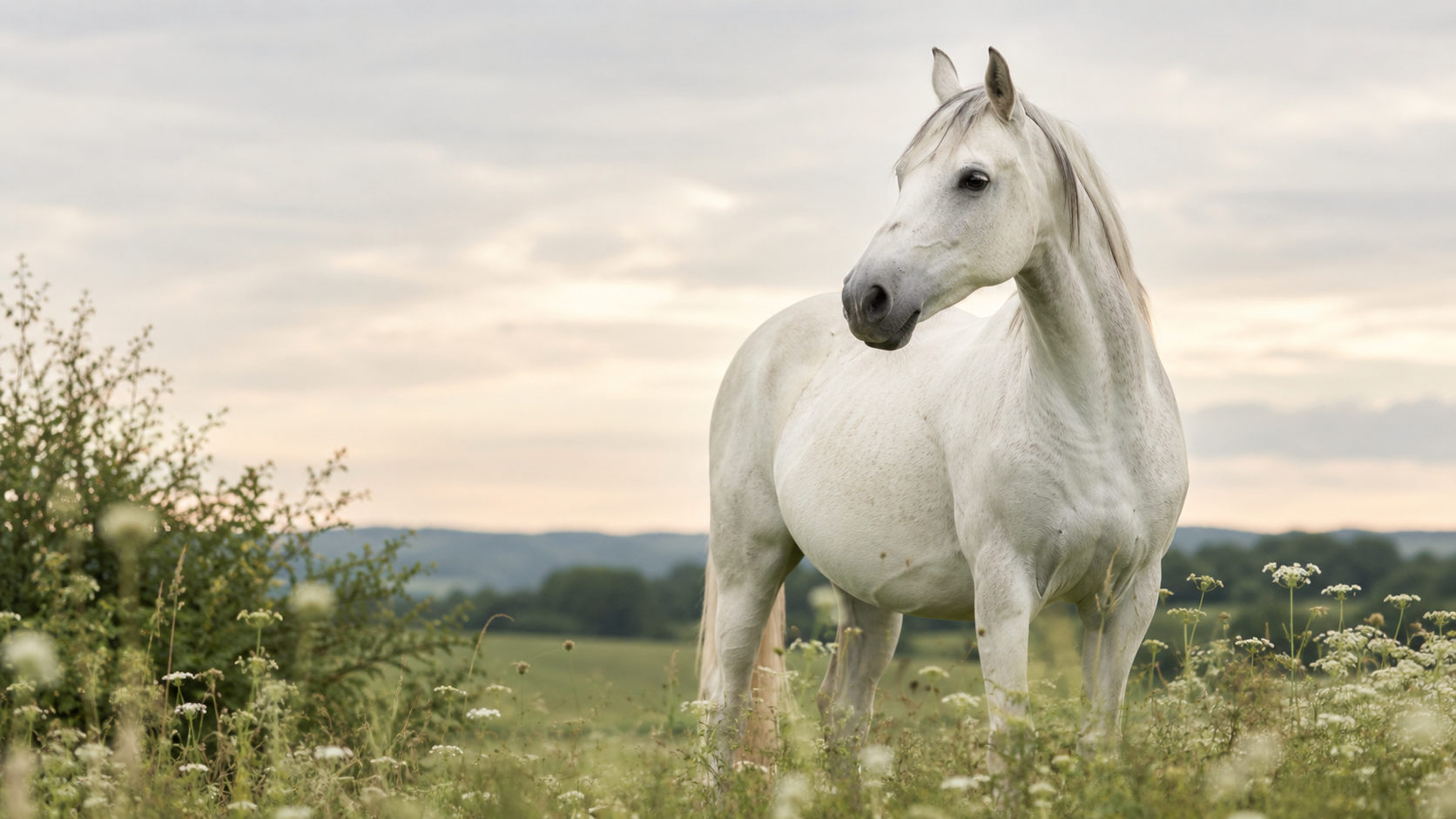
It is a medium to large-sized draft horse, powerful and robust, with a solid bone structure and well-developed musculature. Its build is typical of draft horses, designed for strength and working endurance.
The head is medium-sized, with a straight or slightly convex profile. The eyes are expressive, and the ears are medium-sized.
The neck is short, thick, and muscular, well-set on the body. The withers are broad and not very prominent, blending smoothly into the back.
The back is short, broad, and strong, with a straight and muscular topline. The chest is deep and broad, and the croup is powerful, rounded, and well-muscled.
The limbs are short, strong, and robust, with large joints and well-defined tendons. Feathering is generally present, but not excessively abundant. The hooves are broad and solid.
- Common coats: bay, chestnut, black, grey
Temperament and aptitudes
The Croatian Coldblood is renowned for its calm, docile, and patient temperament. It is a hardworking, willing, and reliable horse, making it easy to handle and train for agricultural and forestry tasks.
The gaits are ample, regular, and energetic, with good impulsion. They are suited for draft work, prioritizing strength and regularity rather than speed or elegance.
- Uses: Agricultural work (plowing, harrowing), Forest skidding, Hauling loads, Recreational and competitive driving, Meat production (historically and in some regions)
- Disciplines: Draft work, Leisure driving
Feeding the Croatian Coldblood
The Croatian Coldblood is a horse with a rather efficient metabolism, typical of draft breeds. It tends to make good use of roughage. Its diet should be primarily based on good quality hay or pasture. Concentrate requirements are moderate and must be adjusted according to work intensity to prevent obesity. Mineral and vitamin supplementation is recommended.
Like many draft breeds with an efficient metabolism, the Croatian Coldblood can be predisposed to obesity and, consequently, to Equine Metabolic Syndrome (EMS) and laminitis if overfed or if it has unlimited access to rich pastures. It is important to monitor its weight and manage its diet accordingly. No other specific dietary sensitivities are documented for this breed.
With Equio, every feed, supplement or treat is read against the horse's real profile (age, weight, Body Condition Score, conditions) — useful for a Croatian Coldblood as soon as a metabolic or digestive sensitivity is known.

Health and points to watch
Particular attention must be paid to weight management to prevent metabolic and joint problems. Regular hoof care is essential due to their size and weight-bearing role. Monitoring of joints is also important, especially in older or heavily worked horses.
- More frequent conditions: Joint problems related to weight and intense work (osteoarthritis), Laminitis (in case of improper dietary management), Hoof problems (requiring regular and appropriate trimming)
Care and grooming
Hoof care is paramount and requires regular trimming adapted to their size and the load they bear. The mane, tail, and feathering, if present, require regular brushing to prevent knots and skin irritations. The coat is generally easy to maintain; regular brushing is sufficient. Clipping is generally not necessary except for sport horses or those in intense work.
Did you know?
- The Croatian Coldblood is considered a national treasure in Croatia and is subject to conservation programs.
- It is often used in historical reenactments and traditional festivals in Croatia.
- Despite its name, it is known for its gentle temperament and great patience, which makes it an excellent working partner.
The Croatian Coldblood and how to track it
The Croatian Coldblood breed has a very limited presence in France. There is no significant breeding or widespread use of this breed on French territory; it remains primarily confined to its country of origin.
Equio lets you build a complete profile for a Croatian Coldblood: identity, weight, Body Condition Score, feeding, conditions, care reminders (vaccines, worming, trimming) and an exportable health log. The breed sets the identity; everyday decisions still depend on the real horse and your vet's advice.
- Record the activity level: rest, leisure, sport or breeding
- Add known conditions or sensitivities
- Scan feeds, plants and care products
- Keep reminders (vaccines, worming, trimming)
- Prepare a PDF export before a vet appointment
Frequently asked questions
Is the Croatian Coldblood suitable for beginners?
Yes, thanks to its calm and docile temperament, the Croatian Coldblood can be an excellent choice for beginners, especially for driving or light agricultural work. Its patience and willingness facilitate its learning and handling.
What is the cost of upkeep for a Croatian Coldblood?
The cost of upkeep is comparable to that of other draft breeds. It requires quality feed, regular veterinary care, hoof trimming, and sufficient space. Its efficient metabolism can reduce concentrate costs if the work is not intense.
Can the Croatian Coldblood be ridden?
Although primarily bred for draft work, the Croatian Coldblood can be ridden. It offers a stable and comfortable ride, although its gaits are not those of a light saddle horse. It is appreciated for trail riding or working equitation.
Is the Croatian Coldblood an endangered breed?
Yes, like many draft breeds, the Croatian Coldblood is considered an endangered breed due to the mechanization of agriculture. Conservation efforts are being implemented in Croatia to preserve the breed and its genetic heritage.
Where can one buy a Croatian Coldblood?
The purchase of a Croatian Coldblood is primarily done in Croatia, from specialized breeders. It is rare to find them outside their country of origin. It is advisable to contact Croatian breeders' associations for more information.