
Horse breed
Noriker
The Noriker is a very ancient breed, with origins tracing back to the horses of the Romans in the province of Noricum. Its breeding is documented from the 16th century in the Austrian Alps, particularly around the Viktring monastery.
The breed at a glance
The Noriker is renowned for its calm, gentle, and balanced temperament. It is a willing, courageous, and very reliable horse for work, possessing great stamina and a good capacity for learning. It is also valued for its docility and kindness.
- Category
- draft horse
- Origin
- Austria · Roman antiquity, established in the 16th century
- Height at withers
- 160–170 cm
- Weight
- 650–800 kg
- Lifespan
- 20-25 years
- Common coats
- chestnut, black, bay, roan, leopard
- Disciplines
- driving, working equitation, equestrian trail riding
- Other names
- Pinzgauer Noriker, Norico-Pinzgauer
Origin and history
The Noriker is a very ancient breed, with origins tracing back to the horses of the Romans in the province of Noricum. Its breeding is documented from the 16th century in the Austrian Alps, particularly around the Viktring monastery. It was developed for agricultural work and mountain transport, becoming a robust and versatile draft horse. The breed was officially recognized and its studbook established in the early 20th century.
Conformation and physique
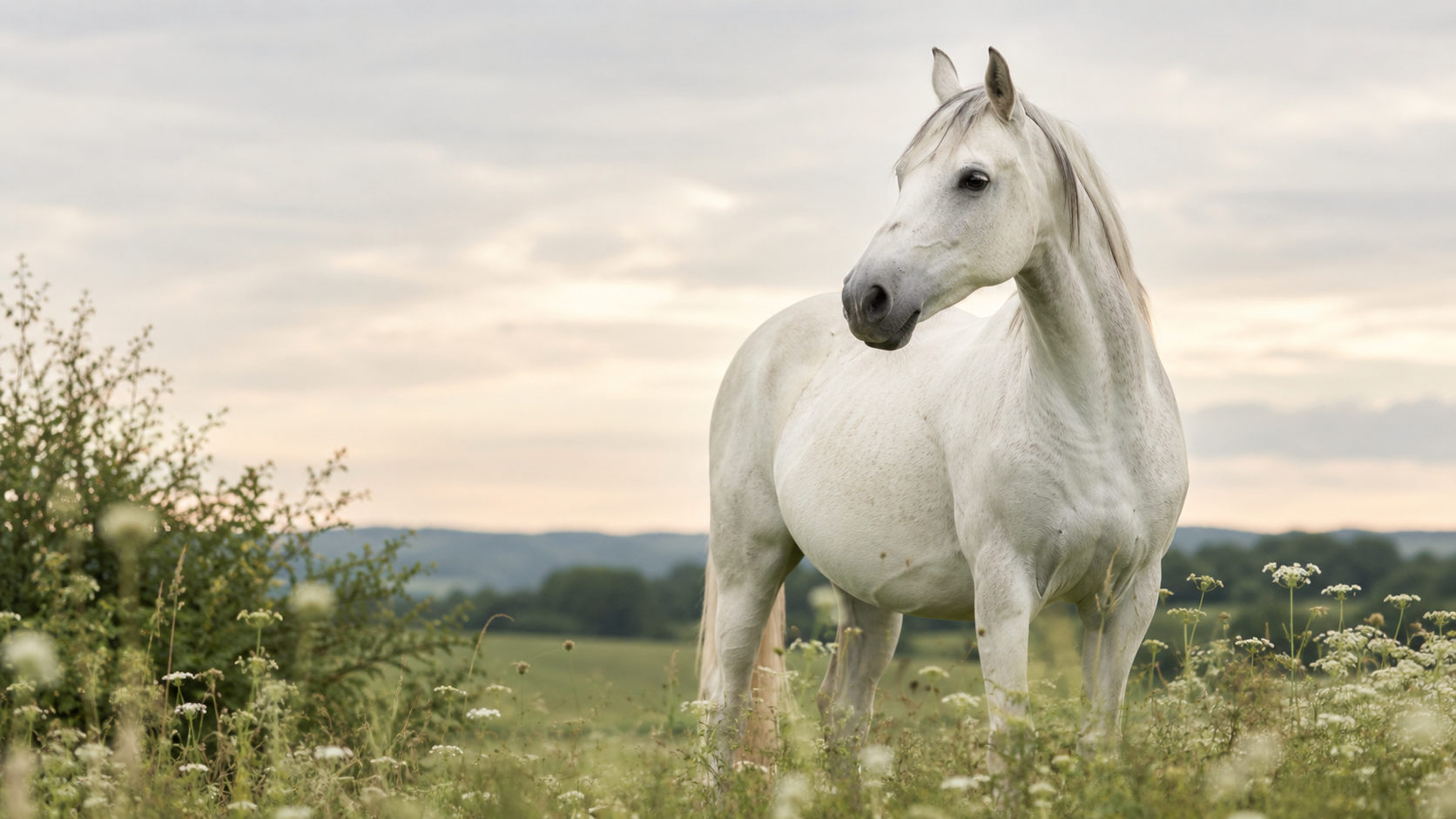
It is a medium to large-sized draft horse, powerful and well-proportioned, with strong bone structure and well-developed musculature. Its build is compact and robust, suited for working in difficult terrain.
The head is expressive, medium-sized, with a straight or slightly convex profile. The eyes are large and lively, the ears medium-sized and well-set.
The neck is strong, muscular, and well-arched, blending harmoniously into a broad, low-set wither.
The back is short, broad, and strong, with a taut topline. The chest is deep and wide, the hindquarters are powerful, muscular, and often double-muscled.
The limbs are solid, with large and well-defined joints. The cannons are short and strong, and abundant feathering is present, especially in winter.
- Common coats: chestnut, black, bay, roan, leopard
Temperament and aptitudes
The Noriker is renowned for its calm, gentle, and balanced temperament. It is a willing, courageous, and very reliable horse for work, possessing great stamina and a good capacity for learning. It is also valued for its docility and kindness.
The gaits are expansive, energetic, and regular, with good impulsion. The walk is sure-footed and ground-covering, the trot is powerful, suited for draft work and mountain travel.
- Uses: agricultural work (plowing, logging), recreational and competitive driving, recreational riding, equestrian tourism, forest logging, family horse
- Disciplines: driving, working equitation, equestrian trail riding
Feeding the Noriker
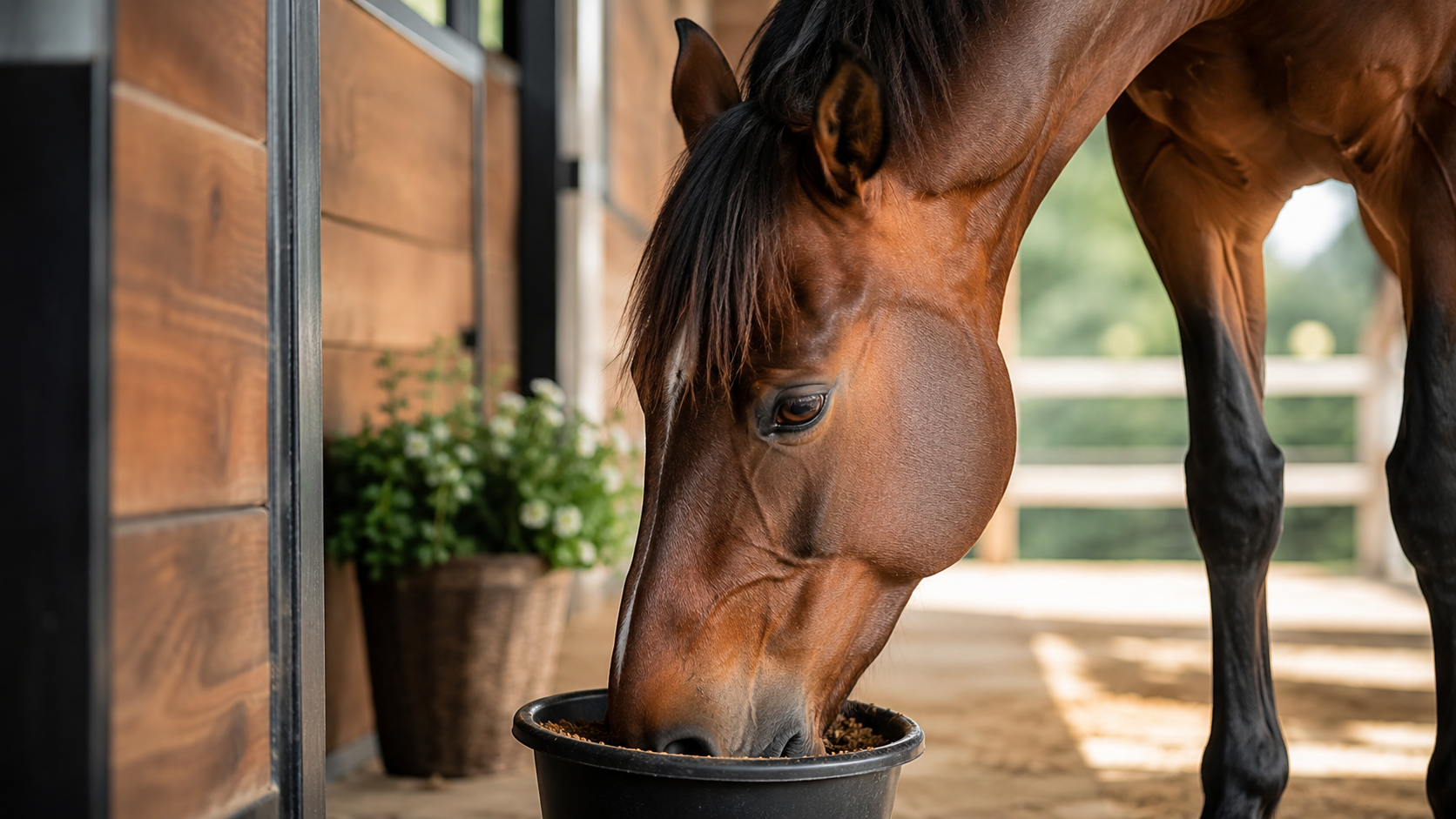
The Noriker is a hardy and economical draft horse. It has an efficient metabolism and can thrive on medium-quality forage. Its diet should primarily consist of good quality hay and grass. Concentrates are only necessary during intense work or to compensate for deficiencies, in order to prevent obesity.
Like many hardy draft horses, the Noriker can be predisposed to Equine Metabolic Syndrome (EMS) and laminitis if overfed or given unlimited access to rich pastures, especially if it is not worked much. Careful dietary management is crucial to prevent these conditions.
With Equio, every feed, supplement or treat is read against the horse's real profile (age, weight, Body Condition Score, conditions) — useful for a Noriker as soon as a metabolic or digestive sensitivity is known.
Health and points to watch
It is important to monitor the Noriker's weight to prevent obesity and the risk of laminitis. Particular attention should be paid to the quality of its conformation and feet, as well as to the early detection of signs of PSSM1, especially muscle stiffness after exercise.
- Documented genetic disorders: PSSM1 (Polysaccharide Storage Myopathy type 1)
- More frequent conditions: laminitis, Equine Metabolic Syndrome (EMS), joint conditions related to intense work or age
Care and grooming
The Noriker's care is relatively simple. Its hooves, often robust, require regular trimming. The abundant mane, tail, and feathering should be brushed regularly to prevent tangles and underlying skin problems. The thick coat may require more frequent brushing during shedding season. Clipping is generally not necessary except for sport horses or those in intense work.
Did you know?
- The Noriker is one of the few draft horse breeds to exhibit the leopard (spotted) coat pattern, inherited from its Baroque ancestors.
- There are several bloodlines within the breed, named after the founding stallions (Vulkan, Nero, Diamant, Schaunitz, Elmar).
- The Noriker is considered the national horse of Austria.
The Noriker and how to track it
The Noriker is not a widespread breed in France, but a few passionate breeders contribute to its presence. It is primarily used for leisure driving, logging, and trail riding.
Equio lets you build a complete profile for a Noriker: identity, weight, Body Condition Score, feeding, conditions, care reminders (vaccines, worming, trimming) and an exportable health log. The breed sets the identity; everyday decisions still depend on the real horse and your vet's advice.
- Record the activity level: rest, leisure, sport or breeding
- Add known conditions or sensitivities
- Scan feeds, plants and care products
- Keep reminders (vaccines, worming, trimming)
- Prepare a PDF export before a vet appointment
Frequently asked questions
Is the Noriker a good horse for beginners?
Yes, thanks to its calm, gentle, and cooperative temperament, the Noriker is often recommended for beginners and less experienced riders. Its robustness and reliability make it an excellent family horse.
What is the difference between a Noriker and a Haflinger?
Although both originate from the Alps, the Noriker is a much larger and heavier draft horse than the Haflinger, which is a pony or small riding horse. The Noriker is primarily used for heavy work and driving, while the Haflinger is more versatile for riding.
Is the Noriker suitable for forest logging?
Absolutely. The Noriker was developed for mountain work and is particularly well-suited for forest logging due to its strength, sure-footedness, endurance, and willing temperament. It is highly valued in alpine regions for this task.
What are the rarest coat colors in the Noriker?
The leopard (spotted) coat pattern is one of the most distinctive and sought-after in the Noriker, although it is not the most common. Roan and black coats are also highly prized.
Is the Noriker a sport horse?
The Noriker is not a sport horse in the classical sense (show jumping, high-level dressage). However, it excels in driving disciplines, working equitation, and trail riding, where its strength and endurance are major assets.