
Horse breed
Quarab
The Quarab is a relatively recent breed, resulting from the cross between the Quarter Horse, Arabian, and Paint Horse. The goal was to combine the athleticism and temperament of the Quarter Horse/Paint Horse with the endurance, refinement, and beauty of the Arabian.
The breed at a glance
The Quarab is renowned for its balanced, intelligent, and willing temperament. It is generally easy to train, cooperative, and possesses a good learning ability, making it an excellent partner for work and leisure.
- Category
- saddle horse
- Origin
- United States · Late 20th century
- Height at withers
- 142–163 cm
- Weight
- 450–590 kg
- Lifespan
- 25-30 years
- Common coats
- bay, chestnut, black, grey, palomino, dun, cremello, perlino, roan, tobiano, overo, tovéro, sabino, leopard
- Disciplines
- Western Pleasure, Reining, Trail, Barrel Racing
- Other names
- American Quarab, Quarab Horse
Origin and history
The Quarab is a relatively recent breed, resulting from the cross between the Quarter Horse, Arabian, and Paint Horse. The goal was to combine the athleticism and temperament of the Quarter Horse/Paint Horse with the endurance, refinement, and beauty of the Arabian. The breed was officially recognized in 1999 with the creation of the International Quarab Horse Association (IQHA).
Conformation and physique
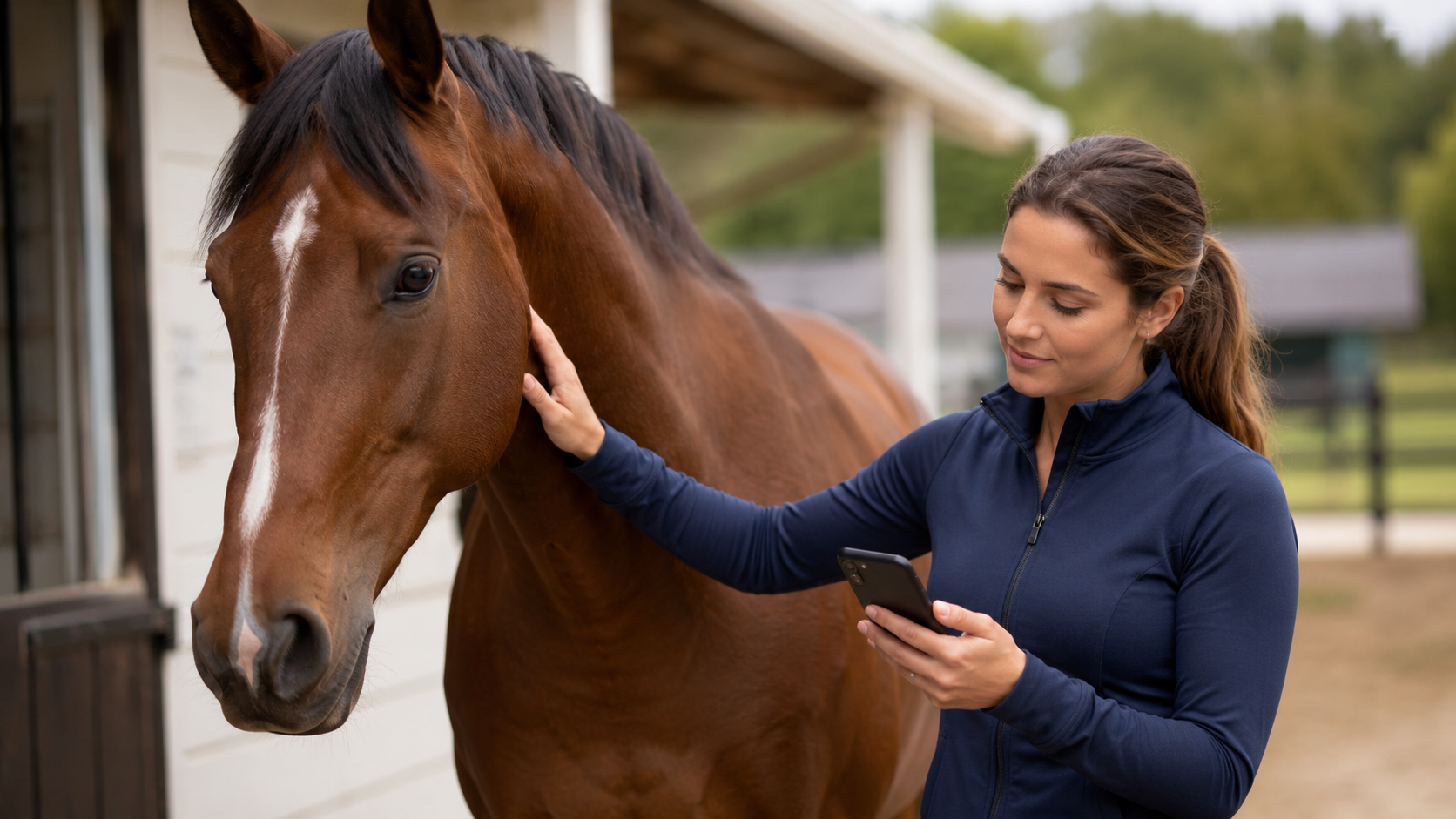
The Quarab is a medium-sized, well-muscled horse with a solid yet refined bone structure. It exhibits a harmonious balance between the power of the Quarter Horse and the elegance of the Arabian.
The head is expressive, often with a straight or slightly concave profile (inherited from the Arabian), large eyes, wide nostrils, and well-defined ears.
The neck is well-proportioned, muscular, and arched, blending harmoniously into well-defined and muscular withers.
The body is compact and powerful, with a short, strong back, a muscular topline, a deep and wide chest, and a rounded, muscular croup.
The limbs are solid, with clean joints and short cannons. The hooves are well-formed and resilient. Feathers are generally sparse.
- Common coats: bay, chestnut, black, grey, palomino, dun, cremello, perlino, roan, tobiano, overo, tovéro, sabino, leopard
Temperament and aptitudes
The Quarab is renowned for its balanced, intelligent, and willing temperament. It is generally easy to train, cooperative, and possesses a good learning ability, making it an excellent partner for work and leisure.
The gaits are supple, expansive, and regular, with good impulsion. The Quarab inherits the versatility of its foundation breeds, offering comfortable and efficient gaits for various disciplines.
- Uses: recreational riding, trail riding, western riding, dressage, show jumping, endurance riding, driving, show
- Disciplines: Western Pleasure, Reining, Trail, Barrel Racing, Dressage, Show Jumping, Endurance, Hunter Under Saddle
Feeding the Quarab
The Quarab, originating from robust breeds, generally has an easy keeper metabolism. It is important to monitor its weight, as it can be prone to becoming overweight if not sufficiently exercised or if its diet is too rich. A diet based on good quality forage (hay or grass) in sufficient quantity is paramount. Concentrates should be adjusted according to the activity level and individual needs, favoring low-starch and low-sugar formulas for horses with low to moderate activity.
Although the Quarab does not exhibit documented specific predispositions to unique breed-specific dietary sensitivities, it can inherit sensitivities from its foundation breeds. Like many saddle horses, it can be prone to laminitis or Equine Metabolic Syndrome (EMS) in cases of overfeeding or a diet too rich in sugars and starch, especially if it has an easy keeper metabolism. Careful dietary management is therefore recommended.
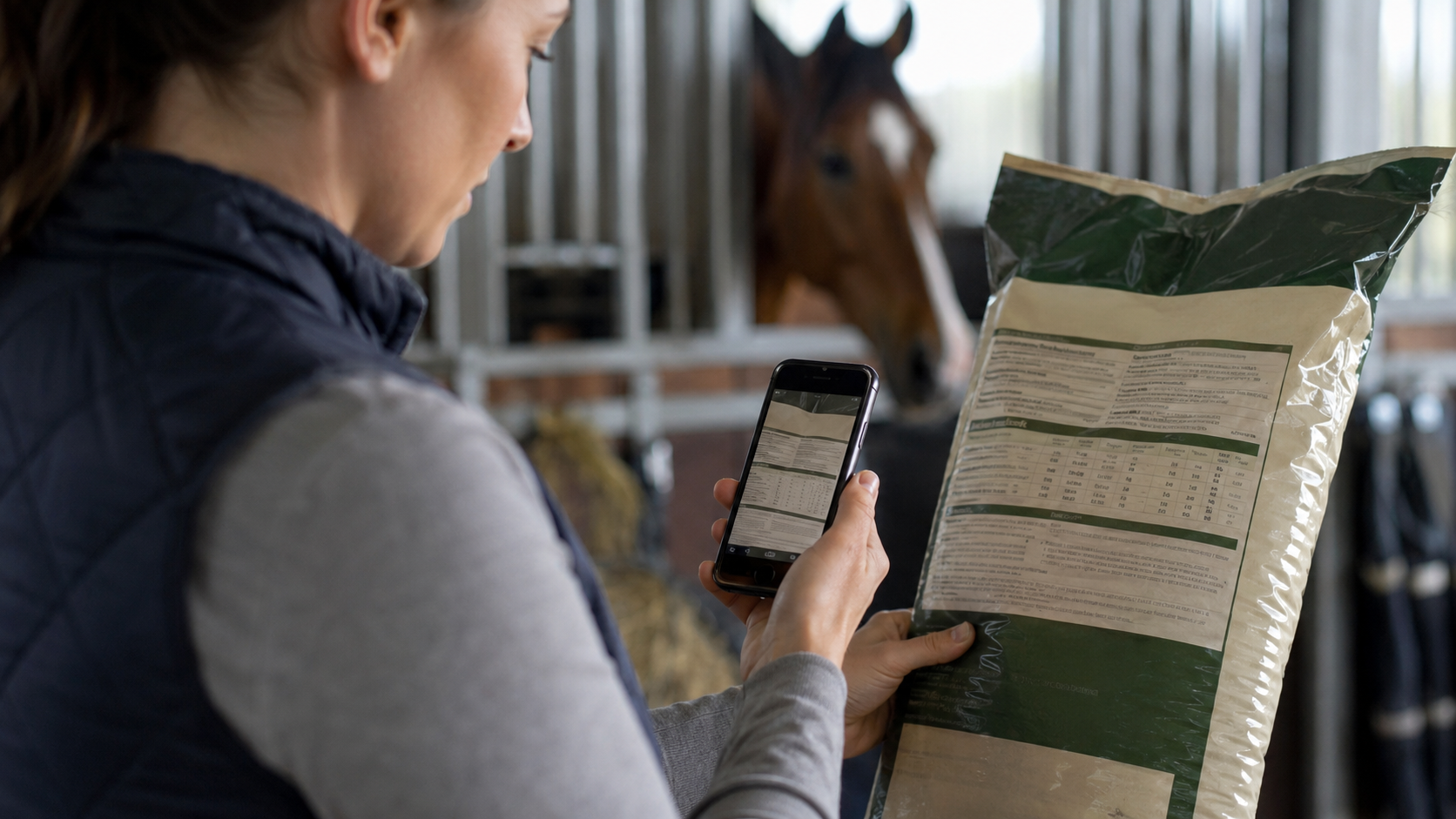
With Equio, every feed, supplement or treat is read against the horse's real profile (age, weight, Body Condition Score, conditions) — useful for a Quarab as soon as a metabolic or digestive sensitivity is known.

Health and points to watch
It is crucial to know the genetic status of the parents for hereditary diseases of the foundation breeds. Particular attention must be paid to weight management to prevent metabolic problems. Regular veterinary follow-up, including vaccinations, deworming, and dental care, is essential to maintain good health.
- Documented genetic disorders: HYPP (Hyperkalemic Periodic Paralysis) - possible if Quarter Horse/Paint Horse carrier lines are present, HERDA (Hereditary Equine Regional Dermal Asthenia) - possible if Quarter Horse/Paint Horse carrier lines are present, GBED (Glycogen Branching Enzyme Deficiency) - possible if Quarter Horse/Paint Horse carrier lines are present, PSSM1 (Polysaccharide Storage Myopathy type 1) - possible if Quarter Horse/Paint Horse carrier lines are present, SCID (Severe Combined Immunodeficiency) - possible if Arabian carrier lines are present
- More frequent conditions: Dental problems (like any equine breed), Colic (related to dietary management), Locomotor disorders (osteoarthritis, lameness) with age or intense work
Care and grooming
Quarab care is similar to that of most saddle horses. Regular hoof trimming is necessary to maintain their integrity. The mane and tail can be thick and require regular detangling. The coat is generally easy to maintain, but daily brushing is recommended for cleanliness and early detection of skin problems. Clipping may be considered for horses working intensely in winter.
Did you know?
- The name 'Quarab' is a portmanteau combining 'Quarter' (for Quarter Horse) and 'Arab' (for Arabian).
- The International Quarab Horse Association (IQHA) was founded in 1999 to promote and register this breed.
- Quarabs can be registered under three main types: the 'Pleasure Type' (more Arabian influence), the 'Stock Type' (more Quarter Horse/Paint Horse influence), and the 'Foundation Type' (a balance between the three).
The Quarab and how to track it
The Quarab is still a relatively uncommon breed in France, but its versatility and temperament make it a breed gaining popularity among recreational riders and in certain Western disciplines. Breeding remains niche, but imports do occur.
Equio lets you build a complete profile for a Quarab: identity, weight, Body Condition Score, feeding, conditions, care reminders (vaccines, worming, trimming) and an exportable health log. The breed sets the identity; everyday decisions still depend on the real horse and your vet's advice.
- Record the activity level: rest, leisure, sport or breeding
- Add known conditions or sensitivities
- Scan feeds, plants and care products
- Keep reminders (vaccines, worming, trimming)
- Prepare a PDF export before a vet appointment
Frequently asked questions
What is the average price of a Quarab?
The price of a Quarab varies considerably depending on its age, training level, lineage (performance lines), coat color, and location. It can range from €3,000 for an unbroken young horse to over €15,000 for a proven competition horse.
Is the Quarab a good horse for beginners?
Yes, thanks to its balanced, intelligent, and cooperative temperament, the Quarab can be an excellent horse for beginners or intermediate riders. Its versatility and willingness to learn make it a pleasant and safe partner, provided there is appropriate guidance.
What are the main differences between a Quarab and a Quarter Horse?
The Quarab is a cross between the Quarter Horse, Arabian, and Paint Horse. It combines the musculature and power of the Quarter Horse with the refinement, endurance, and elegance of the Arabian. It is often more refined than a purebred Quarter Horse and may have more expansive gaits and greater stamina.
Is the Quarab suitable for endurance riding?
Yes, thanks to its Arabian blood, the Quarab possesses natural endurance and the ability to cover long distances. Lines with a higher proportion of Arabian blood are particularly well-suited for this discipline, combining robustness and stamina.
What coat colors are accepted for the Quarab?
All coat colors are accepted for the Quarab, including solid colors (bay, chestnut, black, grey) and pinto patterns (tobiano, overo, sabino, tovero) inherited from the Paint Horse, as well as diluted colors (palomino, buckskin, cremello, perlino) and spotted patterns (leopard) if the bloodlines allow.