
Horse breed
Purebred Spanish Horse
The Pure Spanish Horse (PRE) descends from Iberian horses, whose origins date back to antiquity. It was strongly influenced by Barb horses during the Moorish occupation of the Iberian Peninsula.

The breed at a glance
The PRE is renowned for its noble, intelligent, and sensitive temperament. It is courageous, willing, and very close to humans, making it an easy horse to train and pleasant to ride. It possesses a great capacity for learning and a strong presence.
- Category
- saddle horse
- Origin
- Spain · 15th century
- Height at withers
- 154–174 cm
- Weight
- 450–650 kg
- Lifespan
- 25-30 years
- Common coats
- grey, bay, black, chestnut, palomino, dun
- Disciplines
- dressage, working equitation, TREC, driving
- Other names
- PRE, Andalou, Pura Raza Española
Origin and history
The Pure Spanish Horse (PRE) descends from Iberian horses, whose origins date back to antiquity. It was strongly influenced by Barb horses during the Moorish occupation of the Iberian Peninsula. The breed was established and developed by Carthusian monks from the 15th century onwards, particularly those from Jerez de la Frontera, Seville, and Cazalla. The official studbook was created in 1912, recognizing the PRE as a distinct breed and preserving its unique characteristics.
Conformation and physique
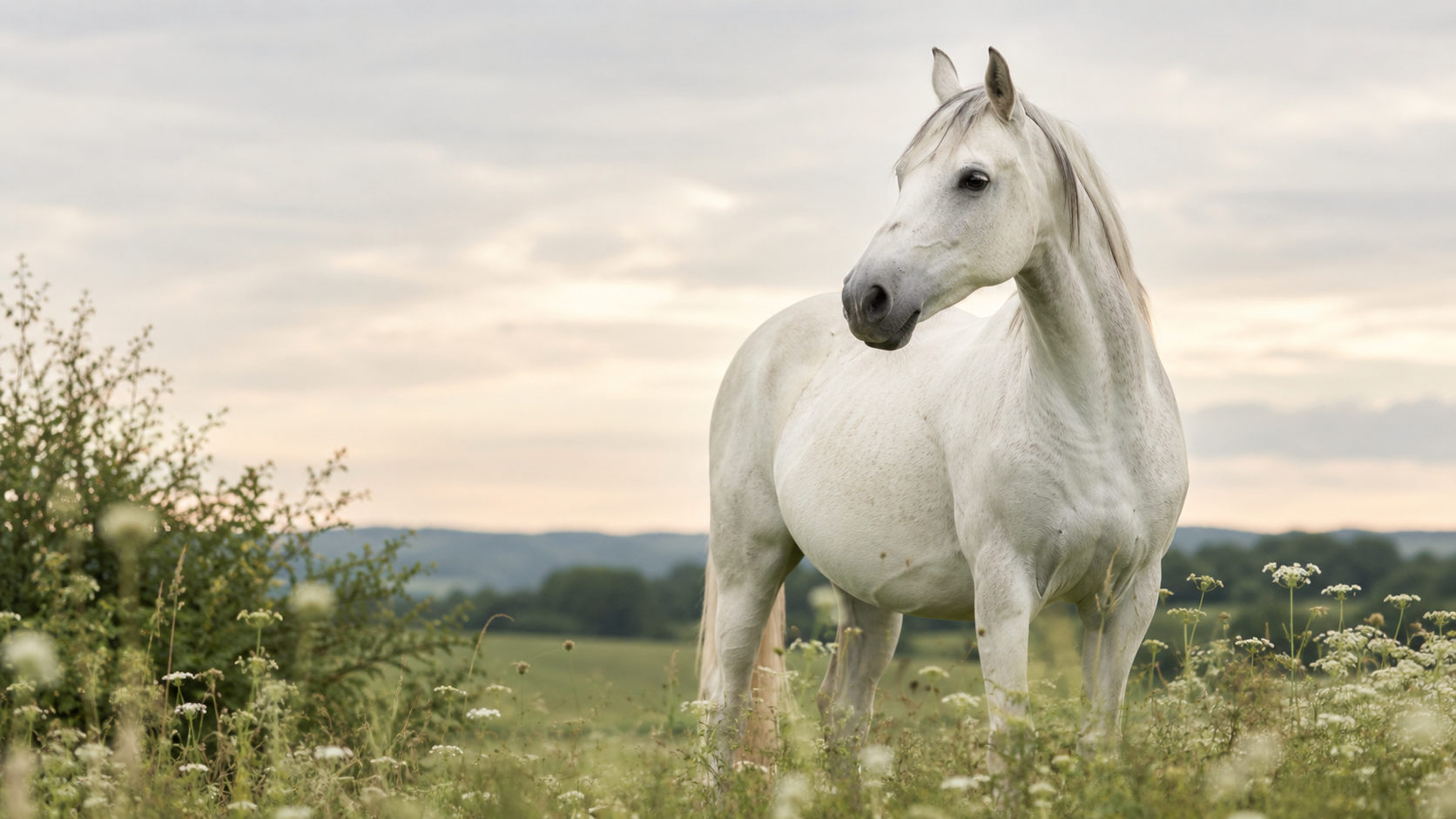
A medium-framed horse, harmonious and powerful, with dense bone structure and well-developed musculature. Its silhouette is elegant and compact, often described as a 'Baroque horse'.
Medium-sized, dry head, with a straight or slightly convex (sub-convex) profile. The eyes are large, expressive, and lively. The ears are medium-sized, well-set, and mobile.
Powerful, arched neck, well-set, broad at the base and tapering towards the head. The withers are well-defined and long, blending harmoniously into the back.
Short, broad, and muscular back. The topline is strong and slightly ascending towards the croup. The chest is ample and deep. The croup is rounded, strong, and slightly sloped, with a low-set and full tail.
Strong, clean, and well-muscled limbs, with large and well-defined joints. The cannons are short and the pasterns are of medium length. Feathers are present but not excessive. The hooves are hard and well-formed.
- Common coats: grey, bay, black, chestnut, palomino, dun
Temperament and aptitudes
The PRE is renowned for its noble, intelligent, and sensitive temperament. It is courageous, willing, and very close to humans, making it an easy horse to train and pleasant to ride. It possesses a great capacity for learning and a strong presence.
The gaits are elevated, ample, rhythmic, and energetic, with great impulsion. The walk is regular, the trot is elevated, and the canter is round and balanced, with a natural aptitude for collection.
- Uses: classical dressage, Haute École, working equitation, driving, equestrian show, breeding, leisure
- Disciplines: dressage, working equitation, TREC, driving
Feeding the Purebred Spanish Horse
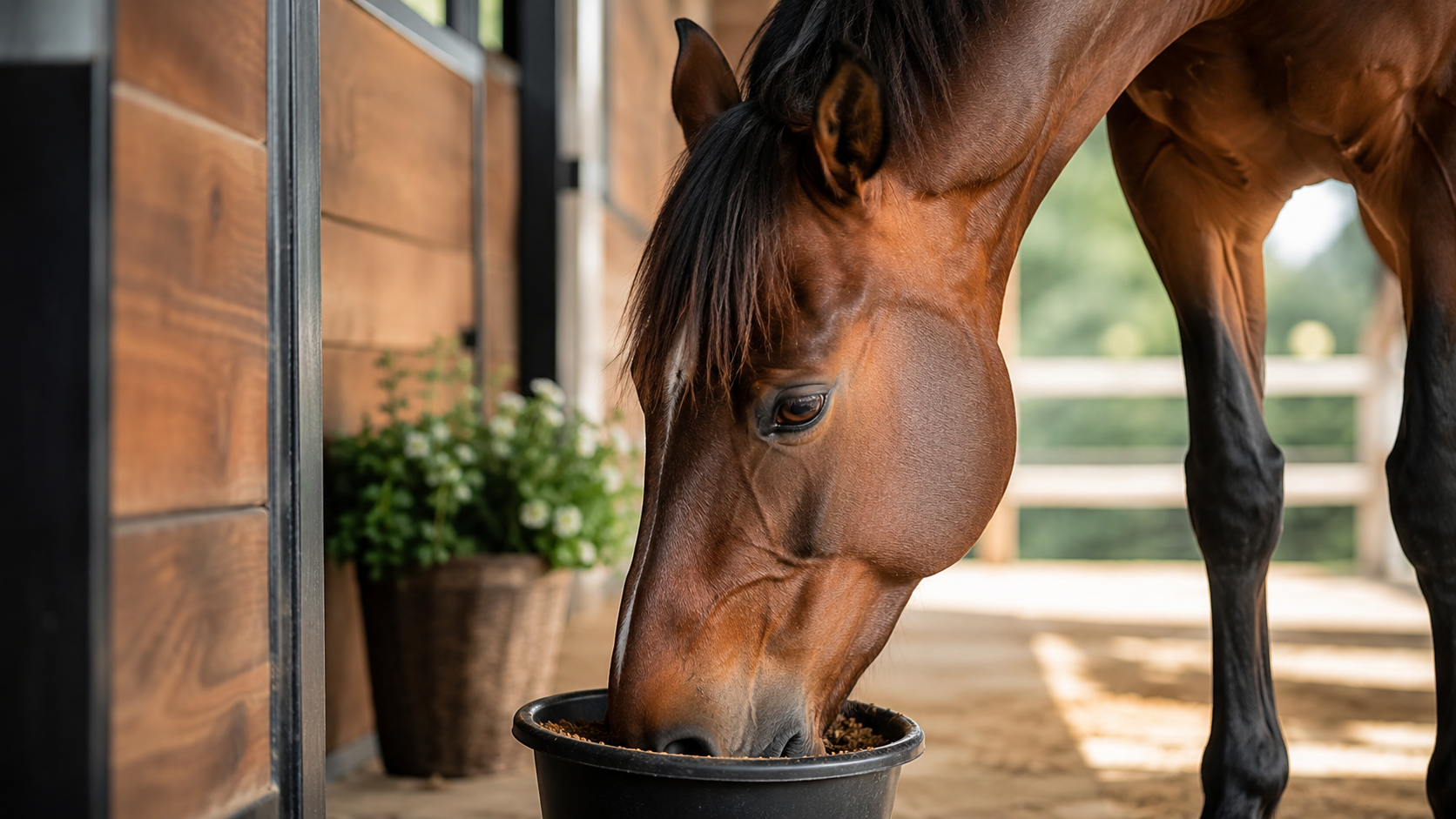
The Pure Spanish Horse generally has a thrifty metabolism, capable of efficiently utilizing forage. It tends to gain weight if not sufficiently exercised or if its diet is too rich. A base of good quality forage (hay, grass) is essential. Concentrates should be adjusted according to the intensity of work, favoring low-starch and low-sugar feeds for horses that are not very active or prone to obesity.
Although generally robust, the PRE, like other breeds with a thrifty metabolism, can be predisposed to Equine Metabolic Syndrome (EMS) and laminitis if overfed or sedentary. Vigilance is required regarding sugar and starch intake, especially for overweight individuals or those with a history of these conditions.
With Equio, every feed, supplement or treat is read against the horse's real profile (age, weight, Body Condition Score, conditions) — useful for a Purebred Spanish Horse as soon as a metabolic or digestive sensitivity is known.
Health and points to watch
Particular attention should be paid to weight management to prevent EMS and laminitis. In grey horses, regular monitoring for melanomas is recommended, particularly around the anus, under the tail, and on the eyelids. Regular veterinary check-ups are essential for early detection of any abnormalities.
- Documented genetic disorders: cerebellar ataxia (rare)
- More frequent conditions: osteochondrosis (OCD) (variable depending on bloodlines), melanomas (in greys)
Care and grooming
The mane and tail, often very full, require regular maintenance (detangling, washing) to prevent knots and breakage. The hooves are generally hard and healthy, but regular trimming is essential. The coat does not require specific care beyond daily grooming. Clipping is performed according to use and season.
Did you know?
- The PRE is often called the 'horse of kings' due to its historical use by European nobility and royal courts.
- It is the only equine breed in the world to have its studbook managed by the Spanish Ministry of Defense (through ANCCE).
- The PRE has strongly influenced many other breeds, notably the Lipizzaner, the Lusitano, and American breeds such as the Mustang.
The Purebred Spanish Horse and how to track it
The Pure Spanish Horse is very present in France, where it is appreciated for its qualities in dressage, working equitation, and as a pleasure horse. French breeding is active and contributes to the dissemination of the breed.
Equio lets you build a complete profile for a Purebred Spanish Horse: identity, weight, Body Condition Score, feeding, conditions, care reminders (vaccines, worming, trimming) and an exportable health log. The breed sets the identity; everyday decisions still depend on the real horse and your vet's advice.
- Record the activity level: rest, leisure, sport or breeding
- Add known conditions or sensitivities
- Scan feeds, plants and care products
- Keep reminders (vaccines, worming, trimming)
- Prepare a PDF export before a vet appointment
Frequently asked questions
What is the average price of a Pure Spanish Horse?
The price of a PRE varies considerably depending on its age, training level, lineage (bloodline, parents), coat color, and potential. It can range from €5,000 for a young, unbroken horse to over €30,000 for a high-quality, schooled horse.
Is the Purebred Spanish Horse a good horse for beginners?
Thanks to its calm, intelligent, and willing temperament, the PRE can be suitable for supervised beginner riders. However, its sensitivity and strength require a rider capable of understanding and respecting its cues, and not being overwhelmed by its energy.
What is the difference between a Purebred Spanish Horse and an Andalusian?
Historically, the term 'Andalusian' referred to horses from the Andalusia region. Today, 'Purebred Spanish Horse' (PRE) is the official name of the breed recognized by the Spanish studbook. All PREs are Andalusian horses, but not all Andalusian horses are necessarily PREs registered in the studbook.
Is the PRE suitable for show jumping?
Although the PRE is agile and powerful, it is not traditionally bred for high-level show jumping. Its elevated gaits and physique predispose it more to dressage and working equitation. However, it can participate in show jumping at a recreational or amateur level.
How to care for a PRE's mane and tail?
The PRE's mane and tail are often very long and thick. It is recommended to detangle them regularly with a suitable product, wash them with a mild shampoo, and moisturize them to prevent breakage. Some owners braid the tail or mane to protect them during work or in the pasture.