
Horse breed
Deli Pony
The Deli Pony originates from the island of Sumatra, Indonesia, specifically the Deli region. It was developed from local ponies crossed with imported Arabian horses, particularly by Dutch colonists.

The breed at a glance
The Deli Pony is known for its lively, intelligent, and courageous temperament. It is generally docile and easy to train, making it a good companion for riders of all levels, including children. It is also renowned for its great endurance and ability to work in hot climates.
- Category
- pony
- Origin
- Indonesia · 19th century
- Height at withers
- 120–130 cm
- Lifespan
- 20-25 years
- Common coats
- bay, chestnut, grey, black
- Disciplines
- recreational riding, trail riding, pony races
- Other names
- Deli Pony
Origin and history
The Deli Pony originates from the island of Sumatra, Indonesia, specifically the Deli region. It was developed from local ponies crossed with imported Arabian horses, particularly by Dutch colonists. The objective was to create a more refined and faster pony, suitable for light transport and riding. The breed is well-established and locally recognized for its qualities.
Conformation and physique
The Deli Pony is a small-sized pony, but with a harmonious conformation and elegant gaits. It has fine but strong bone structure, typical of breeds influenced by Arabian blood.
Fine and expressive head, often with a slightly concave or straight profile. The eyes are large and lively, the ears small and well-placed. The face is straight or slightly dished.
Well-proportioned, arched, and well-set neck, giving a noble appearance. The withers are generally well-defined.
Short and strong back, taut topline. Deep and well-sprung chest. The croup is rounded and muscular, with a high-set tail.
Fine but strong limbs, with well-defined joints and clean tendons. The hooves are small and hard. Feathering is generally absent or very sparse.
- Common coats: bay, chestnut, grey, black
Temperament and aptitudes
The Deli Pony is known for its lively, intelligent, and courageous temperament. It is generally docile and easy to train, making it a good companion for riders of all levels, including children. It is also renowned for its great endurance and ability to work in hot climates.
The gaits are light, supple, and energetic, with good impulsion. The Deli Pony is renowned for its speed and endurance over short distances.
- Uses: light transport, saddle horse, pony races, light agricultural work
- Disciplines: recreational riding, trail riding, pony races
Feeding the Deli Pony
The Deli Pony is a hardy and economical breed, accustomed to sometimes difficult feeding conditions. Its metabolism is efficient, making it prone to obesity if its diet is not controlled. It generally thrives on good quality forage (grass, hay) and only requires concentrates during intense work or for specific needs (growth, gestation).
Due to its efficient metabolism, the Deli Pony can be predisposed to Equine Metabolic Syndrome (EMS) and laminitis if overfed or given unlimited access to rich pastures. Careful weight monitoring and appropriate dietary management are essential to prevent these conditions.
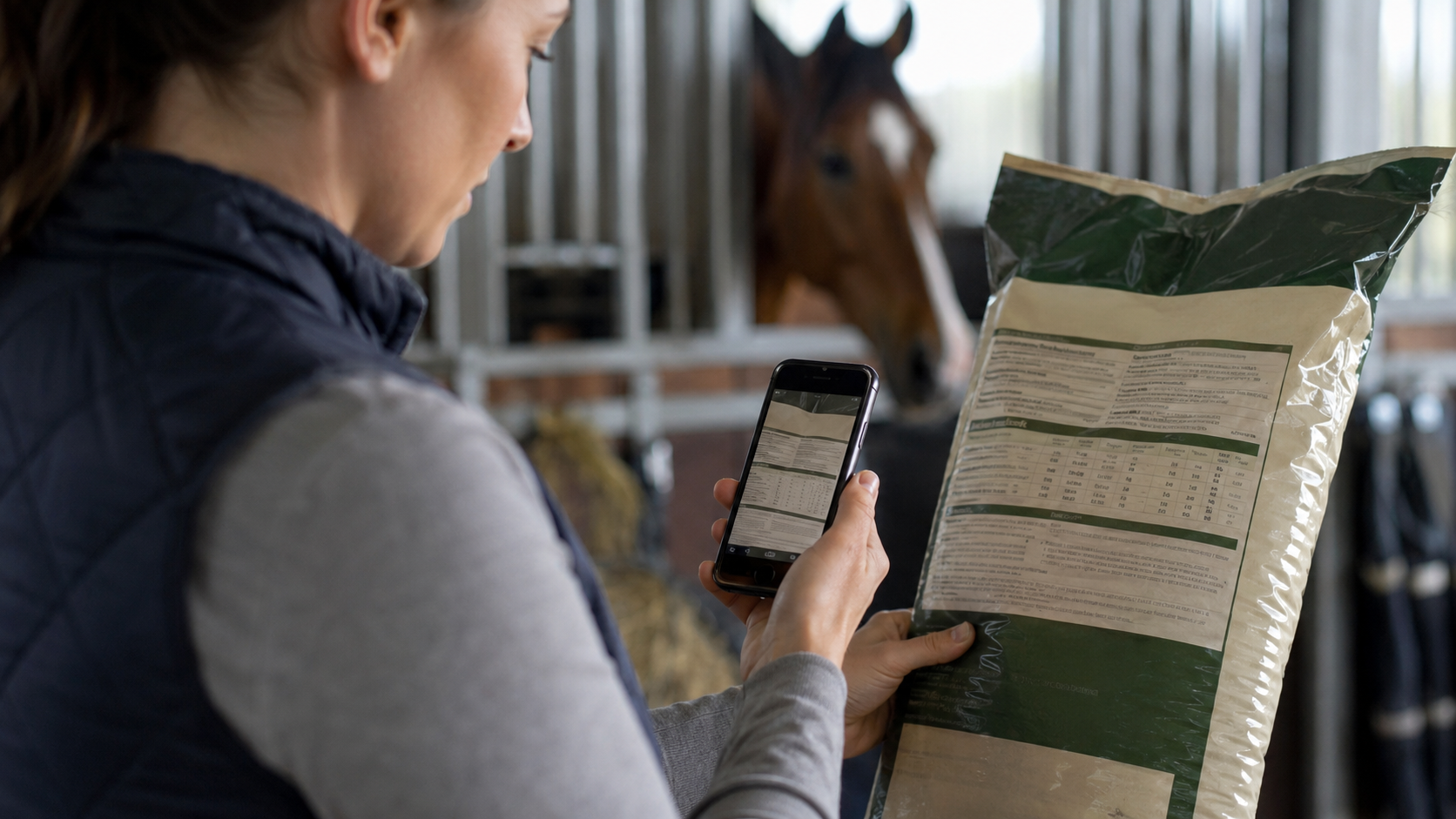
With Equio, every feed, supplement or treat is read against the horse's real profile (age, weight, Body Condition Score, conditions) — useful for a Deli Pony as soon as a metabolic or digestive sensitivity is known.

Health and points to watch
Particular attention should be paid to weight management and laminitis prevention, especially during seasonal or dietary changes. Hoof quality should be monitored, although they are generally robust. Good parasite management is also crucial in hot climates.
- More frequent conditions: laminitis, Equine Metabolic Syndrome (EMS)
Care and grooming
Care for the Deli Pony is relatively simple. Its hooves, though strong, require regular trimming. Its mane and tail are generally fine and do not require excessive maintenance. Its short coat is easy to care for, and clipping is rarely necessary, except for aesthetic reasons or comfort during intense work in very hot climates.
Did you know?
- The Deli Pony is often used in traditional pony races in Indonesia, where it is valued for its speed and agility.
- Its Arabian influence gives it remarkable elegance and endurance for a pony of its size.
- It is considered a symbol of local pride in certain regions of Sumatra.
The Deli Pony and how to track it
The Deli Pony is a very rare breed in France and Europe. There is no significant breeding or widespread use of this breed in French territory. Its presence is anecdotal, often limited to a few imported individuals.
Equio lets you build a complete profile for a Deli Pony: identity, weight, Body Condition Score, feeding, conditions, care reminders (vaccines, worming, trimming) and an exportable health log. The breed sets the identity; everyday decisions still depend on the real horse and your vet's advice.
- Record the activity level: rest, leisure, sport or breeding
- Add known conditions or sensitivities
- Scan feeds, plants and care products
- Keep reminders (vaccines, worming, trimming)
- Prepare a PDF export before a vet appointment
Frequently asked questions
Is the Deli Pony suitable for children?
Yes, the Deli Pony is generally considered an excellent pony for children due to its docile, intelligent temperament and suitable size. Its courage and liveliness also make it a good partner for learning to ride.
What is the primary use of the Deli Pony?
Historically and currently, the Deli Pony is primarily used as a saddle pony for light transport and recreational riding. It is also popular in traditional pony races in Indonesia.
Is the Deli Pony easy to care for?
Yes, it is a hardy and economical breed. It requires basic care such as regular hoof trimming and an appropriate diet to prevent obesity, but it is generally robust and low-maintenance.
Can Deli Ponies be found outside Indonesia?
The Deli Pony is primarily bred in Indonesia. It is very rare to find it outside its country of origin, and imports are infrequent, making it an exotic breed in other parts of the world.
What is the Arabian influence on the Deli Pony?
The Arabian influence was introduced through crossbreeding in the 19th century, aiming to improve the speed, elegance, and endurance of local ponies. This is evident in a more refined head, an arched neck, and lighter gaits.