
Horse breed
Kisber Felver
The Kisber Felver breed was developed at the Kisbér State Stud in Hungary, founded in 1853. It resulted from complex crosses between local mares and hot-blooded stallions (Thoroughbred, Arabian, Anglo-Arabian, Trakehner).

The breed at a glance
The Kisber Felver is renowned for its willing, intelligent, and courageous temperament. It is generally easy to train, cooperative, and possesses a great learning ability, making it a reliable partner for sport.
- Category
- sport horse
- Origin
- Hungary · Late 19th century
- Height at withers
- 160–170 cm
- Weight
- 500–600 kg
- Lifespan
- 25-30 years
- Common coats
- bay, chestnut, black, grey
- Disciplines
- show jumping, dressage, eventing, driving
- Other names
- Kisbéri Félvér, Kisber Halfbred
Origin and history
The Kisber Felver breed was developed at the Kisbér State Stud in Hungary, founded in 1853. It resulted from complex crosses between local mares and hot-blooded stallions (Thoroughbred, Arabian, Anglo-Arabian, Trakehner). The objective was to create a versatile, elegant, and high-performing cavalry horse. The breed was officially recognized and its studbook established after World War II, despite significant population losses.
Conformation and physique
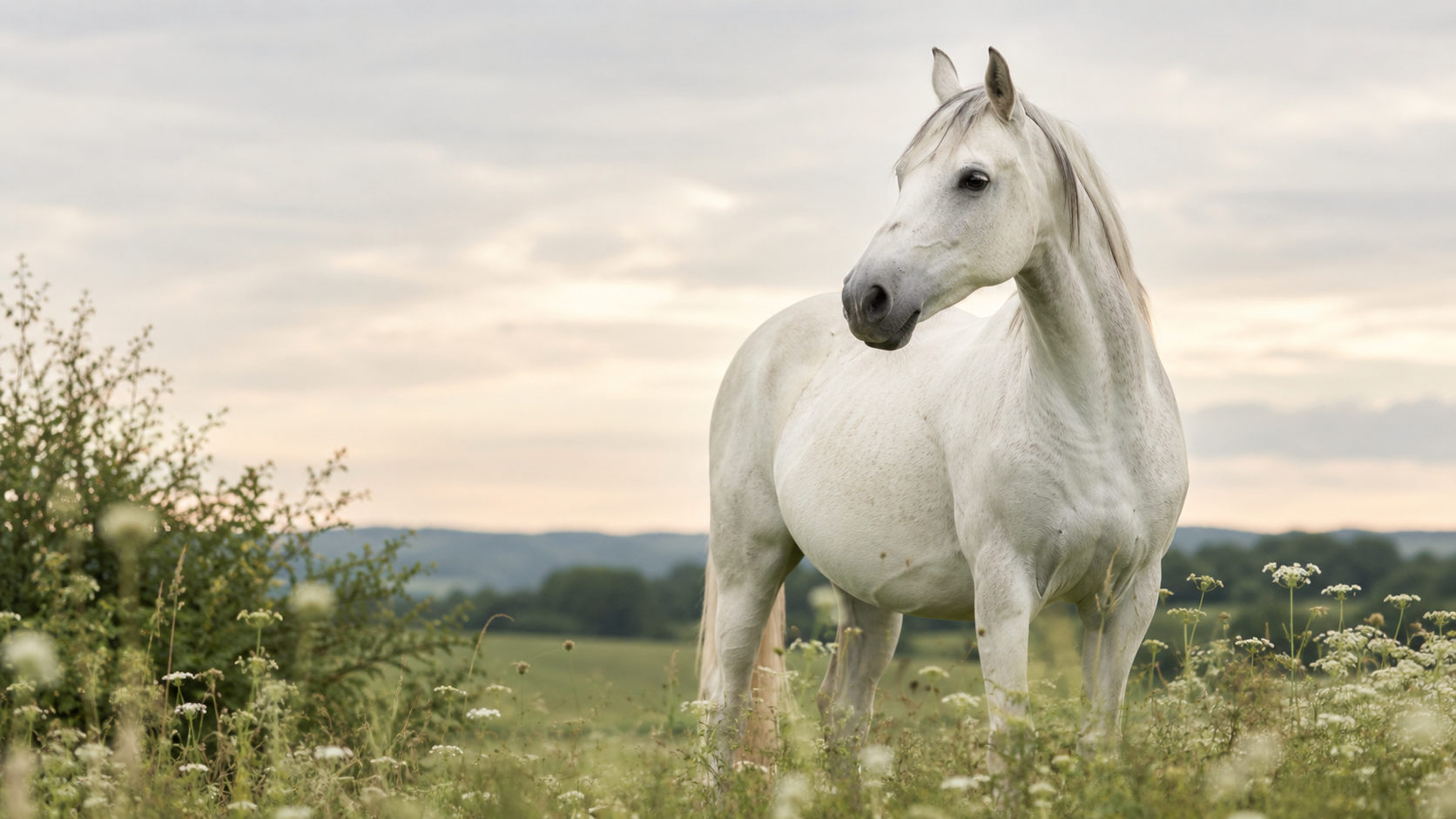
The Kisber Felver is a medium to large-sized horse, elegant and athletic, with a solid yet refined bone structure. It presents a harmonious silhouette, typical of a modern sport horse, combining strength and agility.
Dry and expressive head, medium-sized, with a straight or slightly concave profile. The eyes are large and lively, the ears well-set and mobile. The nostrils are wide and open.
Long, well-muscled, and arched neck, blending harmoniously into well-defined and long withers. The head carriage is proud.
Short and strong back, taut and muscular topline. Deep and wide chest, well-sprung ribs. The croup is long, muscular, and slightly sloped, with a well-set tail.
Long, clean, and muscular limbs, with large and well-defined joints. The cannons are short and the tendons well-defined. The hooves are hard and well-formed. Little to no feathering.
- Common coats: bay, chestnut, black, grey
Temperament and aptitudes
The Kisber Felver is renowned for its willing, intelligent, and courageous temperament. It is generally easy to train, cooperative, and possesses a great learning ability, making it a reliable partner for sport.
The gaits are expansive, supple, energetic, and balanced, with good impulsion. The walk is regular, the trot airy, and the canter powerful and rhythmic, demonstrating an excellent aptitude for jumping.
- Uses: cavalry horse (historical), sport horse (dressage, show jumping, eventing), driving, leisure
- Disciplines: show jumping, dressage, eventing, driving
Feeding the Kisber Felver
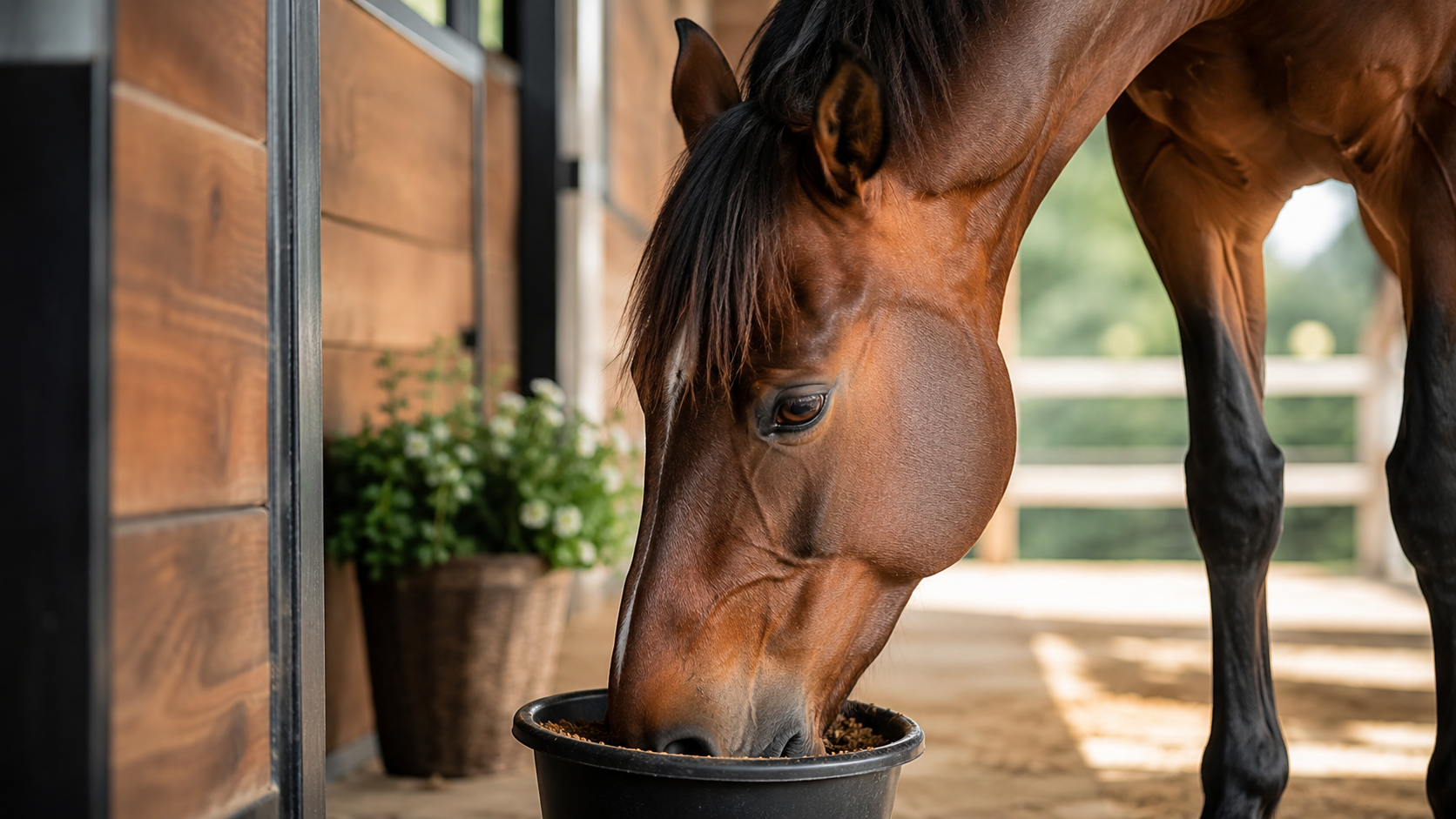
As a sport horse, the Kisber Felver has moderate to high energy requirements depending on its activity level. It is generally not considered an easy keeper. A balanced diet, rich in good quality forage (free-choice hay), is essential. Concentrates adapted to exertion (rich in energy and protein) are necessary for horses in intense work, taking care not to overload starch intake.
The breed does not show documented predispositions to specific dietary sensitivities such as laminitis or Equine Metabolic Syndrome (EMS) more than the general equine population. However, like any sport horse, careful dietary management is crucial to prevent digestive and metabolic disorders related to excessive or unbalanced concentrate intake.
With Equio, every feed, supplement or treat is read against the horse's real profile (age, weight, Body Condition Score, conditions) — useful for a Kisber Felver as soon as a metabolic or digestive sensitivity is known.
Health and points to watch
Particular attention must be paid to joint and tendon health, given its athletic use. Regular veterinary examinations, rigorous farriery care, and adapted training management are essential to prevent injuries.
- More frequent conditions: locomotor disorders related to intense athletic activity (osteoarthritis, tendinitis)
Care and grooming
Routine care includes regular hoof trimming (every 6-8 weeks) to maintain good balance. The coat is easy to maintain; daily brushing is sufficient. The mane and tail can be left natural or braided depending on the discipline. Clipping is common for sport horses in winter.
Did you know?
- The Kisbér Stud, where the breed was developed, was one of the most prestigious in Europe in the 19th century.
- After World War II, a large part of the Kisber Felver stock was lost or dispersed, but conservation efforts allowed the breed to be rebuilt.
- The Thoroughbred 'Kincsem', one of the most famous race mares of all time (undefeated in 54 races), was born in Kisbér and influenced the founding bloodlines.
The Kisber Felver and how to track it
The Kisber Felver breed is underrepresented in France, with a small number of dedicated breeders and owners. It remains a niche breed but is valued for its athletic qualities.
Equio lets you build a complete profile for a Kisber Felver: identity, weight, Body Condition Score, feeding, conditions, care reminders (vaccines, worming, trimming) and an exportable health log. The breed sets the identity; everyday decisions still depend on the real horse and your vet's advice.
- Record the activity level: rest, leisure, sport or breeding
- Add known conditions or sensitivities
- Scan feeds, plants and care products
- Keep reminders (vaccines, worming, trimming)
- Prepare a PDF export before a vet appointment
Frequently asked questions
Is the Kisber Felver a good horse for beginners?
Due to its willing temperament and energy, the Kisber Felver is generally more suited to riders with some experience. It can be an excellent partner for an experienced rider looking to advance in equestrian sports.
What is the average price of a Kisber Felver?
The price of a Kisber Felver varies considerably depending on its age, level of training, lineage, and sporting potential. As a rare breed, prices can be higher than for more common breeds, ranging from a few thousand to several tens of thousands of euros for proven sport horses.
Is the Kisber Felver suited to the French climate?
Yes, the Kisber Felver is a robust and adaptable breed that acclimatizes well to temperate climates, including that of France. It tolerates seasonal variations well, provided it has appropriate shelter and care.
Where can you find a Kisber Felver in France?
As the breed is rare in France, it is advisable to contact the French breed association (if one exists) or international studbooks. Breeders are few, and it may be necessary to consider importing from Hungary or other European countries.
What are the Kisber Felver's key strengths in competition?
The Kisber Felver excels in competition thanks to its athleticism, suppleness, intelligence, and courage. It is particularly valued for its abilities in show jumping, dressage, and eventing, where it demonstrates strength, agility, and a willingness to perform well.