
Horse breed
Karabakh
The Karabakh horse is an ancient breed originating from the mountainous Karabakh region of Azerbaijan. Its origins date back to antiquity, with influences from Persian, Turkmen, and Arabian horses.

The breed at a glance
The Karabakh is renowned for its lively, courageous, and energetic temperament, but also for its great docility and intelligence. It is easy to train and very loyal to its rider, making it an excellent working partner.
- Category
- saddle horse
- Origin
- Azerbaijan · 4th-5th century
- Height at withers
- 145–155 cm
- Weight
- 350–450 kg
- Lifespan
- 25-30 years
- Common coats
- golden chestnut, golden bay, palomino, dun
- Disciplines
- flat racing, endurance riding, equestrian trail riding, light dressage
- Other names
- Karabakh Horse, Azerbaijani Horse
Origin and history
The Karabakh horse is an ancient breed originating from the mountainous Karabakh region of Azerbaijan. Its origins date back to antiquity, with influences from Persian, Turkmen, and Arabian horses. It was traditionally bred by the Karabakh khans and used as a war and parade horse. The breed was officially recognized and a studbook was established in the 20th century, although its population has significantly declined following regional conflicts.
Conformation and physique
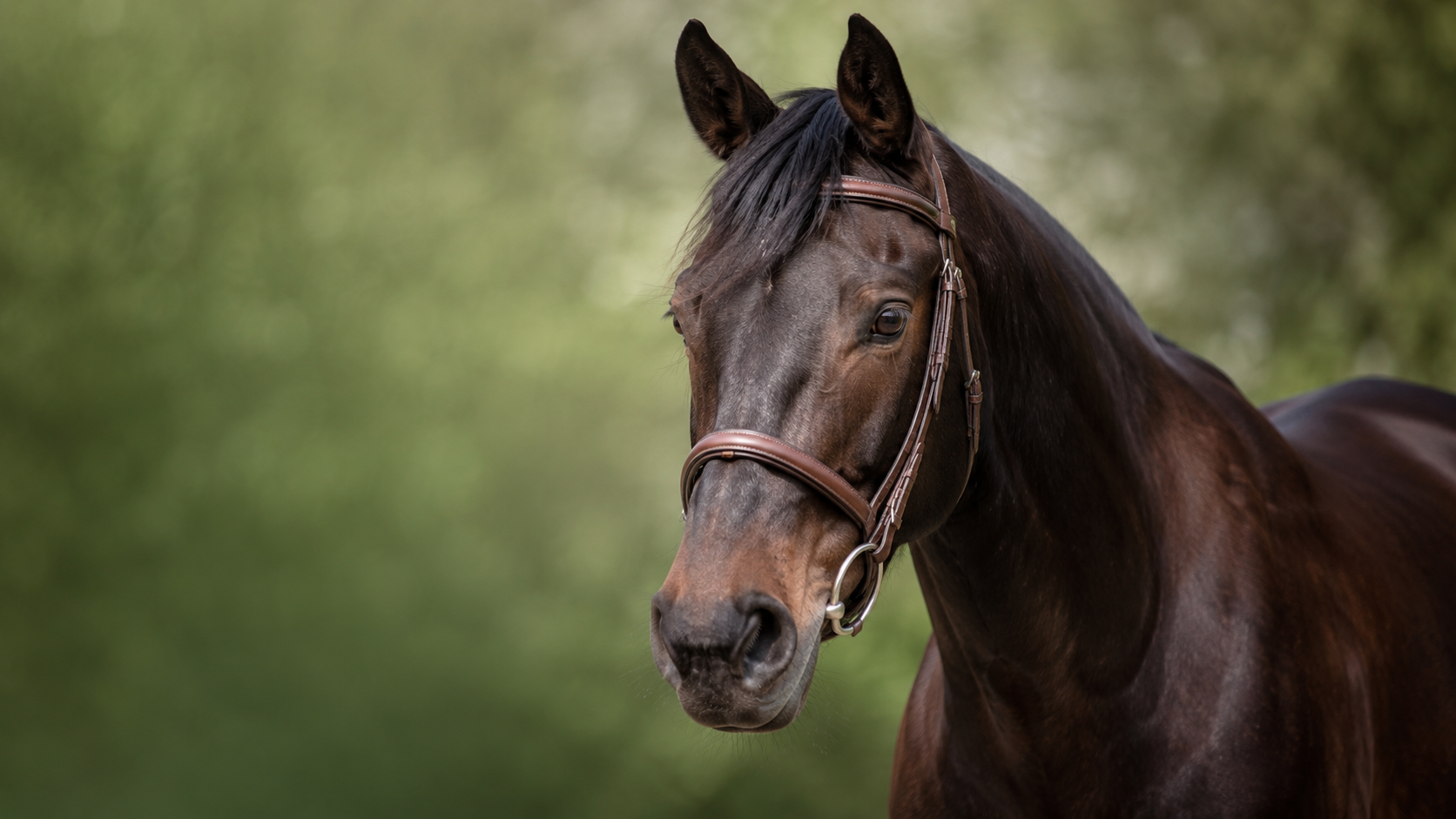
The Karabakh is a medium-sized horse, elegant and harmonious, with fine but strong bone. It has an athletic and compact build, typical of oriental saddle horses.
The head is refined, clean-cut, with a straight or slightly concave profile. The eyes are large and expressive, the ears medium-sized and well-placed.
The neck is long, well-muscled and arched, set high. The withers are well-defined and extended.
The back is short and straight, the topline is strong. The chest is broad and deep. The croup is muscular, slightly sloping, and well-rounded.
The legs are fine, clean, and strong, with well-defined joints and clean tendons. The hooves are hard and well-formed. Feathering is generally absent or very sparse.
- Common coats: golden chestnut, golden bay, palomino, dun
Temperament and aptitudes
The Karabakh is renowned for its lively, courageous, and energetic temperament, but also for its great docility and intelligence. It is easy to train and very loyal to its rider, making it an excellent working partner.
The gaits are supple, expansive, and energetic, with good impulsion. The walk is regular, the trot is airy, and the canter is fast and balanced.
- Uses: saddle horse, racehorse, parade horse, light work horse, endurance riding
- Disciplines: flat racing, endurance riding, equestrian trail riding, light dressage, show jumping (amateur level)
Feeding the Karabakh
The Karabakh is a hardy and economical breed, accustomed to the poor pastures of its region of origin. It has an efficient metabolism and is prone to obesity if its diet is not adapted. A base of good quality forage (hay or grass) is essential, supplemented by concentrates only if the workload is sustained. It is important to monitor its weight to avoid overfeeding.
Due to its economical metabolism, the Karabakh can be predisposed to Equine Metabolic Syndrome (EMS) and laminitis if overfed or if it has unlimited access to rich pastures. It is therefore crucial to carefully manage its sugar and starch intake.
With Equio, every feed, supplement or treat is read against the horse's real profile (age, weight, Body Condition Score, conditions) — useful for a Karabakh as soon as a metabolic or digestive sensitivity is known.

Health and points to watch
Regular monitoring of weight and body condition is essential to prevent metabolic problems. It is also important to ensure regular hoof trimming and good dental hygiene, as for any horse.
- More frequent conditions: laminitis, Equine Metabolic Syndrome (EMS)
Care and grooming
Karabakh care is relatively simple. Its hard hooves require regular trimming but are generally resilient. Its mane and tail, often full, can be maintained with regular brushing. Its fine coat does not require special care, and clipping is generally not necessary except in cases of intense work in winter.
Did you know?
- The Karabakh is often nicknamed the 'golden horse' due to the brilliant golden coat of many individuals, particularly golden chestnuts and golden bays.
- It is one of the oldest saddle horse breeds in the world, with a rich history and an influence on other oriental breeds.
- The Karabakh is depicted on the coat of arms of Azerbaijan, symbolizing national pride and strength.
The Karabakh and how to track it
The Karabakh breed is very rare in France, with an almost non-existent population. There is no significant breeding or widespread use of this breed in French territory.
Equio lets you build a complete profile for a Karabakh: identity, weight, Body Condition Score, feeding, conditions, care reminders (vaccines, worming, trimming) and an exportable health log. The breed sets the identity; everyday decisions still depend on the real horse and your vet's advice.
- Record the activity level: rest, leisure, sport or breeding
- Add known conditions or sensitivities
- Scan feeds, plants and care products
- Keep reminders (vaccines, worming, trimming)
- Prepare a PDF export before a vet appointment
Frequently asked questions
What is special about the Karabakh's coat?
The Karabakh is famous for its coats with metallic golden reflections, particularly golden chestnut and golden bay. This unique characteristic has earned it the nickname 'golden horse'.
Is the Karabakh a good horse for beginners?
Although intelligent and docile, the Karabakh is a lively and energetic horse. It is better suited for riders who already have some experience, capable of managing its temperament and channeling its energy.
Where can Karabakh horses be found?
The majority of Karabakh horses are found in Azerbaijan, their country of origin. The breed is rare outside this region, and it is difficult to acquire them in other countries.
Is the Karabakh a threatened breed?
Yes, the Karabakh is considered a threatened breed. Conflicts in the Karabakh region have severely affected its population, and conservation efforts are underway to preserve this historic breed.
What are the Karabakh's athletic abilities?
The Karabakh excels in flat racing and endurance thanks to its speed and robustness. It is also appreciated for trail riding and light dressage, demonstrating great versatility.