
Horse breed
Karabair
The Karabair is an ancient Central Asian breed, with origins tracing back to the Ferghana horses. It was developed in the Ferghana Valley, Uzbekistan, through crosses between local horses, Arabian, Turkmen, and Mongolian horses.
The breed at a glance
The Karabair is renowned for its calm, intelligent, and willing temperament. It is courageous, enduring, and easy to train, making it an excellent partner for work and leisure. It is also known for its loyalty to its rider.
- Category
- saddle horse
- Origin
- Uzbekistan · Antiquity (foundations), 18th-19th centuries (modern establishment)
- Height at withers
- 145–155 cm
- Weight
- 400–500 kg
- Lifespan
- 25-30 years
- Common coats
- bay, chestnut, grey, black
- Disciplines
- endurance riding, trail riding, dressage (leisure), show jumping (leisure)
- Other names
- Karabair Horse, Karabakh Horse (historiquement lié mais distinct)
Origin and history
The Karabair is an ancient Central Asian breed, with origins tracing back to the Ferghana horses. It was developed in the Ferghana Valley, Uzbekistan, through crosses between local horses, Arabian, Turkmen, and Mongolian horses. Historically used as a warhorse, saddle horse, and light draft horse, it played a crucial role in the region's culture and economy. The breed was officially recognized and its studbook established in Uzbekistan in the 20th century.
Conformation and physique
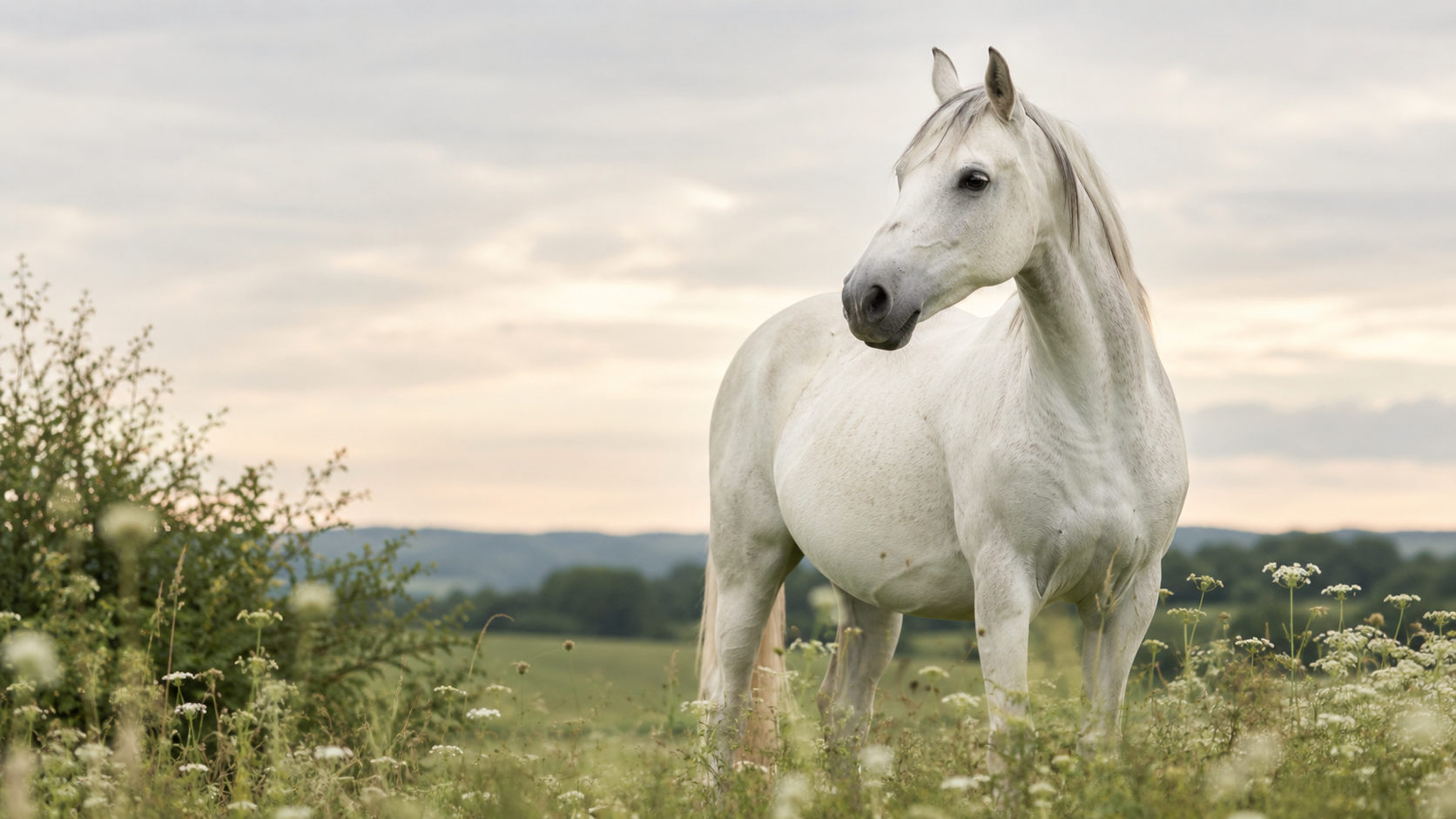
The Karabair is a medium-sized horse, compact and muscular, with solid bone structure. It presents a harmonious silhouette, combining strength and agility, typical of oriental saddle horses.
Medium-sized head, well-proportioned, with a straight or slightly convex profile. The eyes are large and expressive, the ears medium-sized and well-placed. The nostrils are wide.
Medium-length neck, well-muscled and arched, blending harmoniously into a well-defined and muscular wither.
Short, strong back, taut topline. Broad and deep chest. Long, muscular, and slightly sloping croup, with a high-set tail.
Clean, strong, and well-muscled limbs, with broad joints and well-defined tendons. The hooves are hard and well-formed. Little to no feathering.
- Common coats: bay, chestnut, grey, black
Temperament and aptitudes
The Karabair is renowned for its calm, intelligent, and willing temperament. It is courageous, enduring, and easy to train, making it an excellent partner for work and leisure. It is also known for its loyalty to its rider.
The gaits are supple, expansive, and energetic, with good balance. The walk is active, the trot extended, and the canter powerful, demonstrating good endurance.
- Uses: saddle horse, light draft horse, pack horse, traditional flat racing, traditional equestrian games, breeding
- Disciplines: endurance riding, trail riding, dressage (leisure), show jumping (leisure), driving
Feeding the Karabair
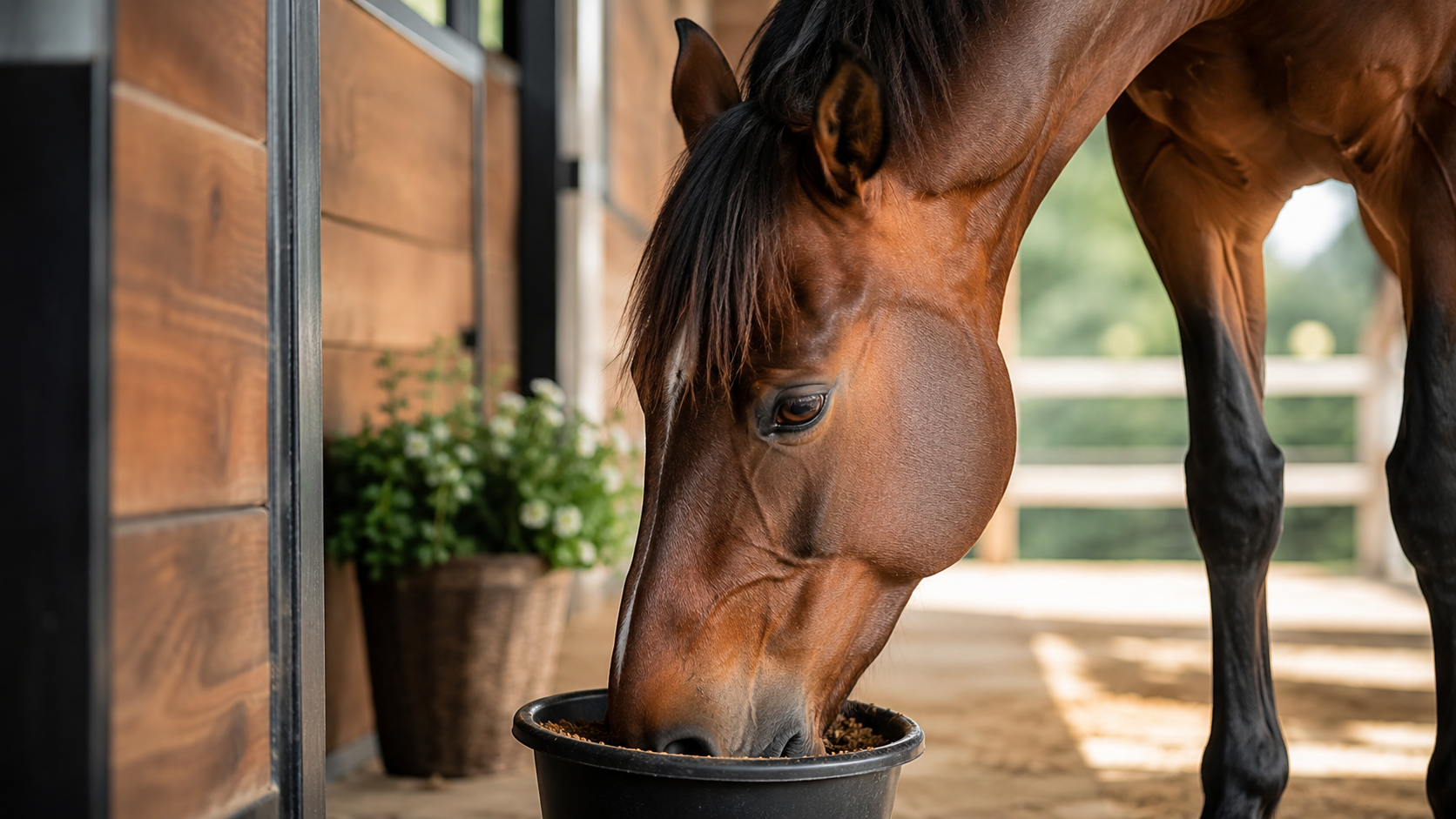
The Karabair is a horse with an efficient metabolism, adapted to the arid conditions of its country of origin. It utilizes medium-quality forage well and tends to gain weight if its diet is not adjusted. A diet based on good quality hay is paramount. Concentrates are only necessary in cases of intense work or specific needs, and should be adapted sparingly to avoid overweight.
Due to its efficient metabolism, the Karabair can be predisposed to Equine Metabolic Syndrome (EMS) and laminitis if overfed or sedentary, especially with diets rich in sugars and starch. Careful management of diet and exercise is essential to prevent these conditions.
With Equio, every feed, supplement or treat is read against the horse's real profile (age, weight, Body Condition Score, conditions) — useful for a Karabair as soon as a metabolic or digestive sensitivity is known.
Health and points to watch
Particular attention must be paid to weight management to prevent EMS and laminitis. Hoof quality, although generally good, requires regular trimming. Routine dental and parasite monitoring is also crucial.
- More frequent conditions: locomotor disorders related to wear and tear (osteoarthritis) if work is excessive or poorly managed, dental problems (as with any horse)
Care and grooming
The Karabair's hooves are renowned for their hardness and require regular trimming but can often go unshod if the terrain allows. The mane and tail are generally full and require regular care to prevent tangles. The coat is easy to maintain and does not require specific care beyond usual grooming.
Did you know?
- The Karabair is one of the oldest and purest breeds in Central Asia, having retained many characteristics of its ancestors.
- It is often confused with the Karabakh horse (Azerbaijan) due to the similarity of names and close geographical origin, but they are distinct breeds.
- The Karabair is capable of covering long distances in difficult climatic conditions, demonstrating its incredible endurance and hardiness.
The Karabair and how to track it
The Karabair breed is very rare in France and is not subject to significant breeding there. The few individuals present are generally imported and used for trail riding or leisure riding.
Equio lets you build a complete profile for a Karabair: identity, weight, Body Condition Score, feeding, conditions, care reminders (vaccines, worming, trimming) and an exportable health log. The breed sets the identity; everyday decisions still depend on the real horse and your vet's advice.
- Record the activity level: rest, leisure, sport or breeding
- Add known conditions or sensitivities
- Scan feeds, plants and care products
- Keep reminders (vaccines, worming, trimming)
- Prepare a PDF export before a vet appointment
Frequently asked questions
Is the Karabair a good horse for beginners?
Yes, thanks to its calm, intelligent, and willing temperament, the Karabair can be an excellent horse for beginner or intermediate riders, provided it is well-supervised and educated.
What is the difference between a Karabair and a Karabakh?
Although the names are similar and the regions of origin are close, the Karabair originates from Uzbekistan (Ferghana Valley) and the Karabakh from Azerbaijan. They are two distinct breeds, although they share common ancestors and oriental characteristics.
Is the Karabair suitable for endurance riding?
Absolutely. The Karabair is naturally endowed with great endurance, good stamina, and an efficient metabolism, making it an excellent candidate for endurance disciplines and long trail rides.
Where can one buy a Karabair horse in France?
It is very difficult to find a Karabair in France, as the breed is poorly represented there. Acquisition would likely require direct import from Uzbekistan or neighboring countries, or through specialized breeders in Europe.
Is the Karabair a hardy breed?
Yes, the Karabair is a very hardy breed, adapted to harsh climates and difficult terrains. It is known for its robustness, its ability to live outdoors, and its frugality.