
Horse breed
Icelandic Horse
The Icelandic horse descends from Scandinavian and Celtic ponies imported by the Vikings during the colonization of Iceland. The island's geographical isolation has preserved the purity of the breed, with no other horses having been introduced since the 10th century.

The breed at a glance
The Icelandic horse is renowned for its calm, gentle, and cooperative temperament, while also being energetic and willing. It is intelligent, curious, and very hardy, making it an excellent companion for leisure and work.
- Category
- hardy breed
- Origin
- Iceland · 9th - 10th century
- Height at withers
- 130–145 cm
- Weight
- 300–400 kg
- Lifespan
- 25-30 years
- Common coats
- bay, chestnut, black, grey, palomino, dun, roan, pinto, cream
- Disciplines
- Tölt, Skeid (gait racing), Equestrian trekking, Dressage (recreational)
- Other names
- Cheval Islandais, Icelandic Horse
Origin and history
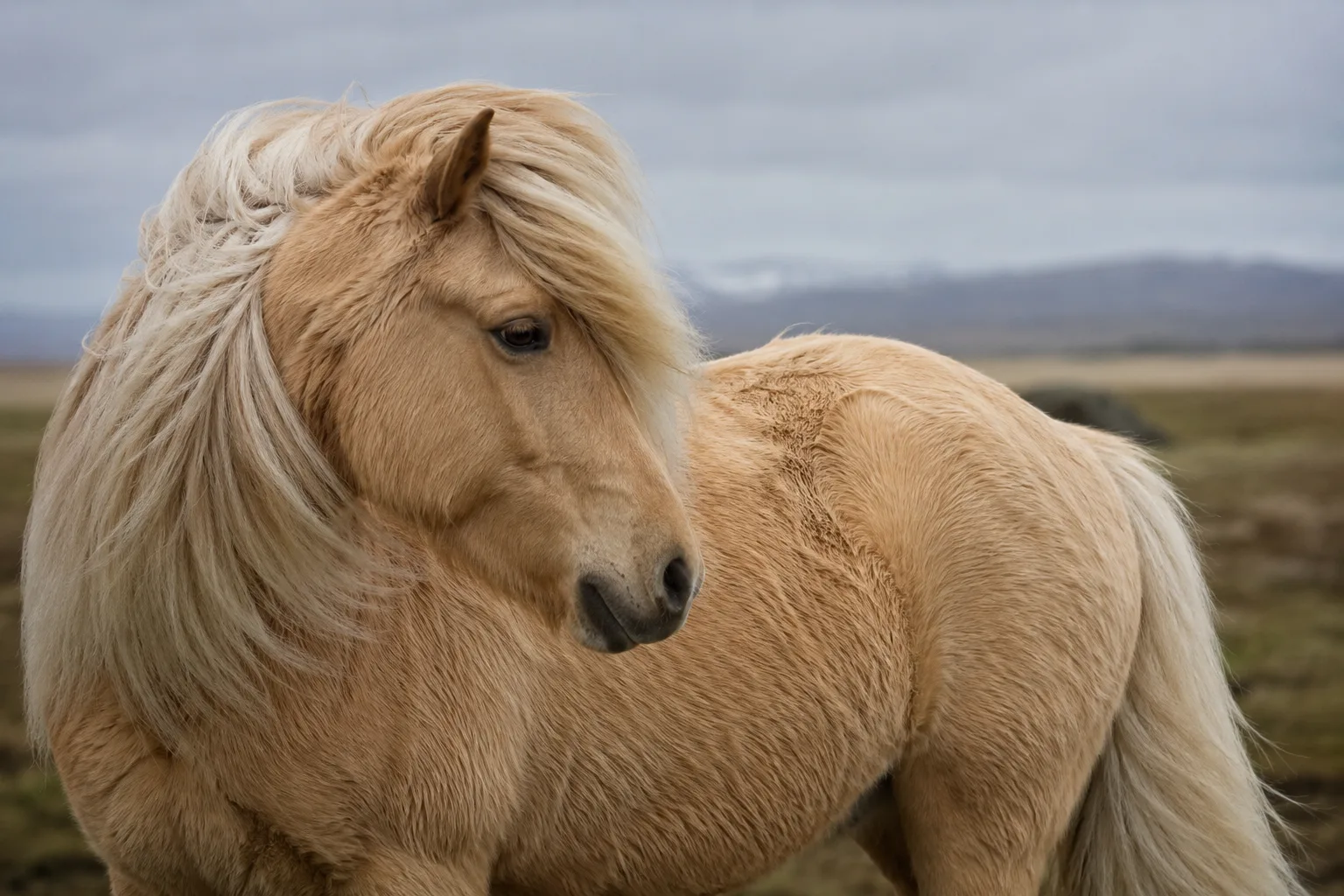
The Icelandic horse descends from Scandinavian and Celtic ponies imported by the Vikings during the colonization of Iceland. The island's geographical isolation has preserved the purity of the breed, with no other horses having been introduced since the 10th century. It played a crucial role in the development of Iceland as a means of transport and labor. The breed is officially recognized and protected by strict laws prohibiting the importation of horses into Iceland and the return of exported horses.

Conformation and physique
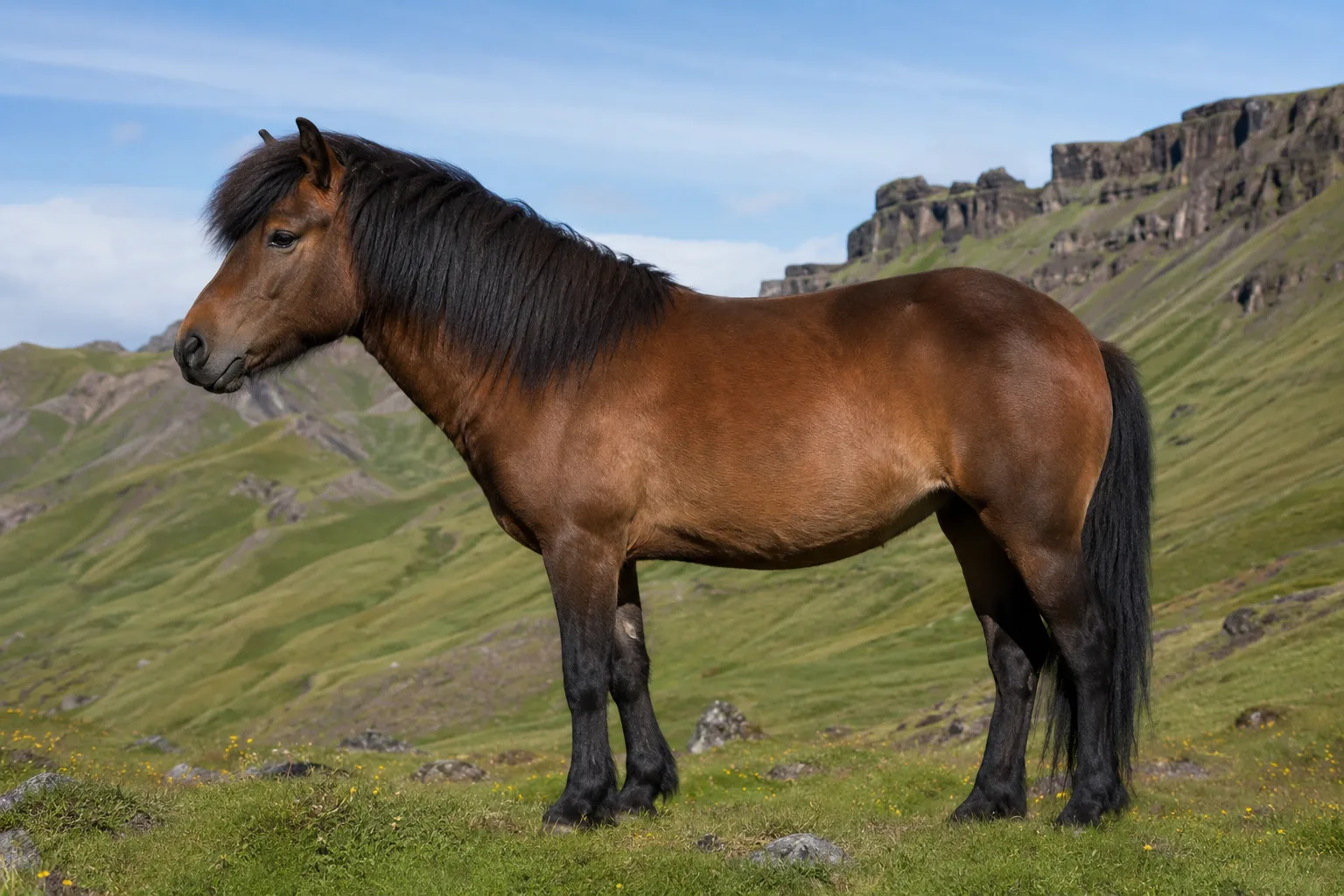
It is a small-sized, robust, and compact horse, with strong bone structure and well-developed musculature. It has a harmonious silhouette, typical of hardy breeds, adapted to its original environment.
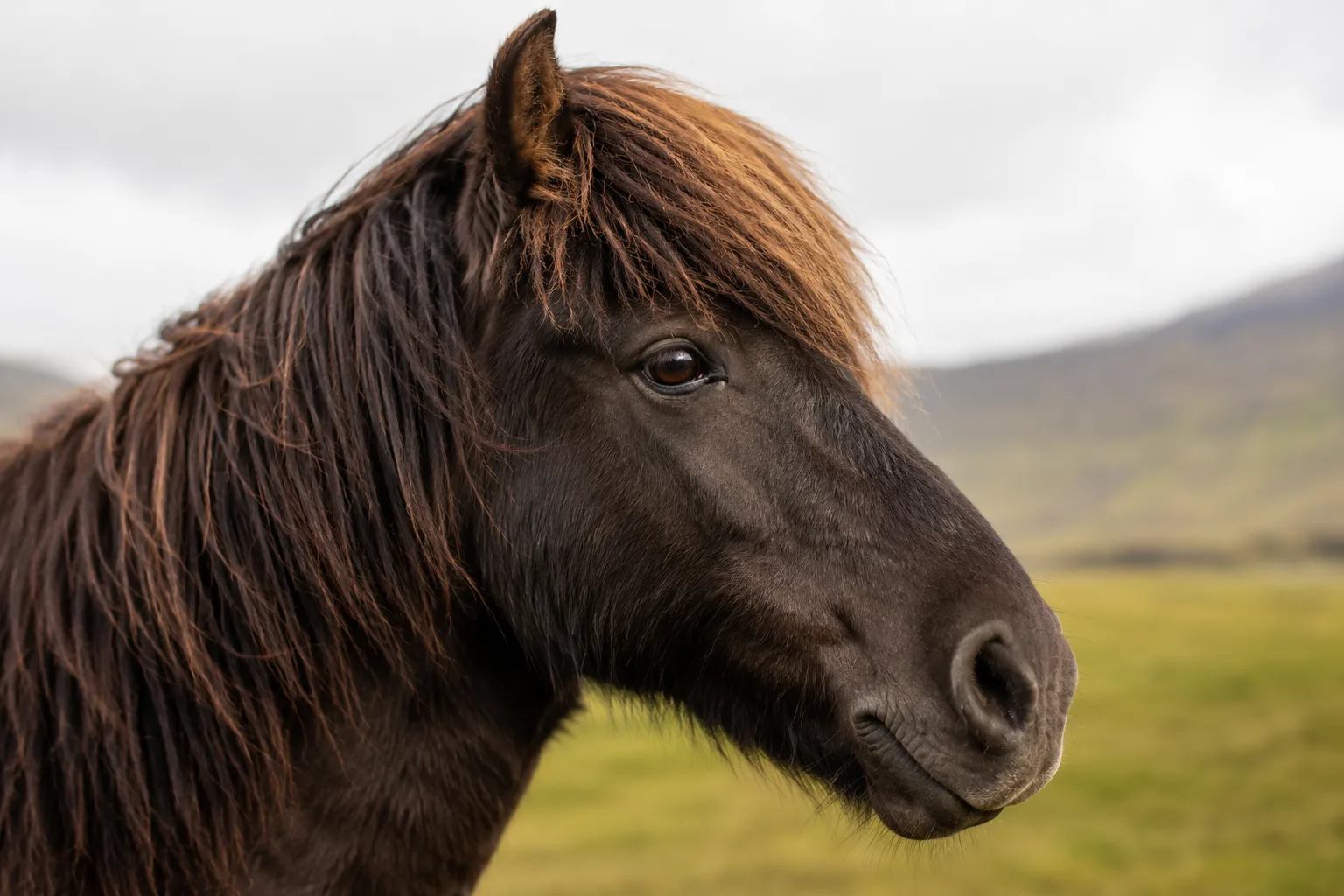
The head is well-proportioned, with a straight or slightly concave profile, large expressive eyes, and wide nostrils. The ears are medium-sized and well-set.
The neck is strong, well-muscled, set high, and blends harmoniously into a well-defined and muscular wither.
The back is short and strong, and the topline is solid. The chest is broad and deep, ensuring good lung capacity. The croup is muscular and slightly sloped.
The limbs are short, strong, with broad and well-defined joints. The cannon bones are short, and the hooves are hard and well-formed. Feathers are often present, especially in winter.
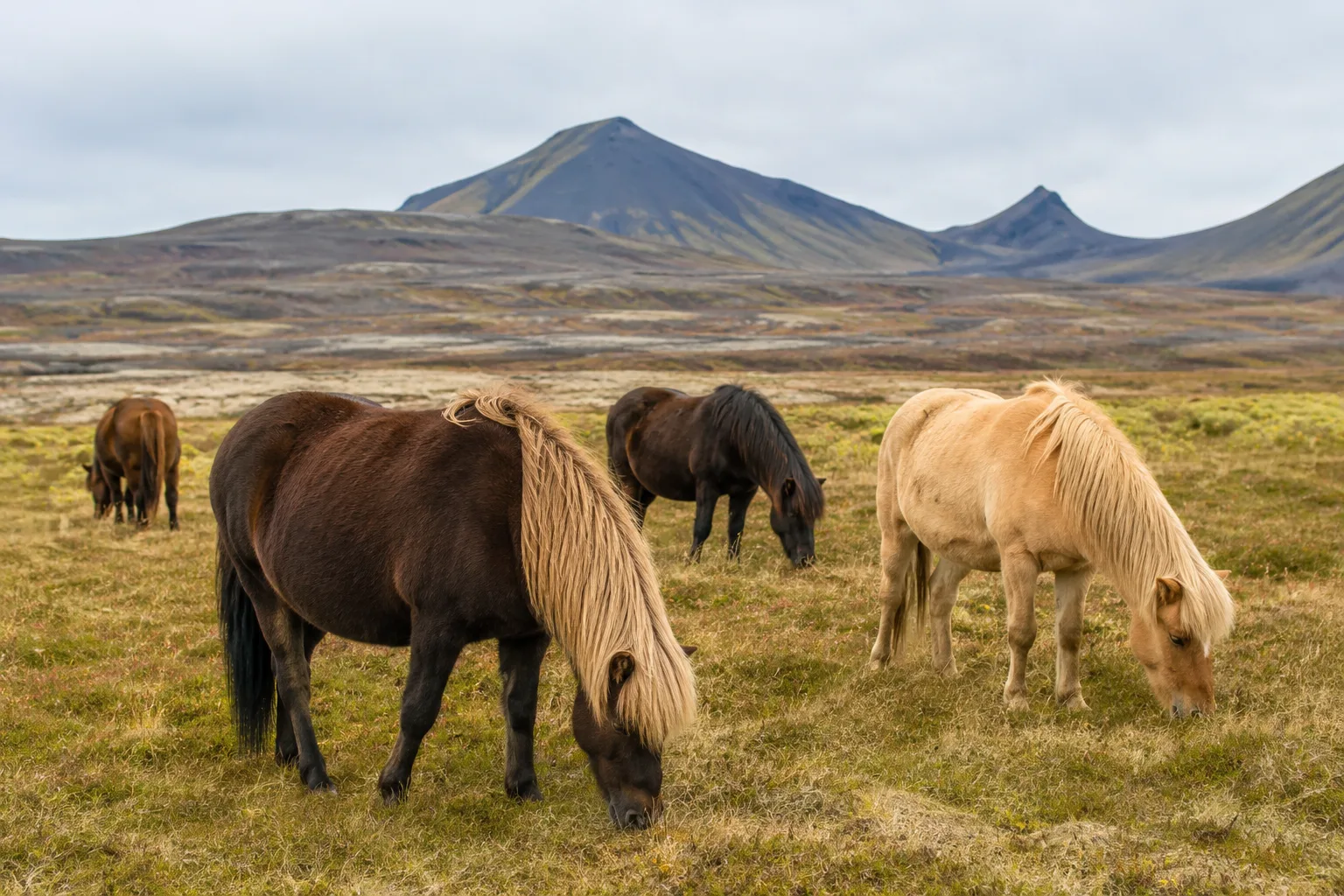
- Common coats: bay, chestnut, black, grey, palomino, dun, roan, pinto, cream
Temperament and aptitudes
The Icelandic horse is renowned for its calm, gentle, and cooperative temperament, while also being energetic and willing. It is intelligent, curious, and very hardy, making it an excellent companion for leisure and work.
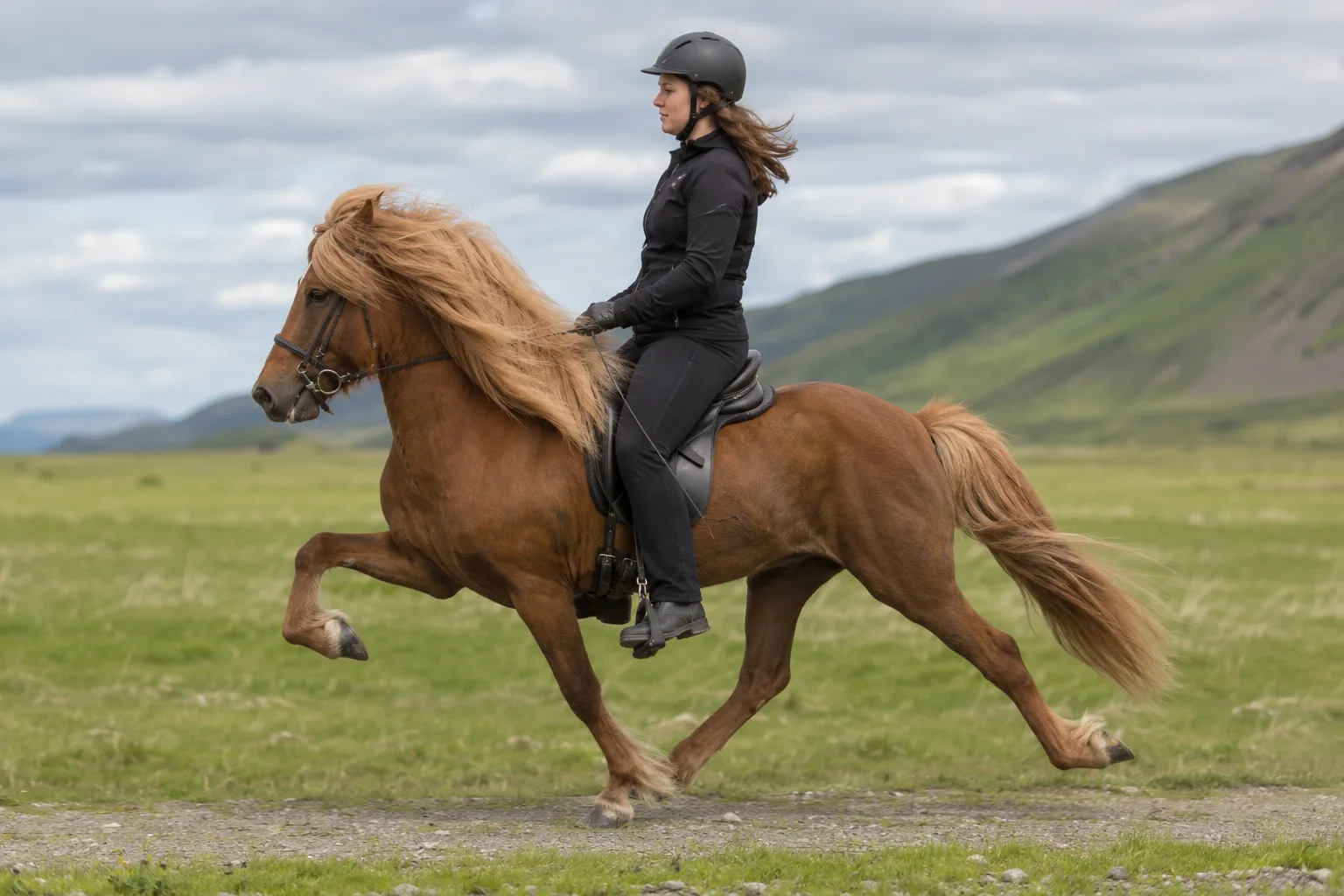
The Icelandic horse is famous for its five natural gaits: walk, trot, canter, the tölt (a very comfortable four-beat lateral gait), and the skeid or 'flying pace' (a fast two-beat lateral gait, reserved for racing horses).
- Uses: recreational riding, trail riding, cattle work, gait competitions, light driving, equine-assisted therapy
- Disciplines: Tölt, Skeid (gait racing), Equestrian trekking, Dressage (recreational)
Feeding the Icelandic Horse
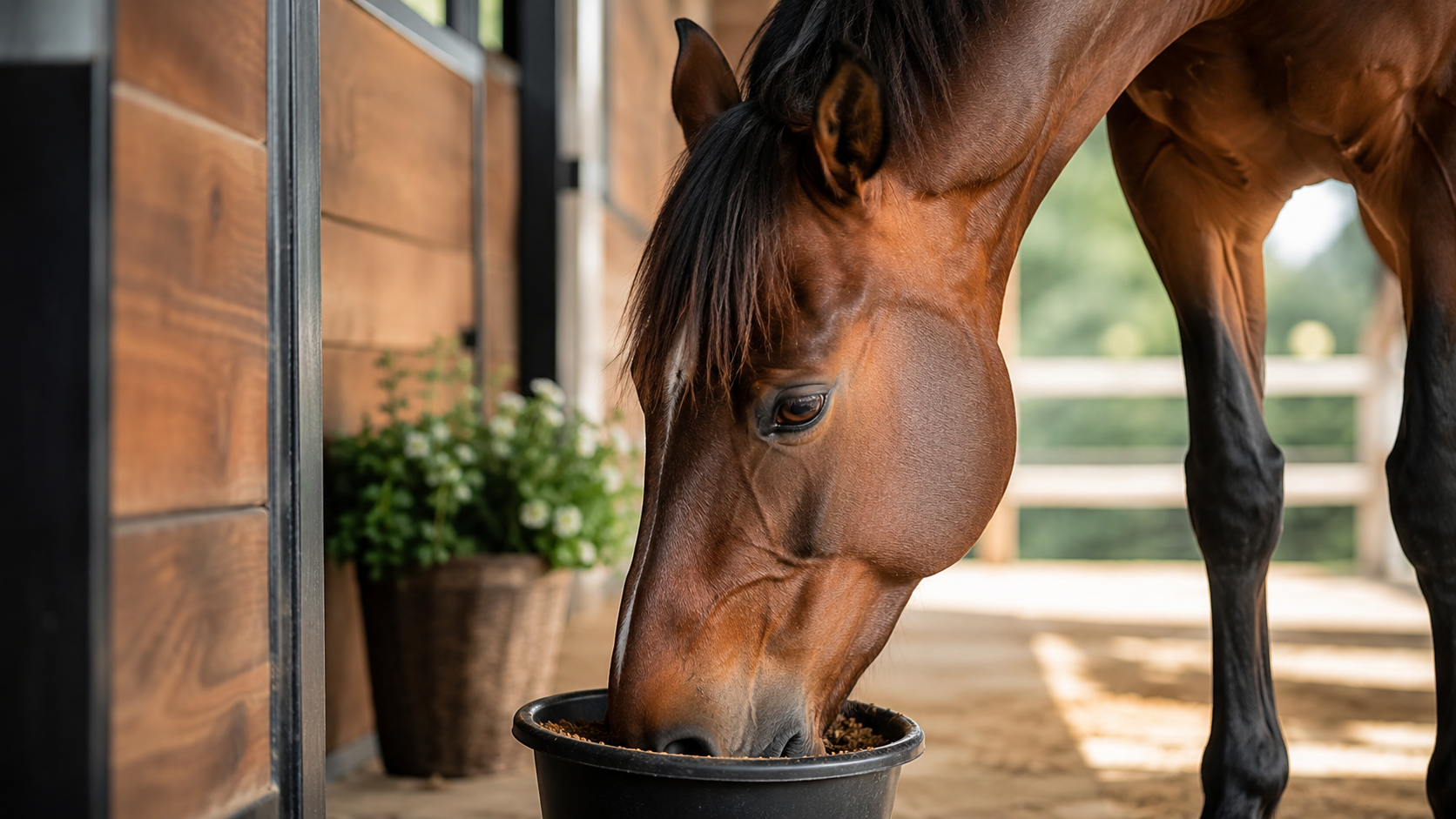
The Icelandic horse is a hardy breed with an efficient metabolism, accustomed to harsh living conditions and a sparse diet. It tends to become overweight if overfed. Its diet should primarily consist of good quality forage (hay or grass), provided in controlled amounts. Concentrates are only necessary in cases of intense work or specific needs (gestation, lactation), and must be adapted to avoid excesses of sugars and starch.
Due to its efficient metabolism, the Icelandic horse is predisposed to laminitis and Equine Metabolic Syndrome (EMS), especially if fed diets rich in sugars and starch or if overweight. Careful monitoring of its weight and diet is essential to prevent these conditions.
With Equio, every feed, supplement or treat is read against the horse's real profile (age, weight, Body Condition Score, conditions) — useful for a Icelandic Horse as soon as a metabolic or digestive sensitivity is known.
Health and points to watch
It is important to monitor the Icelandic horse's weight and adapt its diet to prevent laminitis and EMS. Recurrent summer eczema (Sweet Itch) is a common skin condition, requiring careful management, especially during the summer months. Particular attention should be paid to hoof quality.
- More frequent conditions: laminitis, Equine Metabolic Syndrome (EMS), recurrent summer eczema (Sweet Itch)
Care and grooming
Icelandic horse hooves are naturally hard and resilient, but regular trimming is essential. Their manes and tails are often very thick and require regular detangling. Their thick coat protects them well from the cold; clipping is generally not necessary except for sport horses in intense work. In cases of sweet itch, specific skin care is required.
Did you know?
- It is forbidden to import horses into Iceland, and an Icelandic horse that leaves the island can never return, in order to preserve the genetic purity of the breed.
- The Icelandic horse is the only horse in the world to naturally possess five gaits, including the famous tölt, a very comfortable gait for the rider.
- Despite its small size, the Icelandic horse is always called a 'horse' and not a 'pony' by its breeders and enthusiasts, due to its strength, temperament, and bone structure.
The Icelandic Horse and how to track it
The Icelandic horse breed is well represented in France, with active breeding farms and a community of riders passionate about its gaits and temperament. It is primarily used for leisure riding, trekking, and gait competitions.
Equio lets you build a complete profile for a Icelandic Horse: identity, weight, Body Condition Score, feeding, conditions, care reminders (vaccines, worming, trimming) and an exportable health log. The breed sets the identity; everyday decisions still depend on the real horse and your vet's advice.
- Record the activity level: rest, leisure, sport or breeding
- Add known conditions or sensitivities
- Scan feeds, plants and care products
- Keep reminders (vaccines, worming, trimming)
- Prepare a PDF export before a vet appointment
Frequently asked questions
What is the price of an Icelandic horse?
The price of an Icelandic horse varies considerably depending on its age, level of training, gaits (particularly the quality of the tölt and skeid), lineage, and potential. It can range from €3,000 for a young leisure horse to over €15,000 for a proven competition horse.
Is the Icelandic horse suitable for beginners?
Yes, thanks to its calm, gentle, and cooperative temperament, the Icelandic horse is often considered an excellent breed for beginners and leisure riders. Its small size and robustness also make it very safe.
How do I maintain my Icelandic horse's gaits?
Maintaining the Icelandic horse's gaits, particularly the tölt, requires regular and specific training. It is recommended to consult an instructor specialized in Icelandic horses to develop and maintain the quality of its gaits, by working on the horse's balance, suppleness, and strength.
Can Icelandic horses live outdoors all year round?
Yes, the Icelandic horse is a very hardy breed, perfectly suited to live outdoors all year round, even in cold climates. Its thick winter coat and natural hardiness allow it to withstand harsh weather conditions, provided it has natural or artificial shelter and access to water and forage.
What are the specific health problems of the Icelandic horse?
Icelandic horses are generally robust, but they are predisposed to laminitis and Equine Metabolic Syndrome (EMS) due to their efficient metabolism. Recurrent sweet itch is also a common condition, requiring careful management, especially in summer.