
Horse breed
Belgian Warmblood
The Belgian Warmblood is a relatively young breed, developed after World War II to meet the growing demand for sport horses. It originated from crosses between Belgian draft mares (Brabant) and foreign warmblood stallions (Thoroughbred, Selle Français, Hanoverian, Holsteiner, etc.).

The breed at a glance
The Belgian Warmblood is renowned for its willing, courageous, and intelligent temperament. It is generally cooperative, easy to train, and possesses a good learning ability, making it an excellent partner for high-level sport.
- Category
- sport horse
- Origin
- Belgium · Mid-20th century
- Height at withers
- 160–175 cm
- Weight
- 500–650 kg
- Lifespan
- 25-30 years
- Common coats
- bay, chestnut, grey, black
- Disciplines
- show jumping, dressage, eventing
- Other names
- BWP, Belgian Warmblood
Origin and history
The Belgian Warmblood is a relatively young breed, developed after World War II to meet the growing demand for sport horses. It originated from crosses between Belgian draft mares (Brabant) and foreign warmblood stallions (Thoroughbred, Selle Français, Hanoverian, Holsteiner, etc.). The objective was to create an athletic horse, high-performing in show jumping and dressage. The breed was officially recognized in 1955 with the creation of the BWP (Belgisch Warmbloed Paard) breeding association.
Conformation and physique
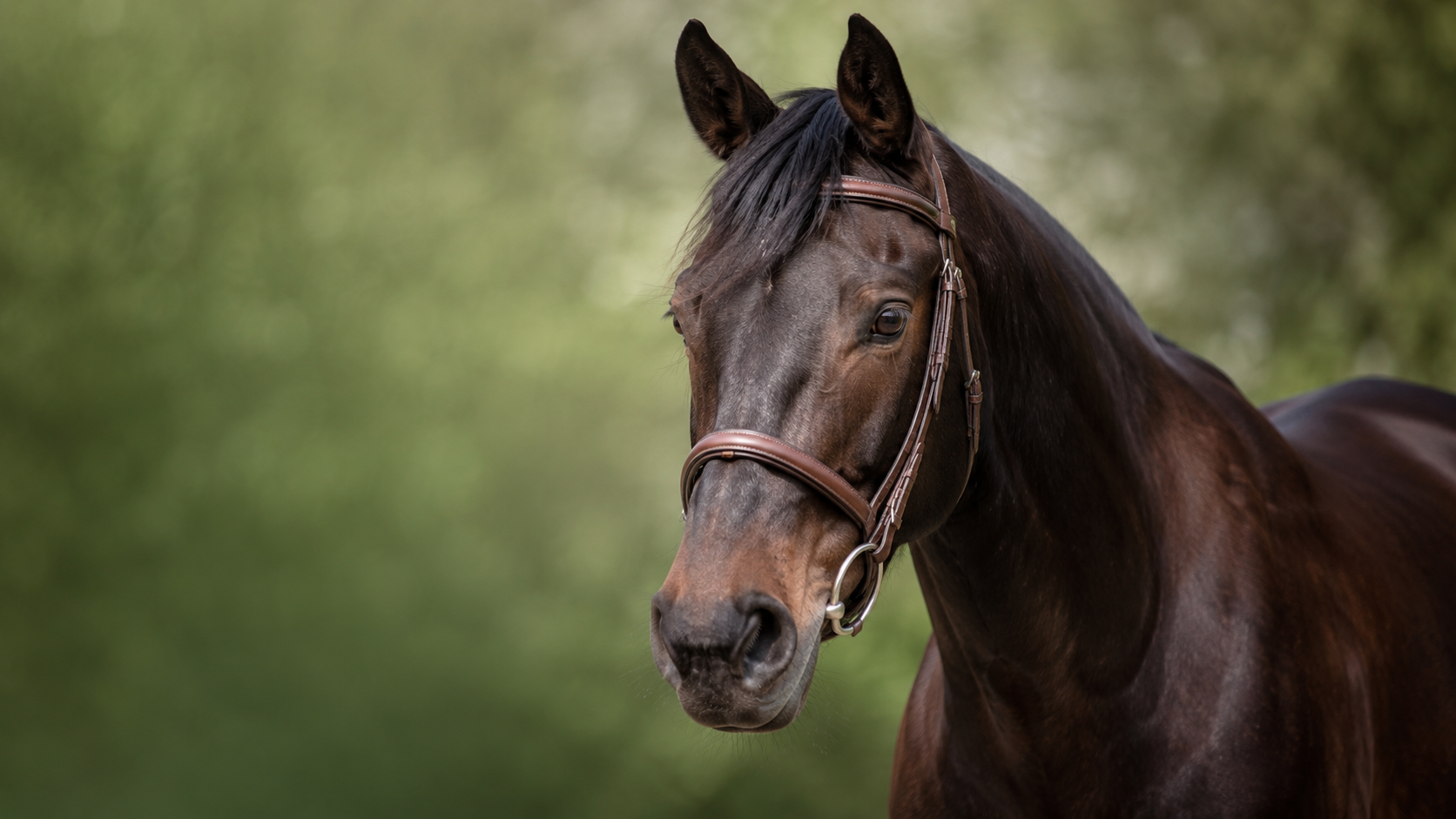
It is a large, harmonious, and athletic sport horse, with a solid bone structure but without excessive heaviness. Its build is that of a modern horse, powerful and elegant, suited for demanding equestrian disciplines.
Expressive, medium-sized head, well-proportioned to the body, with a straight or slightly convex profile. The eyes are large and lively, the ears well-set and mobile.
Long, well-muscled, and well-set neck, blending harmoniously into a long and prominent wither, promoting balance and suppleness.
Strong and short back, taut and muscular topline. Deep and broad chest, providing ample room for the lungs. Long, muscular, and slightly sloping croup, conducive to powerful impulsion.
Long, clean, and muscular limbs, with large and well-defined joints. The cannons are short and the tendons well-defined. The feet are strong and well-formed. Feathering is generally sparse.
- Common coats: bay, chestnut, grey, black
Temperament and aptitudes
The Belgian Warmblood is renowned for its willing, courageous, and intelligent temperament. It is generally cooperative, easy to train, and possesses a good learning ability, making it an excellent partner for high-level sport.
The gaits are expansive, supple, energetic, and balanced, with good hindquarter engagement. The canter is particularly powerful and rhythmic, ideal for show jumping.
- Uses: sport horse, breeding
- Disciplines: show jumping, dressage, eventing
Feeding the Belgian Warmblood
The Belgian Warmblood is an athlete that requires a balanced diet tailored to its activity level. Its metabolism is that of a demanding sport horse. It needs good quality forage in sufficient quantity, supplemented by concentrates rich in energy, protein, and minerals, adjusted according to the intensity of work. Particular attention must be paid to vitamin and trace element intake to support performance and recovery.
Although generally robust, the Belgian Warmblood, like any sport horse, can be prone to digestive disorders (gastric ulcers, colic) in cases of stress or unsuitable feeding (too many concentrates, insufficient forage). It has no documented predisposition to specific metabolic diseases such as EMS or PSSM, but careful dietary management remains paramount.
With Equio, every feed, supplement or treat is read against the horse's real profile (age, weight, Body Condition Score, conditions) — useful for a Belgian Warmblood as soon as a metabolic or digestive sensitivity is known.

Health and points to watch
Regular monitoring of joints is essential, especially in sport horses. Good environmental management (ventilation, dust) prevents respiratory conditions. Regular dental and farriery care is also crucial to maintain performance and well-being.
- More frequent conditions: osteoarticular conditions (osteoarthritis, osteochondrosis) due to the intensity of sport, respiratory problems (emphysema) in case of poor environmental management, gastric ulcers
Care and grooming
Hoof care is paramount and requires trimming or shoeing adapted to the disciplines practiced. The mane, tail, and coat are generally easy to maintain, requiring regular brushing. Clipping is common in sport horses to facilitate sweat management. Particular attention should be paid to the skin, especially after exercise, to prevent irritations.
Did you know?
- The BWP is one of the most successful studbooks in the world for show jumping, regularly producing Olympic-level horses.
- The BWP selection process is very rigorous, based on the sport performance of breeding stock and their offspring.
- The horse Darco, a BWP stallion, is considered one of the best sires of show jumping horses of all time.
The Belgian Warmblood and how to track it
The Belgian Warmblood is well-represented in France, particularly in show jumping and dressage disciplines, where it is valued for its athletic qualities. Many French breeders use BWP stallions to improve their own sport horse bloodlines.
Equio lets you build a complete profile for a Belgian Warmblood: identity, weight, Body Condition Score, feeding, conditions, care reminders (vaccines, worming, trimming) and an exportable health log. The breed sets the identity; everyday decisions still depend on the real horse and your vet's advice.
- Record the activity level: rest, leisure, sport or breeding
- Add known conditions or sensitivities
- Scan feeds, plants and care products
- Keep reminders (vaccines, worming, trimming)
- Prepare a PDF export before a vet appointment
Frequently asked questions
Is the Belgian Warmblood suitable for beginner riders?
Due to its willing temperament and energy, the Belgian Warmblood is generally more suited to experienced or supervised riders. Its power and responsiveness require a certain level of skill to be managed well, especially in competition.
What is the average price of a Belgian Warmblood?
The price of a Belgian Warmblood varies considerably depending on its age, lineage (bloodline, parents), training level, and sport performance. A young, unbroken horse can cost a few thousand euros, while a proven sport horse with good breeding can reach tens of thousands, or even more for high-level horses.
Is the Belgian Warmblood a good leisure horse?
Although primarily bred for sport, a Belgian Warmblood with a good temperament and appropriate training can make an excellent leisure horse for an experienced rider. It will enjoy hacks and varied activities, provided it gets enough exercise to channel its energy.
How to recognize a true Belgian Warmblood?
A true Belgian Warmblood is registered with the BWP (Belgisch Warmbloed Paard) studbook and possesses an equine passport attesting to its origins. It exhibits the typical morphological and temperament characteristics of the breed, focused on sport performance.
What are the main qualities of the Belgian Warmblood in show jumping?
In show jumping, the Belgian Warmblood is valued for its power, carefulness over fences, intelligence at the jump, responsiveness, and courage. It possesses an excellent jump and a great ability to collect and propel itself.