
Horse breed
Silesian Horse
The Silesian Horse is a Polish breed developed from local Silesian horses, crossed with heavy and semi-heavy breed stallions such as the Oldenburg, Hanoverian, and Friesian. Initially bred for agricultural work and transport, it was officially recognized as a distinct breed in Poland.

The breed at a glance
The Silesian Horse is renowned for its calm, docile, and willing temperament. It is intelligent, easy to train, and very cooperative, making it an excellent partner for work and leisure. Its gentle nature makes it suitable for riders of all levels.
- Category
- draft horse
- Origin
- Poland · Late 19th century - early 20th century
- Height at withers
- 160–170 cm
- Weight
- 600–750 kg
- Lifespan
- 20-25 years
- Common coats
- bay, chestnut, black, grey
- Disciplines
- Driving (competition and leisure), Dressage (leisure), Trail riding, Farm work
- Other names
- Silesian Horse, Ślązak
Origin and history
The Silesian Horse is a Polish breed developed from local Silesian horses, crossed with heavy and semi-heavy breed stallions such as the Oldenburg, Hanoverian, and Friesian. Initially bred for agricultural work and transport, it was officially recognized as a distinct breed in Poland. Its development aimed to create a versatile, powerful, and elegant draft horse, adapted to the region's needs.
Conformation and physique
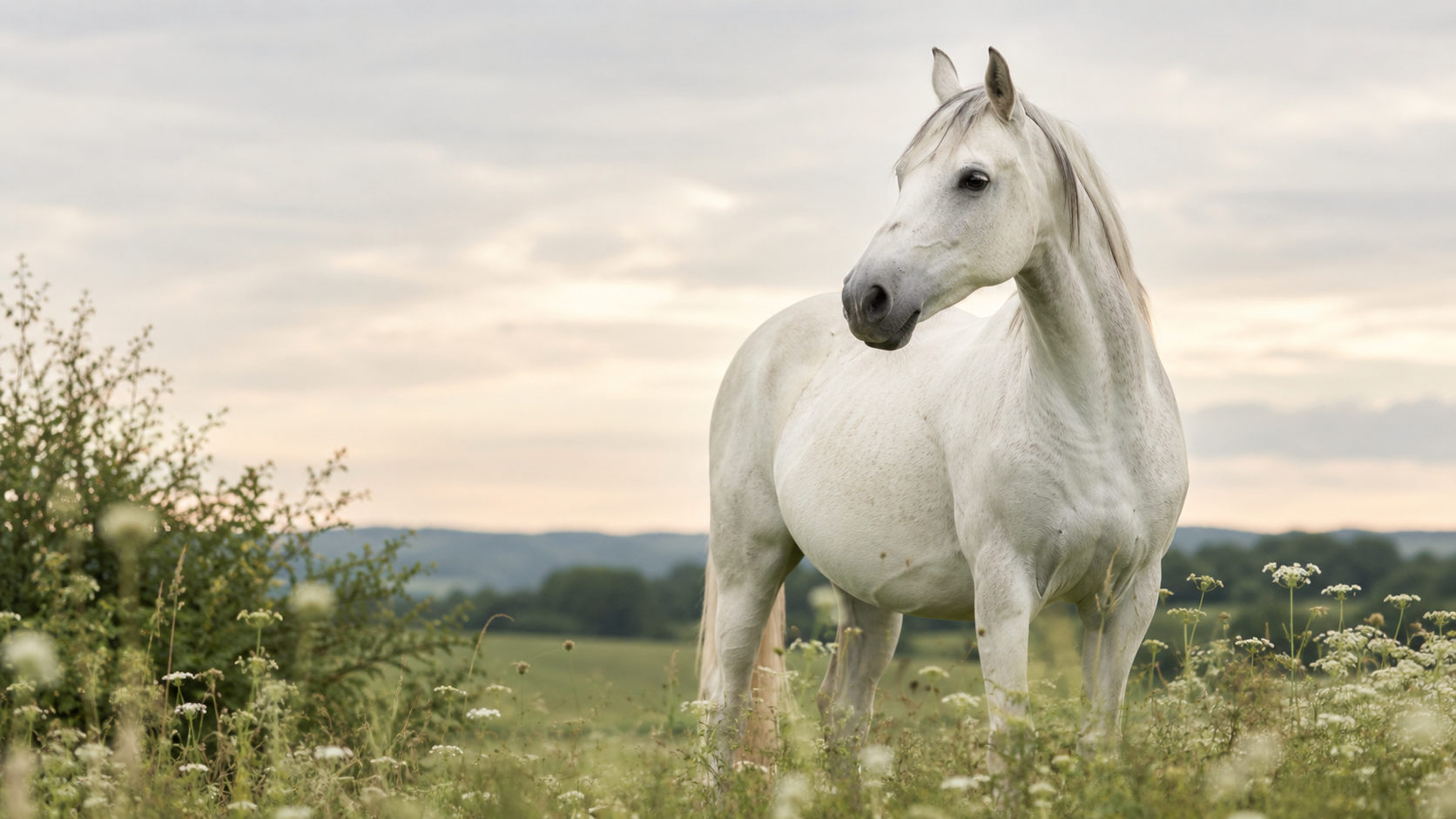
It is a medium to large-sized horse, powerful and harmonious, with solid bone structure and well-developed musculature. It presents an elegant silhouette for a draft horse, combining strength and nobility.
The head is medium-sized, well-proportioned, with a straight or slightly convex profile. The eyes are large and expressive, the ears medium-sized and well-placed.
The neck is long, muscular, and well-arched, inserting harmoniously into a well-defined and extended wither. It contributes to the overall elegance of the breed.
The back is broad and strong, the topline is straight and muscular. The chest is deep and broad, the ribs well-sprung. The croup is long, broad, and slightly sloping, often double.
The limbs are strong, with broad and well-defined joints. The cannons are short and robust, the feet are large and well-formed. Moderate feathering is present.
- Common coats: bay, chestnut, black, grey
Temperament and aptitudes
The Silesian Horse is renowned for its calm, docile, and willing temperament. It is intelligent, easy to train, and very cooperative, making it an excellent partner for work and leisure. Its gentle nature makes it suitable for riders of all levels.
The gaits are ample, energetic, and regular, with good impulsion. The walk is active, and the trot is supple and powerful, reflecting its capacity for both work and driving.
- Uses: Heavy agricultural work, Competitive and recreational driving, Versatile riding horse, Breeding for meat production (historically)
- Disciplines: Driving (competition and leisure), Dressage (leisure), Trail riding, Farm work
Feeding the Silesian Horse
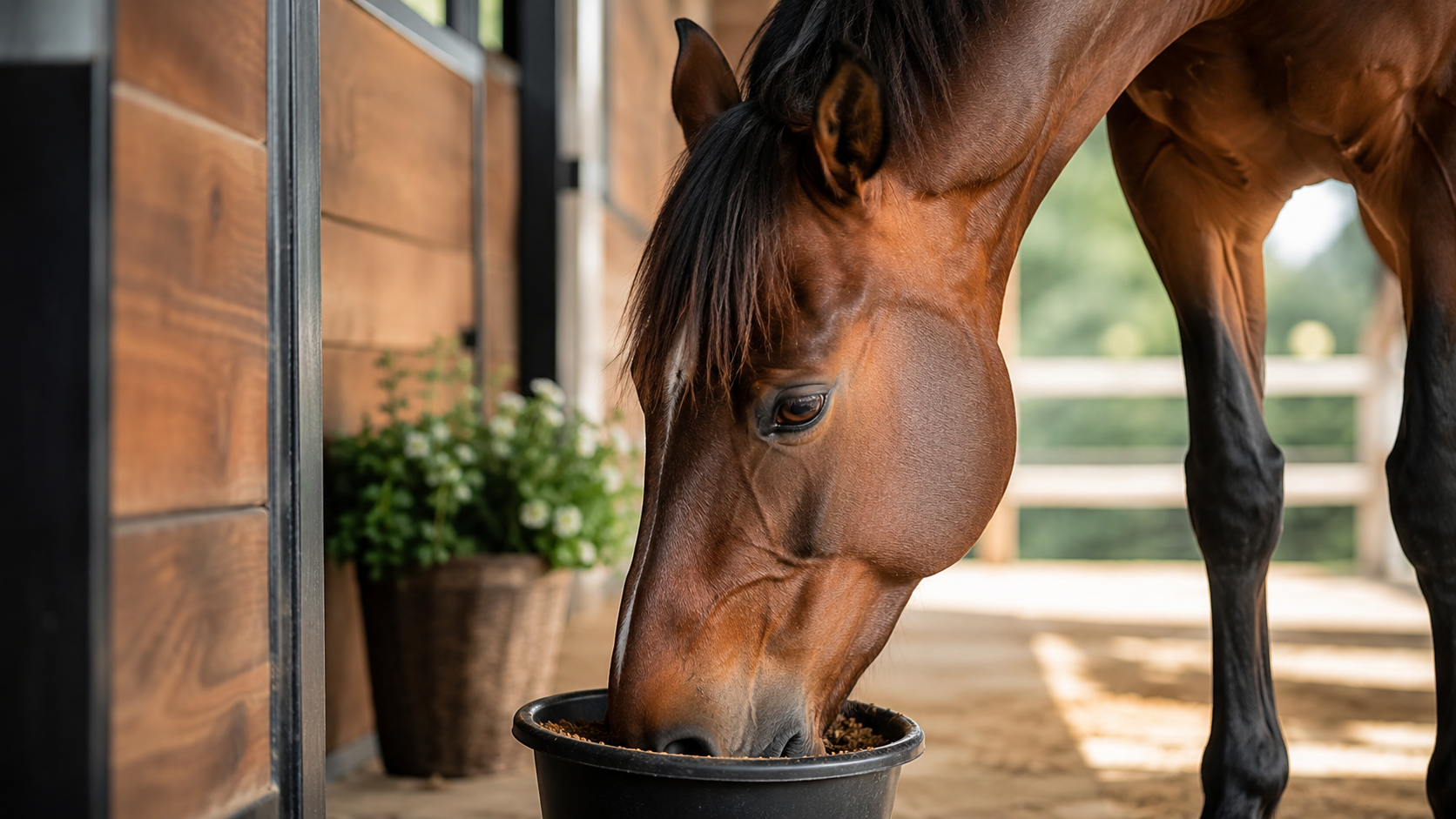
The Silesian Horse is a draft horse with a rather efficient metabolism, capable of efficiently utilizing forage. It tends to become overweight if not sufficiently exercised or if its diet is too rich. A base of good quality forage (hay or grass) should make up the majority of its ration. Concentrates are only necessary for intense work or specific needs (growth, lactation), while ensuring to limit sugar and starch intake.
Although it does not have documented genetic predispositions to specific metabolic diseases like PSSM or EMS, its efficient metabolism makes it potentially more susceptible to laminitis and obesity in cases of overfeeding or a diet too rich in sugars and starch, like many draft breeds.
With Equio, every feed, supplement or treat is read against the horse's real profile (age, weight, Body Condition Score, conditions) — useful for a Silesian Horse as soon as a metabolic or digestive sensitivity is known.
Health and points to watch
Particular attention must be paid to weight management to prevent obesity and joint problems. Regular hoof care is essential, as well as monitoring of joints, especially in older horses or those subjected to intense work.
- More frequent conditions: Osteoarthritis (due to size and weight), Foot problems (requiring regular and appropriate trimming)
Care and grooming
The hooves of the Silesian Horse, often large and robust, require regular and precise trimming to maintain their integrity. The mane and feathers, generally abundant, require regular maintenance to prevent knots and underlying skin conditions. The coat does not require specific care beyond usual grooming.
Did you know?
- The Silesian Horse is one of the most elegant and lightest draft horse breeds in Poland, often referred to as a 'light draft horse'.
- There are two types within the breed: the old type (heavier, draft-oriented) and the new type (lighter, oriented towards sport and modern driving), although the standards tend to merge.
- Historically, it was highly valued for its strength and versatility in the coal mines of Silesia.
The Silesian Horse and how to track it
The breed is rare in France, where it is mainly found among a few driving enthusiasts or breeders of foreign breeds. There is no dedicated French studbook.
Equio lets you build a complete profile for a Silesian Horse: identity, weight, Body Condition Score, feeding, conditions, care reminders (vaccines, worming, trimming) and an exportable health log. The breed sets the identity; everyday decisions still depend on the real horse and your vet's advice.
- Record the activity level: rest, leisure, sport or breeding
- Add known conditions or sensitivities
- Scan feeds, plants and care products
- Keep reminders (vaccines, worming, trimming)
- Prepare a PDF export before a vet appointment
Frequently asked questions
Is the Silesian Horse a good driving horse?
Yes, the Silesian Horse is particularly renowned for its driving abilities. Its strength, calm temperament, and expansive gaits make it an excellent choice for both leisure and competition driving.
What is the temperament of the Silesian Horse?
The Silesian Horse is known for its gentle, calm, and cooperative temperament. It is an intelligent, willing, and easy-to-handle horse, making it suitable for many riders, including beginners.
Is the Silesian Horse suitable for beginner riders?
Thanks to its calm temperament and docility, the Silesian Horse can be quite suitable for beginner or inexperienced riders, provided it is well-supervised and trained.
Where can one find a Silesian Horse in France?
The Silesian Horse is rare in France. It can be found through breeders specializing in foreign breeds or via direct imports from Poland. Specialized advertisements or contacts with Polish breed associations may be helpful.
What is the difference between the old and new types of Silesian Horse?
The old type is heavier and closer to the traditional draft horse, while the new type has been lightened through crossbreeding to be more versatile, particularly in sport driving and under saddle. Current standards tend to favor the lighter, more athletic type.