
Horse breed
Latvian Horse
The Latvian Horse breed was developed from local draft-type mares and imported riding horses, notably Oldenburgs, Hanoverians, and Holsteiners. The objective was to create a versatile, robust, and high-performing horse.

The breed at a glance
The Latvian Horse is renowned for its calm, willing, and cooperative temperament. It is intelligent, easy to train, and demonstrates great endurance and good working ability, making it a reliable partner for various disciplines.
- Category
- sport horse
- Origin
- Latvia · Late 19th century - Mid-20th century
- Height at withers
- 155–165 cm
- Weight
- 500–600 kg
- Lifespan
- 20-25 years
- Common coats
- bay, chestnut, black, grey
- Disciplines
- show jumping, dressage, eventing, sport driving
- Other names
- Latvian Horse, Latvijas Bērnu Zirgs
Origin and history
The Latvian Horse breed was developed from local draft-type mares and imported riding horses, notably Oldenburgs, Hanoverians, and Holsteiners. The objective was to create a versatile, robust, and high-performing horse. The breed was officially recognized in 1952, with a strong orientation towards sport and driving.
Conformation and physique
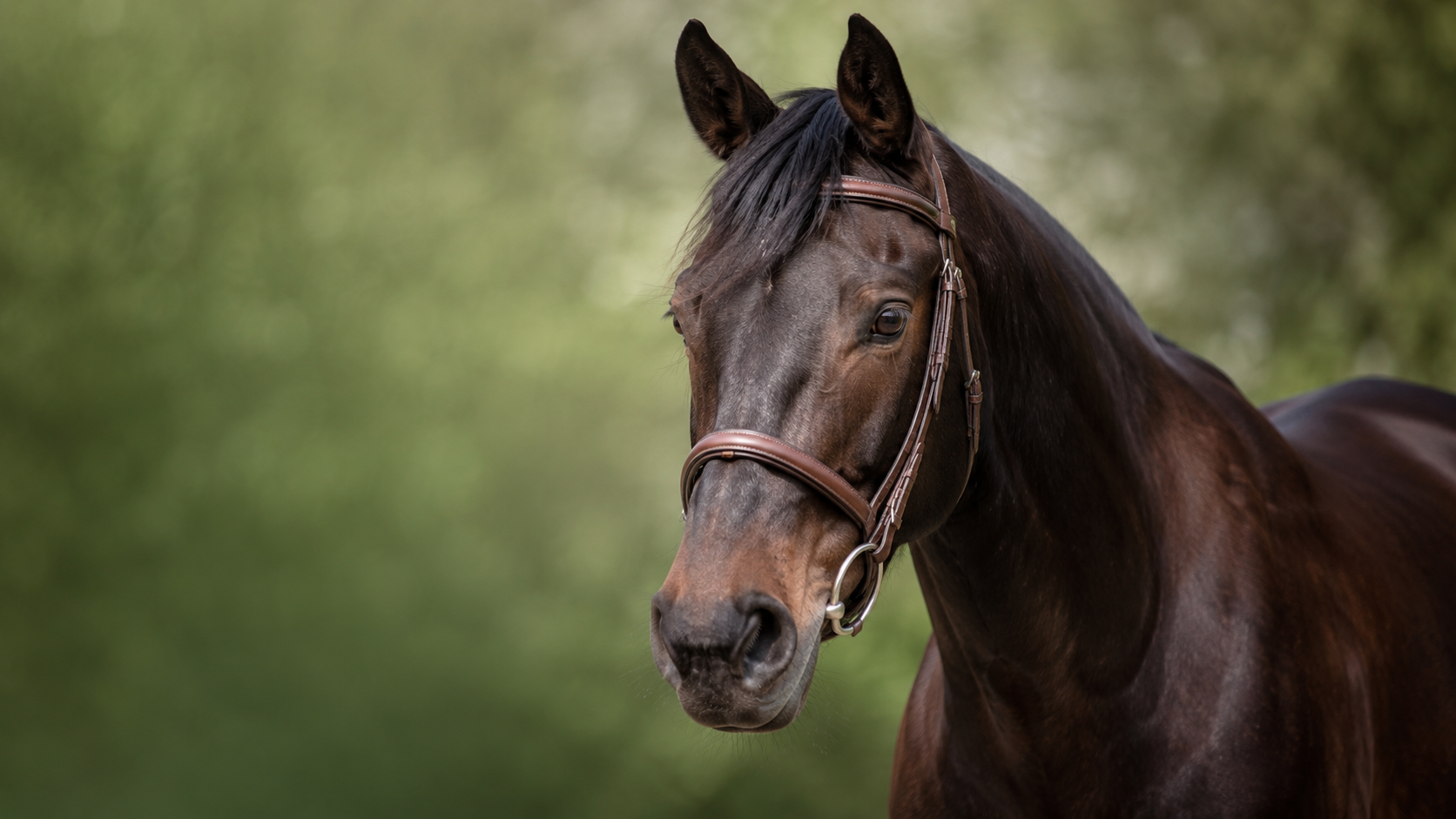
It is a medium to large-sized horse, with a harmonious and athletic build. It has a solid bone structure and well-developed musculature, typical of sport horses from Northern Europe.
The head is medium-sized, well-proportioned, with a straight or slightly convex profile. The eyes are large and expressive, the ears medium-sized and well-placed.
The neck is long, well-muscled, and well-set, blending harmoniously into a pronounced and extended wither.
The back is straight and strong, the topline is solid. The chest is broad and deep, ensuring good respiratory capacity. The croup is long, muscled, and slightly sloping.
The limbs are strong, with large and well-defined joints. The cannons are short and the tendons clean. The feet are solid and well-formed. Feathering is generally sparse.
- Common coats: bay, chestnut, black, grey
Temperament and aptitudes
The Latvian Horse is renowned for its calm, willing, and cooperative temperament. It is intelligent, easy to train, and demonstrates great endurance and good working ability, making it a reliable partner for various disciplines.
The gaits are ample, supple, and energetic, with good balance and marked impulsion. The walk is regular, the trot is active, and the canter is balanced and powerful, ideal for jumping and dressage.
- Uses: saddle horse, driving horse, sport horse, agricultural workhorse (historically)
- Disciplines: show jumping, dressage, eventing, sport driving, trail riding
Feeding the Latvian Horse
The Latvian Horse is a sport horse with a metabolism that can be demanding during periods of intense work. It requires a balanced diet, rich in good quality forage (hay, grass) ad libitum. Depending on the intensity of work, concentrates (grains, compound feeds) may be necessary to meet its energy and protein requirements, without excess to avoid obesity.
The breed is not specifically documented for particular dietary sensitivities such as laminitis or EMS more frequently than other sport horse breeds. However, like any horse, an unbalanced diet or an excess of sugars/starch can lead to metabolic disorders.
With Equio, every feed, supplement or treat is read against the horse's real profile (age, weight, Body Condition Score, conditions) — useful for a Latvian Horse as soon as a metabolic or digestive sensitivity is known.

Health and points to watch
Particular attention must be paid to limb conformation and hoof quality to prevent locomotor problems. Regular veterinary check-ups and appropriate training management are essential to maintain joint and tendon health, especially in sport horses.
- More frequent conditions: Musculoskeletal conditions related to intense athletic activity (osteoarthritis, tendinitis) if training management is not appropriate
Care and grooming
Routine care includes regular hoof trimming (every 6-8 weeks) to maintain good hoof integrity. The coat requires regular brushing, especially during shedding season. The mane and tail can be maintained to prevent tangles. Clipping may be necessary for horses in intense work.
Did you know?
- The Latvian Horse originated from three distinct types: the riding type, the harness type, and the draft type, although the modern focus is primarily on the riding and sport horse.
- The breed's selection was strongly influenced by German horses, notably the Oldenburg, to improve riding and harness qualities.
- Latvian Horses are known for their longevity and hardiness, partially inherited from their draft ancestors.
The Latvian Horse and how to track it
The Latvian Horse is a rare breed in France. There is no significant breeding or large population, as the breed is primarily found in the Baltic and Eastern European countries.
Equio lets you build a complete profile for a Latvian Horse: identity, weight, Body Condition Score, feeding, conditions, care reminders (vaccines, worming, trimming) and an exportable health log. The breed sets the identity; everyday decisions still depend on the real horse and your vet's advice.
- Record the activity level: rest, leisure, sport or breeding
- Add known conditions or sensitivities
- Scan feeds, plants and care products
- Keep reminders (vaccines, worming, trimming)
- Prepare a PDF export before a vet appointment
Frequently asked questions
Is the Latvian Horse suitable for beginners?
Yes, thanks to its calm and cooperative temperament, the Latvian Horse can be a good choice for beginner or intermediate riders, provided it is well-supervised and trained.
What is the average price of a Latvian Horse?
The price of a Latvian Horse can vary considerably depending on its age, training level, lineage, and performance. In Latvia, prices may be more affordable than in Western Europe for sport horses of similar quality.
Is the Latvian Horse a good family horse?
Yes, its gentle nature and versatility make it an excellent family horse, capable of adapting to various activities, from pleasure riding to light sport.
Where can one buy a Latvian Horse in France?
It is rare to find Latvian Horses for sale directly in France. It is more likely that one would need to turn to breeders or specialized dealers in the Baltic or Eastern European countries.
Is the Latvian Horse resistant to cold?
Yes, being native to a region with harsh winters, the Latvian Horse is naturally hardy and well-adapted to cold climates, provided it has shelter and sufficient feed.