
Horse breed
Flemish Horse
The Flemish Horse is an ancient draft horse breed originating from Flanders, Belgium. It is the direct ancestor of the Brabant (Belgian Draft Horse) and heavily influenced many European and American draft breeds.

The breed at a glance
The Flemish Horse is renowned for its calm, gentle, and docile temperament. It is very willing to work, intelligent, and easy to handle, making it an excellent partner for driving and agricultural work.
- Category
- draft horse
- Origin
- Belgium · 19th century
- Height at withers
- 160–170 cm
- Weight
- 800–1000 kg
- Lifespan
- 20-25 years
- Common coats
- chestnut, bay, black, grey
- Disciplines
- traditional driving, recreational driving competition, agricultural and forestry work
- Other names
- Vlaams Paard, Flemish Horse
Origin and history
The Flemish Horse is an ancient draft horse breed originating from Flanders, Belgium. It is the direct ancestor of the Brabant (Belgian Draft Horse) and heavily influenced many European and American draft breeds. The breed nearly disappeared in the early 20th century due to the motorization of agriculture and a preference for lighter types. A conservation program was launched in the 1990s to restore the breed from a few remaining individuals and judicious crosses with old-type Brabants.
Conformation and physique
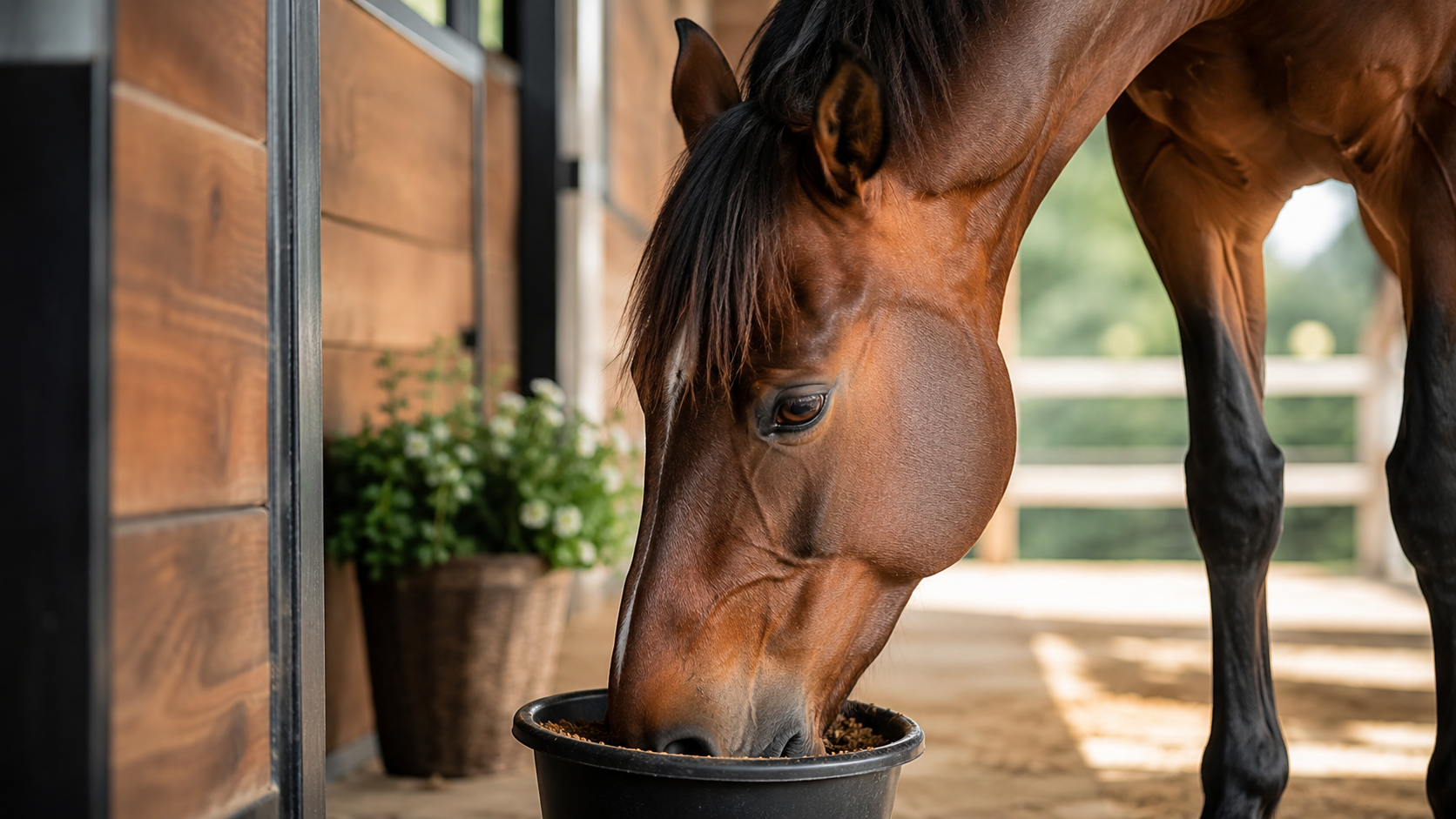
It is a heavy draft horse, powerful and compact, with strong bone structure and well-developed musculature. It has a massive yet harmonious silhouette, typical of heavy draft horses.
The head is medium-sized, expressive, with a straight or slightly convex profile. The eyes are large and lively, and the ears are medium-sized and well-set.
The neck is short, thick, and very muscular, well-set into the shoulders. The withers are broad and not very prominent, blending smoothly into the topline.
The back is short, broad, and very muscular; the topline is strong. The chest is broad and deep; the croup is double, very muscular, and slightly sloped.
The limbs are short, powerful, and very muscular, with large, strong joints. The feathers are abundant and thick, covering the pasterns. The feet are broad and well-formed.
- Common coats: chestnut, bay, black, grey
Temperament and aptitudes
The Flemish Horse is renowned for its calm, gentle, and docile temperament. It is very willing to work, intelligent, and easy to handle, making it an excellent partner for driving and agricultural work.
The gaits are ample, energetic, and regular, with good impulsion. Despite its mass, the Flemish Horse moves with suppleness and power, characteristic of draft horses capable of sustained effort.
- Uses: agricultural work (draft, plowing), recreational and competitive driving, logging, forestry work, green space maintenance, equestrian tourism (carriages)
- Disciplines: traditional driving, recreational driving competition, agricultural and forestry work
Feeding the Flemish Horse
The Flemish Horse is a draft horse with a rather efficient metabolism, capable of effectively utilizing forages. It tends to gain weight if not worked sufficiently. Its diet should primarily consist of good quality forages (hay, grass) fed ad libitum. Concentrates are only necessary for intense work or specific needs (reproduction, growth), taking care not to overload the energy intake to prevent obesity.
Like many draft horses, the Flemish Horse can be predisposed to laminitis and Equine Metabolic Syndrome (EMS) in cases of overfeeding or a diet too rich in sugars and starch, especially if it is not very active. Careful dietary management is crucial to prevent these conditions.
With Equio, every feed, supplement or treat is read against the horse's real profile (age, weight, Body Condition Score, conditions) — useful for a Flemish Horse as soon as a metabolic or digestive sensitivity is known.
Health and points to watch
Regular monitoring of the joints is recommended, especially in older or heavily worked horses. Feather care is essential to prevent skin conditions. Particular attention must be paid to the diet to maintain an ideal weight and prevent metabolic disorders.
- More frequent conditions: joint conditions (osteoarthritis) due to its weight and the stresses of heavy work, skin problems under the feathers (mud fever, dermatitis) if maintenance is insufficient, laminitis and EMS in cases of poor dietary management
Care and grooming
The hooves, often broad and strong, require regular trimming adapted to its weight. The abundant feathers demand meticulous care (cleaning, drying) to prevent dermatitis and mud fever. The coat is generally easy to maintain, but clipping may be considered for horses working intensely to facilitate thermoregulation and drying.
Did you know?
- The Flemish Horse is considered the 'father' of many heavy draft breeds, including the famous Belgian Draft Horse (Brabant) and the Clydesdale.
- The breed was saved from extinction thanks to the efforts of a few Belgian breeders who reconstituted the studbook from horses of the old type.
- It is appreciated for its quiet strength and its ability to work as a team, making it an excellent driving horse.
The Flemish Horse and how to track it
The breed is not very common in France, where the Belgian Draft (Brabant) is better known. A few passionate breeders contribute to its conservation and promotion, mainly for recreational driving and traditional agricultural work.
Equio lets you build a complete profile for a Flemish Horse: identity, weight, Body Condition Score, feeding, conditions, care reminders (vaccines, worming, trimming) and an exportable health log. The breed sets the identity; everyday decisions still depend on the real horse and your vet's advice.
- Record the activity level: rest, leisure, sport or breeding
- Add known conditions or sensitivities
- Scan feeds, plants and care products
- Keep reminders (vaccines, worming, trimming)
- Prepare a PDF export before a vet appointment
Frequently asked questions
Is the Flemish Horse suitable for beginners?
Yes, thanks to its calm and docile temperament, the Flemish Horse is generally very suitable for beginners, especially for driving or groundwork. However, its large size and strength require supervision for young riders or drivers.
What is the difference between the Flemish Horse and the Brabant?
The Flemish Horse is the ancestor of the Brabant (Belgian Draft Horse). The modern Brabant was selected to be slightly heavier and more massive, while the current Flemish Horse aims to rediscover the older type, sometimes a little less heavy, but with the same qualities of strength and temperament.
Can a Flemish Horse be ridden?
Although primarily used for driving and work, the Flemish Horse can certainly be ridden. Its docility and broad back make it a comfortable mount for pleasure riding or trail riding, although it is not selected for classic equestrian disciplines.
What is the cost of maintaining a Flemish Horse?
The cost of maintenance is comparable to that of other draft horses. It requires quality feed, regular care (farriery, veterinary) and sufficient space. Its size may entail slightly higher costs for certain equipment or medications.
Where can one find a Flemish Horse in France?
The breed is rare in France. It is advisable to contact the Belgian breed association (Vlaams Paard vzw) or specialized breeders in Belgium to find individuals. A few passionate breeders in France may also offer horses.