
Horse breed
Carolina Marsh Tacky
The Carolina Marsh Tacky is a direct descendant of Spanish horses introduced by explorers and settlers in the 17th century in the Carolinas. Adapted to coastal marshes, it was essential for transport, agriculture, and fishing.
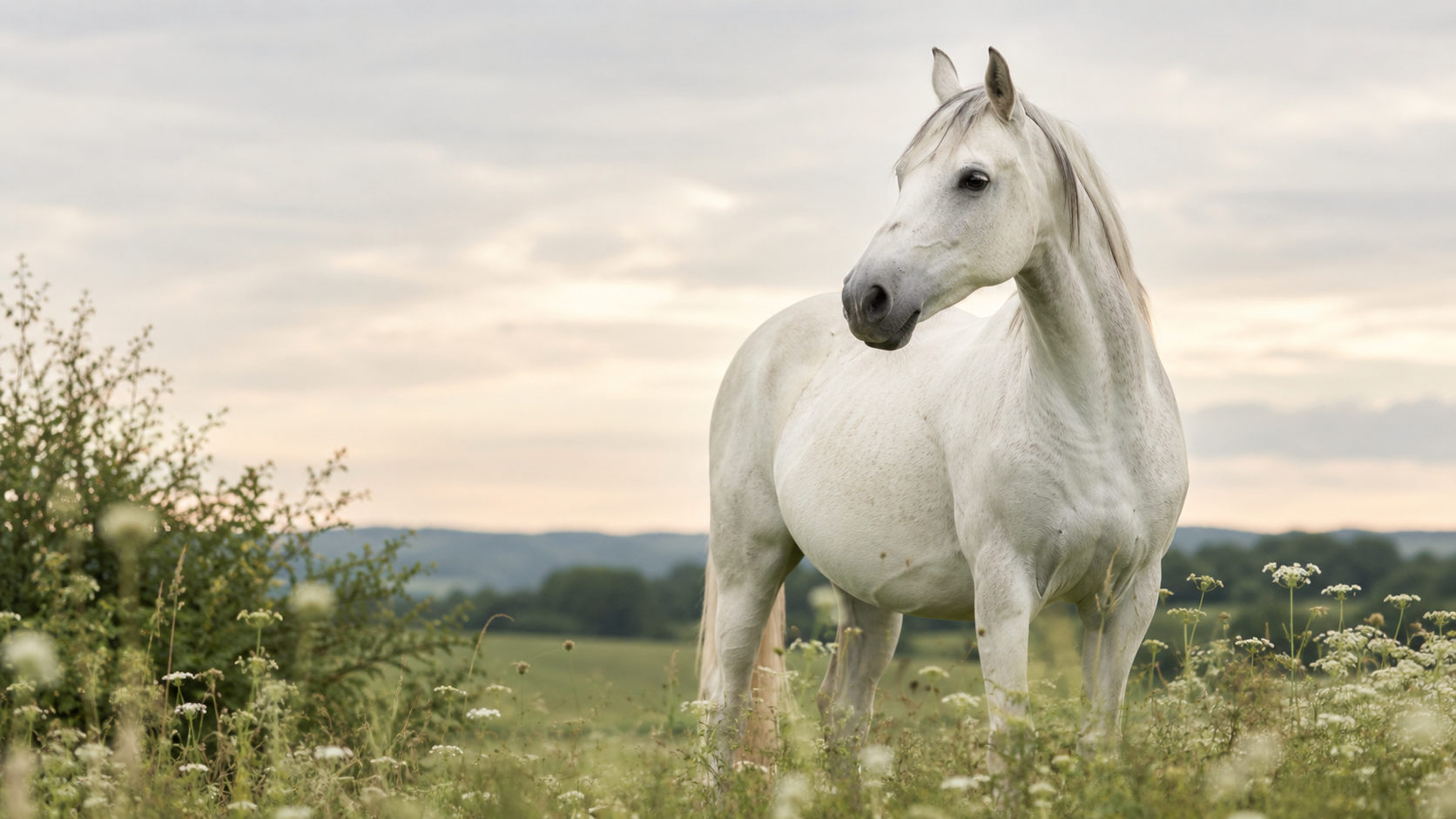
The breed at a glance
The Carolina Marsh Tacky is renowned for its calm, intelligent, and willing temperament. It is a courageous, resilient, and very loyal horse to its rider, making it an excellent partner for work and leisure.
- Category
- hardy breed
- Origin
- United States (South Carolina) · 17th century
- Height at withers
- 132–147 cm
- Weight
- 315–400 kg
- Lifespan
- 25-30 years
- Common coats
- bay, chestnut, black, grey, roan, palomino, dun, grullo
- Disciplines
- Trail riding, Endurance, Cattle work (ranch sorting, cutting), Recreational Western riding
- Other names
- Marsh Tacky, Tacky
Origin and history
The Carolina Marsh Tacky is a direct descendant of Spanish horses introduced by explorers and settlers in the 17th century in the Carolinas. Adapted to coastal marshes, it was essential for transport, agriculture, and fishing. The breed nearly disappeared in the 20th century but was saved by conservation efforts, gaining official recognition and protection. It is considered a rare Spanish Colonial horse.

Conformation and physique
It is a small, compact, and robust horse, of mesomorphic build, with solid bone structure and well-developed musculature. It has an athletic and agile silhouette, typical of hardy working horses.
Medium-sized head, often with a straight or slightly convex profile (ram's nose), large expressive eyes, and alert ears. The muzzle is broad and the nostrils are well-opened.
Medium-length neck, well-set, muscular, and arched, blending into a well-defined but not excessively high wither.
Short, strong back, solid topline. Deep and broad chest, well-sprung ribs. Sloping and muscular croup, with a low-set tail.
Clean, strong limbs, with well-defined joints and short cannons. The hooves are remarkably hard and well-formed, adapted to wet and difficult terrain. Little to no feathering.
- Common coats: bay, chestnut, black, grey, roan, palomino, dun, grullo
Temperament and aptitudes
The Carolina Marsh Tacky is renowned for its calm, intelligent, and willing temperament. It is a courageous, resilient, and very loyal horse to its rider, making it an excellent partner for work and leisure.
The gaits are supple, agile, and energy-efficient, with a surefooted step and the ability to move easily over varied and difficult terrain, particularly marshes. They are known for their endurance.
- Uses: Light agricultural work, Transport in marshes and coastal areas, Net fishing (historical), Equestrian trekking, Recreational riding, Hunting, Cattle work
- Disciplines: Trail riding, Endurance, Cattle work (ranch sorting, cutting), Recreational Western riding
Feeding the Carolina Marsh Tacky
The Carolina Marsh Tacky is a horse with a very efficient metabolism, accustomed to resource-poor environments. It tends to gain weight easily if its diet is not managed. Good quality, but not overly rich, forage forms the basis of its diet. Concentrates are generally only necessary in cases of intense work or specific needs (growth, lactation), and should be given sparingly.
Due to its efficient metabolism, the Carolina Marsh Tacky can be predisposed to Equine Metabolic Syndrome (EMS) and laminitis if overfed or if its diet is too rich in sugars and starch. Careful monitoring of its weight and a low-glycemic diet are recommended.
With Equio, every feed, supplement or treat is read against the horse's real profile (age, weight, Body Condition Score, conditions) — useful for a Carolina Marsh Tacky as soon as a metabolic or digestive sensitivity is known.

Health and points to watch
It is crucial to carefully monitor its weight and body condition to prevent obesity and associated pathologies such as laminitis and EMS. Particular attention should be paid to the quality of its hooves, which, although naturally robust, require proper maintenance.
- More frequent conditions: laminitis, Equine Metabolic Syndrome (EMS)
Care and grooming
Marsh Tacky hooves are naturally very hard and resistant, requiring regular trimming but often less intensive than other breeds. The mane and tail are generally thick and may require regular detangling. Its hardy coat is easy to maintain and does not require special care, other than regular brushing.
Did you know?
- The Carolina Marsh Tacky is one of the few direct descendants of 16th-century Spanish horses still existing in North America.
- It was designated the State Horse of South Carolina in 2010.
- The breed is capable of swimming and moving with ease in marshes and shallow waters, a unique adaptation to its original environment.
- The name 'Tacky' refers to their unassuming appearance and their ability to work hard without fuss.
The Carolina Marsh Tacky and how to track it
The Carolina Marsh Tacky is a very rare and endemic breed to South Carolina. There is no significant population or documented breeding of this breed in France.
Equio lets you build a complete profile for a Carolina Marsh Tacky: identity, weight, Body Condition Score, feeding, conditions, care reminders (vaccines, worming, trimming) and an exportable health log. The breed sets the identity; everyday decisions still depend on the real horse and your vet's advice.
- Record the activity level: rest, leisure, sport or breeding
- Add known conditions or sensitivities
- Scan feeds, plants and care products
- Keep reminders (vaccines, worming, trimming)
- Prepare a PDF export before a vet appointment
Frequently asked questions
What is the price of a Carolina Marsh Tacky?
The price of a Carolina Marsh Tacky is highly variable and depends on age, sex, training, and lineage. Due to their rarity and conservation efforts, they can be more expensive than more common breeds, often ranging between 5,000 and 15,000 USD, or even more for breeding stock.
Is the Carolina Marsh Tacky suitable for beginners?
Yes, thanks to its calm, intelligent, and willing temperament, the Carolina Marsh Tacky can be an excellent horse for beginners or less experienced riders, provided they receive proper guidance and the horse has received appropriate training.
Where can one find a Carolina Marsh Tacky?
Carolina Marsh Tackies are primarily bred in South Carolina, USA. Breed conservation associations, such as the Carolina Marsh Tacky Association, are the best sources for finding breeders and available horses.
Is the Carolina Marsh Tacky an endangered breed?
Yes, the Carolina Marsh Tacky is a rare and endangered breed. Significant conservation efforts are underway to preserve and increase its population, which remains low.
What are the particularities of the Marsh Tacky's hooves?
Marsh Tacky hooves are renowned for their exceptional hardness and resistance. They are adapted to the wet and abrasive terrain of the marshes, which often allows them to go barefoot, even on difficult ground.