
Horse breed
Canadian Pacer
The Canadian Pacer is a historic lineage of the Canadian Horse, developed in Quebec from the 18th century. It originated from crosses between horses imported from France (likely light saddle and draft horses) and horses from New England.

The breed at a glance
Renowned for its willing, courageous, and intelligent temperament. It is an energetic horse but generally easy to handle, endowed with great endurance and a good work ethic.
- Category
- sport horse
- Origin
- Canada · 18th century
- Height at withers
- 142–152 cm
- Weight
- 450–550 kg
- Lifespan
- 25-30 years
- Common coats
- bay, black, chestnut, grey
- Disciplines
- Harness racing (pacing), recreational riding, trail riding
- Other names
- Pacer Canadien, Cheval Canadien (lignée Pacer)
Origin and history
The Canadian Pacer is a historic lineage of the Canadian Horse, developed in Quebec from the 18th century. It originated from crosses between horses imported from France (likely light saddle and draft horses) and horses from New England. Selected for its pacing ability, it became renowned for its speed and endurance, playing a crucial role in racing and rapid transport. Although the pure lineage is rare today, it strongly influenced the development of American trotter and ambler breeds.

Conformation and physique
A medium-sized horse, compact and muscular, with solid bone structure. It presents a harmonious silhouette, typical of a versatile saddle horse, but with musculature adapted for speed and endurance.
Medium-sized head, well-proportioned, with a straight or slightly concave profile. The eyes are large and expressive, the ears medium-sized and well-placed.
Muscular and well-arched neck, blending harmoniously into a well-defined and long wither. It contributes to the horse's overall balance.
Short, strong back, taut topline. Deep and wide chest, offering good lung capacity. Muscular and slightly sloped croup, with a well-set tail.
Strong and well-muscled limbs, with clean joints and well-defined tendons. The cannons are short and the feet are hard and well-formed. Little to no feathering.
- Common coats: bay, black, chestnut, grey
Temperament and aptitudes
Renowned for its willing, courageous, and intelligent temperament. It is an energetic horse but generally easy to handle, endowed with great endurance and a good work ethic.
The Canadian Pacer was particularly valued for its fast and regular pace, a two-beat lateral gait. It also possessed efficient trot and canter, but pacing was its signature.
- Uses: Pacing races, Fast transport (harness), versatile riding horse, light agricultural work
- Disciplines: Harness racing (pacing), recreational riding, trail riding
Feeding the Canadian Pacer
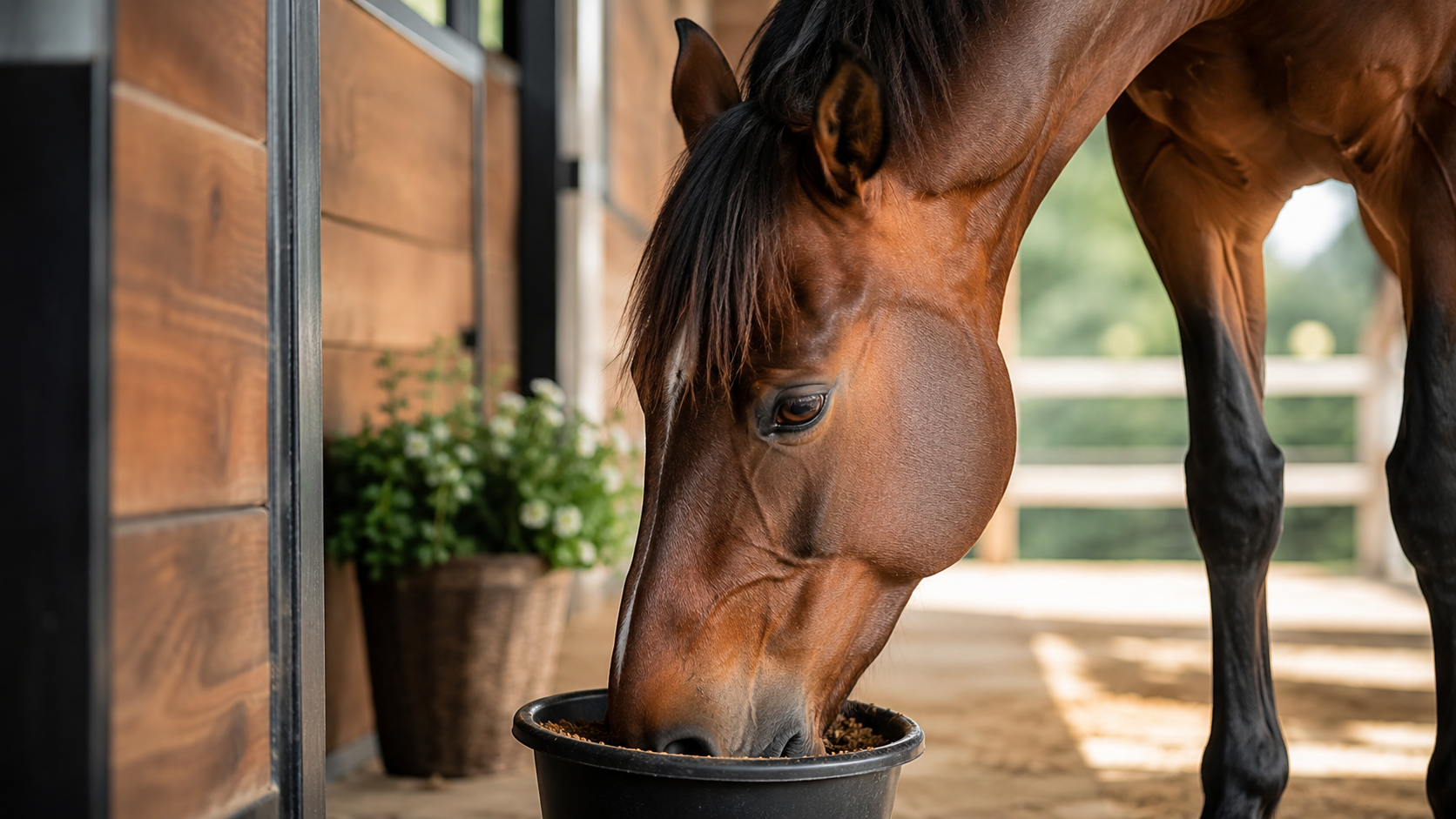
The Canadian Pacer, like the Canadian Horse from which it originated, generally has an efficient metabolism, capable of effectively utilizing forage. It tends to gain weight if not sufficiently exercised. A diet based on good quality forage (hay or grass) is paramount. Concentrates are only necessary in cases of intense work or specific needs (growth, lactation), and should be adjusted sparingly to avoid excess weight.
Although the Canadian Pacer as a specific lineage does not have documented dietary sensitivities distinct from the Canadian Horse, the latter is sometimes considered to have a slight predisposition to Equine Metabolic Syndrome (EMS) and laminitis in cases of overfeeding or inappropriate pasture management, due to its efficient metabolism.
With Equio, every feed, supplement or treat is read against the horse's real profile (age, weight, Body Condition Score, conditions) — useful for a Canadian Pacer as soon as a metabolic or digestive sensitivity is known.
Health and points to watch
Particular attention must be paid to weight management to prevent obesity and associated risks such as laminitis. Regular monitoring of conformation and feet is also essential, especially for a horse with specific gaits like pacing.
- More frequent conditions: Osteoarthritis (in older subjects or those with an intense athletic career)
Care and grooming
Care is typical for a classic saddle horse. Regular hoof trimming is crucial to maintain balance and good locomotion. The mane and tail are generally left natural. The coat does not require specific care beyond usual grooming, and clipping depends on use and season.
Did you know?
- The Canadian Pacer played a fundamental role in the development of famous American breeds such as the Standardbred, the Tennessee Walking Horse, and the Morgan.
- Its pacing ability was so highly valued that it was often exported to the United States to improve bloodlines of racing and working horses.
- The Canadian Horse, of which the Pacer is a lineage, is sometimes nicknamed the 'Little Iron Horse' for its robustness and versatility.
The Canadian Pacer and how to track it
The Canadian Pacer as a distinct lineage is extremely rare in France, if not non-existent. The Canadian Horse, from which it originated, is also very poorly represented in French territory, with a few rare imports for breeding or leisure.
Equio lets you build a complete profile for a Canadian Pacer: identity, weight, Body Condition Score, feeding, conditions, care reminders (vaccines, worming, trimming) and an exportable health log. The breed sets the identity; everyday decisions still depend on the real horse and your vet's advice.
- Record the activity level: rest, leisure, sport or breeding
- Add known conditions or sensitivities
- Scan feeds, plants and care products
- Keep reminders (vaccines, worming, trimming)
- Prepare a PDF export before a vet appointment
Frequently asked questions
What is the difference between a Canadian Pacer and a Canadian Horse?
The Canadian Pacer is a specific historical lineage of the Canadian Horse, selected for its pacing ability. The Canadian Horse is the broader parent breed, which includes various lineages adapted for different uses, including the Pacer for pacing races.
Does the Canadian Pacer still exist today?
The pure lineage of the Canadian Pacer is very rare and difficult to find today. Its characteristics have been largely integrated and diluted into other ambler breeds, notably the Standardbred, but the influence of this lineage is still present.
Is it a good horse for recreational riding?
Historically, the Canadian Pacer was a versatile, intelligent, and enduring horse. If an individual of this lineage were found, it would likely be an excellent recreational horse, capable of trail riding and various activities thanks to its willing temperament and robustness.
What are the main gaits of the Canadian Pacer?
The distinctive gait of the Canadian Pacer is the pace, a two-beat lateral gait where the limbs on the same side move simultaneously. It was also capable of trotting and cantering, but pacing was its specialty for speed.
Where can Canadian Pacers be found?
It is extremely difficult to find pure Canadian Pacers today. Individuals closest to this historical lineage would likely be found in Canada, within Canadian Horse conservation programs, or in Standardbred bloodlines that have retained ancient traits.