
Horse breed
Bulgarian East Balkan Horse
The Bulgarian East Balkan horse breed was developed in Bulgaria from the late 19th century, primarily at the Kabiuk State Stud. It originated from complex crosses between local Shagya-type mares and improving breeds such as the English Thoroughbred, Arabian, Gidran, and Nonius stallions.

The breed at a glance
The Bulgarian East Balkan horse is renowned for its balanced temperament: it is intelligent, willing, and courageous, while also being calm and easy to train. These qualities make it versatile and appreciated by both amateur and professional riders.
- Category
- sport horse
- Origin
- Bulgaria · Late 19th century - Early 20th century
- Height at withers
- 158–165 cm
- Weight
- 450–550 kg
- Lifespan
- 25-30 years
- Common coats
- bay, chestnut, grey, black
- Disciplines
- show jumping, dressage, eventing, endurance riding
- Other names
- East Bulgarian
Origin and history
The Bulgarian East Balkan horse breed was developed in Bulgaria from the late 19th century, primarily at the Kabiuk State Stud. It originated from complex crosses between local Shagya-type mares and improving breeds such as the English Thoroughbred, Arabian, Gidran, and Nonius stallions. The objective was to create a versatile saddle and sport horse, adapted to military and agricultural needs, and later to sporting purposes. The breed was officially recognized and its studbook established in the mid-20th century.
Conformation and physique
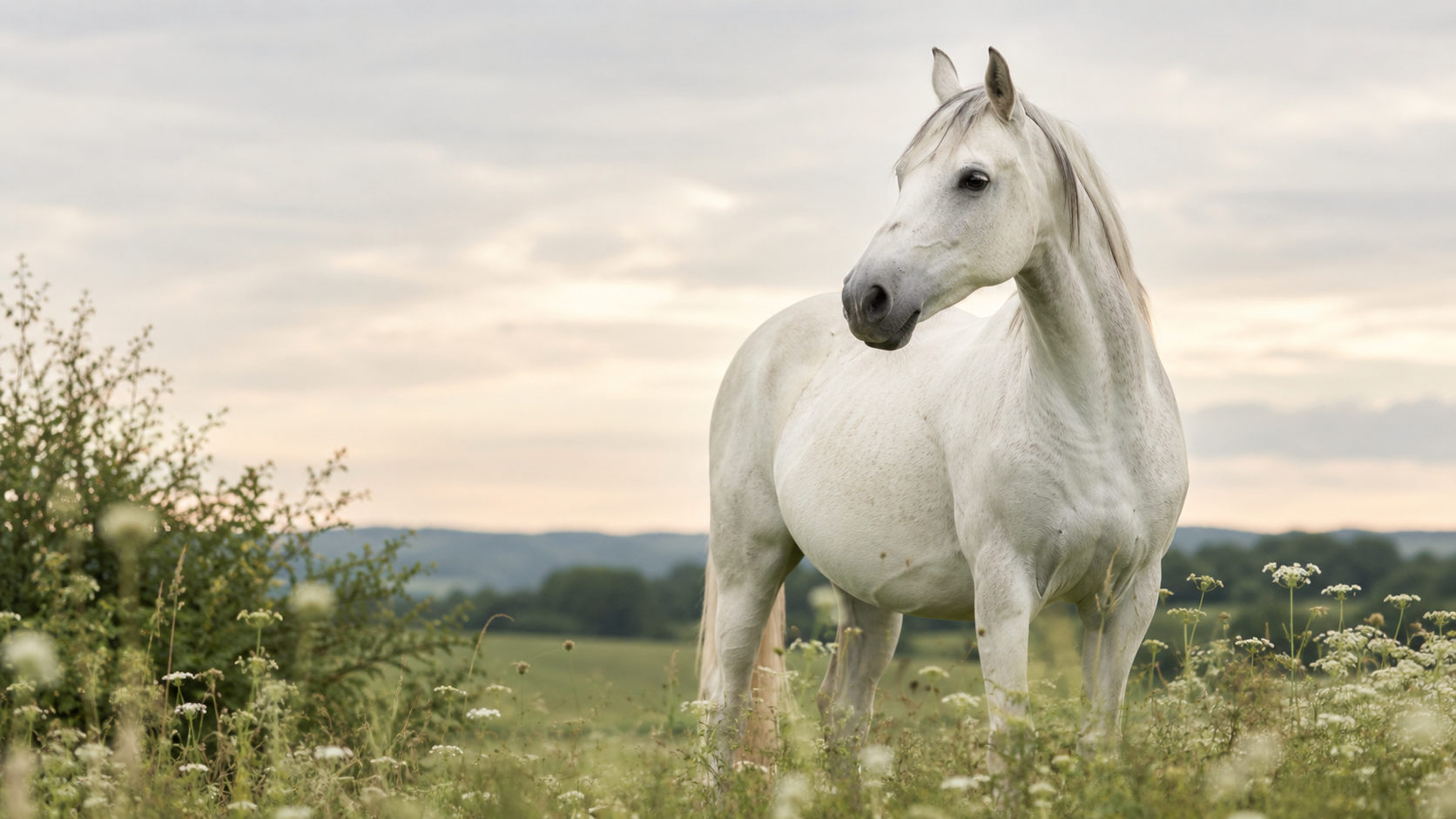
It is a medium to large-sized horse, harmonious and athletic, with a solid yet elegant bone structure. Its silhouette is that of a modern sport horse, combining strength and agility.
The head is medium-sized, well-proportioned, with a straight or slightly concave profile. The eyes are large and expressive, the ears medium-sized and well-placed.
The neck is long, well-muscled, and well-set, blending harmoniously into a long, well-defined wither, promoting good freedom of movement.
The back is straight and strong, the topline is taut. The chest is broad and deep, ensuring good respiratory capacity. The croup is long, muscular, and slightly sloped.
The limbs are solid, with large and well-defined joints. The cannons are short and the tendons well-defined. The feet are hard and well-formed. Feathering is generally sparse.
- Common coats: bay, chestnut, grey, black
Temperament and aptitudes
The Bulgarian East Balkan horse is renowned for its balanced temperament: it is intelligent, willing, and courageous, while also being calm and easy to train. These qualities make it versatile and appreciated by both amateur and professional riders.
The gaits are ample, supple, and energetic, with good balance and marked impulsion. The walk is regular, the trot extended, and the canter rhythmic, making it a good sport horse.
- Uses: saddle horse, driving, light agricultural work (historical), equestrian sport
- Disciplines: show jumping, dressage, eventing, endurance riding
Feeding the Bulgarian East Balkan Horse
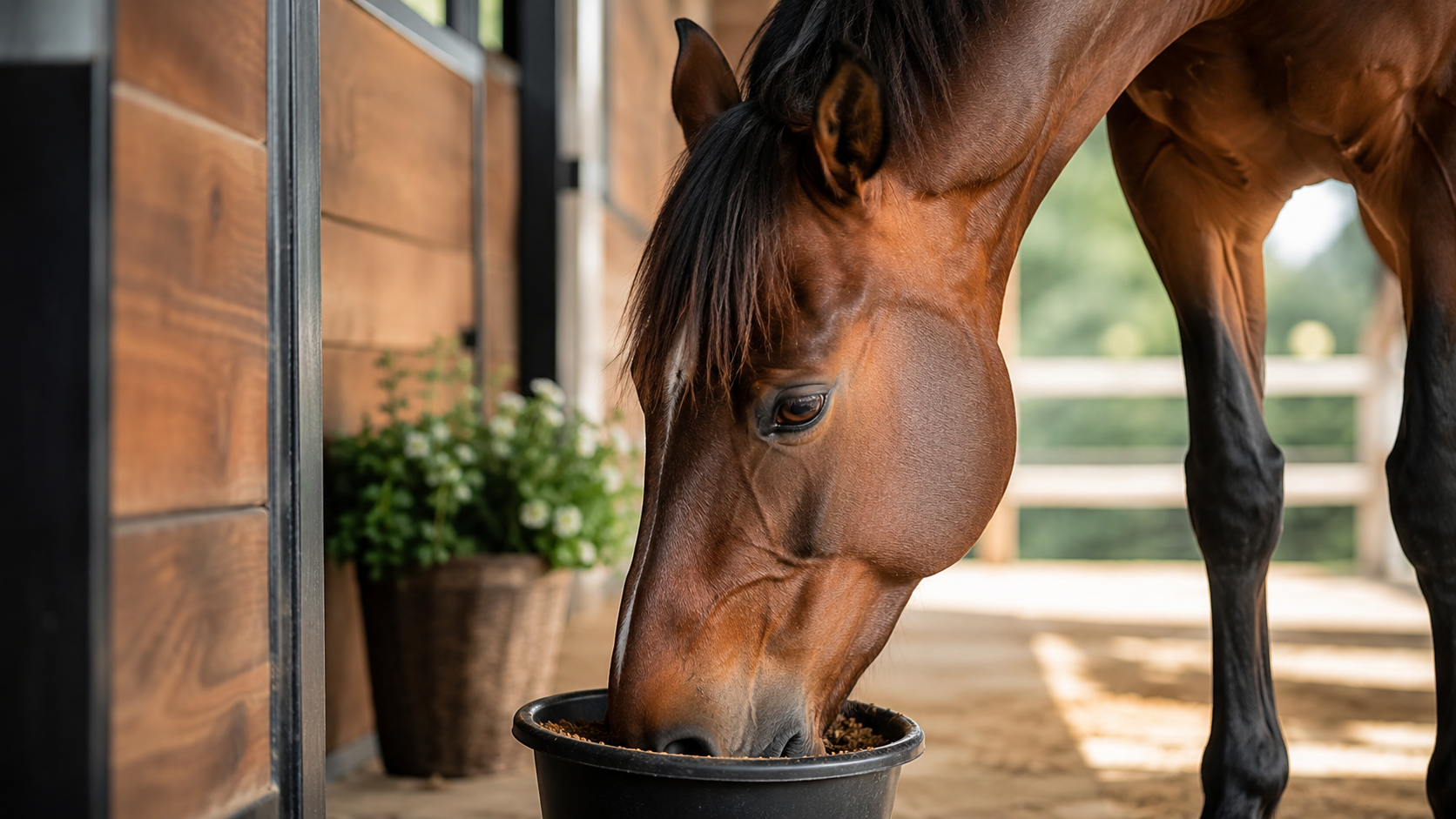
As a sport horse, the Bulgarian East Balkan horse has energy requirements that vary greatly with its activity level. It requires a balanced diet, rich in good quality forage (hay, grass) ad libitum. Depending on the intensity of work, concentrates (cereals, compound feeds) will be necessary to cover its needs for energy, protein, and minerals. It is not particularly prone to becoming overweight if exercised regularly.
There are no documented specific predispositions to dietary sensitivities or particular metabolic risks (such as laminitis, EMS, or PSSM) for the Bulgarian East Balkan horse breed. Standard dietary management adapted to its activity level is recommended to maintain its health.
With Equio, every feed, supplement or treat is read against the horse's real profile (age, weight, Body Condition Score, conditions) — useful for a Bulgarian East Balkan Horse as soon as a metabolic or digestive sensitivity is known.
Health and points to watch
Particular attention must be paid to the quality of the conformation and the soundness of the joints, especially in horses subjected to intense athletic training. Regular veterinary monitoring and preventive management of locomotor disorders are essential.
- More frequent conditions: locomotor affections related to intense athletic activity (osteoarthritis, tendinitis)
Care and grooming
Care is typical for a classic sport horse: regular hoof trimming or shoeing, daily coat brushing. The mane, tail, and feathering are generally sparse and do not require special maintenance beyond detangling. Skin monitoring is recommended, especially during wet periods, to prevent skin conditions.
Did you know?
- The Kabiuk stud farm played a central role in the development and selection of the Bulgarian East Balkan horse breed for decades.
- The breed was strongly influenced by the introduction of English Thoroughbred blood, which gives it its athletic abilities.
- Despite its name, the Bulgarian East Balkan horse is a relatively young breed, with its characteristics having been established quite recently.
The Bulgarian East Balkan Horse and how to track it
The Bulgarian East Balkan horse breed is very rare in France. There is no significant breeding or established population; individuals present are generally imported and few in number.
Equio lets you build a complete profile for a Bulgarian East Balkan Horse: identity, weight, Body Condition Score, feeding, conditions, care reminders (vaccines, worming, trimming) and an exportable health log. The breed sets the identity; everyday decisions still depend on the real horse and your vet's advice.
- Record the activity level: rest, leisure, sport or breeding
- Add known conditions or sensitivities
- Scan feeds, plants and care products
- Keep reminders (vaccines, worming, trimming)
- Prepare a PDF export before a vet appointment
Frequently asked questions
Is the Bulgarian East Balkan horse a good horse for beginners?
Thanks to its calm, intelligent, and willing temperament, the Bulgarian East Balkan horse can be suitable for supervised beginner riders, provided they are accompanied by a professional. Its versatility and responsiveness also make it an excellent partner for more experienced riders.
What is the availability of the Bulgarian East Balkan horse outside of Bulgaria?
The Bulgarian East Balkan horse is primarily bred in Bulgaria. Its availability is limited outside its country of origin, and it is rare to find them for sale in other European countries, including France.
Is the Bulgarian East Balkan horse suitable for endurance riding?
Yes, thanks to its robustness, natural stamina, and good temperament, the Bulgarian East Balkan horse can be an excellent horse for the discipline of endurance riding. Its expansive gaits and lung capacity make it an athlete capable of covering long distances.
What is the average price of a Bulgarian East Balkan horse?
The price of a Bulgarian East Balkan horse can vary considerably depending on its age, level of training, lineage (bloodline), and athletic performance. In Bulgaria, prices may be more affordable than for Western sport horse breeds, but importation can add significant costs.
How to recognize a Bulgarian East Balkan horse?
A Bulgarian East Balkan horse is recognized by its athletic and harmonious silhouette, its expressive head with a straight profile, its long and well-set neck, and its solid limbs. The most common coat colors are bay, chestnut, grey, and black.