
Horse breed
Breton
The Breton is a very ancient breed, descending from the indigenous horses of Brittany. Over the centuries, it was influenced by crosses with Oriental horses, Ardennais, and Percherons, particularly to develop its different lines.
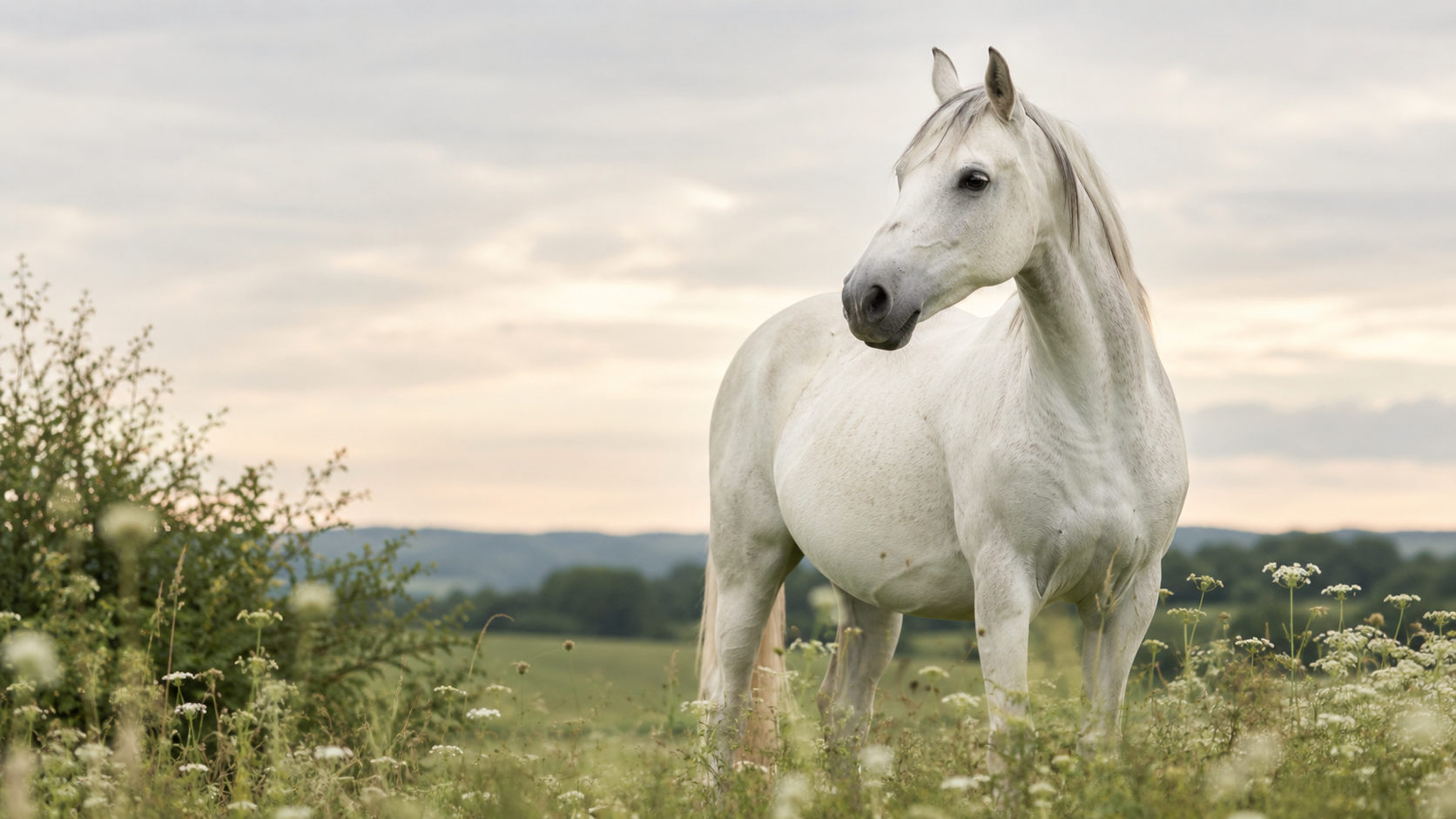
The breed at a glance
The Breton is renowned for its calm, gentle, and willing temperament. It is a courageous, docile horse and very close to humans, making it an excellent partner for work and leisure. It is easy to handle and train.
- Category
- draft horse
- Origin
- France · Antiquity (origins), 19th century (modern establishment)
- Height at withers
- 150–165 cm
- Weight
- 600–900 kg
- Lifespan
- 20-25 years
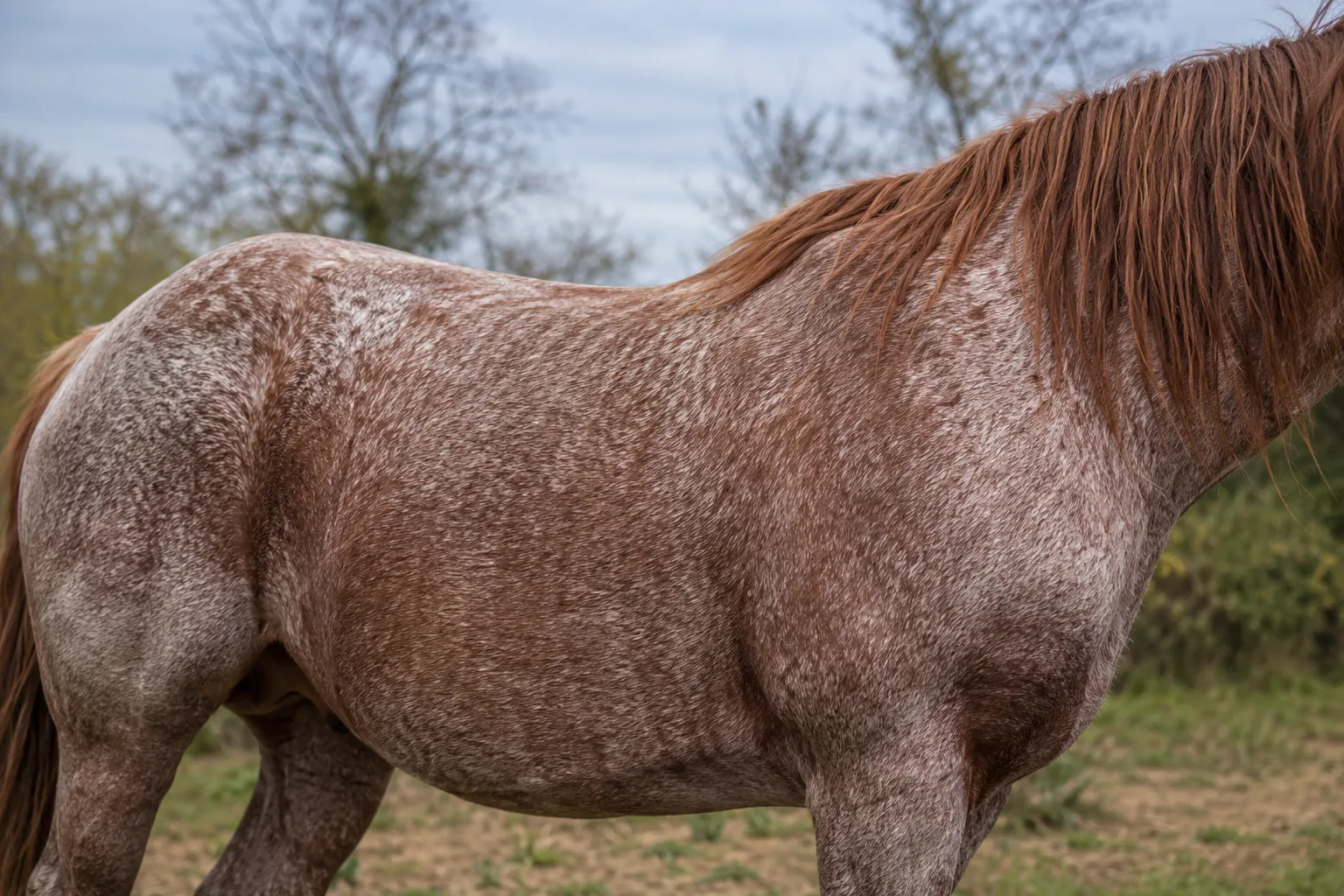
- Common coats
- chestnut, bay, roan, grey
- Disciplines
- driving, logging, agricultural work, working equitation
- Other names
- Postier Breton, Corlay, Centre-Montagne

Origin and history
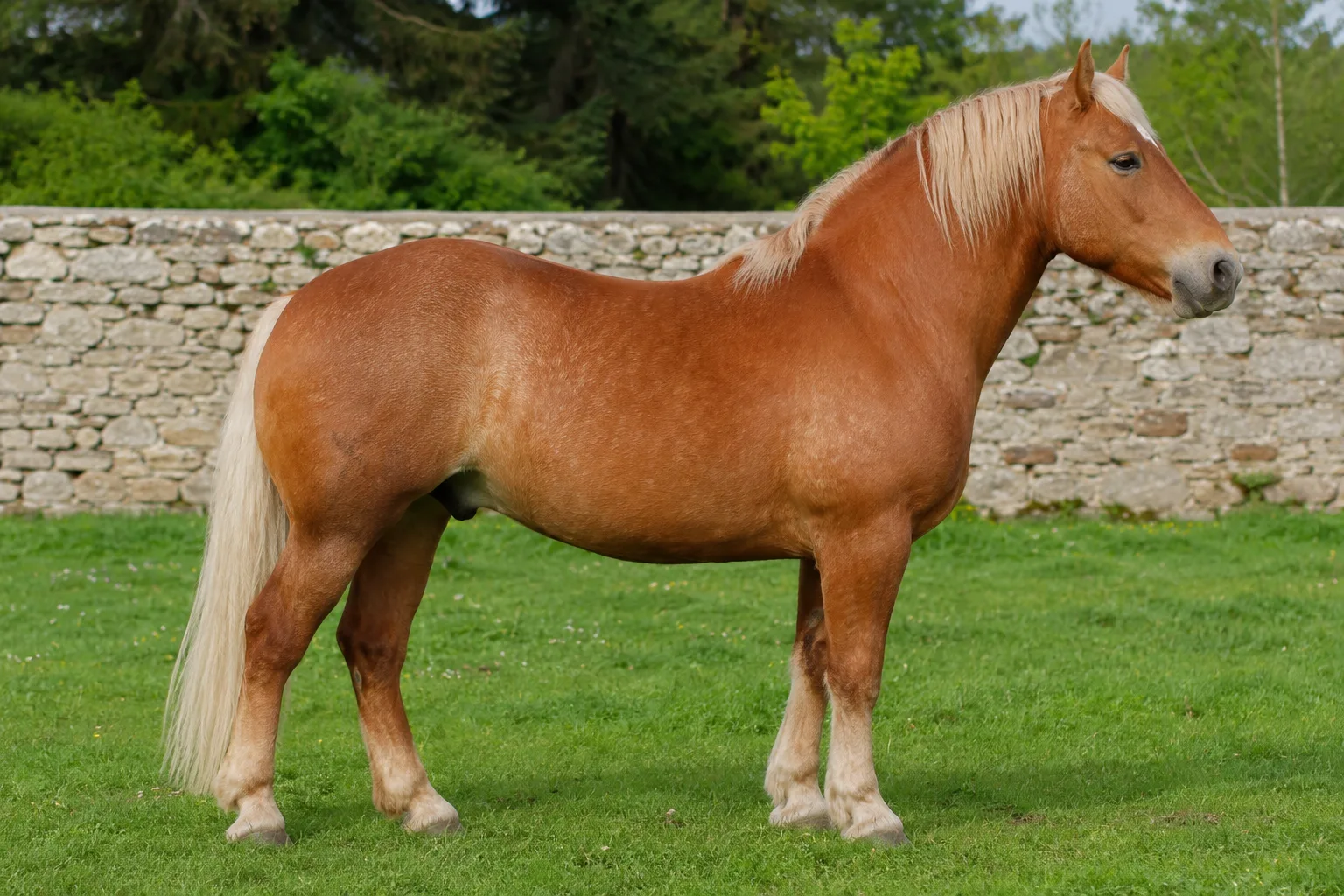
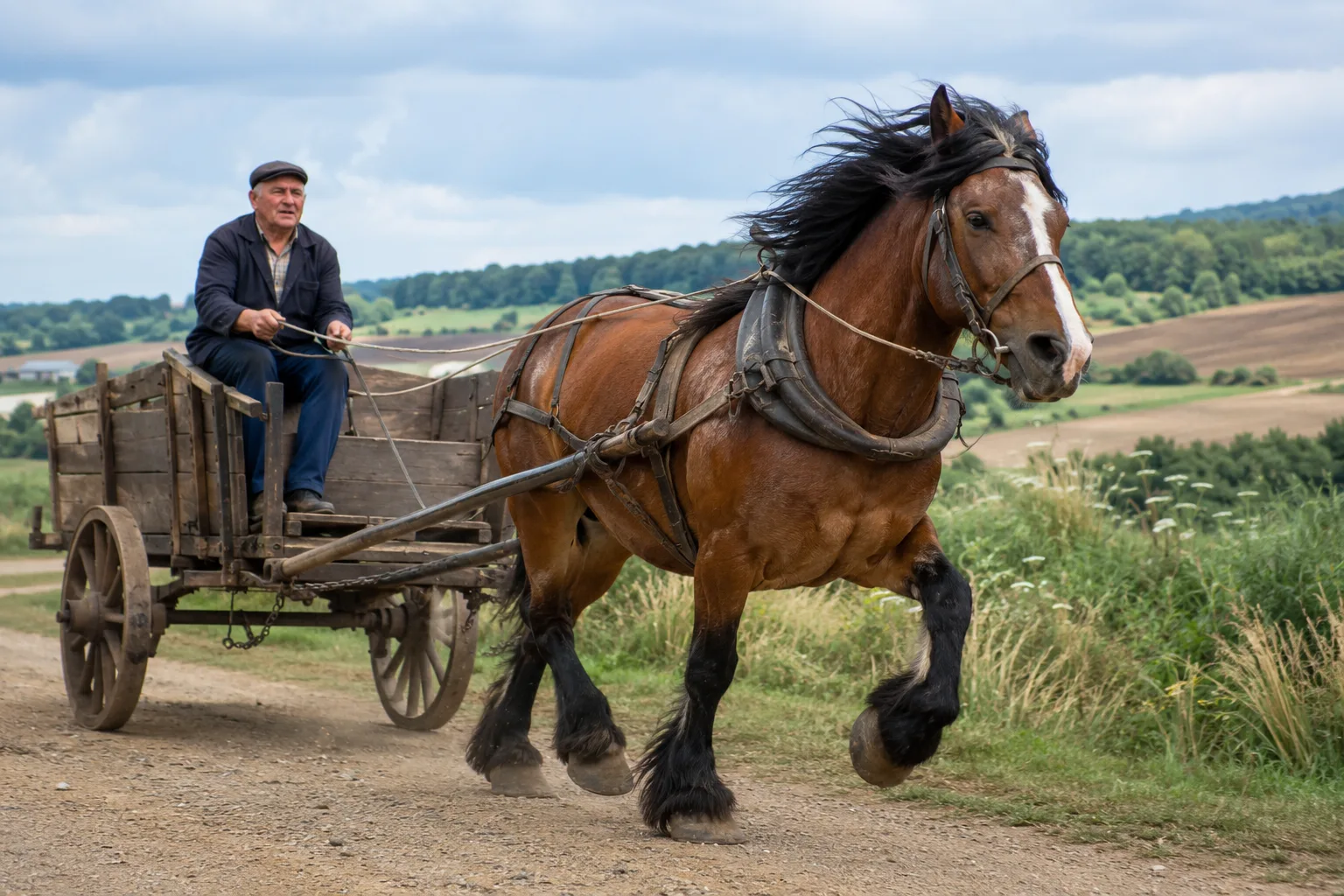
The Breton is a very ancient breed, descending from the indigenous horses of Brittany. Over the centuries, it was influenced by crosses with Oriental horses, Ardennais, and Percherons, particularly to develop its different lines. The breed was officially recognized at the beginning of the 20th century, with the creation of its studbook. Historically used for agriculture, transport, and artillery, it is now appreciated for its versatility.

Conformation and physique
A medium-sized, compact, and powerful draft horse, with solid bone structure and well-developed musculature. It gives an impression of strength and robustness.
Square, expressive head, with a broad forehead, short and mobile ears, and a straight or slightly concave profile. The eyes are large and lively.
Short, thick, and very muscular neck, well-set into the shoulders. The withers are broad and not very prominent.
Short and broad back, taut and muscular topline. Deep and ample chest, well-sprung ribs. Double, broad, and very muscular croup, slightly sloped.
Short, powerful, and well-muscled limbs, with large and sound joints. The cannons are short and the feathers are present but not excessive. The feet are large and well-formed.
- Common coats: chestnut, bay, roan, grey
Temperament and aptitudes
The Breton is renowned for its calm, gentle, and willing temperament. It is a courageous, docile horse and very close to humans, making it an excellent partner for work and leisure. It is easy to handle and train.
Energetic, expansive, and regular gaits, with good balance. The walk is active and the trot is powerful, reflecting its strength and endurance.
- Uses: agricultural work (plowing, logging), recreational and competitive driving, horse-drawn traction (tourism, green space maintenance), meat production (historically), military remount (historically), recreational riding
- Disciplines: driving, logging, agricultural work, working equitation
Feeding the Breton
The Breton is a draft horse with a rather efficient metabolism, capable of effectively utilizing forage. It tends to gain weight if not worked sufficiently or if its diet is too rich. A diet based on good quality forage (hay, grass) is paramount. Concentrates are only necessary in cases of intense work or specific needs (gestation, lactation), and must be adapted to avoid excesses of sugars and starch.
Like many draft horses with an efficient metabolism, the Breton can be predisposed to Equine Metabolic Syndrome (EMS) and laminitis if overfed or given unlimited access to rich pastures. Careful dietary management is crucial to prevent these conditions.
With Equio, every feed, supplement or treat is read against the horse's real profile (age, weight, Body Condition Score, conditions) — useful for a Breton as soon as a metabolic or digestive sensitivity is known.

Health and points to watch
Carefully monitor weight and body condition to prevent obesity and the risk of laminitis. Particular attention should be paid to limb conformation and foot care to avoid joint and hoof problems, especially in individuals subjected to heavy work.
- More frequent conditions: laminitis, Equine Metabolic Syndrome (EMS), weight and work-related joint conditions
Care and grooming
Hoof care is essential, with regular trimming adapted to the foot's conformation. Feathering, though sparse, requires monitoring to prevent dermatitis. The coat is easy to maintain. Clipping may be considered for horses working intensely to facilitate thermoregulation.
Did you know?
- The Breton has been widely exported, particularly to the United States where it contributed to the improvement of other draft breeds.
- There are several types within the Breton breed, including the Postier Breton (lighter and more elegant, suitable for fast driving) and the Breton de Corlay (heavier, for agricultural work).
- The Breton is one of the rare draft breeds to have maintained a stable population thanks to its versatility and adaptation to new uses.
The Breton and how to track it
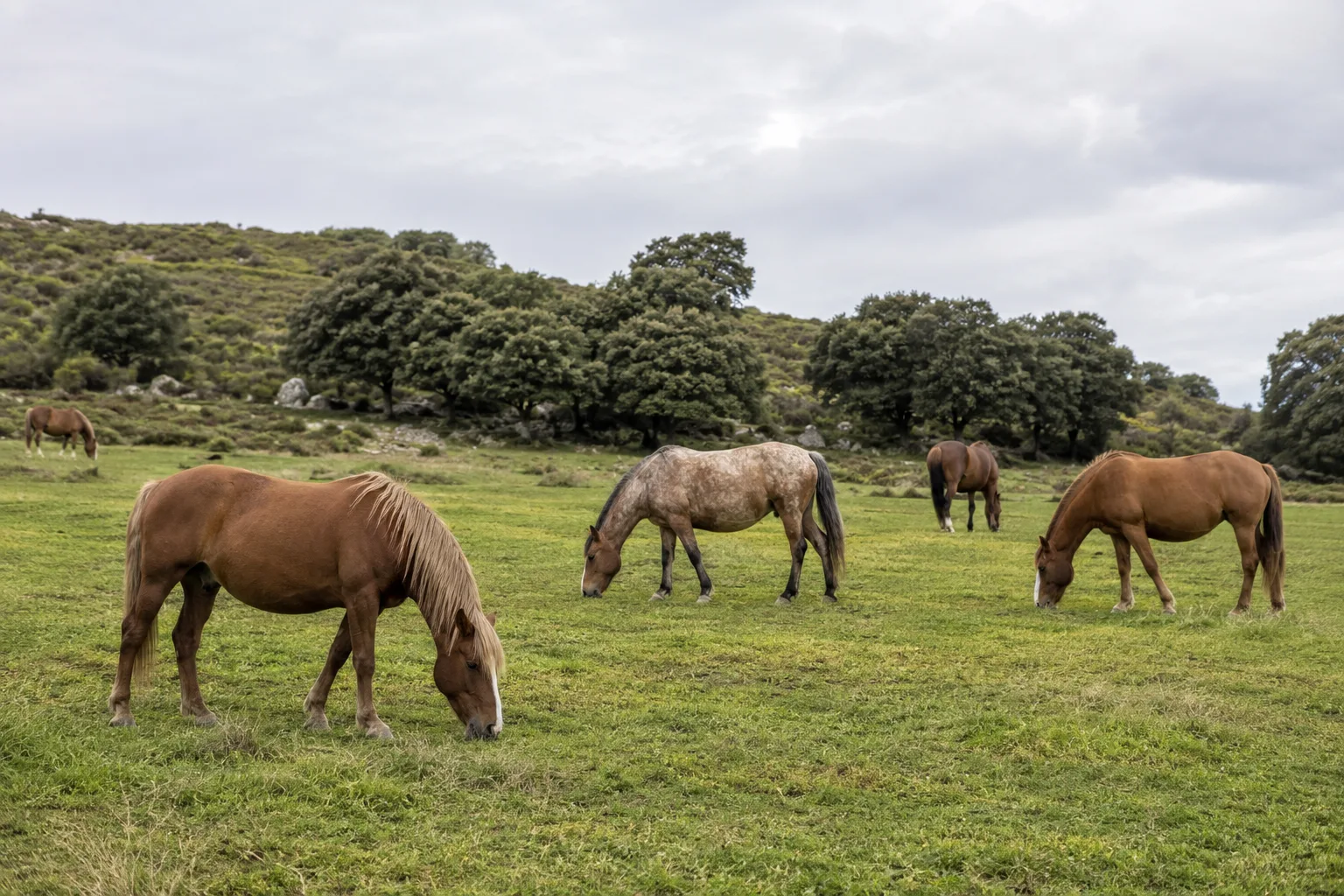
The Breton is one of the most represented draft breeds in France. It is primarily bred in Brittany, but also in other regions, and is widely used for leisure driving and light agricultural work.
Equio lets you build a complete profile for a Breton: identity, weight, Body Condition Score, feeding, conditions, care reminders (vaccines, worming, trimming) and an exportable health log. The breed sets the identity; everyday decisions still depend on the real horse and your vet's advice.
- Record the activity level: rest, leisure, sport or breeding
- Add known conditions or sensitivities
- Scan feeds, plants and care products
- Keep reminders (vaccines, worming, trimming)
- Prepare a PDF export before a vet appointment
Frequently asked questions
Is the Breton a good horse for leisure riding?
Yes, the Breton is an excellent leisure horse. Its calm temperament, robustness, and docility make it an ideal companion for riders of all levels, including beginners. It is comfortable and safe for outdoor riding.
What is the difference between the Postier Breton and the Breton de Corlay?
The Postier Breton is a lighter and more elegant lineage, selected for fast driving and transport. The Breton de Corlay, or Centre-Montagne, is heavier and more powerful, traditionally used for agricultural work and logging in mountainous terrain.
Is the Breton adapted to hot climates?
Originating from a temperate region, the Breton is robust and adapts well to various climates. However, like any draft horse, it can suffer from intense heat and requires adequate hydration and protection during hot periods.
What is the cost of maintaining a Breton horse?
The cost of maintaining a Breton is comparable to that of other draft horses. Its efficient metabolism can reduce concentrate requirements, but its size implies higher costs for hay, deworming, and veterinary care. Regular trimming is essential.
Can you do show jumping with a Breton?
Although the Breton is versatile, show jumping is not its preferred discipline due to its heavy build and gaits less suited to this activity. It excels more in driving, agricultural work, or trail riding.