
Horse breed
Comtois
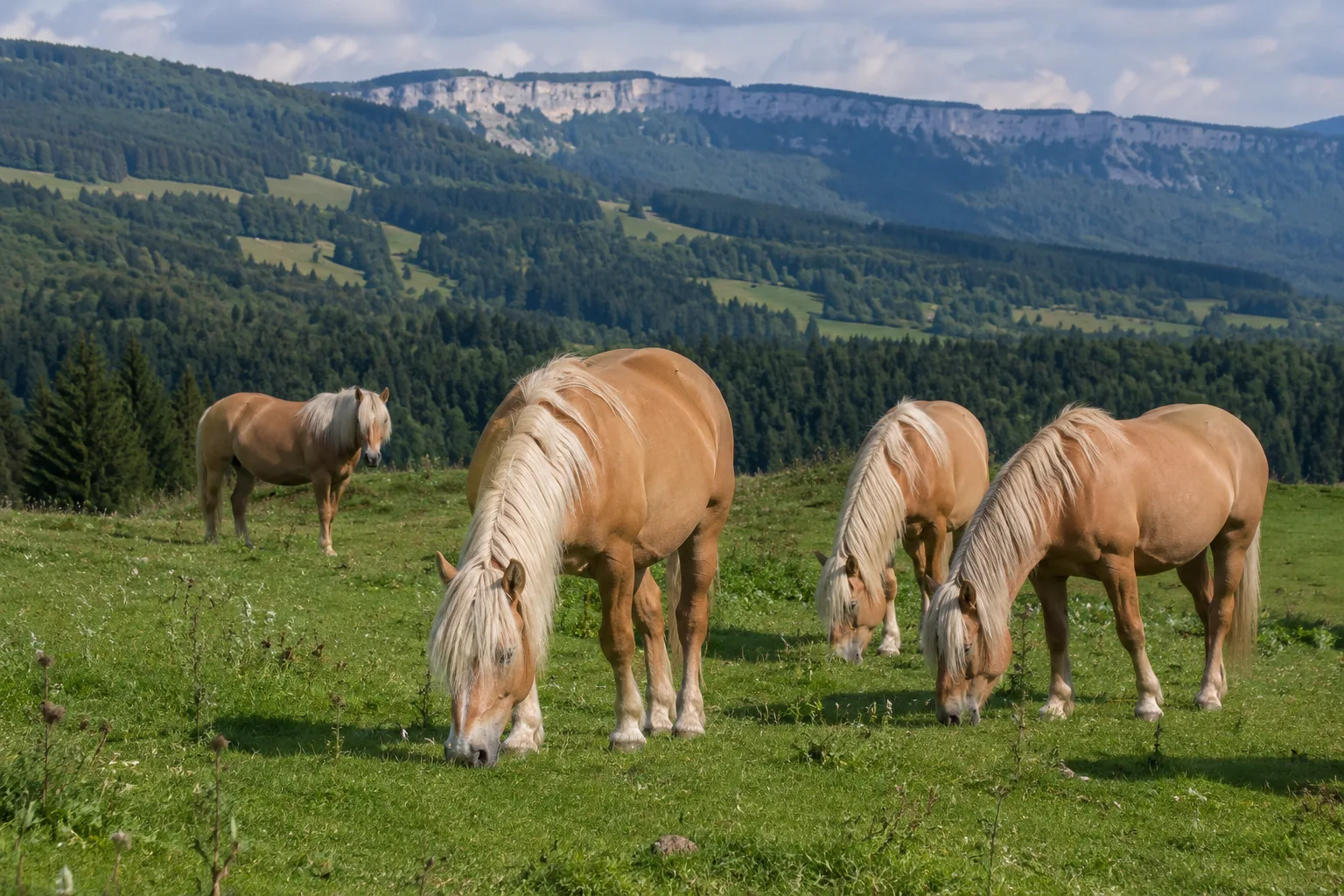
Originating from the Jura mountains, the Comtois descends from Germanic and local horses. It was influenced by crosses with breeds such as the Boulonnais and Percheron in the 19th century to enhance its strength.

The breed at a glance
The Comtois is renowned for its calm, gentle, and docile temperament. It is a willing, courageous horse that is very close to humans, making it an excellent partner for work and leisure. It is easy to handle and train.
- Category
- draft horse
- Origin
- France · Middle Ages (established in the 19th century)
- Height at withers
- 150–165 cm
- Weight
- 650–800 kg
- Lifespan
- 20-25 years
- Common coats
- chestnut, flaxen chestnut, bay
- Disciplines
- Competitive driving, TREC (recreational), Working equitation
- Other names
- Cheval Comtois

Origin and history
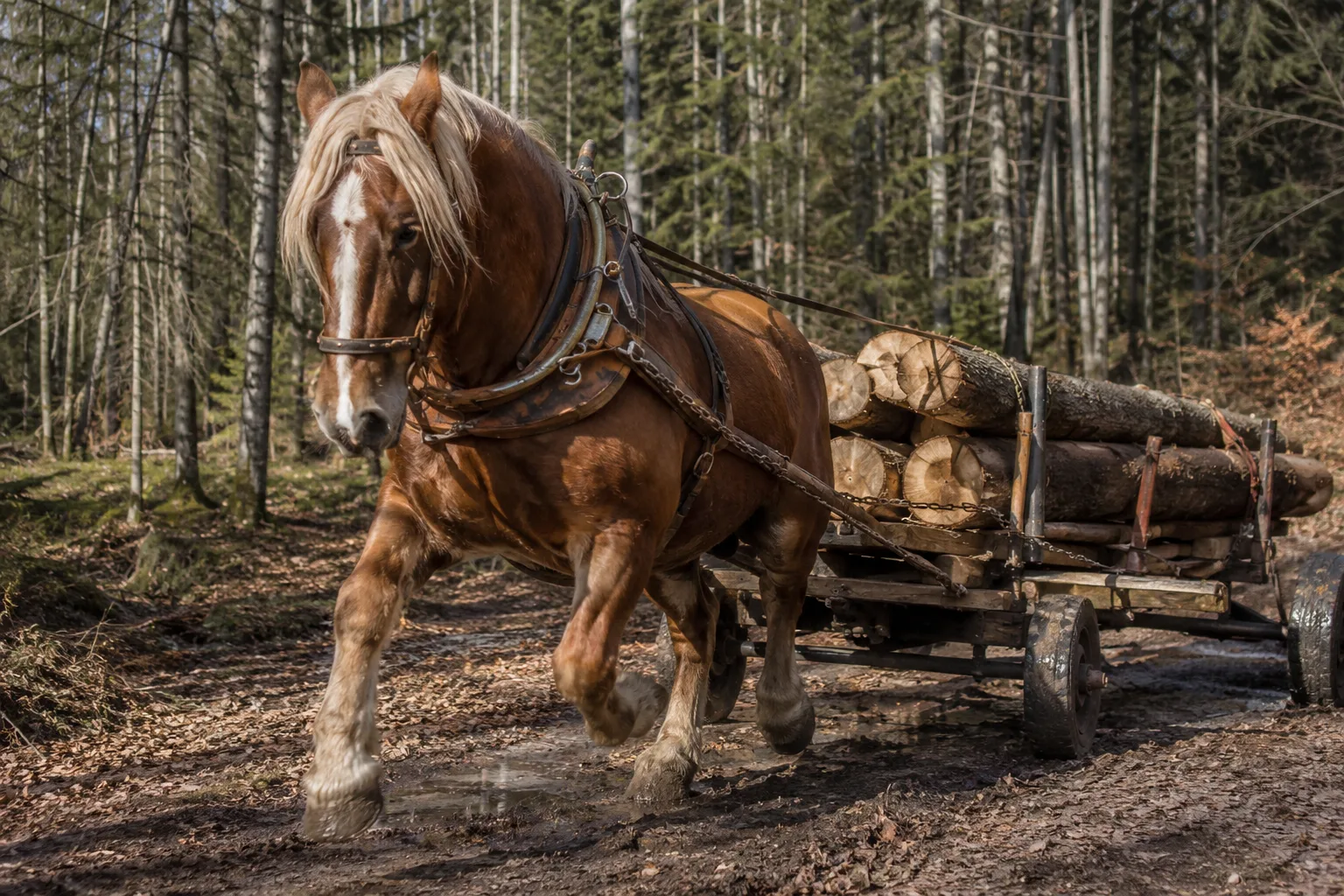
Originating from the Jura mountains, the Comtois descends from Germanic and local horses. It was influenced by crosses with breeds such as the Boulonnais and Percheron in the 19th century to enhance its strength. Traditionally used for agricultural work and logging, its breed standard was officially established in 1919, and today it is recognized for its versatility.

Conformation and physique
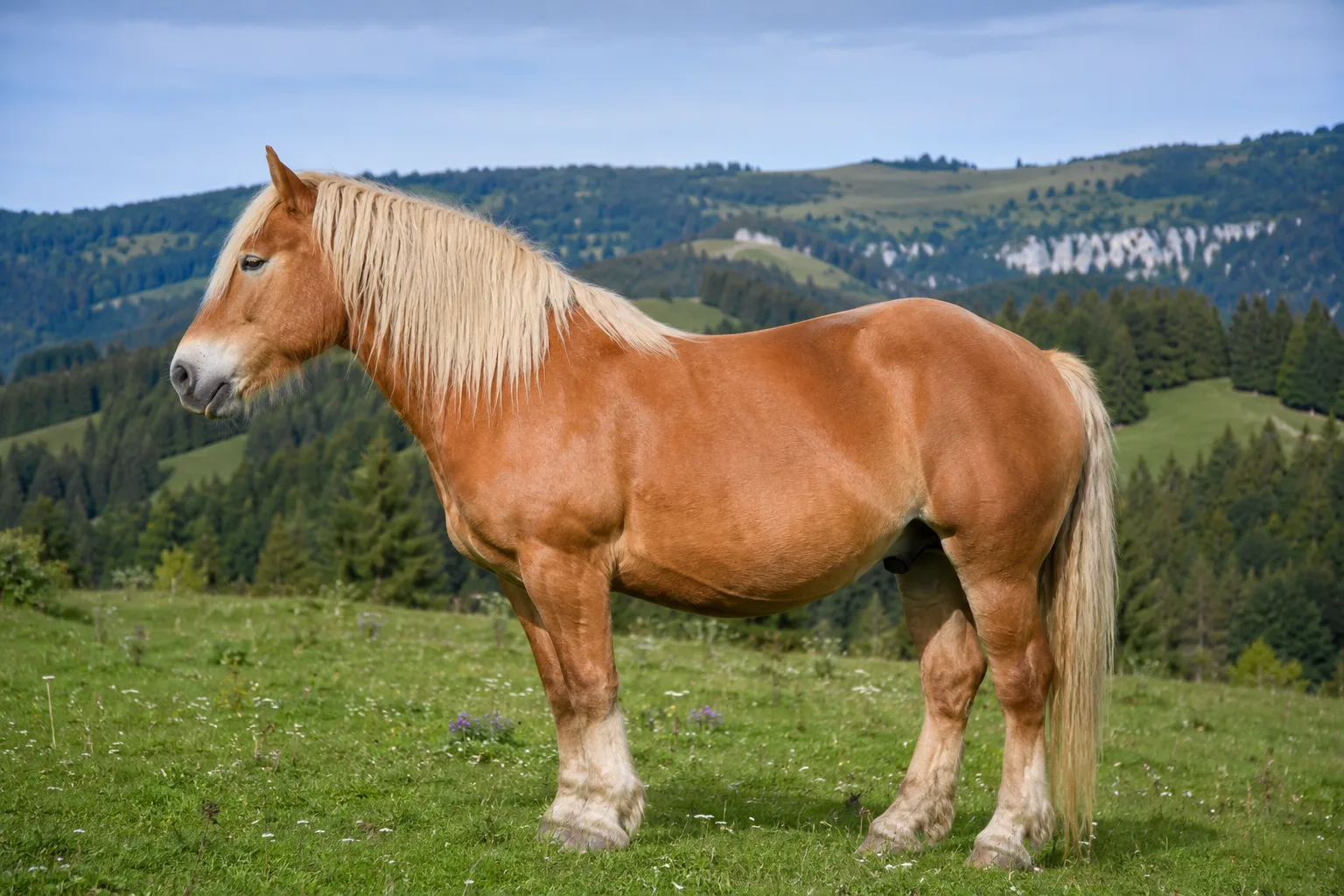
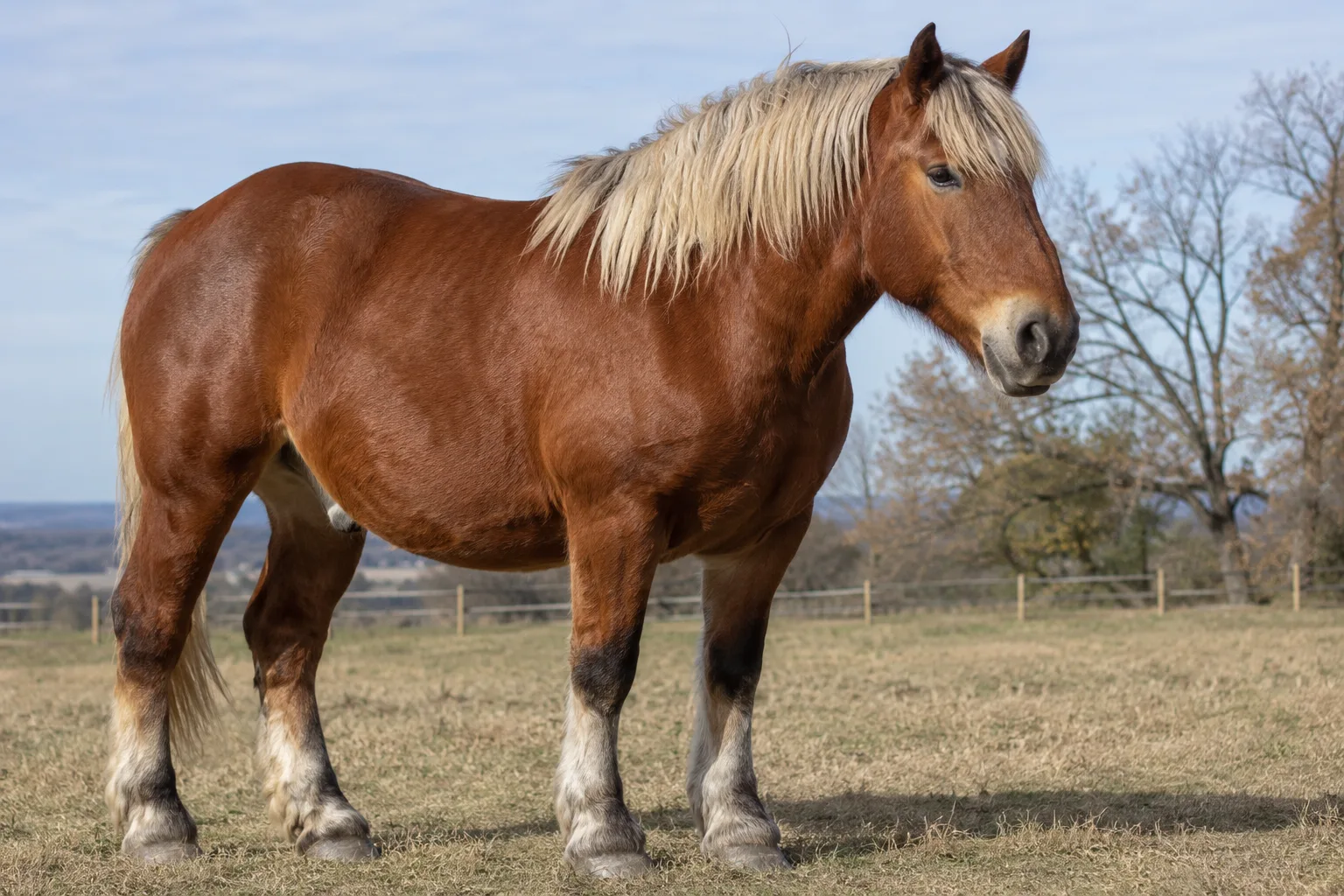
The Comtois is a medium to large draft horse, powerful and compact, with strong bone structure and well-developed musculature. Its silhouette is harmonious and robust, typical of mountain draft horses.
Expressive head, rather short and square, with a broad forehead, small and well-set ears, and a straight or slightly concave profile. The eyes are lively and gentle.
Short, thick, and very muscular neck, well-set on a low but broad wither. It is powerful and arched, typical of draft horses.
Short and broad back, very muscular, with a strong, taut topline. The chest is deep and wide, the ribs are well-sprung. The hindquarters are double, very muscular, and slightly sloped.
Short, strong, and robust limbs, with large and sound joints. The cannons are short and clean, the feet are large and well-formed. Feathering is present, but not excessively abundant.
- Common coats: chestnut, flaxen chestnut, bay
Temperament and aptitudes
The Comtois is renowned for its calm, gentle, and docile temperament. It is a willing, courageous horse that is very close to humans, making it an excellent partner for work and leisure. It is easy to handle and train.
The Comtois' gaits are ample, energetic, and regular, with good impulsion. It is distinguished by its sure-footed walk and active trot, suited for difficult terrain and draft work.
- Uses: Agricultural work (plowing, haymaking), Forest skidding, Recreational and competitive driving, Equestrian tourism (rides, trail riding), Meat (historically, but decreasingly), Recreational riding (ridden)
- Disciplines: Competitive driving, TREC (recreational), Working equitation
Feeding the Comtois
The Comtois is a hardy and economical horse, accustomed to mountain pastures. It has an efficient metabolism and is prone to obesity if overfed. Its diet should primarily consist of good quality forage (grass, hay) ad libitum. Concentrates are only necessary for intense work or specific needs and should be given sparingly to prevent excess weight.
Due to its efficient metabolism, the Comtois can be predisposed to Equine Metabolic Syndrome (EMS) and laminitis, especially if overweight or if it ingests forage too rich in sugars and starch. Careful dietary management is crucial to prevent these conditions.
With Equio, every feed, supplement or treat is read against the horse's real profile (age, weight, Body Condition Score, conditions) — useful for a Comtois as soon as a metabolic or digestive sensitivity is known.

Health and points to watch
Carefully monitor the horse's weight and adjust its diet accordingly to prevent obesity and the risk of laminitis. Regular hoof care is essential, as is particular attention to the joints, especially in older horses or those subjected to intense work.
- More frequent conditions: Laminitis, Equine Metabolic Syndrome (EMS), Joint problems related to weight and work (osteoarthritis)
Care and grooming
The Comtois' hooves, often robust, require regular trimming to maintain their balance and prevent problems. The mane, tail, and feathering, although less abundant than in other draft breeds, should be brushed to prevent knots and skin irritations. The dense coat does not require special care, but clipping may be considered for horses working intensely in winter to facilitate drying.
Did you know?
- The Comtois is often nicknamed the 'golden horse' due to its highly sought-after flaxen chestnut coat.
- It is one of the few draft breeds whose population has increased in recent decades, thanks to its versatility and temperament.
- The Comtois is used for mare's milk production on some farms.
The Comtois and how to track it
The Comtois is one of the most popular draft horse breeds in France, with a stable population and dynamic breeding, primarily in its region of origin, the Jura and Doubs. It is highly valued for driving and logging.
Equio lets you build a complete profile for a Comtois: identity, weight, Body Condition Score, feeding, conditions, care reminders (vaccines, worming, trimming) and an exportable health log. The breed sets the identity; everyday decisions still depend on the real horse and your vet's advice.
- Record the activity level: rest, leisure, sport or breeding
- Add known conditions or sensitivities
- Scan feeds, plants and care products
- Keep reminders (vaccines, worming, trimming)
- Prepare a PDF export before a vet appointment
Frequently asked questions
What is the average price of a Comtois horse?
The price of a Comtois horse generally ranges between €2,500 and €6,000, depending on the horse's age, sex, lineage, training level, and abilities. Foals are less expensive, while horses trained for driving or logging can fetch higher prices.
Is the Comtois suitable for beginners?
Yes, thanks to its calm, gentle, and docile temperament, the Comtois is an excellent breed for beginners and inexperienced riders. Its robustness and patience make it a reliable and safe companion.
What is the maximum height of a Comtois?
The maximum height of a Comtois is generally 165 cm at the withers, although some individuals may be slightly taller. The average is typically between 150 and 160 cm.
Can the Comtois be ridden?
Absolutely. Although primarily known as a draft horse, the Comtois is increasingly appreciated as a leisure riding horse. Its robustness, surefootedness, and temperament make it an excellent trail and pleasure riding horse.
How to prevent laminitis in a Comtois?
To prevent laminitis in a Comtois, it is essential to manage its weight, limit access to rich pasture in spring and autumn, and prioritize good quality hay with a low sugar content. Regular exercise and a diet tailored to its actual needs are also crucial.