
Horse breed
Barb
The Barb is a very ancient breed, with origins dating back to Antiquity in North Africa. It is considered one of the foundational breeds for many modern saddle horses, notably the Thoroughbred.
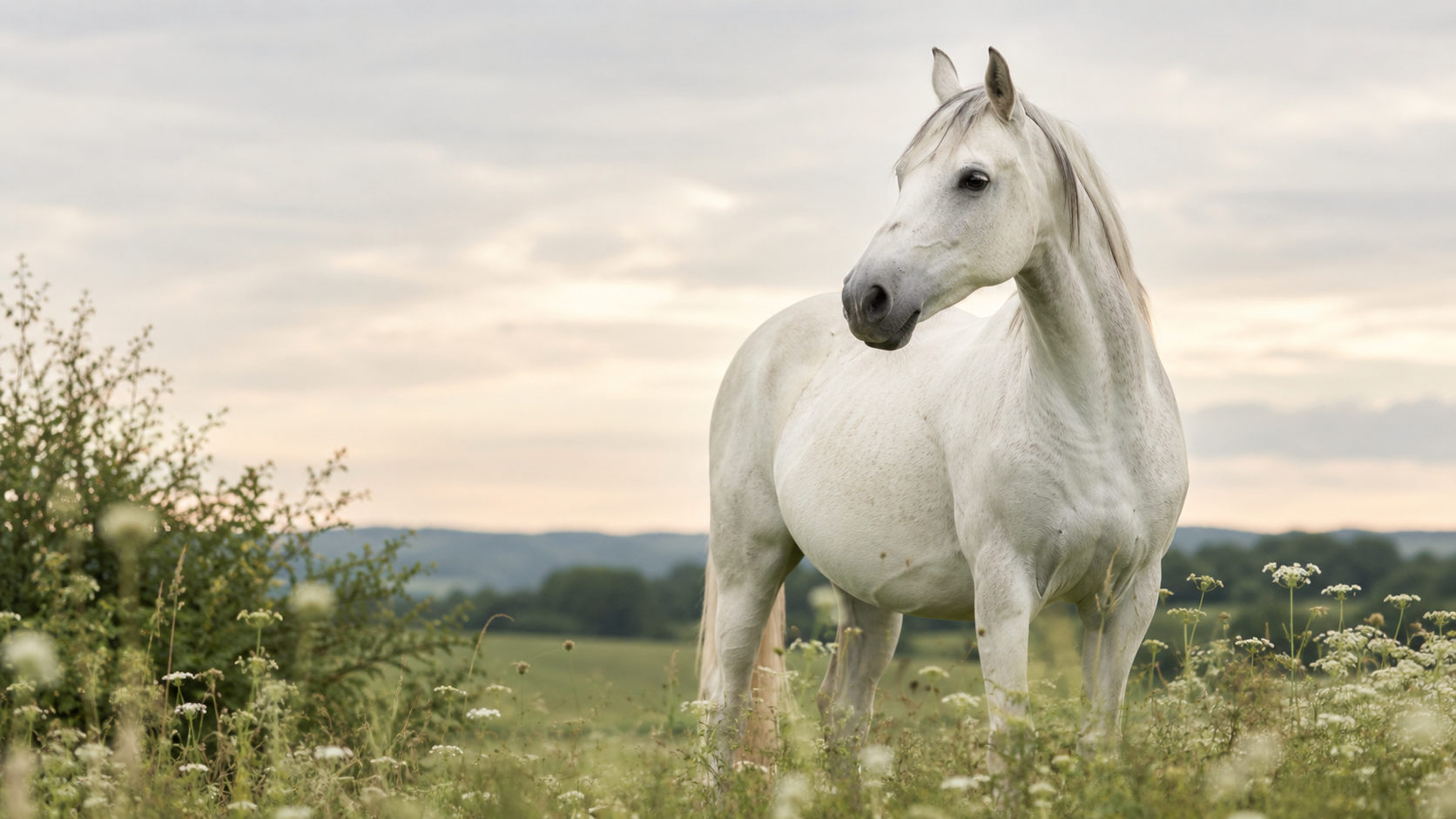
The breed at a glance
The Barb is renowned for its courageous, willing, and resilient temperament. It is intelligent, loyal, and close to humans, making it an excellent companion. It is also very enduring and versatile in work.
- Category
- saddle horse
- Origin
- North Africa (Morocco, Algeria, Tunisia, Libya) · Antiquity / Early Middle Ages
- Height at withers
- 145–160 cm
- Weight
- 400–550 kg
- Lifespan
- 25-30 years
- Common coats
- grey, bay, chestnut, black
- Disciplines
- Endurance, TREC, Dressage, Trail riding
- Other names
- Barb, Berber Horse
Origin and history
The Barb is a very ancient breed, with origins dating back to Antiquity in North Africa. It is considered one of the foundational breeds for many modern saddle horses, notably the Thoroughbred. Its robustness and endurance made it an essential war and travel horse for the Berber peoples. The breed has been recognized, and preservation efforts are being carried out by international associations.
Conformation and physique
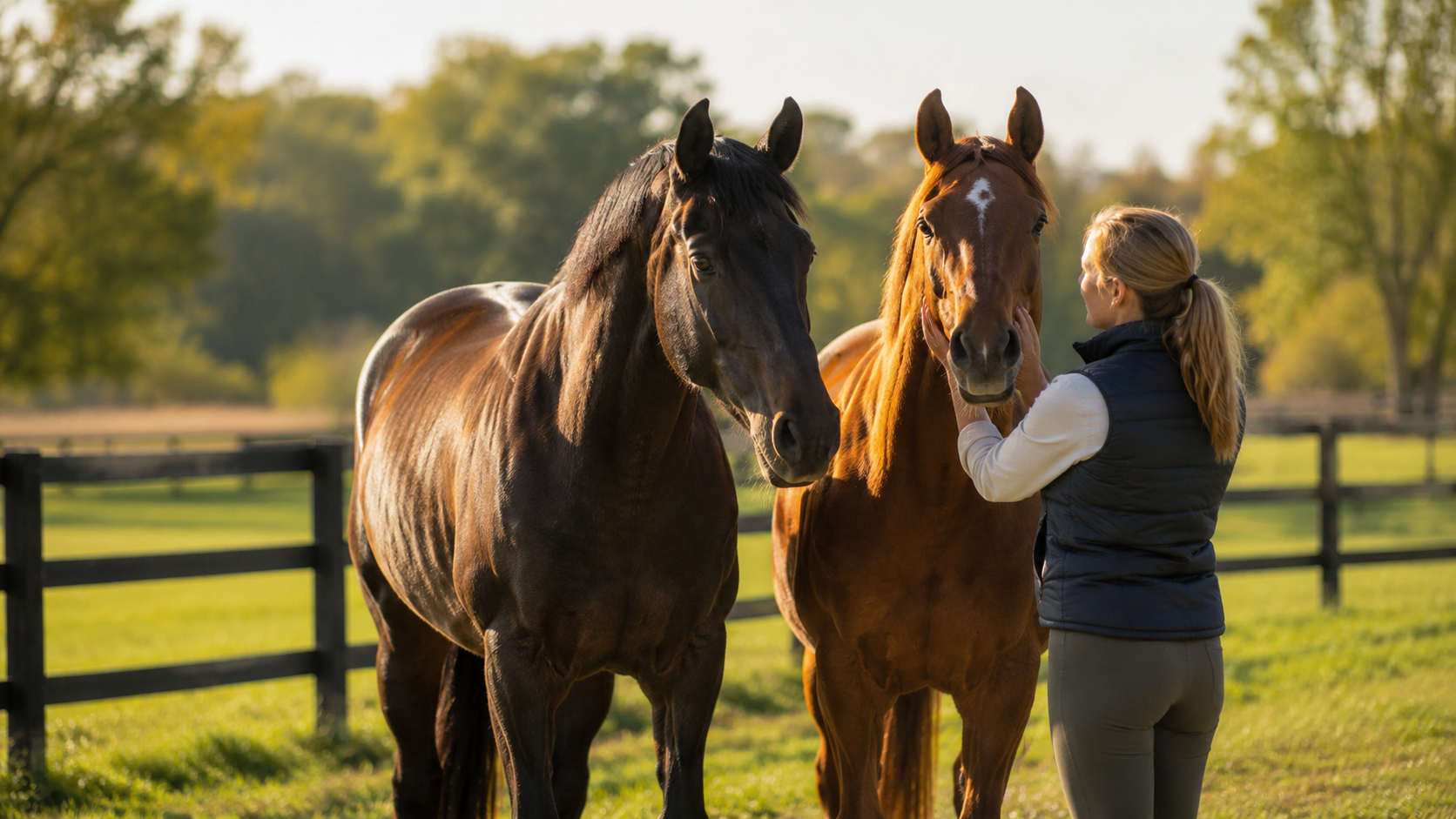
The Barb is a medium-sized horse, compact and powerful, with solid bone structure. It has a harmonious silhouette, typical of oriental saddle horses, but with more developed musculature.
Head rather long and strong, with a straight or slightly convex (ram-like) profile. The eyes are expressive, the ears medium-sized and well-set. The muzzle is broad.
Neck short and thick, well-muscled, often arched (stag-like) in males. The withers are not very prominent, blending smoothly into the back.
Back short and strong, often swaybacked. The topline is solid. Chest broad and deep. Croup sloping and muscular, sometimes double.
Legs solid and clean, with large and well-defined joints. Cannons are short. Hooves are hard and well-formed. Feathering is sparse.
- Common coats: grey, bay, chestnut, black
Temperament and aptitudes
The Barb is renowned for its courageous, willing, and resilient temperament. It is intelligent, loyal, and close to humans, making it an excellent companion. It is also very enduring and versatile in work.
The gaits are energetic, expansive, and supple, with good impulsion. The walk is active, the trot extended, and the canter is particularly enduring and balanced, characteristic of a desert horse.
- Uses: warhorse, pack and travel horse, versatile riding horse, equestrian trail riding, dressage, endurance riding, cattle work, equestrian show
- Disciplines: Endurance, TREC, Dressage, Trail riding, Working equitation
Feeding the Barb
The Barb is a horse with an efficient metabolism, accustomed to harsh conditions and limited resources. It utilizes coarse forages very well and tends to gain weight if its diet is not adapted to its activity level. A supply of quality forage (hay, grass) should form the basis of its ration. Concentrates are only necessary for intense work or specific needs and should be given sparingly to avoid overfeeding.
Due to its efficient metabolism, the Barb can be predisposed to laminitis and Equine Metabolic Syndrome (EMS) if overfed or sedentary. It is therefore important to monitor its weight and limit sugar and starch intake, especially for less active horses.
With Equio, every feed, supplement or treat is read against the horse's real profile (age, weight, Body Condition Score, conditions) — useful for a Barb as soon as a metabolic or digestive sensitivity is known.

Health and points to watch
Particular attention should be paid to weight management and diet to prevent metabolic disorders. The robustness of its limbs and hooves generally makes it resistant to locomotor affections, but regular and appropriate trimming is essential.
- More frequent conditions: laminitis (if overfed), Equine Metabolic Syndrome (EMS)
Care and grooming
The Barb is a hardy horse that requires little specific maintenance. Its hard hooves need regular trimming but are generally resilient. Mane and tail are often abundant and can be detangled regularly. Its coat is easy to care for and requires no special attention, except during shedding season. Good general hygiene and foot monitoring are the basics of its care.
Did you know?
- The Barb is one of the three foundation sires of the Thoroughbred, along with the Arabian and the Turkoman.
- It played a crucial role in the development of many European breeds, particularly in Spain and Portugal.
- Barb horses were renowned for their ability to cover long distances in the desert with little water and food.
The Barb and how to track it
The Barb breed is present in France, mainly thanks to passionate breeders and associations working for its promotion and preservation. It is appreciated for trail riding, endurance, and leisure riding.
Equio lets you build a complete profile for a Barb: identity, weight, Body Condition Score, feeding, conditions, care reminders (vaccines, worming, trimming) and an exportable health log. The breed sets the identity; everyday decisions still depend on the real horse and your vet's advice.
- Record the activity level: rest, leisure, sport or breeding
- Add known conditions or sensitivities
- Scan feeds, plants and care products
- Keep reminders (vaccines, worming, trimming)
- Prepare a PDF export before a vet appointment
Frequently asked questions
Is the Barb a good horse for beginners?
Yes, the Barb is often recommended for beginner or intermediate riders due to its calm temperament, docility, and willingness to cooperate. It is also very safe and enduring outdoors.
What is the difference between a Barb and an Arabian?
Although both breeds are of Oriental origin, the Barb is generally more compact, more muscular, and has a longer, sometimes convex head, whereas the Arabian is finer, more elegant, with a concave head and a high-set tail. The Barb is renowned for its strength and endurance, the Arabian for its speed and elegance.
Is the Barb suitable for endurance riding?
Absolutely. Endurance is one of the Barb's preferred disciplines. Its robustness, resistance to fatigue, ability to recover quickly, and mental fortitude make it an excellent endurance horse, capable of covering very long distances.
What is the average price of a Barb horse?
The price of a Barb horse can vary considerably depending on its age, training level, lineage, and location. Generally, expect to pay between 3,000 € and 8,000 € for a well-trained leisure horse, but breeding or competition prospects can reach higher prices.
How to recognize a true Barb?
A true Barb can be recognized by its characteristic morphology: a long, strong head, a straight or slightly convex profile, a short, thick neck, a short, strong back, a sloping croup, solid limbs, and hard hooves. Its courageous and enduring temperament is also a distinctive trait.