
Field Horsetail
Equisetum arvense
Horse
Severe
Any suspected ingestion is an immediate veterinary emergency. Chronic intoxication: ingestion of hay containing 20% horsetail for 2 to 4 weeks.
Equio informs, it does not diagnose. When in doubt, call your vet.
What to do now
- Antidote
- Vitamin B1 (thiamine) administered by veterinary means.
- Time to signs
- Several days to several weeks of continuous ingestion
- Prognosis
- Good if vitamin B1 treatment is initiated early. Fatal if the stage of coma or exhaustion is reached.
- Immediately stop feeding contaminated hay.
- Contact a veterinarian urgently.
- Prepare information on the amount ingested and duration of exposure.
Its ID card
- Height
- 0.1 m – 0.6 m
- Flowering
- Sporangia develop on distinct fertile stems in early spring (March-April), before the appearance of sterile vegetative stems.
- Toxic parts
- Entire aerial part (stems).
- Toxin
- Enzyme (Thiaminase), alkaloids (Equisetine, Palustrine).
- Habitat
- Wet meadows, compacted soils, riverbanks, embankments, ditches.
- Soil indicator
- Clayey, wet, poorly drained, compacted soils.
- Regions
- Entire Europe
- In hay
- Yes — stays toxic once dried
- Palatability
- Avoided when growing due to its roughness and hardness (silica). Very often consumed unknowingly by horses in hay.
When the risk rises
All year round (via contaminated winter hay).
Spotting it in the field
Marsh Horsetail (Equisetum palustre, even more toxic!). — smell : faint, slightly acrid smell when crushed.
- Plant without true leaves or flowers.
- Green, jointed, grooved, and rough stems.
- Resembles a small, thread-like fir tree.
- Rustles under the fingers due to silica content.
Signs to watch for
Chronic (cumulative) toxicity
Dose : Approximately 1 to 2% of the horse's body weight in fresh plant over a prolonged period (several weeks). For a 500 kg horse, this represents 5 to 10 kg of fresh plant per day.
- Hypersensitivity to noise and touch
- Loss of hindlimb coordination
- Severe weight loss
- Rapid and weak pulse
- Recumbent horse with paddling movements
Who is affected
Other species : Cattle and sheep are much less sensitive than horses.
In pregnant mares : fetal weakness linked to maternal deficiency.
Getting rid of it
Method : Manually pull the plant before spore formation, wearing gloves due to its roughness. Soil drainage is essential to limit its regrowth.
- Carefully inspect hay before feeding.
- Identify and eradicate horsetail from pastures.
- Avoid harvesting hay from infested areas.
Frequently asked questions
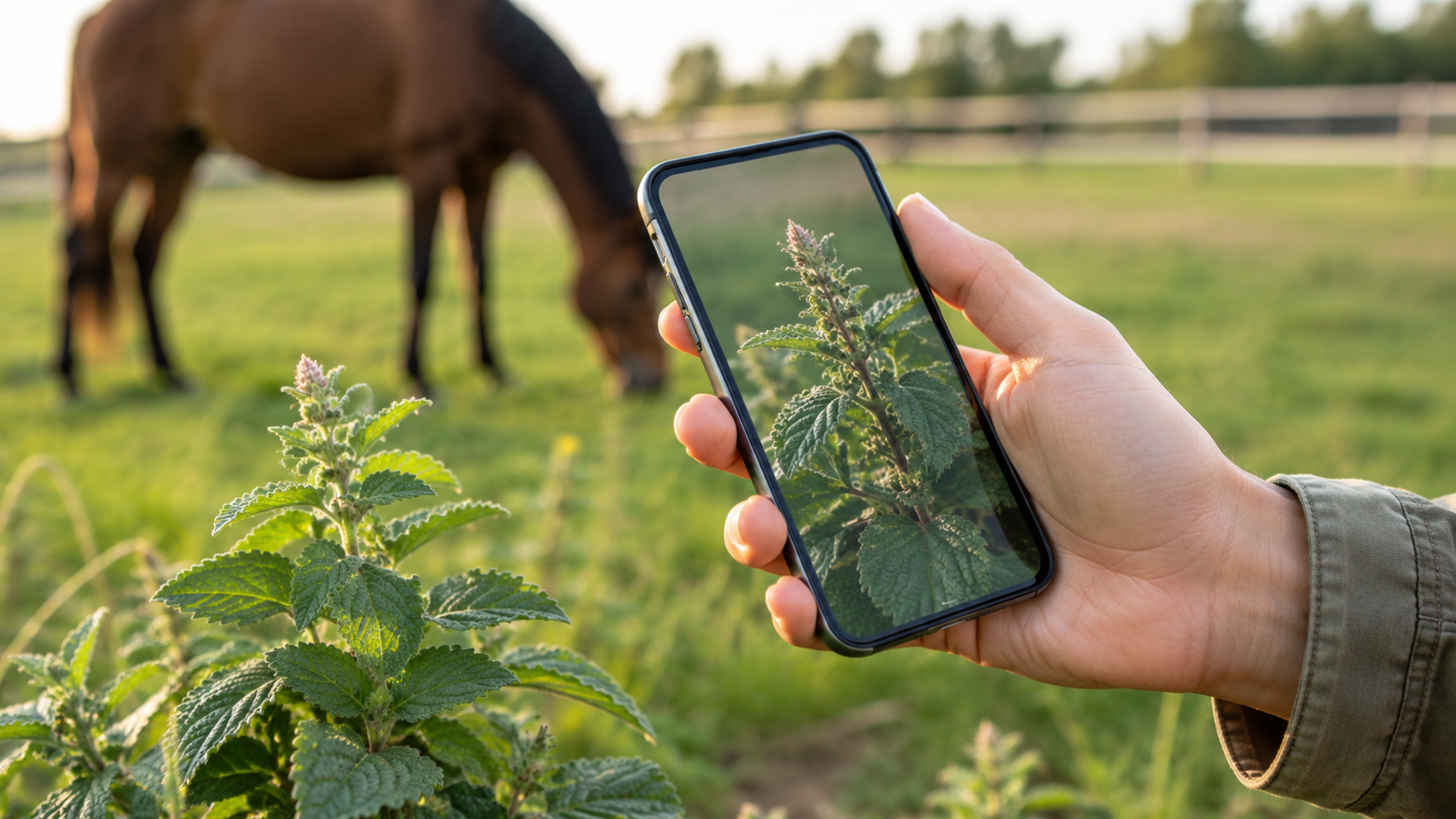
Can Equio identify Field Horsetail from a photo?
It can help organize visual clues, but plant identification must remain cautious when horse health is at stake.
Is Field Horsetail dangerous in hay?
This entry flags hay vigilance. Isolate suspicious forage and ask for professional advice if exposure is possible.
This page is informational. If ingestion is likely, if signs appear, or if the horse is fragile, contact a veterinarian immediately.