
Horse breed
Welara
The Welara breed is the result of a deliberate cross between the Welsh pony and the Arabian horse. The objective was to combine the beauty, elegance, and endurance of the Arabian with the gentle temperament and versatility of the Welsh pony.
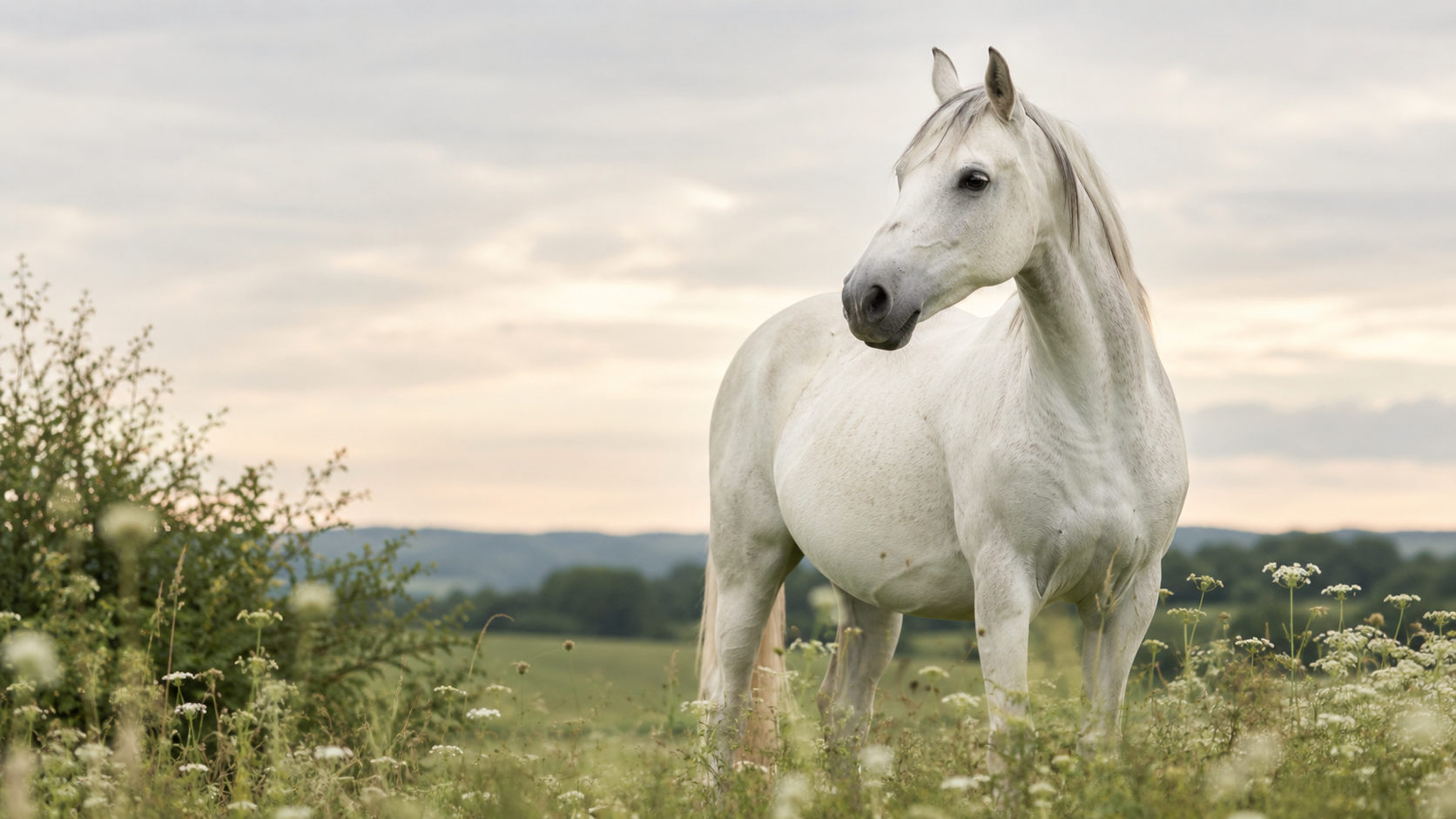
The breed at a glance
The Welara is renowned for its intelligent, gentle, and willing temperament. It is easy to train, cooperative, and suitable for both children and adults, making it an excellent family and sport pony.
- Category
- pony
- Origin
- United States · 1970s
- Height at withers
- 117–147 cm
- Weight
- 250–400 kg
- Lifespan
- 25-30 years
- Common coats
- bay, chestnut, grey, black, palomino, dun, roan
- Disciplines
- dressage, show jumping, eventing, hunting
Origin and history
The Welara breed is the result of a deliberate cross between the Welsh pony and the Arabian horse. The objective was to combine the beauty, elegance, and endurance of the Arabian with the gentle temperament and versatility of the Welsh pony. The first Welara foal was born in 1971, and the Welara Pony Registry was founded in 1981 to register and promote the breed. It is recognized for its harmonious conformation and athletic abilities.

Conformation and physique
The Welara is an elegant and athletic saddle-type pony, with fine but strong bone. It presents a harmonious silhouette, combining the refinement of the Arabian and the robustness of the Welsh.
The head is refined, often with a concave or straight profile, large expressive eyes, and wide nostrils. The ears are small and well-placed.
The neck is long, well-arched, and set high, blending harmoniously into well-defined withers.
The back is short and strong, the topline is taut. The chest is deep and broad, and the croup is long and muscular, often slightly sloped.
The limbs are fine, with clean joints and well-defined tendons. The hooves are hard and well-formed. Feathering is generally absent or very light.
- Common coats: bay, chestnut, grey, black, palomino, dun, roan
Temperament and aptitudes
The Welara is renowned for its intelligent, gentle, and willing temperament. It is easy to train, cooperative, and suitable for both children and adults, making it an excellent family and sport pony.
The gaits are fluid, supple, and energetic, with good amplitude and natural impulsion. The walk is active, the trot is airy, and the canter is balanced.
- Uses: recreational riding, family pony, equestrian competition, driving
- Disciplines: dressage, show jumping, eventing, hunting, western riding, driving
Feeding the Welara
The Welara, originating from hardy breeds, generally has a rather efficient metabolism. It tends to utilize its feed well and can be prone to obesity if overfed or lacking exercise. A diet based on good quality forage (hay or grass) in sufficient quantity is paramount. Concentrates are only necessary in cases of intense work or specific needs (growth, lactation), and must be adapted to avoid excesses of sugars and starch.
Like many ponies and breeds with efficient metabolisms, the Welara can be predisposed to Equine Metabolic Syndrome (EMS) and laminitis, especially in cases of overweight or unlimited access to rich grass. Careful dietary management is crucial to prevent these conditions.
With Equio, every feed, supplement or treat is read against the horse's real profile (age, weight, Body Condition Score, conditions) — useful for a Welara as soon as a metabolic or digestive sensitivity is known.

Health and points to watch
Regular monitoring of weight and body condition is essential to prevent obesity and associated risks like laminitis. Particular attention should be paid to hoof quality and parasite management, as with any equine.
- More frequent conditions: laminitis, Equine Metabolic Syndrome (EMS)
Care and grooming
Welara care is relatively standard. Regular hoof trimming is necessary to maintain their integrity. The mane and tail can be thick and require regular detangling. The coat is easy to maintain, and clipping is generally only required for ponies in intense work or competition.
Did you know?
- The name 'Welara' is a contraction of the names of its two founding breeds: Welsh and Arabian.
- The Welara is often described as having the 'head of an Arabian on the body of a Welsh'.
- There are different sections within the Welara registry, based on the percentage of Arabian and Welsh blood.
The Welara and how to track it
The Welara breed is not widespread in France, where breeding is confidential. The few individuals present are mainly used for leisure riding or amateur sport.
Equio lets you build a complete profile for a Welara: identity, weight, Body Condition Score, feeding, conditions, care reminders (vaccines, worming, trimming) and an exportable health log. The breed sets the identity; everyday decisions still depend on the real horse and your vet's advice.
- Record the activity level: rest, leisure, sport or breeding
- Add known conditions or sensitivities
- Scan feeds, plants and care products
- Keep reminders (vaccines, worming, trimming)
- Prepare a PDF export before a vet appointment
Frequently asked questions
What is the maximum height of a Welara?
The maximum height of a Welara is 147 cm at the withers, which classifies it as a pony. However, there are variations depending on bloodlines and the percentages of Arabian and Welsh blood.
Is the Welara a good pony for children?
Yes, the Welara is generally considered an excellent pony for children thanks to its gentle, intelligent, and cooperative temperament. Its versatility makes it suitable for learning and various disciplines.
What are the main qualities of the Welara?
The main qualities of the Welara include its elegance, athleticism, balanced temperament, versatility in many equestrian disciplines, and its robustness inherited from its founding breeds.
Is the Welara easy to care for?
Yes, the Welara is relatively easy to care for. It is robust, has an efficient metabolism, and does not require specific care beyond routine pony maintenance, provided its diet is monitored to prevent obesity.
Where can Welaras be found in France?
Welara are rare in France. It is possible to find them through specialized breeders or private advertisements, but the search may require looking abroad or through specific contacts.