
Horse breed
Vlaamperd
The Vlaamperd is a South African breed developed from the 1940s onwards. It originated from crosses between the Friesian, Hackney, Thoroughbred, and Cape Harness Horse.
The breed at a glance
The Vlaamperd is renowned for its willing, intelligent, and cooperative temperament. It is courageous and a quick learner, making it a pleasant horse to work with and suitable for various disciplines.
- Category
- saddle horse
- Origin
- South Africa · Mid-20th century
- Height at withers
- 142–163 cm
- Lifespan
- 20-25 years
- Common coats
- black, bay, chestnut
- Disciplines
- dressage, show jumping, competition driving, recreational riding
Origin and history
The Vlaamperd is a South African breed developed from the 1940s onwards. It originated from crosses between the Friesian, Hackney, Thoroughbred, and Cape Harness Horse. The objective was to create an elegant and versatile riding horse, capable of performing under saddle and in harness. The breed was officially recognized in South Africa.

Conformation and physique
The Vlaamperd is a medium-sized horse, elegant and athletic, with a strong yet refined bone structure. It presents a harmonious silhouette, combining power and finesse.
The head is well-proportioned, with a straight or slightly convex profile. The eyes are large and expressive, the ears medium-sized and well-placed. The muzzle is broad and the nostrils open.
The neck is long, well-muscled, and arched, blending harmoniously into a well-defined and extended wither. It contributes to the horse's overall elegance.
The back is short and strong, the topline is taut and muscular. The chest is deep and broad, the ribs well-sprung. The croup is long, muscular, and slightly sloped.
The limbs are clean, strong, and well-muscled, with broad joints and well-defined tendons. The cannons are short and the pasterns are of medium length. Feathering is generally sparse. The hooves are hard and well-formed.
- Common coats: black, bay, chestnut
Temperament and aptitudes
The Vlaamperd is renowned for its willing, intelligent, and cooperative temperament. It is courageous and a quick learner, making it a pleasant horse to work with and suitable for various disciplines.
The gaits are ample, supple, and energetic, with good impulsion. The walk is regular, the trot is elevated and airy, and the canter is balanced and comfortable.
- Uses: saddle horse, driving, dressage, show jumping, trail riding
- Disciplines: dressage, show jumping, competition driving, recreational riding
Feeding the Vlaamperd
The Vlaamperd is a sport horse that, depending on its activity level, can have moderate to high energy requirements. It needs a balanced diet, rich in good quality forage (hay or grass), and supplemented with concentrates appropriate for its workload. It is not particularly prone to becoming overweight if properly exercised.
There are no specific documented predispositions to dietary sensitivities or particular metabolic risks for the Vlaamperd breed. A balanced diet tailored to its workload remains paramount for preventing general metabolic disorders.
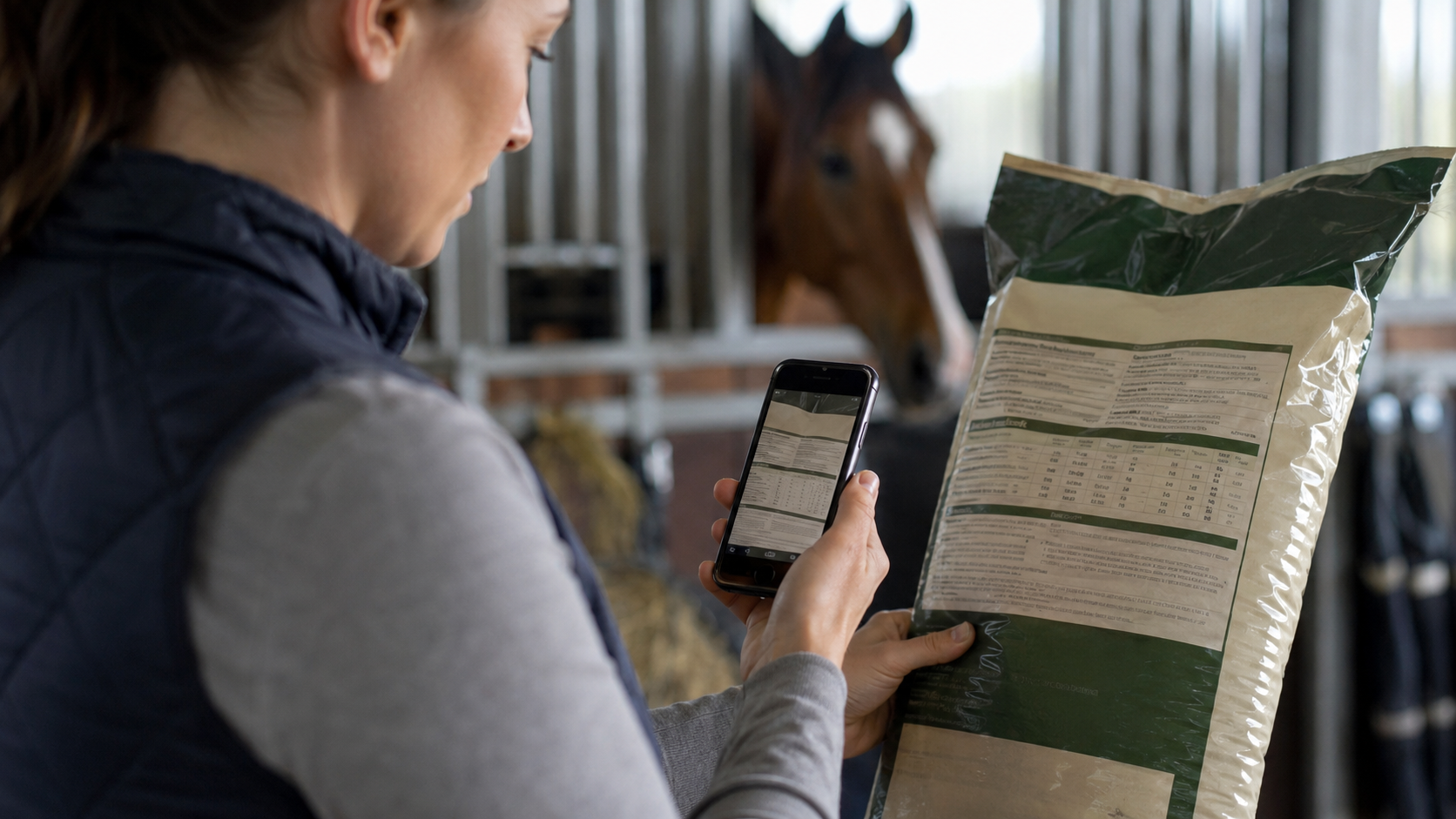
With Equio, every feed, supplement or treat is read against the horse's real profile (age, weight, Body Condition Score, conditions) — useful for a Vlaamperd as soon as a metabolic or digestive sensitivity is known.

Health and points to watch
As with any sport horse, particular attention must be paid to the musculoskeletal system (joints, tendons) and hoof quality. Regular veterinary check-ups and a deworming and vaccination program are essential.
Care and grooming
Vlaamperd care is standard: regular hoof trimming (every 6-8 weeks), daily grooming of the coat to maintain its shine. The mane and tail can be left long or maintained according to preference. Particular attention should be paid to the feathers, if present, to prevent dermatitis.
Did you know?
- The name 'Vlaamperd' means 'Flemish horse' in Afrikaans, referring to the Friesian influence in its development.
- The breed is particularly valued in South Africa for its versatility and elegance in driving.
- The Vlaamperd is often compared to the Friesian for its appearance and black coat, but it is generally lighter and more athletic.
The Vlaamperd and how to track it
The Vlaamperd breed is very rare in France and is not significantly bred there. Its presence is anecdotal, limited to a few imported individuals.
Equio lets you build a complete profile for a Vlaamperd: identity, weight, Body Condition Score, feeding, conditions, care reminders (vaccines, worming, trimming) and an exportable health log. The breed sets the identity; everyday decisions still depend on the real horse and your vet's advice.
- Record the activity level: rest, leisure, sport or breeding
- Add known conditions or sensitivities
- Scan feeds, plants and care products
- Keep reminders (vaccines, worming, trimming)
- Prepare a PDF export before a vet appointment
Frequently asked questions
What is the temperament of the Vlaamperd?
The Vlaamperd is known for its willing, intelligent, and cooperative temperament. It is a courageous and easy-to-train horse, which makes it pleasant for various equestrian activities.
Is the Vlaamperd a good horse for driving?
Yes, the Vlaamperd is particularly valued for driving. Its elevated gaits, elegance, and temperament make it an excellent driving horse, capable of competitive performance.
What are the most common coat colors of the Vlaamperd?
The most common coat colors for the Vlaamperd are black, bay, and chestnut. Black is particularly sought after and contributes to its elegant appearance, reminiscent of the Friesian.
Is the Vlaamperd suitable for beginner riders?
Due to its intelligence and willingness, a well-trained Vlaamperd can be suitable for intermediate riders. For beginners, professional guidance is recommended, as it can have a spirited temperament.
Where can Vlaamperds be found outside South Africa?
The Vlaamperd is primarily bred in South Africa. It is very rare outside its country of origin, and acquiring one in Europe or elsewhere would generally require importation.