
Horse breed
Virginia Highlander
The Virginia Highlander breed was developed in the 1960s in Virginia, USA, by William S. Pugh.

The breed at a glance
It is an intelligent, courageous, and willing pony, with a calm and cooperative temperament. It is known for its kindness and patience, making it an excellent companion for riders of all ages and levels.
- Category
- pony
- Origin
- United States · 1960s
- Height at withers
- 117–147 cm
- Weight
- 270–450 kg
- Lifespan
- 25-30 years
- Common coats
- bay, chestnut, black, grey, palomino, dun, roan, cream
- Disciplines
- equestrian trail riding, TREC, leisure driving, Western pleasure riding
Origin and history
The Virginia Highlander breed was developed in the 1960s in Virginia, USA, by William S. Pugh. The objective was to create a versatile, robust pony with additional gaits. It originated from crosses between Appalachian Mountain Ponies, Welsh Ponies, and Icelandic Horses. The breed was officially recognized by the Virginia Highlander Association.
Conformation and physique
The Virginia Highlander is a medium-sized pony, compact and muscular, with strong bone structure. It has a harmonious and balanced silhouette, typical of mountain ponies, but with a touch of refinement.
The head is well-proportioned, with a broad forehead, expressive eyes, and a straight or slightly concave bridge of the nose. The ears are medium-sized and well-placed.
The neck is of medium length, well-muscled and well-set, blending harmoniously into a well-defined wither.
The body is compact with a short, strong back, a solid topline, and a deep chest. The croup is rounded and muscular.
The limbs are robust, with strong joints and short cannons. The hooves are hard and well-formed. Light feathering may be present.
- Common coats: bay, chestnut, black, grey, palomino, dun, roan, cream
Temperament and aptitudes
It is an intelligent, courageous, and willing pony, with a calm and cooperative temperament. It is known for its kindness and patience, making it an excellent companion for riders of all ages and levels.
The Virginia Highlander is renowned for its natural and comfortable gaits, including the walk, trot, canter, as well as additional gaits such as the 'single-foot' (a four-beat lateral gait) and the 'running walk'.
- Uses: recreational riding, trail riding, light work riding, driving, family horse
- Disciplines: equestrian trail riding, TREC, leisure driving, Western pleasure riding
Feeding the Virginia Highlander
The Virginia Highlander is a hardy and economical pony, adapted to simple diets. It tends to be an easy keeper and can easily become overweight if overfed. A diet based primarily on good quality forage (hay or grass) is usually sufficient. Concentrates are only necessary in cases of intense work or specific needs (growth, lactation), and should be given sparingly to avoid excess weight.
Due to its efficient metabolism, the Virginia Highlander can be predisposed to Equine Metabolic Syndrome (EMS) and laminitis if subjected to a diet too rich in sugars and starch, or if it is overweight. Careful management of diet and weight is crucial.
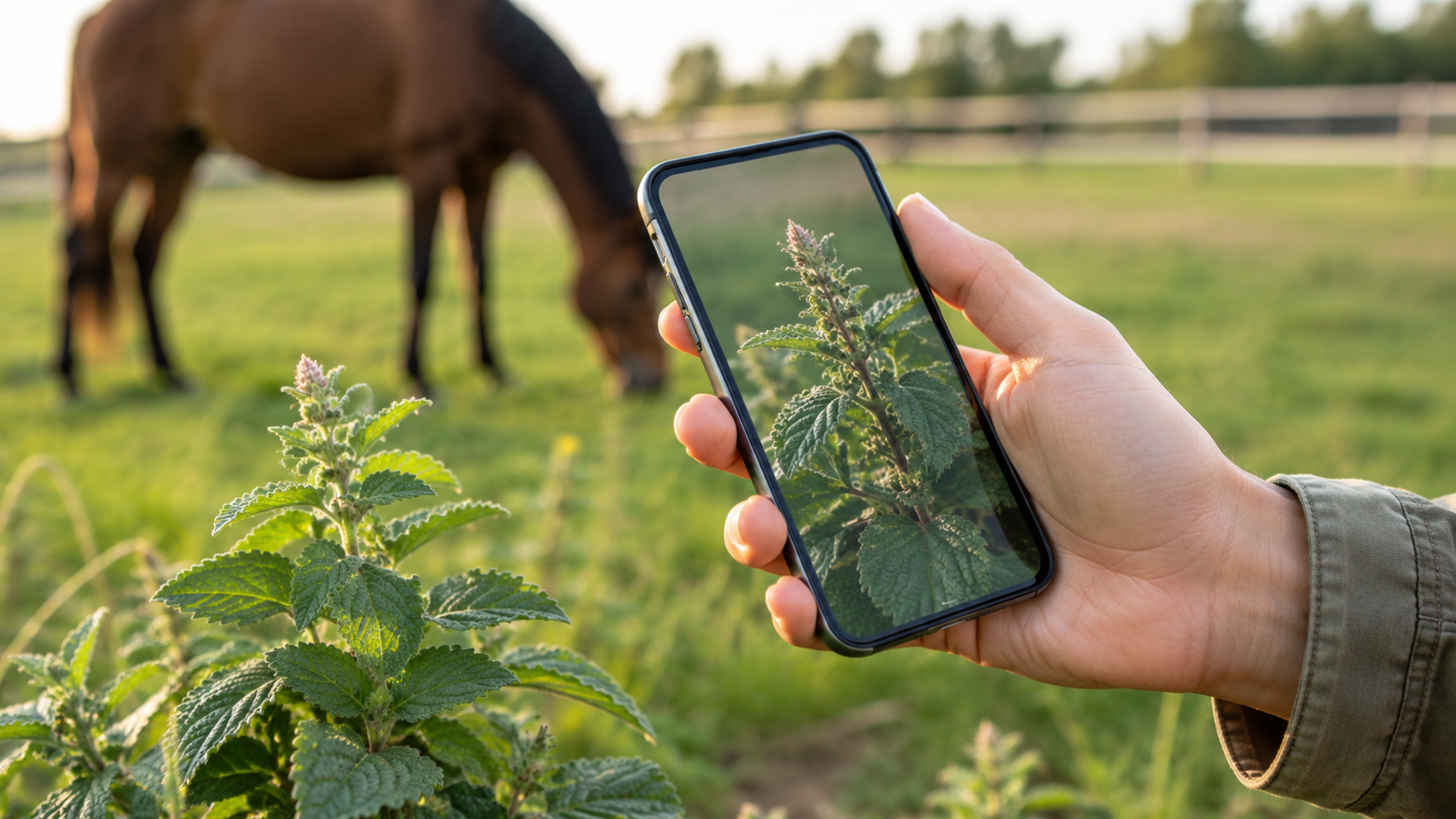
With Equio, every feed, supplement or treat is read against the horse's real profile (age, weight, Body Condition Score, conditions) — useful for a Virginia Highlander as soon as a metabolic or digestive sensitivity is known.
Health and points to watch
Regular monitoring of weight and body condition is essential to prevent metabolic problems. It is important to maintain regular physical activity and adapt the diet to avoid overweight, especially on rich pastures. Particular attention should be paid to hoof health.
- More frequent conditions: laminitis, Equine Metabolic Syndrome (EMS)
Care and grooming
Virginia Highlanders are easy-care ponies. Their robust hooves require regular trimming but are generally low-maintenance. The mane and tail can be thick and require regular brushing to prevent tangles. The coat is dense and may require more frequent brushing during shedding periods. Clipping is generally not necessary except for ponies in intense work.
Did you know?
- The Virginia Highlander is one of the few pony breeds to possess natural additional gaits, which makes it particularly comfortable to ride.
- The breed was developed with the idea of creating an ideal 'family horse', capable of adapting to various riders and activities.
- Despite its pony size, it is capable of carrying adults thanks to its robust conformation and strong bone structure.
The Virginia Highlander and how to track it
The Virginia Highlander breed is very rare in France and Europe. There is no significant breeding or established population on French territory. The few individuals present would be isolated imports.
Equio lets you build a complete profile for a Virginia Highlander: identity, weight, Body Condition Score, feeding, conditions, care reminders (vaccines, worming, trimming) and an exportable health log. The breed sets the identity; everyday decisions still depend on the real horse and your vet's advice.
- Record the activity level: rest, leisure, sport or breeding
- Add known conditions or sensitivities
- Scan feeds, plants and care products
- Keep reminders (vaccines, worming, trimming)
- Prepare a PDF export before a vet appointment
Frequently asked questions
Is the Virginia Highlander suitable for children?
Yes, the Virginia Highlander is renowned for its calm, patient, and cooperative temperament, making it an excellent choice for children and beginner riders. Its pony size is also an advantage for young riders.
What are the specific gaits of the Virginia Highlander?
In addition to the classic gaits (walk, trot, canter), the Virginia Highlander possesses natural additional gaits such as the 'single-foot' and the 'running walk'. These four-beat gaits are very comfortable for the rider and allow covering long distances without fatigue.
Is the Virginia Highlander a good trail horse?
Absolutely. Its robustness, endurance, sure-footedness, and comfortable gaits make it an excellent companion for trail riding. It is capable of adapting to different terrains and climates.
What is the average price of a Virginia Highlander?
The price of a Virginia Highlander can vary considerably depending on age, training level, bloodline, and location. Due to its rarity outside the United States, prices may be higher and include import costs. It is difficult to give a precise average price for France.
Is the Virginia Highlander easy to care for?
Yes, it is a hardy and economical breed. It requires basic care such as regular hoof trimming, brushing, and a diet adapted to its efficient metabolism to avoid overweight. It is generally robust and disease-resistant.