
Horse breed
Lundy Pony
The Lundy Pony is a relatively recent breed, developed on Lundy Island, off the coast of Devon, England. It was created in the 1920s by Martin Coles Harman, the island's owner, who wanted a robust and versatile pony for work and transport on the island.

The breed at a glance
The Lundy Pony is renowned for its calm, intelligent, and willing temperament. It is courageous, reliable, and easy to handle, making it an excellent companion for children and adults. It is also very hardy and adapts well to various situations.
- Category
- pony
- Origin
- United Kingdom · Mid-20th century
- Height at withers
- 122–137 cm
- Lifespan
- 25-30 years
- Common coats
- bay, chestnut, grey, black
- Disciplines
- dressage (club level), show jumping (club level), pony games, TREC
Origin and history
The Lundy Pony is a relatively recent breed, developed on Lundy Island, off the coast of Devon, England. It was created in the 1920s by Martin Coles Harman, the island's owner, who wanted a robust and versatile pony for work and transport on the island. The breed originated from crosses between New Forest Ponies, Connemara Ponies, and Welsh Ponies. The studbook was established in 1974.

Conformation and physique
The Lundy Pony is a medium-sized pony, well-built and compact, with strong bone. It has a harmonious silhouette, typical of hardy working ponies.
The head is well-proportioned, with a straight or slightly concave profile. The eyes are large and expressive, and the ears are medium-sized and well-set.
The neck is of medium length, well-muscled and set on, blending harmoniously into a well-defined wither.
The back is short and strong, and the topline is taut. The chest is deep and wide, and the croup is muscular and slightly sloped.
The limbs are strong, with well-defined joints and correct conformation. The cannons are short, and the hooves are hard and well-formed. Feathers are generally sparse.
- Common coats: bay, chestnut, grey, black
Temperament and aptitudes
The Lundy Pony is renowned for its calm, intelligent, and willing temperament. It is courageous, reliable, and easy to handle, making it an excellent companion for children and adults. It is also very hardy and adapts well to various situations.
The gaits are free, active, and regular, with good ground cover. The walk is energetic, the trot is supple, and the canter is balanced, reflecting its versatility.
- Uses: recreational riding, driving, light agricultural work, packing, children's riding
- Disciplines: dressage (club level), show jumping (club level), pony games, TREC, trail riding
Feeding the Lundy Pony
The Lundy Pony is a hardy pony with an efficient metabolism, adapted to sometimes harsh living conditions. It is prone to obesity if overfed. Its diet should primarily consist of good quality forage (grass, hay) in sufficient quantities. Concentrates are only necessary in cases of intense work or specific needs (growth, lactation), and should be given sparingly to avoid metabolic problems.
Due to its efficient metabolism, the Lundy Pony can be predisposed to laminitis and Equine Metabolic Syndrome (EMS) if fed diets too rich in sugars and starch, or if it is overweight. Careful monitoring of its weight and an appropriate diet are essential.
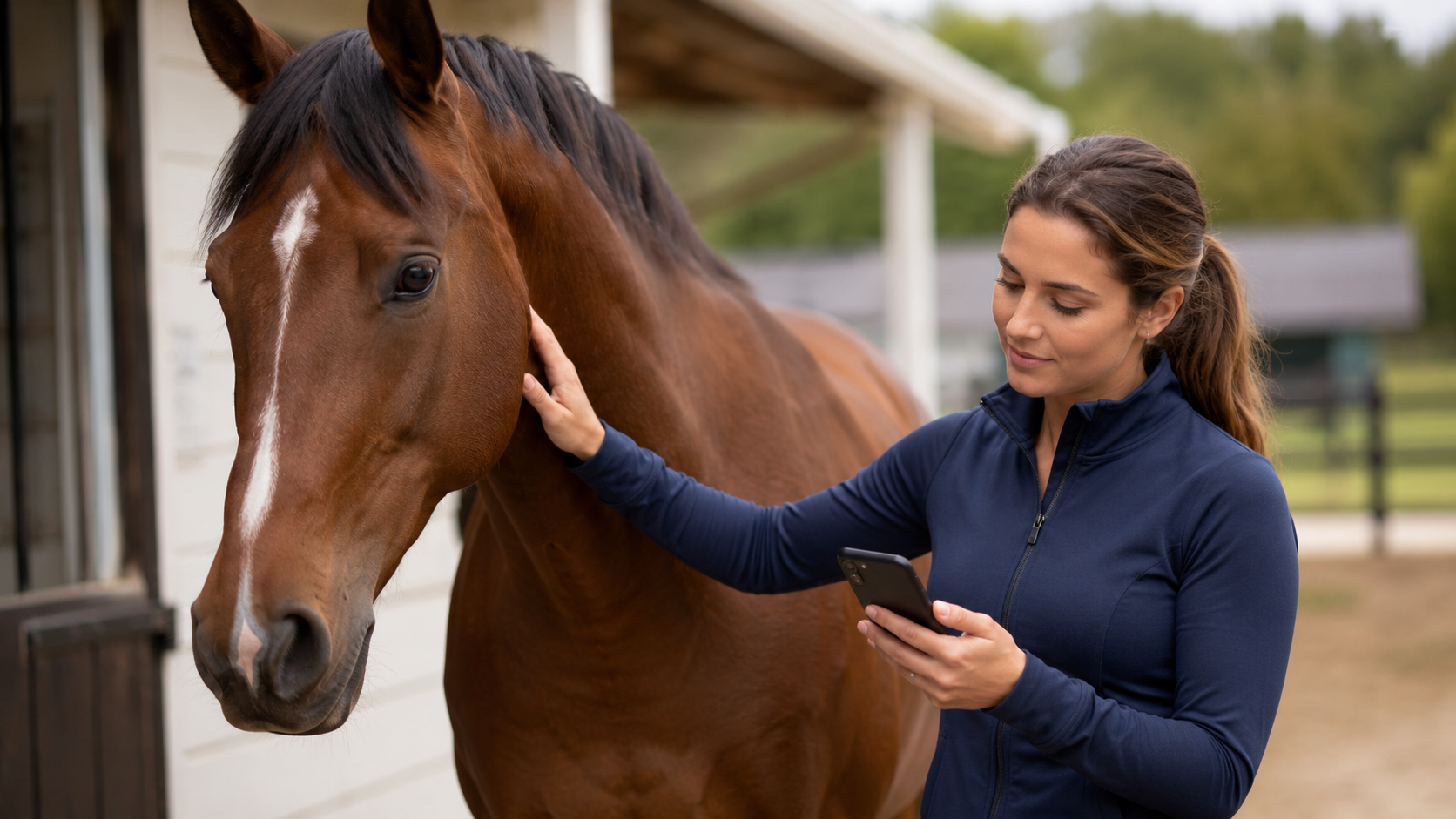
With Equio, every feed, supplement or treat is read against the horse's real profile (age, weight, Body Condition Score, conditions) — useful for a Lundy Pony as soon as a metabolic or digestive sensitivity is known.
Health and points to watch
It is important to regularly monitor the Lundy Pony's weight and adjust its diet to prevent obesity and associated metabolic conditions. Particular attention should be paid to hoof quality, which are generally robust but require regular trimming.
- More frequent conditions: laminitis, Equine Metabolic Syndrome (EMS)
Care and grooming
The care of the Lundy Pony is relatively simple. Its naturally hard hooves require regular trimming every 6 to 8 weeks. Its mane and tail can be left natural or maintained according to use. Its dense coat protects it well from the elements and does not require special clipping, except for intense work in winter. Regular brushing is sufficient to maintain the cleanliness of the coat.
Did you know?
- Lundy Island, from which the breed takes its name, is a nature reserve and a Site of Special Scientific Interest, which has helped preserve the purity of the breed.
- Lundy Ponies are known for their ability to live semi-feral on the island, adapting perfectly to its harsh and windy environment.
- The Lundy Pony is sometimes nicknamed the 'Island Pony' due to its unique island origin.
The Lundy Pony and how to track it
The Lundy Pony is a rare breed outside the United Kingdom. Its presence in France is very limited, with a few individuals imported for leisure breeding, but there is no French studbook or significant breeding program.
Equio lets you build a complete profile for a Lundy Pony: identity, weight, Body Condition Score, feeding, conditions, care reminders (vaccines, worming, trimming) and an exportable health log. The breed sets the identity; everyday decisions still depend on the real horse and your vet's advice.
- Record the activity level: rest, leisure, sport or breeding
- Add known conditions or sensitivities
- Scan feeds, plants and care products
- Keep reminders (vaccines, worming, trimming)
- Prepare a PDF export before a vet appointment
Frequently asked questions
Is the Lundy Pony suitable for beginners?
Yes, thanks to its calm temperament and docility, the Lundy Pony is generally very suitable for beginner riders and children. Its reliability makes it an excellent first pony.
What is the maximum height of a Lundy Pony?
The maximum height of a Lundy Pony is approximately 137 cm at the wither, which places it in the medium-sized pony category.
Is the Lundy Pony a hardy breed?
Absolutely. The Lundy Pony was developed to live in harsh conditions on Lundy Island, making it an extremely hardy, resilient, and low-maintenance breed.
Where can one buy a Lundy Pony in France?
The Lundy Pony is very rare in France. It is unlikely to find one for sale directly within the country. One would need to contact breeders in the United Kingdom and consider importation.
What are the most common coat colors for the Lundy Pony?
The most common coat colors for the Lundy Pony are bay, chestnut, grey, and black. All solid colors are accepted by the breed standard.