
Horse breed
Dülmen Pony
The Dülmen Pony is one of Europe's last wild horse breeds, with its presence documented since the Middle Ages in the Dülmen region of Westphalia. It was preserved thanks to the ducal family of Croÿ, who created a reserve in 1847 to protect the last remaining specimens.
The breed at a glance
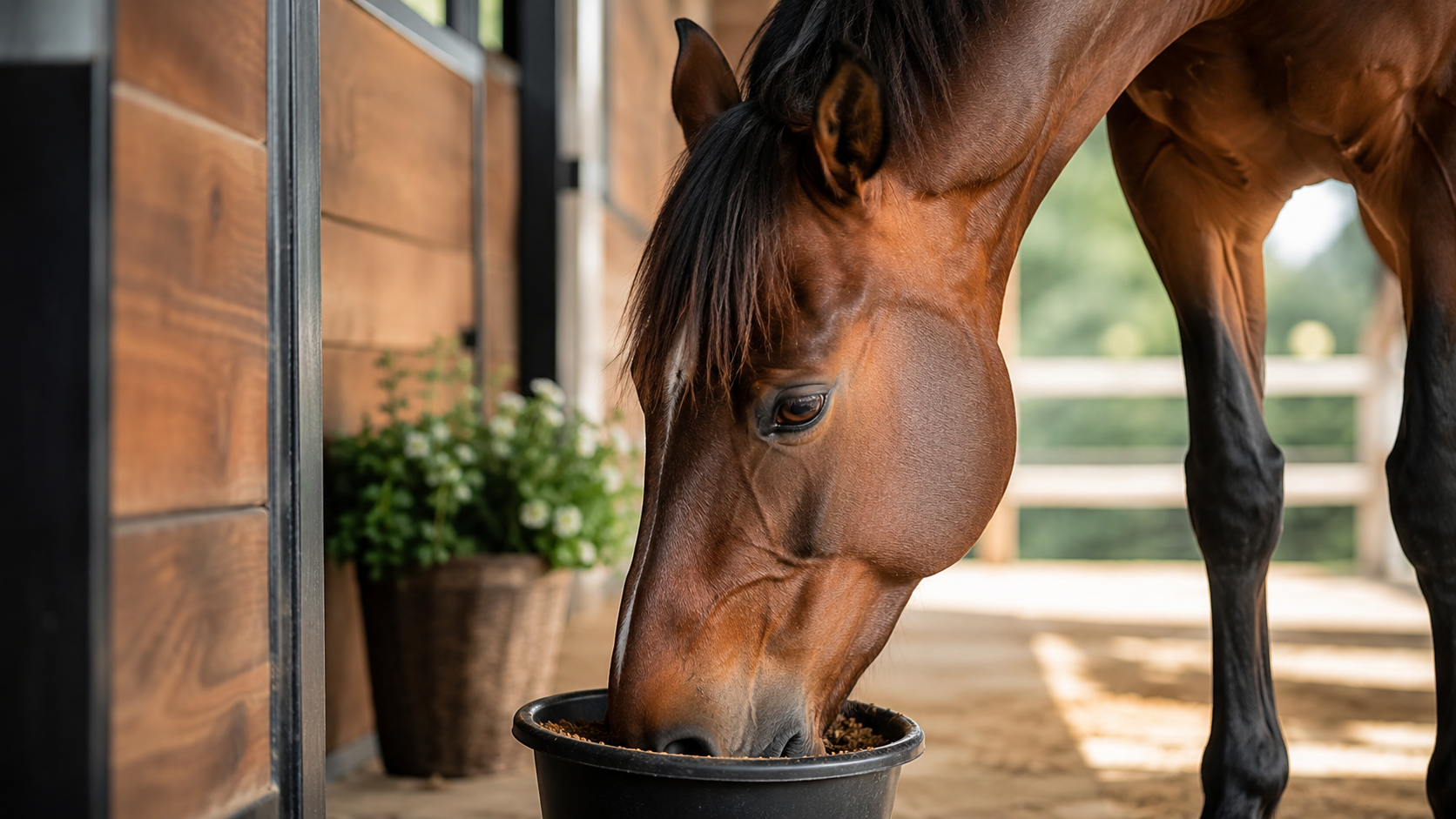
The Dülmen Pony is known for its hardy, calm, and balanced temperament. It is intelligent, curious, and generally easy to handle despite its semi-feral origin. It is willing to work and shows great endurance.
- Category
- hardy breed
- Origin
- Germany · Middle Ages (documented presence)
- Height at withers
- 125–135 cm
- Lifespan
- 25-30 years
- Common coats
- grullo, grey, bay, black
- Disciplines
- trail riding, TREC, pony games, vaulting
- Other names
- Dülmener Wildpferd, Dülmen Pony
Origin and history
The Dülmen Pony is one of Europe's last wild horse breeds, with its presence documented since the Middle Ages in the Dülmen region of Westphalia. It was preserved thanks to the ducal family of Croÿ, who created a reserve in 1847 to protect the last remaining specimens. Although there have been some crossbreedings over the centuries, the breed has retained many of its primitive characteristics. It is officially recognized and subject to a rigorous conservation program.
Conformation and physique
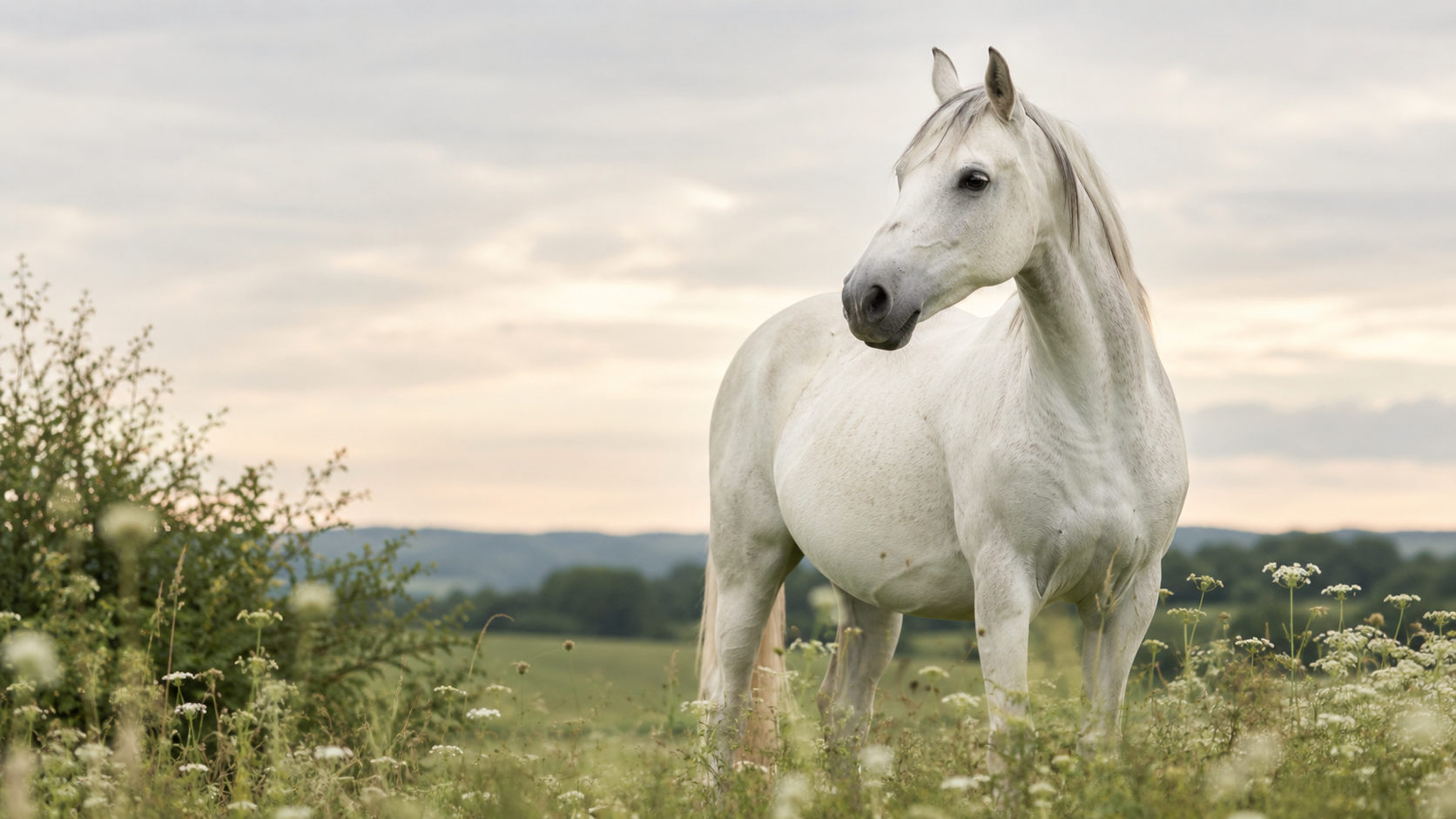
It is a small pony with a compact and robust build and strong bone structure. It has a typical silhouette of primitive breeds, adapted to semi-feral life.
Pony head, often somewhat coarse, with a straight or slightly concave profile. The eyes are lively and expressive, the ears small and well-set.
Short, muscular neck, well-set. The withers are low, blending smoothly into the back.
Short, strong back, straight topline. Broad and deep chest. Rounded and muscular croup, often double.
Short, strong limbs, with well-developed joints and clean tendons. The hooves are hard and well-formed, adapted to varied terrain. Little to no feathering.
- Common coats: grullo, grey, bay, black
Temperament and aptitudes
The Dülmen Pony is known for its hardy, calm, and balanced temperament. It is intelligent, curious, and generally easy to handle despite its semi-feral origin. It is willing to work and shows great endurance.
The gaits are free, energetic, and sure-footed, with good impulsion. The walk is active, the trot supple, and the canter balanced, reflecting its adaptation to natural terrain.
- Uses: recreational riding, light driving, work with children, genetic preservation, eco-grazing
- Disciplines: trail riding, TREC, pony games, vaulting
Feeding the Dülmen Pony
The Dülmen Pony is a very hardy and economical breed, accustomed to thriving on poor forage. Its metabolism is very efficient, making it prone to obesity if its diet is too rich. It primarily requires good quality hay and grass, with minimal concentrate intake, only in cases of intense work or specific needs (gestation, lactation).
Due to its economical metabolism, the Dülmen Pony is predisposed to laminitis and Equine Metabolic Syndrome (EMS) if overfed or exposed to pastures too rich in fructans. Careful dietary management is crucial to prevent these conditions.
With Equio, every feed, supplement or treat is read against the horse's real profile (age, weight, Body Condition Score, conditions) — useful for a Dülmen Pony as soon as a metabolic or digestive sensitivity is known.
Health and points to watch
Regular monitoring of weight and body condition is essential to prevent obesity and metabolic problems. Hooves should be inspected frequently, as, although robust, they can be prone to issues if the environment is too wet or if trimming is neglected.
- More frequent conditions: laminitis, Equine Metabolic Syndrome (EMS)
Care and grooming
Care is relatively simple for this hardy breed. The very strong hooves require regular trimming but are rarely shod. The mane and tail are often thick and can be left natural or minimally maintained. The dense coat does not require clipping and provides good protection from the elements. Particular attention should be paid to the skin in cases of prolonged mud exposure to prevent dermatitis.
Did you know?
- Dülmen Ponies live semi-ferally in the Merfelder Bruch reserve, near Dülmen, and are rounded up once a year during the 'Wildpferdefang' (wild horse capture) for weaning the young and selling surplus males.
- It is one of Europe's last wild horse breeds, along with the Konik and the Tarpan (extinct, but recreated).
- The grullo coat color is very characteristic of the breed, often accompanied by a dorsal stripe and leg barrings.
The Dülmen Pony and how to track it
The breed is very rare in France, primarily found in wildlife parks or with a few breeders passionate about conserving primitive breeds. Its use remains marginal for recreational riding.
Equio lets you build a complete profile for a Dülmen Pony: identity, weight, Body Condition Score, feeding, conditions, care reminders (vaccines, worming, trimming) and an exportable health log. The breed sets the identity; everyday decisions still depend on the real horse and your vet's advice.
- Record the activity level: rest, leisure, sport or breeding
- Add known conditions or sensitivities
- Scan feeds, plants and care products
- Keep reminders (vaccines, worming, trimming)
- Prepare a PDF export before a vet appointment
Frequently asked questions
Is the Dülmen Pony truly wild?
Dülmen Ponies live semi-ferally in a reserve, without direct human intervention except during the annual roundup. They retain many wild instincts but are accustomed to human presence and can be trained.
Is it a good pony for children?
Yes, thanks to its calm temperament, robustness, and suitable size, the Dülmen Pony is an excellent companion for children, whether for recreational riding or learning.
Where can one buy a Dülmen Pony in France?
Buying a Dülmen Pony in France is difficult due to the breed's rarity. It is best to contact the breeders' association in Germany directly or breeders specializing in primitive breeds.
What is special about its coat color?
The most iconic coat color is grullo, characterized by a grey-brown coat, a black mane and tail, a dorsal stripe, and sometimes leg barrings, signs of its primitive origin.
Is the Dülmen Pony an endangered breed?
Yes, although conservation efforts are in place, the Dülmen Pony is considered an endangered breed due to its limited population and restricted range. Breeding programs aim to maintain its genetic diversity.