
Horse breed
Konik
The Konik is a direct descendant of the Tarpan, the wild horse of Eastern Europe that became extinct in the early 20th century. Attempts to recreate the Tarpan were made by crossing Koniks with other hardy breeds.
The breed at a glance
The Konik is renowned for its calm, docile, and very hardy temperament. It is intelligent, willing, and easy to handle, making it an excellent companion for riders of all levels. Its robustness and endurance make it suitable for many types of work.
- Category
- hardy breed
- Origin
- Poland · Middle Ages / 19th Century (breed establishment)
- Height at withers
- 130–140 cm
- Weight
- 350–400 kg
- Lifespan
- 25-30 years
- Common coats
- grullo (mouse gray), grey, bay (rare)
- Disciplines
- leisure driving, equestrian trail riding, trail riding, pony games
- Other names
- Konik Polski, Konik Polonais
Origin and history
The Konik is a direct descendant of the Tarpan, the wild horse of Eastern Europe that became extinct in the early 20th century. Attempts to recreate the Tarpan were made by crossing Koniks with other hardy breeds. The breed was established in the 19th century, notably by Polish breeders. It played an essential role in agriculture and transport in Poland. Its official recognition helped preserve its primitive characteristics.
Conformation and physique
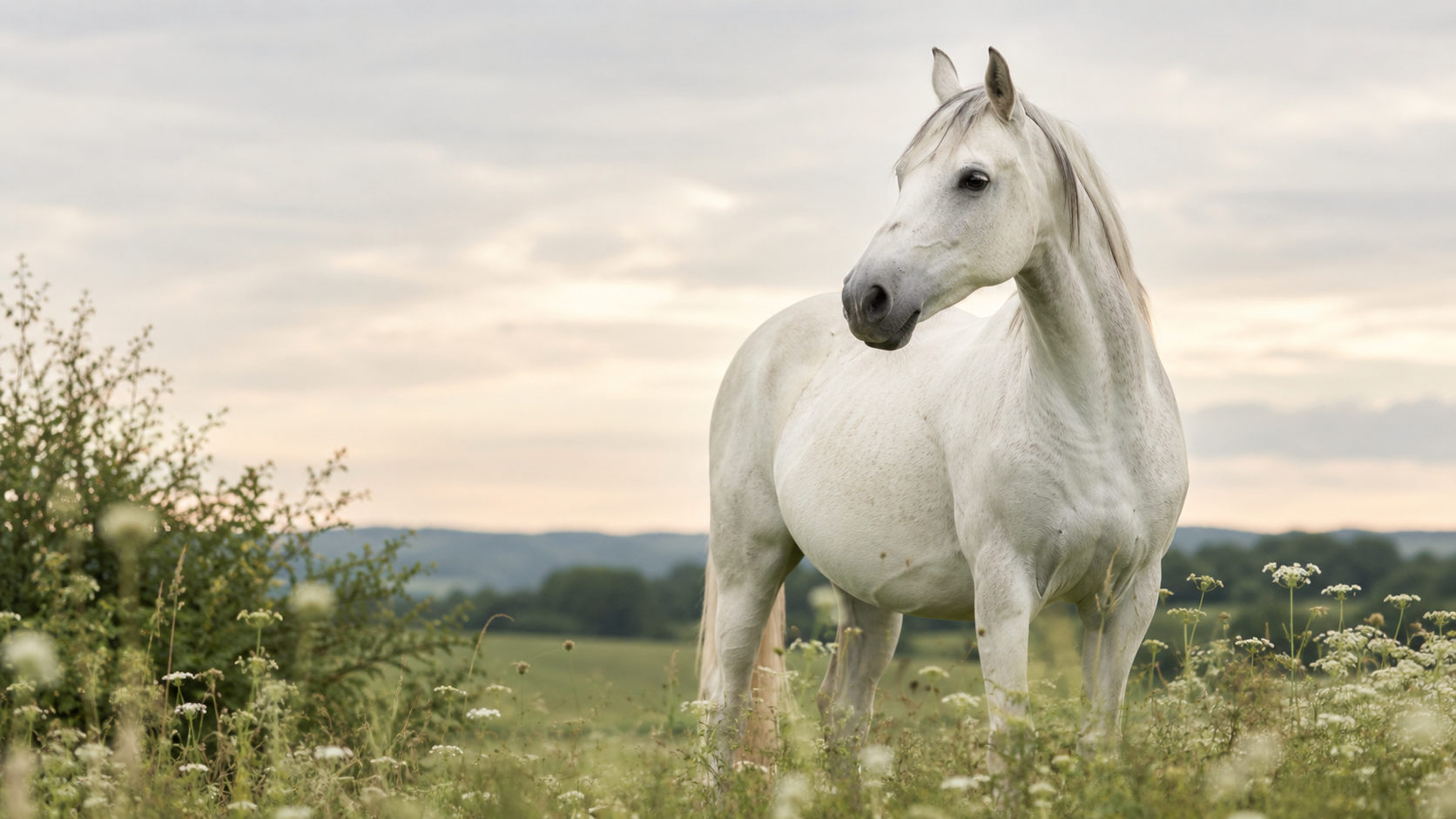
It is a small pony, compact and robust in build, with solid bone structure. It exhibits a typical primitive horse silhouette, with well-developed musculature and an overall hardy appearance.
Relatively heavy head, with a straight or slightly concave profile, a broad forehead, and expressive eyes. The ears are medium-sized and well-set.
Short, thick neck, well-set, often arched. The withers are not prominent, blending smoothly into the backline.
Short, straight back, sometimes slightly swayed in older individuals. Broad and deep chest. Muscular hindquarters, often double-lobed, with a low-set tail.
Short, strong limbs, with well-defined joints and short cannons. The hooves are hard and well-formed. Feathering is generally sparse.
- Common coats: grullo (mouse gray), grey, bay (rare)
Temperament and aptitudes
The Konik is renowned for its calm, docile, and very hardy temperament. It is intelligent, willing, and easy to handle, making it an excellent companion for riders of all levels. Its robustness and endurance make it suitable for many types of work.
The gaits are straightforward, energetic, and regular, with good stride length at the walk and trot. The canter is balanced and enduring, suitable for varied terrain.
- Uses: light agricultural work, driving, recreational riding, trail riding, ecological landscape management (eco-grazing), family horse
- Disciplines: leisure driving, equestrian trail riding, trail riding, pony games
Feeding the Konik
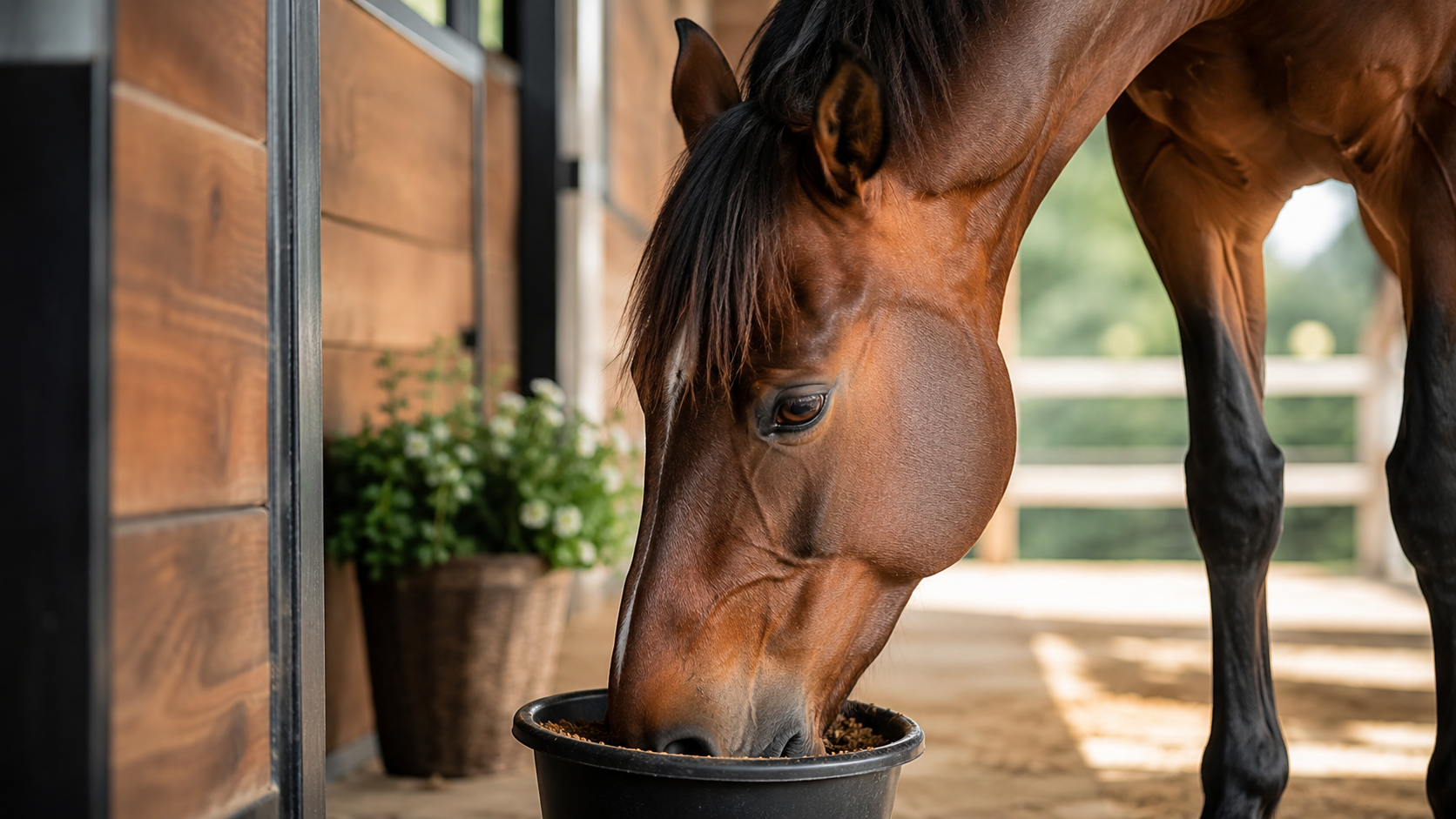
The Konik is a very economical horse, accustomed to sparse diets. Its metabolism is adapted to utilizing coarse forages, and it has a strong tendency to become overweight if its diet is too rich. It generally thrives on good quality hay or pasture, with minimal or no concentrate feed, except in cases of intense work or specific needs (gestation, lactation).
Due to its economical metabolism, the Konik is predisposed to Equine Metabolic Syndrome (EMS) and laminitis if overfed or exposed to pastures too rich in fructans. Careful dietary management is crucial to prevent these conditions.
With Equio, every feed, supplement or treat is read against the horse's real profile (age, weight, Body Condition Score, conditions) — useful for a Konik as soon as a metabolic or digestive sensitivity is known.
Health and points to watch
Regular monitoring of weight and body condition is essential to prevent obesity and associated risks. Hooves should be inspected frequently, especially when on rich pasture, to detect any signs of laminitis. Particular attention should be paid to dental care, as with any equine.
- More frequent conditions: laminitis, Equine Metabolic Syndrome (EMS), obesity
Care and grooming
The Konik is a hardy breed that requires little specific maintenance. Its hooves are generally very hard and require regular trimming, but often less frequently than other breeds. Mane and tail are thick and can be left natural or detangled regularly. Its dense coat protects it well from the elements; clipping is rarely necessary. Skin care is standard.
Did you know?
- The Konik is often used in rewilding projects in Europe, as it is considered one of the horses most closely related to the Tarpan.
- The word 'Konik' means 'small horse' in Polish.
- Some Koniks display a dorsal stripe and zebra markings on their legs, primitive traits inherited from the Tarpan.
The Konik and how to track it
The Konik breed is present in France, primarily for eco-grazing and leisure riding. Breeding is less developed than in its country of origin, but the breed is gaining popularity for its hardy qualities and its role in natural area management.
Equio lets you build a complete profile for a Konik: identity, weight, Body Condition Score, feeding, conditions, care reminders (vaccines, worming, trimming) and an exportable health log. The breed sets the identity; everyday decisions still depend on the real horse and your vet's advice.
- Record the activity level: rest, leisure, sport or breeding
- Add known conditions or sensitivities
- Scan feeds, plants and care products
- Keep reminders (vaccines, worming, trimming)
- Prepare a PDF export before a vet appointment
Frequently asked questions
Is the Konik a good horse for beginners?
Yes, the Konik is generally considered an excellent horse for beginners and children due to its calm temperament, docility, and small size. It is patient and learns quickly, which facilitates its training.
What is the cost of purchasing a Konik?
The purchase cost of a Konik can vary considerably depending on its age, sex, lineage, and training level. In France, a Konik can cost between 1,000 and 3,000 euros, or even more for well-trained individuals or those with good bloodlines.
Can the Konik live outdoors all year round?
Absolutely. Thanks to its great hardiness, dense coat, and ability to adapt to harsh climates, the Konik is perfectly suited to living outdoors all year round, provided it has natural or artificial shelter to protect itself from the elements.
What is the difference between a Konik and a Tarpan?
The Tarpan is the wild horse of Eastern Europe, now extinct. The Konik is considered the closest descendant of the Tarpan and has been used in 'recreation' programs for the Tarpan, although it is not genetically identical to the original Tarpan.
Is the Konik suitable for equestrian sports?
Although robust and enduring, the Konik is generally not intended for high-level sports disciplines due to its conformation and gaits. It excels more in leisure riding, trekking, and light harness work, where its versatility is appreciated.