
Horse breed
Coffin Bay Pony
The Coffin Bay Pony descends from horses imported to Australia in the 19th century, including Timor ponies and saddle horses. These animals were released into the Coffin Bay Peninsula in South Australia and evolved into a wild and hardy population.

The breed at a glance
The Coffin Bay Pony is renowned for its intelligence, hardiness, and great adaptability. Although of wild origin, handled individuals are generally calm, willing, and easy to train, demonstrating great resilience.
- Category
- hardy breed
- Origin
- Australia · 19th century
- Height at withers
- 120–142 cm
- Lifespan
- 20-25 years
- Common coats
- bay, chestnut, black, grey, palomino, dun
- Disciplines
- outdoor riding, endurance (leisure), pony-games
- Other names
- Coffin Bay Pony, Coffin Bay Wild Horse
Origin and history
The Coffin Bay Pony descends from horses imported to Australia in the 19th century, including Timor ponies and saddle horses. These animals were released into the Coffin Bay Peninsula in South Australia and evolved into a wild and hardy population. They developed great resistance to arid conditions and a temperament suited for survival. The breed is recognized for its status as a managed wild horse.
Conformation and physique
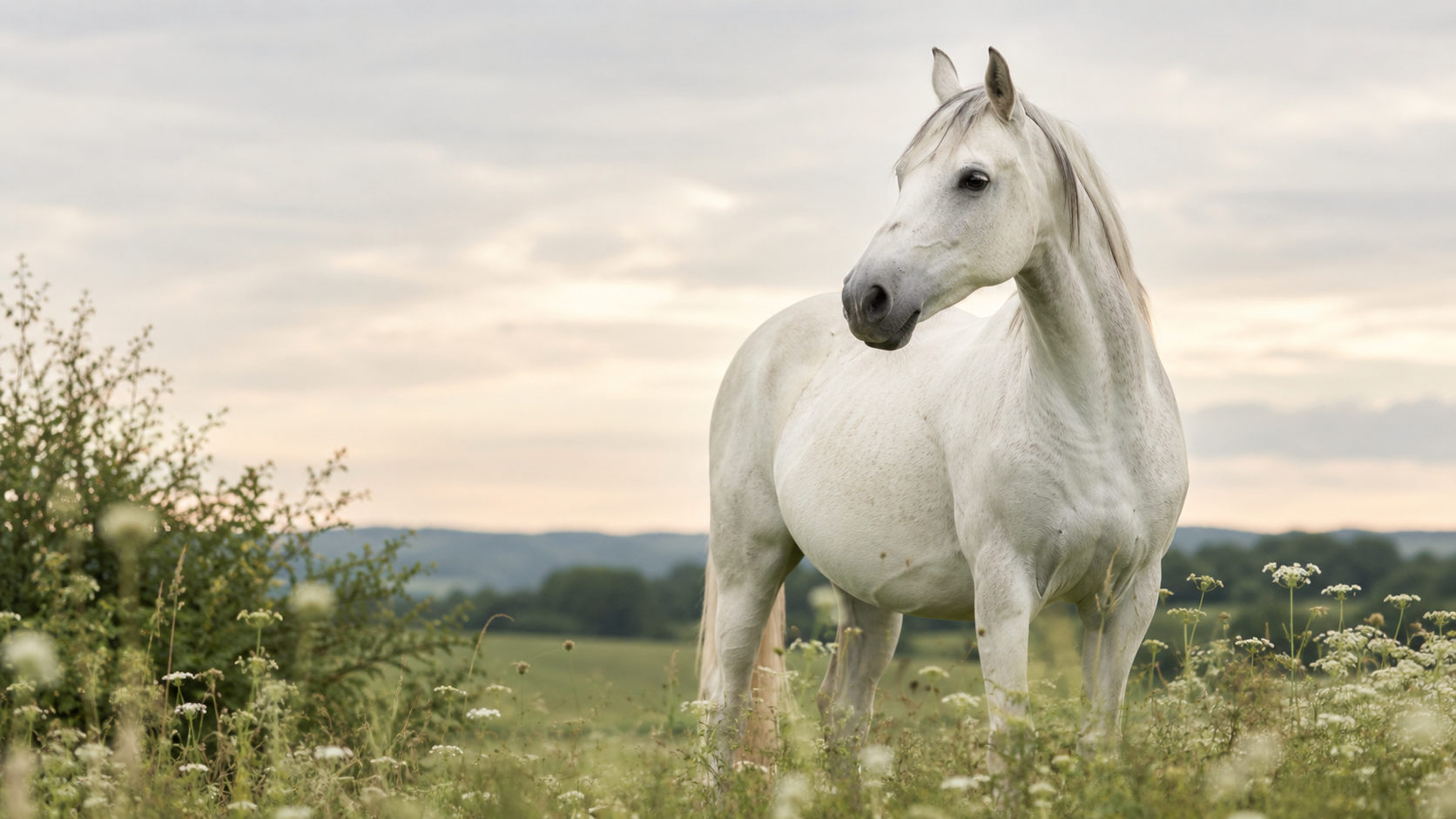
It is a compact and robust pony, with a strong bone structure and well-developed musculature, demonstrating its adaptation to a harsh environment. It has the typical silhouette of hardy breeds.
The head is generally well-proportioned, with a straight or slightly convex profile. The eyes are expressive and the ears are medium-sized and well-set.
The neck is medium-length, muscular, and well-set, blending harmoniously into a wither that is often not very prominent but strong.
The back is short and strong, the topline is straight and muscular. The chest is deep, offering good lung capacity. The hindquarters are rounded and powerful.
The limbs are strong, with clean joints and well-defined tendons. The hooves are hard and resilient, adapted to varied terrain. Feathers are generally sparse.
- Common coats: bay, chestnut, black, grey, palomino, dun
Temperament and aptitudes
The Coffin Bay Pony is renowned for its intelligence, hardiness, and great adaptability. Although of wild origin, handled individuals are generally calm, willing, and easy to train, demonstrating great resilience.
The gaits are free, energetic, and sure-footed, with good ground cover. The walk is active, the trot is regular, and the canter is balanced, reflecting its natural agility.
- Uses: recreational riding, trail riding, cattle work, family horse
- Disciplines: outdoor riding, endurance (leisure), pony-games
Feeding the Coffin Bay Pony
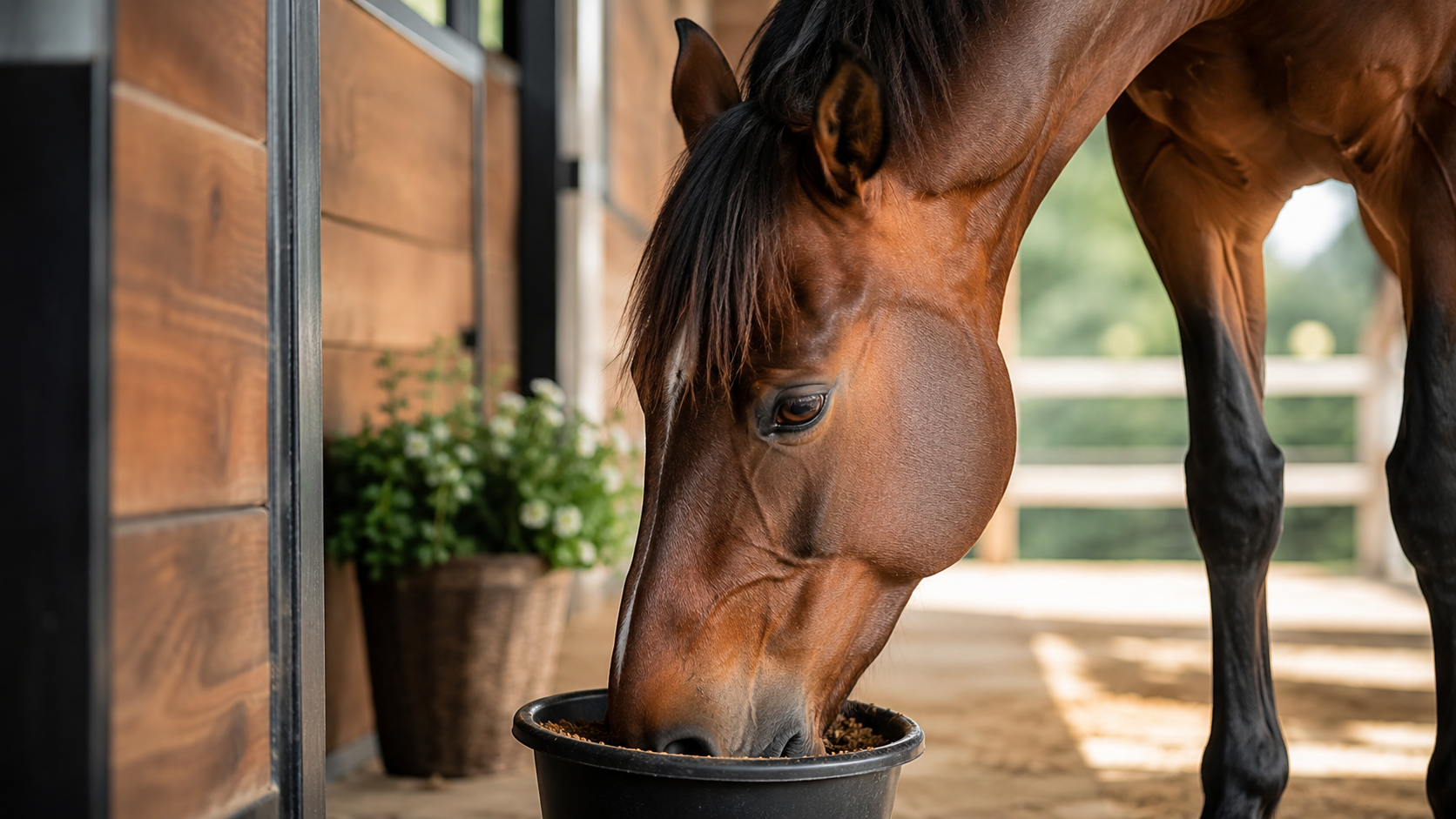
The Coffin Bay Pony is a very economical pony, accustomed to poor diets and harsh living conditions. It tends to become overweight if its diet is too rich. Its diet should primarily consist of good quality, low-energy forage. Concentrates are only necessary in cases of intense work or specific needs, and should be introduced cautiously.
Due to its economical metabolism, the Coffin Bay Pony is potentially predisposed to laminitis and Equine Metabolic Syndrome (EMS) if overfed or exposed to pastures too rich in fructans. Careful monitoring of its weight and diet is essential to prevent these conditions.
With Equio, every feed, supplement or treat is read against the horse's real profile (age, weight, Body Condition Score, conditions) — useful for a Coffin Bay Pony as soon as a metabolic or digestive sensitivity is known.
Health and points to watch
Particular attention must be paid to weight management and laminitis prevention, especially during seasonal changes or access to rich pastures. The general hardiness of the breed minimizes other major health problems.
- More frequent conditions: laminitis, Equine Metabolic Syndrome (EMS)
Care and grooming
The hooves are naturally hard and resilient, requiring regular trimming but often less intensive than other breeds. The mane and tail are generally thick and may require occasional detangling. The coat is hardy and requires no special care, clipping is rarely necessary except for comfort during work.
Did you know?
- Coffin Bay Ponies are the last wild horses of South Australia and are managed by a conservation program to preserve their genetic heritage.
- They are known for their ability to survive in very harsh environments, feeding on native vegetation and finding water in difficult conditions.
- Each year, a portion of the herd is mustered for management, and some individuals are offered for adoption to owners capable of providing them with a suitable home.
The Coffin Bay Pony and how to track it
The Coffin Bay Pony is a very rare breed in France, or even non-existent in structured breeding programs. Any individuals present would likely be isolated imports for rare breed enthusiasts.
Equio lets you build a complete profile for a Coffin Bay Pony: identity, weight, Body Condition Score, feeding, conditions, care reminders (vaccines, worming, trimming) and an exportable health log. The breed sets the identity; everyday decisions still depend on the real horse and your vet's advice.
- Record the activity level: rest, leisure, sport or breeding
- Add known conditions or sensitivities
- Scan feeds, plants and care products
- Keep reminders (vaccines, worming, trimming)
- Prepare a PDF export before a vet appointment
Frequently asked questions
Is the Coffin Bay Pony suitable for children?
Yes, once educated and handled, the Coffin Bay Pony can be an excellent pony for children thanks to its calm temperament, hardiness, and patience. Its size also makes it accessible.
What is the price of a Coffin Bay Pony?
The price of a Coffin Bay Pony is highly variable and depends on its age, level of training, and origin (wild or captive-bred). In Australia, ponies adopted through the management program have adoption fees rather than high sale prices. In France, their rarity makes any estimation difficult.
Where can I buy a Coffin Bay Pony in France?
It is extremely difficult to find a Coffin Bay Pony for purchase in France due to its rarity. One would need to consider importing from Australia, which involves complex costs and procedures.
Is the Coffin Bay Pony easy to care for?
Yes, it is a very hardy and easy-to-maintain breed. Its dietary needs are modest, and it is generally resistant to diseases. The main thing is to ensure it is not overfed and to provide an environment suited to its origins.
Can an adult ride a Coffin Bay Pony?
Yes, despite its pony size, the Coffin Bay Pony is robust enough to carry an adult of reasonable height and weight, especially for recreational riding or trekking. Its strength and solid bone structure allow for this.