
Horse breed
Ostfriesen & Alt-Oldenburger
The Ostfriesen and Alt-Oldenburger are two very closely related breeds, developed in the regions of Ostfriesland and Oldenburg in Germany. They were created from local horses crossed with heavy and warmblood stallions, such as the Friesian, Hanoverian, Thoroughbred, and Cleveland Bay, to produce a versatile and robust agricultural workhorse.
The breed at a glance
The temperament is renowned for being calm, docile, and reliable, making it a pleasant horse to handle and work with. It is also courageous, willing, and intelligent, showing good aptitude for learning and great versatility.
- Category
- draft horse
- Origin
- Germany · 19th century
- Height at withers
- 160–170 cm
- Weight
- 600–800 kg
- Lifespan
- 20-25 years
- Common coats
- bay, chestnut, black, grey
- Disciplines
- competition driving, dressage (leisure and amateur level), working equitation, trail riding
- Other names
- Ostfriesen, Alt-Oldenburger, Oldenburg ancien, Frison oriental
Origin and history
The Ostfriesen and Alt-Oldenburger are two very closely related breeds, developed in the regions of Ostfriesland and Oldenburg in Germany. They were created from local horses crossed with heavy and warmblood stallions, such as the Friesian, Hanoverian, Thoroughbred, and Cleveland Bay, to produce a versatile and robust agricultural workhorse. Initially used as heavy draft and carriage horses, they evolved into lighter riding and carriage horses in the early 20th century, before returning to their orientation as heavy draft and traditional riding horses. The official recognition of the two distinct but very similar breeds has allowed for the preservation of this type of heavy yet elegant horse.
Conformation and physique
It is a large, powerful, and harmonious horse, with strong bone structure and well-developed musculature. It presents an elegant silhouette for a draft horse, combining strength and nobility.
The head is expressive, medium-sized, with a straight or slightly convex (Roman) profile. The eyes are large and lively, the ears well-set and mobile.
The neck is long, powerful, and well-arched, blending harmoniously into a well-defined and muscular wither.
The body is deep and broad, with a strong, short back and a solid topline. The chest is ample and deep, the croup is long, wide, and slightly sloped, often double.
The limbs are strong, with large and well-defined joints. The cannons are short and strong, the feet are large and well-formed. Moderate feathering is often present.
- Common coats: bay, chestnut, black, grey
Temperament and aptitudes
The temperament is renowned for being calm, docile, and reliable, making it a pleasant horse to handle and work with. It is also courageous, willing, and intelligent, showing good aptitude for learning and great versatility.
The gaits are expansive, energetic, and regular, with good impulsion. The walk is active, the trot is supple and rhythmic, and the canter is balanced, reflecting its versatility.
- Uses: agricultural draft horse, heavy and prestigious carriage horse, versatile riding horse (leisure, light dressage), military remount horse (historically)
- Disciplines: competition driving, dressage (leisure and amateur level), working equitation, trail riding
Feeding the Ostfriesen & Alt-Oldenburger
These horses, originating from working lines, have a rather efficient metabolism. They utilize good quality forage well (hay ad libitum or in sufficient quantity). A tendency to gain weight can be present if the diet is not adjusted to their activity level. Concentrate requirements are moderate and must be adapted to the workload, favoring feeds low in starch and sugar to avoid imbalances.
Although generally robust, their efficient metabolism can predispose them, like other draft breeds, to Equine Metabolic Syndrome (EMS) and laminitis in cases of overfeeding or a diet too rich in sugars and starch. Weight monitoring and a balanced diet are essential.
With Equio, every feed, supplement or treat is read against the horse's real profile (age, weight, Body Condition Score, conditions) — useful for a Ostfriesen & Alt-Oldenburger as soon as a metabolic or digestive sensitivity is known.
Health and points to watch
Particular attention should be paid to hoof care, weight management, and the prevention of joint conditions, especially in older or heavily worked horses. Regular dental check-ups are also important.
- More frequent conditions: osteoarthritis (due to size and weight), foot problems (if poorly maintained), metabolic conditions (EMS, laminitis) in case of poor dietary management
Care and grooming
Hoof care is paramount due to their size and weight-bearing role. Regular and appropriate trimming is necessary. The mane and feathers, often abundant, require regular brushing to prevent tangles and underlying skin conditions. The coat is easy to maintain, but daily brushing is recommended to preserve cleanliness and skin health.
Did you know?
- The Ostfriesen and Alt-Oldenburger are considered 'heritage' breeds in Germany, subject to conservation programs.
- Despite their classification as draft horses, they possess gaits and an elegance that make them suitable for prestigious driving and even light dressage.
- These breeds played a crucial role in agriculture and transport in Northern Germany before motorization.
The Ostfriesen & Alt-Oldenburger and how to track it
The breed is not widely represented in France, where it is primarily owned by driving enthusiasts or fans of ancient breeds. Breeding is very limited, and horses are generally imported from Germany.
Equio lets you build a complete profile for a Ostfriesen & Alt-Oldenburger: identity, weight, Body Condition Score, feeding, conditions, care reminders (vaccines, worming, trimming) and an exportable health log. The breed sets the identity; everyday decisions still depend on the real horse and your vet's advice.
- Record the activity level: rest, leisure, sport or breeding
- Add known conditions or sensitivities
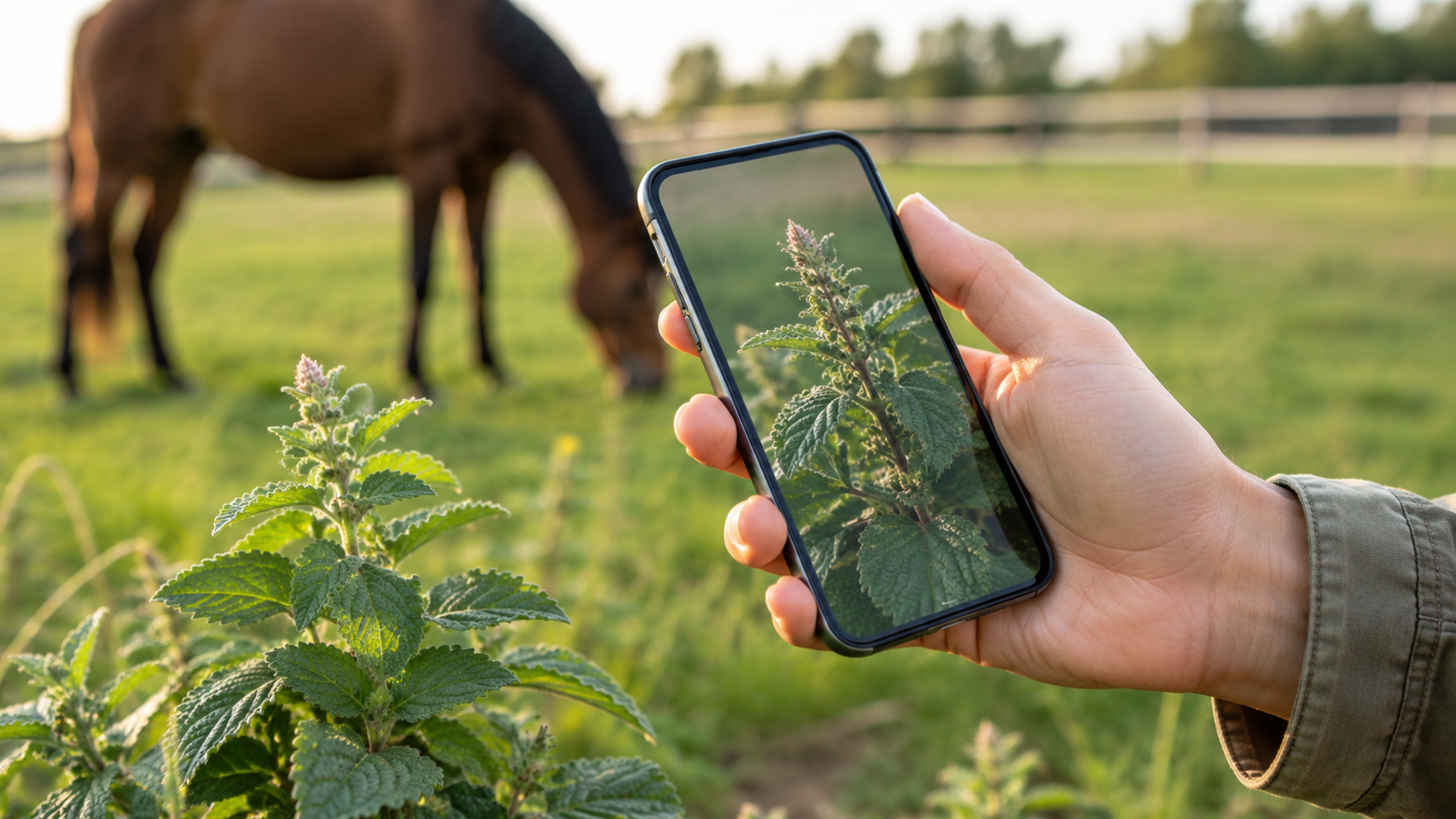
- Scan feeds, plants and care products
- Keep reminders (vaccines, worming, trimming)
- Prepare a PDF export before a vet appointment
Frequently asked questions
What is the difference between the Ostfriesen and the Alt-Oldenburger?
Historically, the Ostfriesen was bred in East Frisia and the Alt-Oldenburger in the Oldenburg region. The two breeds are so similar in type, standard, and history that they are often grouped together and managed by a single studbook, sharing the same breeding objectives.
Are the Ostfriesen and Alt-Oldenburger good horses for beginners?
Yes, thanks to their calm, docile temperament and willingness to cooperate, they can be very good horses for beginners or less experienced riders, provided their size and strength are taken into account.
Can an Ostfriesen or an Alt-Oldenburger be ridden?
Absolutely. Although classified as draft horses, their balanced conformation and supple gaits make them perfectly suitable for riding, especially for leisure riding, light dressage, or working equitation.
What is the acquisition cost of an Ostfriesen or Alt-Oldenburger?
The cost can vary considerably depending on age, training, bloodlines, and place of purchase. In France, their rarity can lead to higher prices, often linked to importation costs. It is advisable to contact specialized breeders in Germany.
Are these horses suitable for hot climates?
Originating from Northern Germany, they are well adapted to temperate climates. In very hot climates, particular attention must be paid to their hydration, heat protection, and adaptation of exercise, as with any large-framed horse.