
Horse breed
National Show Horse
The National Show Horse was developed in the United States in the 1980s with the aim of creating a versatile show horse. It resulted from the cross between the American Saddlebred and the Arabian.
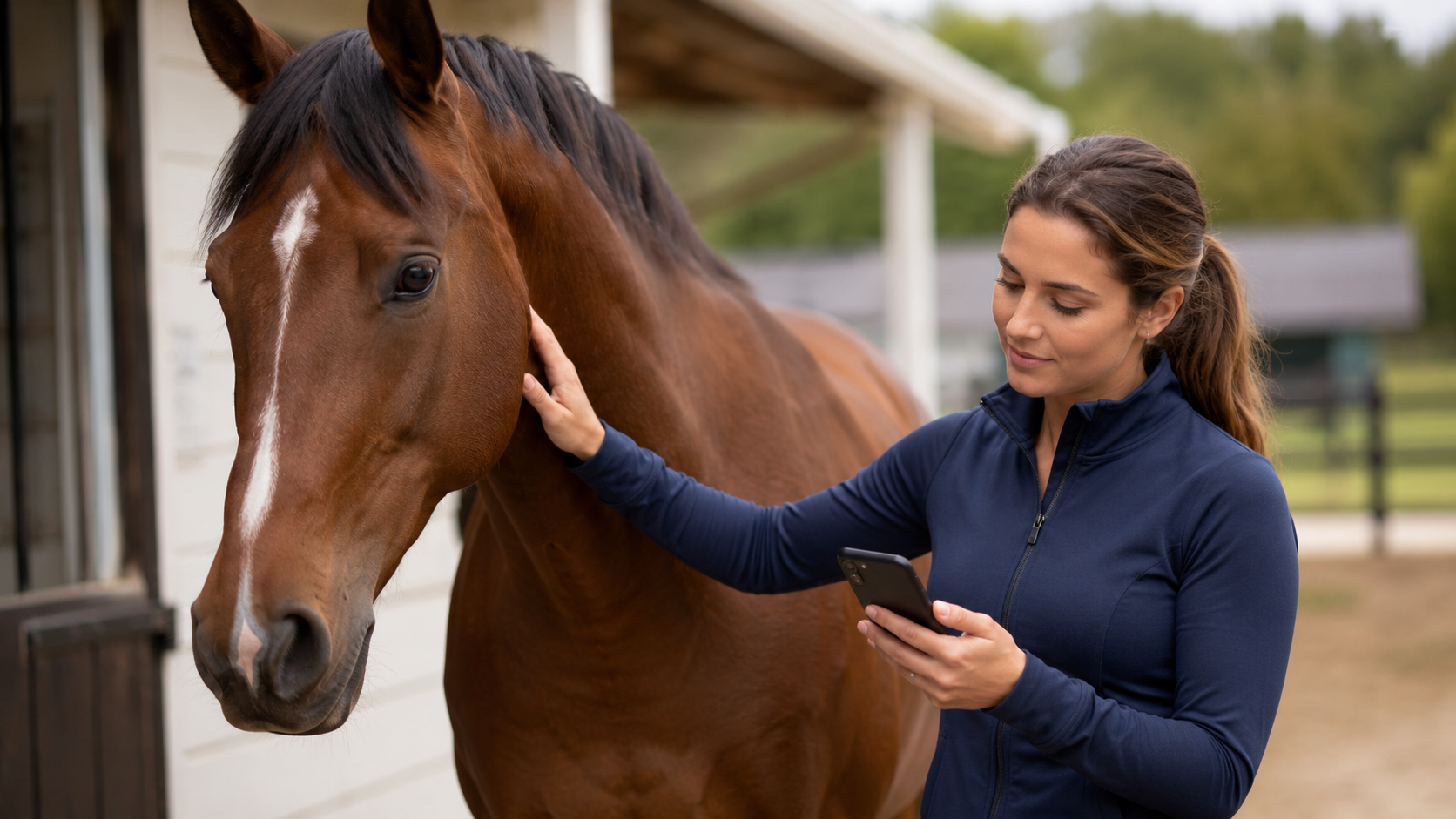
The breed at a glance
The National Show Horse is renowned for its willing, intelligent, and cooperative temperament. It is generally courageous and eager to please, making it a pleasant horse to work with, though sometimes sensitive and requiring a soft hand.
- Category
- sport horse
- Origin
- United States · Late 20th century (1980s)
- Height at withers
- 147–163 cm
- Weight
- 450–550 kg
- Lifespan
- 25-30 years
- Common coats
- bay, chestnut, black, grey, palomino, cremello, perlino, roan
- Disciplines
- Saddle Seat (American show riding), classical dressage, competitive driving, working equitation
Origin and history
The National Show Horse was developed in the United States in the 1980s with the aim of creating a versatile show horse. It resulted from the cross between the American Saddlebred and the Arabian. The breed was officially recognized in 1981 by the National Show Horse Registry. The objective was to combine the elegance and high-stepping gaits of the Saddlebred with the refinement and endurance of the Arabian.

Conformation and physique
The National Show Horse is an elegant and refined saddle horse, medium to large in size, with a fine but strong bone structure. Its physique is athletic and harmonious, designed for show performance.
The head is refined, often with a straight or slightly concave profile inherited from the Arabian, large expressive eyes, and wide nostrils. The ears are small and well-shaped.
The neck is long, arched, and well-set, carried high, contributing to the breed's proud bearing. The withers are well-defined and prominent.
The back is short and strong, and the topline is elegant. The chest is deep and wide, with well-sprung ribs. The croup is long and muscular, often slightly sloped.
The limbs are long, fine, and clean, with well-defined joints and clean tendons. The cannon bones are short, and the pasterns are of medium length. Fetlock hair is generally sparse.
- Common coats: bay, chestnut, black, grey, palomino, cremello, perlino, roan
Temperament and aptitudes
The National Show Horse is renowned for its willing, intelligent, and cooperative temperament. It is generally courageous and eager to please, making it a pleasant horse to work with, though sometimes sensitive and requiring a soft hand.
The gaits are high-stepping, expansive, and energetic, with high and spectacular action, particularly at the trot and canter. The walk is also supple and regular.
- Uses: show horse, recreational riding, dressage, driving
- Disciplines: Saddle Seat (American show riding), classical dressage, competitive driving, working equitation
Feeding the National Show Horse
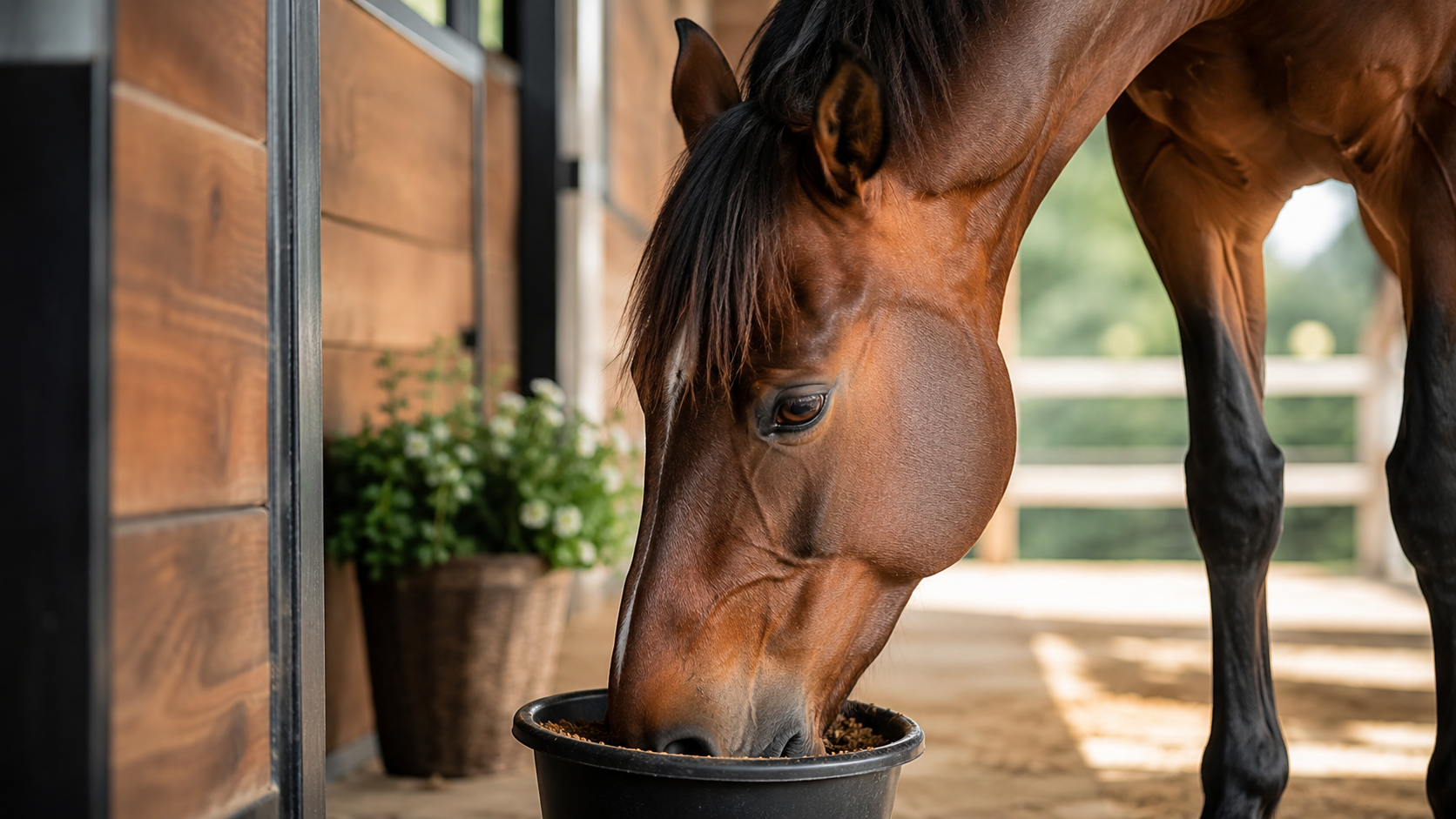
The National Show Horse, being a sport horse with Arabian blood, generally has an efficient metabolism but can be demanding during periods of intense work. It requires a balanced diet, rich in good quality forage (hay or grass). Concentrate requirements vary greatly depending on the activity level, ranging from a mineral and vitamin supplement for a pleasure horse to more energetic rations for a show or competition horse. It is important to monitor its body condition to avoid being overweight or underweight.
Although the breed is not specifically documented for major dietary sensitivities, the presence of Arabian blood may imply a certain vigilance regarding diets too rich in sugars and starch, potentially increasing the risk of laminitis or digestive disorders in sensitive individuals. There is no documented predisposition to EMS or PSSM specific to the breed.
With Equio, every feed, supplement or treat is read against the horse's real profile (age, weight, Body Condition Score, conditions) — useful for a National Show Horse as soon as a metabolic or digestive sensitivity is known.
Health and points to watch
Particular attention must be paid to the health of the limbs and feet, due to the high action and demands of show disciplines. Regular veterinary monitoring is essential for the early detection and management of any lameness or joint problems. Management of competition-related stress is also a point to monitor.
- More frequent conditions: joint problems related to training intensity and high-stepping gaits, hoof conditions (feet)
Care and grooming
Hoof care is paramount and must be regular and professional, especially if the horse is shod for shows. The mane and tail are often left long and full, requiring regular detangling and care to maintain their beauty. The coat is generally easy to maintain, but daily brushing is recommended to maintain shine and cleanliness. Clipping may be practiced in winter for horses in work.
Did you know?
- The National Show Horse is often presented with a long, flowing tail, sometimes artificially enhanced, and a braided or naturally flowing mane, to accentuate its elegance in the show ring.
- The breed is recognized for its ability to perform the 'rack', a four-beat lateral, high-stepping gait, inherited from the Saddlebred.
- To be registered as a National Show Horse, a foal must have at least 50% Saddlebred or Arabian blood, and the other parent must be one of these two breeds.
The National Show Horse and how to track it
The National Show Horse breed is very poorly represented in France. Its breeding is almost non-existent, and its use is anecdotal, primarily limited to a few enthusiasts or isolated imports for specific disciplines.
Equio lets you build a complete profile for a National Show Horse: identity, weight, Body Condition Score, feeding, conditions, care reminders (vaccines, worming, trimming) and an exportable health log. The breed sets the identity; everyday decisions still depend on the real horse and your vet's advice.
- Record the activity level: rest, leisure, sport or breeding
- Add known conditions or sensitivities
- Scan feeds, plants and care products
- Keep reminders (vaccines, worming, trimming)
- Prepare a PDF export before a vet appointment
Frequently asked questions
What is the average price of a National Show Horse?
The price of a National Show Horse varies considerably depending on its age, training, bloodlines, and competition performance. In the United States, prices can range from a few thousand dollars for a young pleasure horse to tens of thousands for a proven show horse.
Is the National Show Horse suitable for beginners?
Due to its willing temperament and high-stepping gaits, the National Show Horse is generally more suitable for experienced or supervised riders. Its sensitivity and energy can be a challenge for a beginner, although calmer individuals may exist.
What are the main differences between a National Show Horse and a Saddlebred?
The National Show Horse is a cross between the Saddlebred and the Arabian, while the Saddlebred is a breed in its own right. The National Show Horse combines the high action of the Saddlebred with the refinement and endurance of the Arabian, often having a more Arabian-type head and slightly finer bone structure than the purebred Saddlebred.
Can the National Show Horse do show jumping?
Although the National Show Horse is primarily bred for show and dressage disciplines, some individuals may be suitable for show jumping at an amateur level. However, it is not its preferred discipline, and it is not specifically bred for it.
How to recognize a National Show Horse?
It is recognized by its elegant and proud bearing, its long and arched neck, its refined head often with an Arabian profile, and its high-stepping, spectacular gaits. The presence of Saddlebred and Arabian blood is evident in its conformation and action.