
Horse breed
Marwari
The Marwari originates from the Marwar region (now Jodhpur) in Rajasthan, India. It likely descends from imported Arabian horses and local ponies, developed by the Rathore Rajput caste.
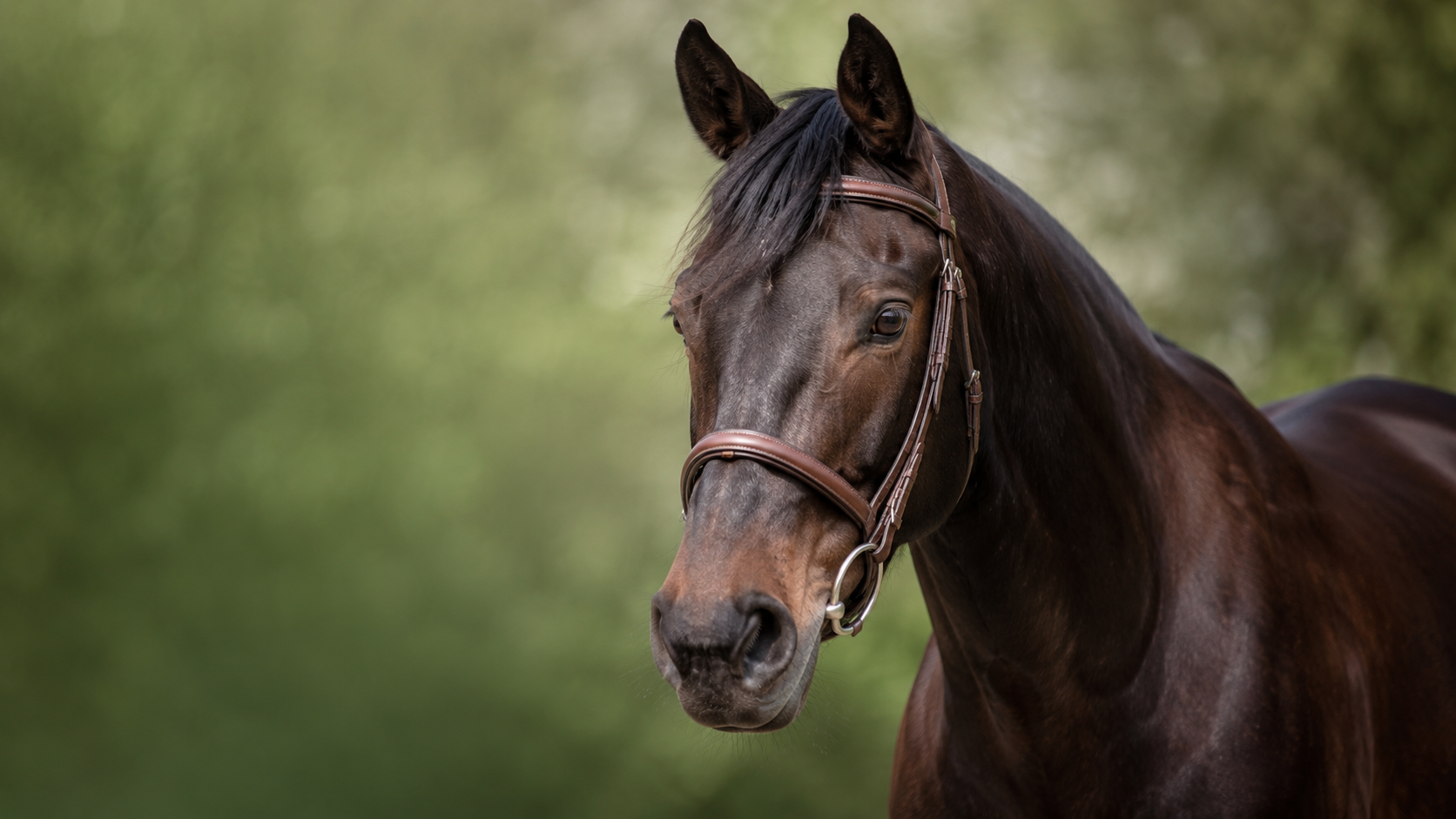
The breed at a glance
The Marwari is known for its courageous, loyal, and intelligent temperament. It is also sensitive and can be spirited, requiring a soft but firm hand. It is very attached to its rider and demonstrates great stamina for work.
- Category
- hot-blooded horse
- Origin
- India · 12th century
- Height at withers
- 142–163 cm
- Weight
- 340–450 kg
- Lifespan
- 20-25 years
- Common coats
- bay, chestnut, grey, black, palomino, dun, pinto
- Disciplines
- polo, dressage, trail riding, endurance riding
Origin and history
The Marwari originates from the Marwar region (now Jodhpur) in Rajasthan, India. It likely descends from imported Arabian horses and local ponies, developed by the Rathore Rajput caste. The breed was historically used as a cavalry horse by Rajput warriors, renowned for its bravery and loyalty. After a period of decline and export prohibition, conservation efforts led to its recognition and preservation.

Conformation and physique
The Marwari is an elegant and athletic horse of medium build, with fine but strong bone. Its silhouette is harmonious, denoting great agility and endurance.
The head is refined, with a straight or slightly concave profile. The most distinctive feature is its ears, which curve inwards, touching or crossing at their tips.
The neck is long and well-muscled, blending harmoniously into a well-defined and extended wither.
The back is short and strong, and the topline is taut. The chest is deep and wide, and the croup is long and muscular, often slightly sloped.
The limbs are fine but robust, with well-defined joints and clean tendons. The hooves are hard and well-formed. Feathering is generally absent or very sparse.
- Common coats: bay, chestnut, grey, black, palomino, dun, pinto
Temperament and aptitudes
The Marwari is known for its courageous, loyal, and intelligent temperament. It is also sensitive and can be spirited, requiring a soft but firm hand. It is very attached to its rider and demonstrates great stamina for work.
The gaits are supple, expansive, and energetic, with good impulsion. The Marwari is renowned for its fast walk and fluid canter, as well as its ability to maintain a comfortable pace over long distances.
- Uses: historic cavalry horse, parade and ceremonial horse, equestrian trail riding, polo, dressage, show jumping, cattle work
- Disciplines: polo, dressage, trail riding, endurance riding
Feeding the Marwari
The Marwari is a horse with a thrifty metabolism, adapted to the arid conditions of its country of origin. It tends to utilize forage efficiently and does not require large quantities of concentrates, except during intense work. A fiber-rich diet (good quality hay) is essential. It is important to monitor its weight as it can be prone to obesity if overfed.
Although hardy, the Marwari, like many horses with a thrifty metabolism, can be predisposed to Equine Metabolic Syndrome (EMS) and laminitis if fed diets too high in sugars and starch, or if it is overweight. Careful management of non-structural carbohydrate intake is recommended.
With Equio, every feed, supplement or treat is read against the horse's real profile (age, weight, Body Condition Score, conditions) — useful for a Marwari as soon as a metabolic or digestive sensitivity is known.
Health and points to watch
The breed is generally robust and resilient. It is advisable to monitor the condition of its hooves, which are naturally hard but may require regular trimming. Particular attention should be paid to weight management to prevent metabolic issues.
Care and grooming
Marwari hooves are renowned for their hardness and require regular trimming but can often go barefoot. The mane and tail are generally full and can be maintained by regular brushing. The coat is fine and does not require special care, apart from daily brushing to maintain its shine. Clipping is rarely necessary.
Did you know?
- The Marwari's ears can rotate 180 degrees, giving it excellent hearing and great expressiveness.
- The breed was saved from extinction thanks to the efforts of Princess Francesca Kelly, who founded the Marwari Bloodline.
- There is a legend that the Marwari's curved ears allow it to hear its rider's footsteps even from a distance.
The Marwari and how to track it
The presence of the Marwari in France is very limited, the breed still being rare outside India. A few passionate breeders are attempting to introduce and develop the breed, mainly for trail riding and leisure, but it remains niche.
Equio lets you build a complete profile for a Marwari: identity, weight, Body Condition Score, feeding, conditions, care reminders (vaccines, worming, trimming) and an exportable health log. The breed sets the identity; everyday decisions still depend on the real horse and your vet's advice.
- Record the activity level: rest, leisure, sport or breeding
- Add known conditions or sensitivities
- Scan feeds, plants and care products
- Keep reminders (vaccines, worming, trimming)
- Prepare a PDF export before a vet appointment
Frequently asked questions
What is the Marwari's most distinctive feature?
The Marwari's most distinctive characteristic is undoubtedly its inward-curving ears, whose tips touch or cross. This feature is unique to the breed and the Kathiawari, a related Indian breed.
Is the Marwari a good horse for beginners?
Due to its sensitive and sometimes spirited temperament, the Marwari is generally not recommended for beginner riders. It is better suited to experienced riders who can appreciate its liveliness and establish a trusting relationship.
Is it possible to import a Marwari into France?
The exportation of Marwari horses outside India was long prohibited. Although exceptions have been made, importation remains complex and subject to strict regulations. It is advisable to inquire with breed associations and competent authorities.
What is the average price of a Marwari horse?
The price of a Marwari can vary considerably depending on its age, lineage, training, and location. Due to its rarity outside India and import costs, it can be significantly more expensive than other breeds, often several thousand euros.
Is the Marwari suited to the European climate?
Yes, the Marwari is adaptable. Although originally from a hot climate, it can acclimatize to Europe's temperate climates, provided it is given adequate shelter from cold and humidity, and a diet adapted to its activity level.