
Horse breed
Mangalarga
The Mangalarga breed originated in Brazil, in the state of Minas Gerais, from an Alter Real stallion (Portuguese horse) named Sublime, crossed with local mares. The objective was to create a comfortable and enduring riding horse for large landowners.

The breed at a glance
It is an intelligent, docile, and courageous horse, with a lively yet balanced temperament. It is known for its strong willingness to work, responsiveness, and kindness, making it an excellent partner for riders.
- Category
- saddle horse
- Origin
- Brazil · Early 19th century
- Height at withers
- 147–157 cm
- Weight
- 400–500 kg
- Lifespan
- 25-30 years
- Common coats
- bay, chestnut, grey, black, palomino, dun
- Disciplines
- working equitation, equestrian trail riding, dressage, endurance riding
- Other names
- Mangalarga Paulista
Origin and history
The Mangalarga breed originated in Brazil, in the state of Minas Gerais, from an Alter Real stallion (Portuguese horse) named Sublime, crossed with local mares. The objective was to create a comfortable and enduring riding horse for large landowners. The breed developed into a versatile working and leisure horse, officially recognized in Brazil.
Conformation and physique
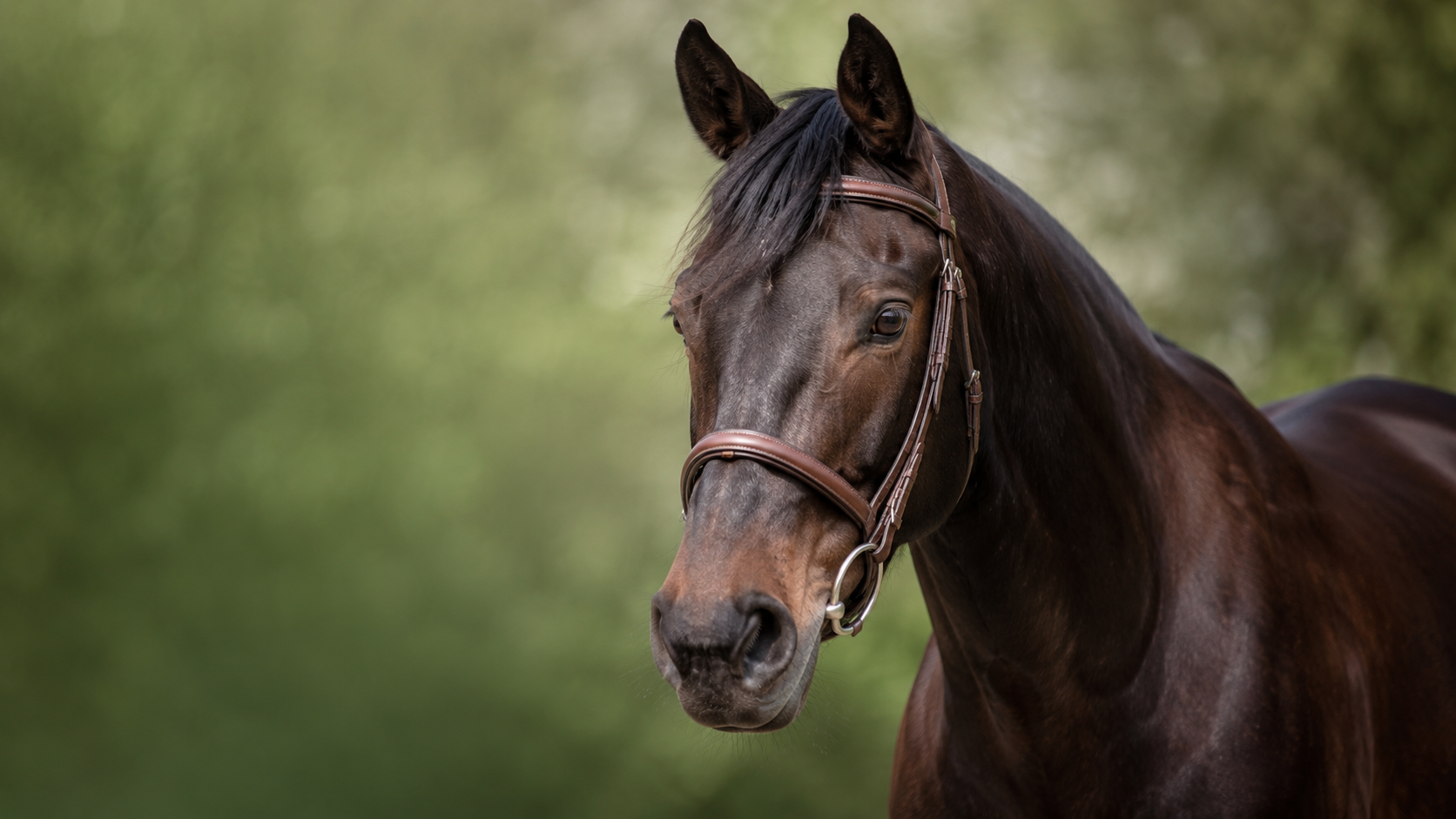
The Mangalarga is a medium-sized horse, elegant and harmonious, with a solid yet refined bone structure. It presents an athletic, well-proportioned silhouette, typical of an agile and enduring riding horse.
The head is medium-sized, well-proportioned to the body, with a straight or slightly convex profile. The eyes are large, expressive, and lively. The ears are medium-sized, well-set apart, and mobile.
The neck is long, muscular, and well-arched, blending harmoniously into a well-defined and extended wither. It gives the horse an elegant carriage.
The back is short and strong, the topline is taut and muscular. The chest is broad and deep, ensuring good respiratory capacity. The croup is long, muscular, and slightly sloped, with a well-set tail.
The limbs are strong, with well-defined joints and clean tendons. The cannons are short and strong. The hooves are round, well-formed, and resistant. Feathering is generally sparse.
- Common coats: bay, chestnut, grey, black, palomino, dun
Temperament and aptitudes
It is an intelligent, docile, and courageous horse, with a lively yet balanced temperament. It is known for its strong willingness to work, responsiveness, and kindness, making it an excellent partner for riders.
The Mangalarga is renowned for its comfortable and regular gaits, particularly its 'marcha', an intermediate four-beat gait, very smooth and without suspension, which can be 'batida' (closer to a trot) or 'picada' (closer to an amble).
- Uses: saddle horse, trail riding, cattle work, family leisure, parades and presentations
- Disciplines: working equitation, equestrian trail riding, dressage, endurance riding, cavalcade
Feeding the Mangalarga
The Mangalarga is an active saddle horse that, depending on its workload, may have moderate to high energy requirements. It has an efficient metabolism and does not particularly tend towards obesity if exercised regularly. A diet based on good quality forage is essential, supplemented by concentrates adapted to the intensity of work to meet energy, protein, and mineral needs.
There are no documented specific predispositions to metabolic risks such as laminitis, Equine Metabolic Syndrome (EMS), or PSSM for the Mangalarga breed. However, a balanced diet and regular monitoring remain paramount to prevent common disorders.
With Equio, every feed, supplement or treat is read against the horse's real profile (age, weight, Body Condition Score, conditions) — useful for a Mangalarga as soon as a metabolic or digestive sensitivity is known.

Health and points to watch
As with any active breed, particular attention should be paid to the locomotor system, especially the joints and feet, due to its frequent use in working equitation and trail riding. Good training management and preventive care are recommended.
Care and grooming
Care for the Mangalarga is similar to that of a classic saddle horse. Regular hoof trimming is essential to maintain their integrity. The mane and tail, often full, require regular detangling. The coat is easy to maintain, and clipping is generally only necessary for sport horses or in cases of intense work in winter.
Did you know?
- The Mangalarga is one of the most popular equine breeds in Brazil, often nicknamed the 'horse of kings' or 'horse of fazendeiros' (ranch owners).
- There is another Brazilian breed, the Mangalarga Marchador, which is a distinct breed although sharing a common origin with the Mangalarga (Paulista).
- The 'marcha' is a natural and genetically fixed gait in the Mangalarga, highly valued for its comfort over long distances.
The Mangalarga and how to track it
The Mangalarga breed is very rarely represented in France. There is no significant breeding or established population, as the breed is primarily present in Brazil and a few South American countries.
Equio lets you build a complete profile for a Mangalarga: identity, weight, Body Condition Score, feeding, conditions, care reminders (vaccines, worming, trimming) and an exportable health log. The breed sets the identity; everyday decisions still depend on the real horse and your vet's advice.
- Record the activity level: rest, leisure, sport or breeding
- Add known conditions or sensitivities
- Scan feeds, plants and care products
- Keep reminders (vaccines, worming, trimming)
- Prepare a PDF export before a vet appointment
Frequently asked questions
What is the difference between the Mangalarga and the Mangalarga Marchador?
Although sharing a common origin, the Mangalarga (also called Mangalarga Paulista) and the Mangalarga Marchador are two distinct breeds. The Mangalarga was developed with crosses of English Thoroughbreds and Arabians, while the Marchador has maintained a purer lineage of Iberian horses, distinguishing itself primarily by its specific 'marcha' gaits.
Is the Mangalarga a good horse for beginners?
Thanks to its docile, intelligent temperament and willingness to please, the Mangalarga can be an excellent horse for beginner or intermediate riders, provided it is well-supervised and trained. Its comfort in the saddle is also an asset.
What are the specific gaits of the Mangalarga?
The Mangalarga is famous for its 'marcha', a very comfortable four-beat gait, without a suspension phase. There are two types of marcha: 'marcha batida', closer to a trot, and 'marcha picada', closer to an amble, both very smooth for the rider.
Where can Mangalargas be found outside of Brazil?
The majority of Mangalargas are found in Brazil. A few breeding operations exist in other South American countries and, to a very limited extent, in North America or Europe, often among breed enthusiasts.
Is the Mangalarga a sport horse or a leisure horse?
The Mangalarga is primarily a versatile saddle horse, excellent for leisure, trail riding, and cattle work. It can also excel in working equitation or light dressage disciplines, but it is not primarily geared towards high-level Olympic disciplines.