
Horse breed
Mallorquín
The Mallorquín is an indigenous breed from the island of Mallorca, likely descending from ancient Iberian horses. Its development has been influenced by Barb and Arabian horses over the centuries.
The breed at a glance
The Mallorquín is renowned for its noble, docile, and balanced temperament. It is an intelligent, courageous, and willing horse, making it pleasant to work with and suitable for various riders.
- Category
- ancient/endangered breed
- Origin
- Spain · Antiquity / Middle Ages (established in the 18th century)
- Height at withers
- 155–165 cm
- Weight
- 450–550 kg
- Lifespan
- 25-30 years
- Common coats
- black
- Disciplines
- dressage, working equitation, trail riding, leisure driving
- Other names
- Cheval de Majorque, Caballo Mallorquín
Origin and history
The Mallorquín is an indigenous breed from the island of Mallorca, likely descending from ancient Iberian horses. Its development has been influenced by Barb and Arabian horses over the centuries. The breed was officially recognized in 1989, and a studbook was created to preserve this unique genetic heritage, which was threatened with extinction.
Conformation and physique
It is a medium-sized horse, of mesomorphic build, with solid bone structure and well-developed musculature. It presents an elegant and harmonious silhouette, typical of Iberian horses.
Medium-sized head, rather long and refined, with a straight or slightly sub-convex (ram-like) profile. The eyes are expressive, and the ears are medium-sized and well-set.
Medium-length neck, well-muscled and arched, blending harmoniously into a well-defined and extended wither.
Short, strong back, straight and solid topline. Broad and deep chest. Rounded and powerful hindquarters, often slightly sloped.
Robust and well-muscled limbs, with broad, clean joints. The cannons are short, and the hooves are hard and well-formed. Feathering is sparse.
- Common coats: black
Temperament and aptitudes
The Mallorquín is renowned for its noble, docile, and balanced temperament. It is an intelligent, courageous, and willing horse, making it pleasant to work with and suitable for various riders.
The gaits are ample, supple, and energetic, with good balance. The walk is regular, the trot is elevated, and the canter is rhythmic, showing good impulsion.
- Uses: saddle horse, light agricultural work, driving, parade, breeding
- Disciplines: dressage, working equitation, trail riding, leisure driving
Feeding the Mallorquín
The Mallorquín is a hardy breed, generally economical and efficient at utilizing forage. It tends to maintain its weight well on a basic diet. Good quality forage (hay, grass) forms the bulk of its diet. Concentrates are only necessary in cases of intense work or specific needs (growth, reproduction), and should be adjusted sparingly to avoid obesity.
Like many hardy breeds, the Mallorquín can be predisposed to Equine Metabolic Syndrome (EMS) and laminitis if overfed or given unlimited access to rich pastures, especially during periods of rapid grass growth. Careful dietary management is crucial.
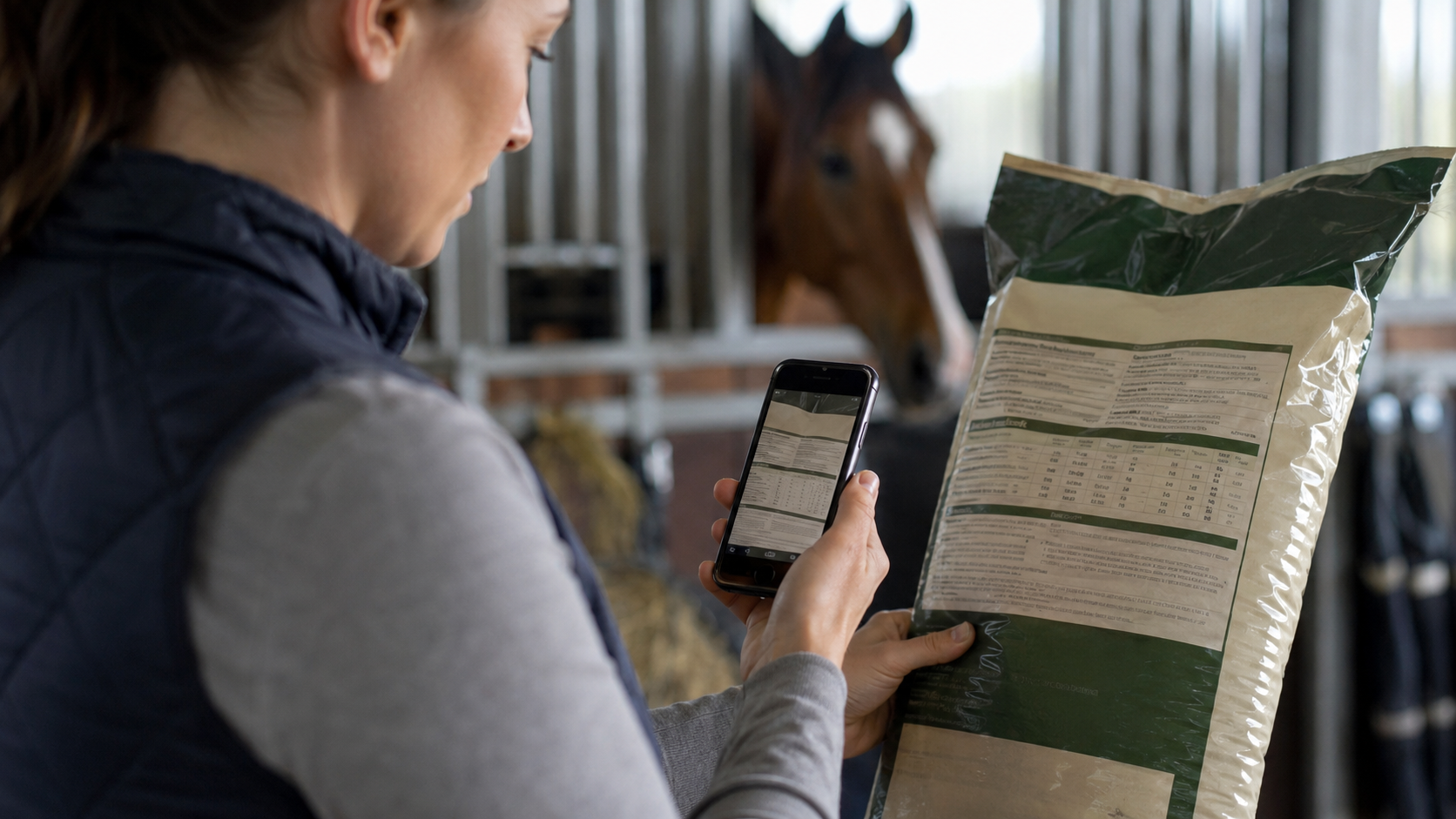
With Equio, every feed, supplement or treat is read against the horse's real profile (age, weight, Body Condition Score, conditions) — useful for a Mallorquín as soon as a metabolic or digestive sensitivity is known.

Health and points to watch
Regular monitoring of weight and body condition is essential to prevent obesity and associated metabolic problems. Particular attention should be paid to hoof quality, although generally robust, to avoid podal affections.
- More frequent conditions: laminitis, Equine Metabolic Syndrome (EMS)
Care and grooming
Mallorquín care is relatively simple. The hooves, naturally hard, require regular trimming. The mane and tail, often abundant, need brushing to prevent tangles. The coat is easy to maintain and does not require special clipping, except for sport work. Good general hygiene is sufficient.
Did you know?
- The Mallorquín is one of Spain's most endangered equine breeds, with an active conservation program for its survival.
- Its black coat is a distinctive characteristic and is the only coat color accepted by the breed standard.
- It is often used in traditional festivals in Mallorca, where it is appreciated for its presence and calm demeanor.
The Mallorquín and how to track it
The Mallorquín breed is very rare in France, with an almost non-existent population. Breeding is mainly concentrated on the island of Mallorca, its place of origin.
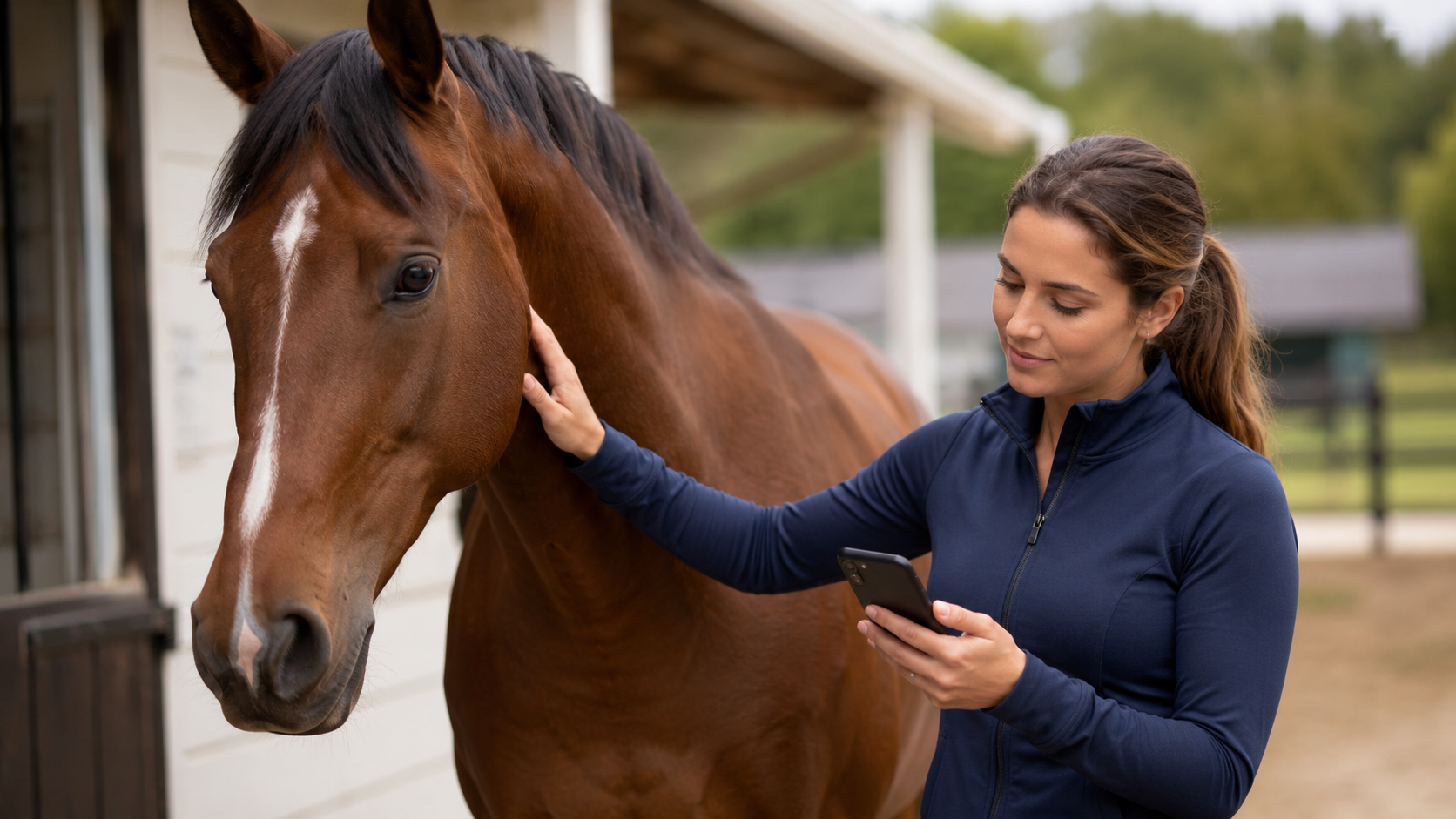
Equio lets you build a complete profile for a Mallorquín: identity, weight, Body Condition Score, feeding, conditions, care reminders (vaccines, worming, trimming) and an exportable health log. The breed sets the identity; everyday decisions still depend on the real horse and your vet's advice.
- Record the activity level: rest, leisure, sport or breeding
- Add known conditions or sensitivities
- Scan feeds, plants and care products
- Keep reminders (vaccines, worming, trimming)
- Prepare a PDF export before a vet appointment
Frequently asked questions
What is the distinctive feature of the Mallorquín's coat?
The black coat is the only accepted and characteristic color of the Mallorquín. It must be intense and without extensive white markings, although small markings on the head or limbs are tolerated.
Is the Mallorquín a good horse for beginners?
Thanks to its calm, docile, and intelligent temperament, the Mallorquín can be an excellent horse for beginner or intermediate riders, provided there is appropriate supervision and a solid basic education.
Where can Mallorquín horses be found?
Mallorquín horses are primarily bred on the island of Mallorca in Spain. Outside of this region, they are extremely rare and difficult to find, even in Europe.
Is the Mallorquín suited to the French climate?
Yes, the Mallorquín is a hardy and resilient breed, accustomed to Mediterranean climates. It would adapt well to France's temperate climates, provided it is offered appropriate living and feeding conditions.
What is the price of a Mallorquín horse?
The price of a Mallorquín can vary considerably depending on its age, level of training, lineage, and rarity. As an endangered and localized breed, prices may be higher due to the difficulty in acquiring one.