
Horse breed
Kentucky Mountain Saddle Horse
The Kentucky Mountain Saddle Horse originates from the mountains of Eastern Kentucky, where it was developed by locals for their daily needs. Resulting from crosses between local saddle horses and imported breeds, it was valued for its versatility and comfortable gaits.
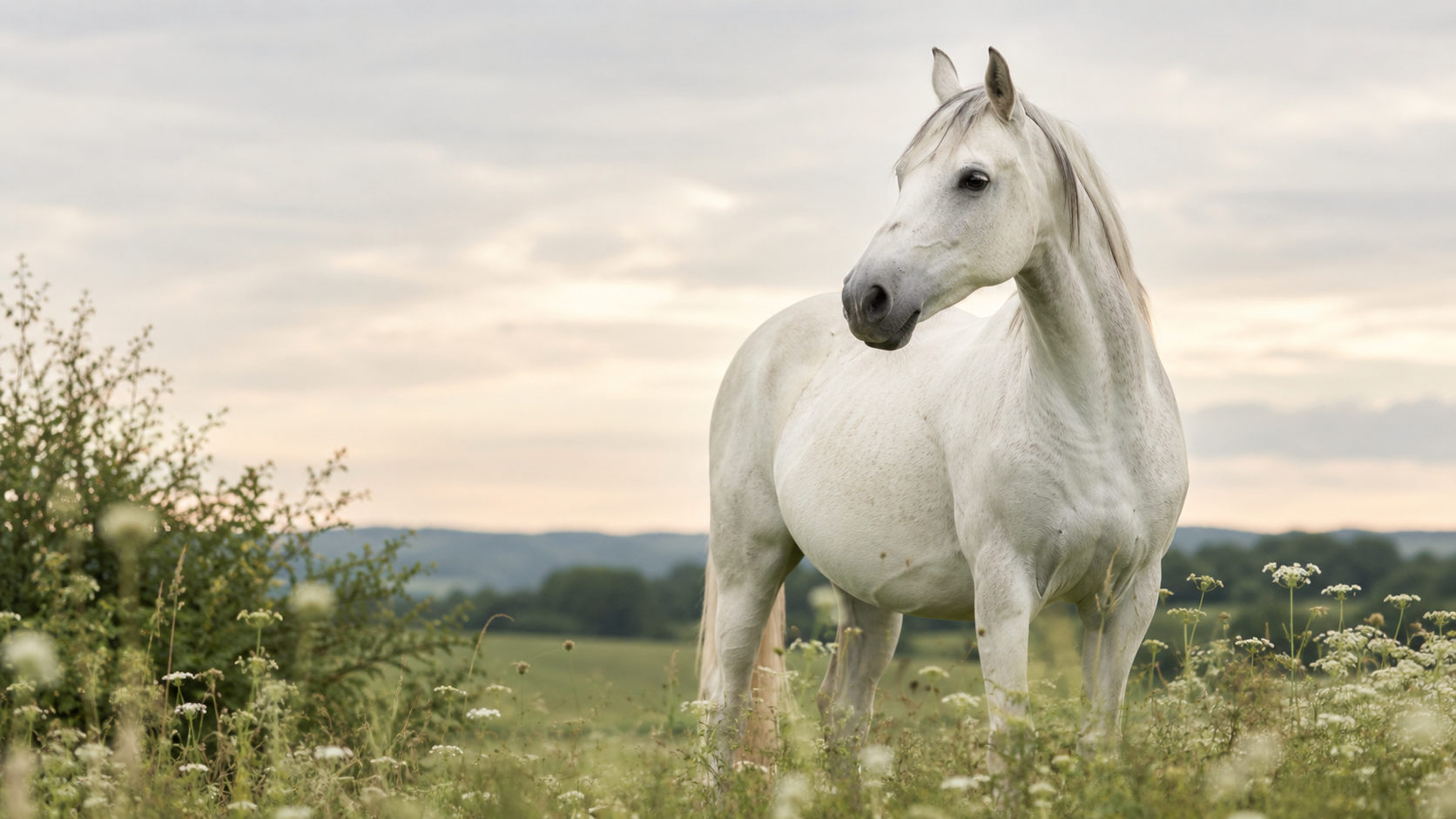
The breed at a glance
This horse has a calm, gentle, and willing temperament, making it an excellent companion for riders of all levels. It is intelligent, easy to train, and very enduring, demonstrating a great aptitude for work and loyalty to its rider.
- Category
- saddle horse
- Origin
- United States · Late 19th century - Early 20th century
- Height at withers
- 137–162 cm
- Weight
- 400–550 kg
- Lifespan
- 25-30 years
- Common coats
- bay, chestnut, black, grey, palomino, dun, roan, cremello, perlino, champagne, silver dapple
- Disciplines
- trail riding, trail, recreational riding, light dressage
- Other names
- KMSH
Origin and history
The Kentucky Mountain Saddle Horse originates from the mountains of Eastern Kentucky, where it was developed by locals for their daily needs. Resulting from crosses between local saddle horses and imported breeds, it was valued for its versatility and comfortable gaits. The breed was officially recognized in 1989 with the creation of the Kentucky Mountain Saddle Horse Association (KMSHA), aiming to preserve its unique characteristics and heritage.

Conformation and physique
It is a medium-sized horse, well-proportioned, with strong yet refined bone. It presents an athletic and elegant silhouette, typical of a saddle horse capable of endurance and comfort.
The head is medium-sized, well-chiseled, with a straight or slightly concave profile. The eyes are large and expressive, the ears alert and well-placed.
The neck is muscular, well-arched, and attaches harmoniously to well-defined withers. It is carried elegantly, contributing to the horse's overall balance.
The back is short and strong, the topline is solid. The chest is deep and broad, ensuring good lung capacity. The croup is muscular and slightly sloped.
The limbs are straight, strong, with well-defined joints and clean tendons. The hooves are well-formed and resilient. Feathering is generally sparse.
- Common coats: bay, chestnut, black, grey, palomino, dun, roan, cremello, perlino, champagne, silver dapple
Temperament and aptitudes
This horse has a calm, gentle, and willing temperament, making it an excellent companion for riders of all levels. It is intelligent, easy to train, and very enduring, demonstrating a great aptitude for work and loyalty to its rider.
The Kentucky Mountain Saddle Horse is renowned for its natural, comfortable gaits, particularly the 'saddle gait' (a four-beat, lateral gait, very smooth for the rider) and the 'rack'. It also has a good walk and a balanced canter.
- Uses: recreational riding, equestrian trail riding, working horse (historically), gait show, outdoor riding
- Disciplines: trail riding, trail, recreational riding, light dressage
Feeding the Kentucky Mountain Saddle Horse
The Kentucky Mountain Saddle Horse typically has an efficient metabolism, capable of utilizing forage well. It tends to maintain its weight easily. A diet based on good quality forage (hay or grass) is paramount. Concentrates are only necessary in cases of intense work or specific needs (growth, lactation), and must be chosen carefully to avoid excessive sugar and starch intake.
Although the breed is not specifically documented for major predispositions to metabolic disorders, like any horse with an efficient metabolism, vigilance is required regarding the risk of overweight, Equine Metabolic Syndrome (EMS), and laminitis in cases of an unbalanced diet or one too rich in sugars/starch.
With Equio, every feed, supplement or treat is read against the horse's real profile (age, weight, Body Condition Score, conditions) — useful for a Kentucky Mountain Saddle Horse as soon as a metabolic or digestive sensitivity is known.

Health and points to watch
Particular attention must be paid to weight management to prevent metabolic risks. Regular dental check-ups and appropriate deworming are essential. Hoof quality should be monitored, especially if the horse is used on varied terrain.
- More frequent conditions: osteoarthritis (in older subjects), dental problems (common to all horses)
Care and grooming
Care is similar to that of most saddle horses. Regular hoof trimming is crucial for maintaining hoof health. The mane and tail can be left long for their natural beauty, requiring regular detangling. The coat is easy to maintain and does not require specific care, other than regular brushing.
Did you know?
- The 'saddle gait' is a natural four-beat gait that allows the rider to remain comfortably in the saddle for long hours, without the jarring motion of the trot.
- The KMSHA (Kentucky Mountain Saddle Horse Association) was founded to preserve the pure bloodlines and unique characteristics of the breed, particularly its gaits.
- These horses were historically used by Appalachian farmers and settlers for transportation, agricultural work, and hunting, thanks to their versatility and surefootedness in mountainous terrain.
The Kentucky Mountain Saddle Horse and how to track it
The Kentucky Mountain Saddle Horse breed is very poorly represented in France. There are no significant breeding operations or established populations, as the breed is primarily concentrated in the United States.
Equio lets you build a complete profile for a Kentucky Mountain Saddle Horse: identity, weight, Body Condition Score, feeding, conditions, care reminders (vaccines, worming, trimming) and an exportable health log. The breed sets the identity; everyday decisions still depend on the real horse and your vet's advice.
- Record the activity level: rest, leisure, sport or breeding
- Add known conditions or sensitivities
- Scan feeds, plants and care products
- Keep reminders (vaccines, worming, trimming)
- Prepare a PDF export before a vet appointment
Frequently asked questions
What is the main characteristic of the Kentucky Mountain Saddle Horse?
Its main characteristic lies in its natural and comfortable gaits, particularly the 'saddle gait', a four-beat gait that offers great smoothness for the rider, ideal for long trail rides.
Is the Kentucky Mountain Saddle Horse suitable for beginners?
Yes, thanks to its calm, gentle, and willing temperament, the Kentucky Mountain Saddle Horse is often considered an excellent mount for beginner riders or those seeking a safe and easy-to-manage horse.
What coat colors are accepted for the Kentucky Mountain Saddle Horse?
All coat colors are accepted for the Kentucky Mountain Saddle Horse, including dilute colors such as palomino, buckskin, champagne, or silver dapple, which offers great aesthetic diversity within the breed.
Where can Kentucky Mountain Saddle Horses be found in France?
The Kentucky Mountain Saddle Horse is very rare in France. It is primarily bred and widespread in the United States. It is unlikely to be easily found on French territory, and importation would be the main option.
Is the Kentucky Mountain Saddle Horse a hardy horse?
Yes, it is a breed renowned for its hardiness, endurance, and surefootedness, inherited from its mountainous origin. It is capable of working long hours and adapting to various environments.